

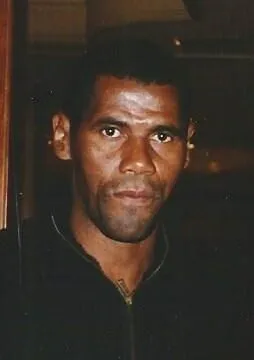
Walter (1989)
Human Design Chart
Biography
Walter played with Brazil under-20s in the 2009 South American Championship. He scored five goals in the tournament held in Venezuela, being crowned top scorer as the national team won their tenth title in the category.
On 11 December 2018, while at the service of Centro Sportivo Alagoano, Walter tested positive for furosemide and sibutramine metabolites after a match against Grêmio Esportivo Brasil, being suspended until further notice. The banned substances were found in prescription drugs he had been taking to fight his obesity problem.
Walter (1989) — Generator with Profile 4/6
Generator 4/6 — Design at a Glance
Walter (1989)'s design sets a tendency for great endurance and inner strength, comparable to a workhorse that generates energy when it burns for its task. This configuration describes a Generator type whose central mechanics lie in reacting: Not initiating action but responding to impulses from life is the key to effectiveness.
His strategy was to wait for signals and then act when his Sacral Center – the center of life force – sent a clear "yes." If he did this, he was rewarded with a feeling of deep fulfillment. However, his design was vulnerable to two specific pitfalls. The first occurred when Walter (1989) did things he had no desire for; here he wasted his energy and tended towards burnout as he acted against his inner compass.
The second danger arose when he was prevented from working on his heart project even though it still held full power within him. Such interruptions or ignoring the urge to continue led to frustration and loss of energy. Therefore, his design demanded discipline in waiting for the right impulse to effectively and satisfyingly use the immense sacral energy rather than blocking it through forced initiatives or suppressed drives.
Sacral Authority
Walter (1989) showed a decision-making approach that was strictly oriented towards physical resonance: He did not act based on abstract goals but reacted to external stimuli with an immediate inner confirmation. His design dictated that he only invested energy when his body gave a clear signal – a grunt, an affirming "Mhm," or a noticeable surge of power. This reaction came from the Sacral Authority, which served as his primary compass and provided him with vitality and enthusiasm once he engaged in something. He avoided rigid purposefulness; his satisfaction arose from immersing himself in the activity itself, driven by an inexhaustible life force.
Another important aspect was support from his activated Spleen Center. This gave him a quick, instinctive reaction capability and direct access to his physical well-being. He could make spontaneous and reliable decisions as these instincts harmonized with sacral energy. Crucial for his strategy was waiting for this physical response before any action. Since his Emotional Center is open, the Sacral Authority remains the only dependable source; it always takes precedence over other defined centers. Walter (1989) used this mechanism to navigate through life – guided by joy and the natural energy of his design, rather than fighting against his inner rhythm or being led by external expectations.
The 4/6 Profile — Opportunist / Role Model
Walter (1989) showed a clear development line from experimenting and exploratory behavior in early years to a more reflective, detached attitude later in life. His design suggested that he initially defined himself strongly through social experiments and testing various relationships, driven by the need for belonging and the Heart Center. This phase was characterized by Line 4, which integrated him into networks and helped him strategically utilize opportunities.
In the background, however, the dynamics of Profile 4/6 "Networker / Role Model" were already at work. Often an internal conflict arises between the desire for emotional connection (Heart) and the later emerging drive for intellectual distance and wisdom (Head). Walter (1989) had to learn to endure this tension. Line 6 brought with it the necessity of accepting mutations as a natural part of life and surrendering to processes rather than fighting against them. This required a certain level of commitment, even if confusion or depressive phases could occur when life seemed momentarily meaningless.
His Gate 56 on the fourth line supported him in conveying messages through stories and clever communication. He learned to wait for appropriate opportunities and to use self-interest positively – that is, protecting his own interests. Later, he was expected to function as a wise role model, where his Heart always had to remain cautious not to open up to false people. The balance between social connection and the tendency to retreat to the "mountain" of reflection shaped his entire life's task.
Split Definition — Defined & Open Centers
Walter (1989) revealed a consistent internal structure in thinking and energy, paired with situational flexibility in identity and expression. His design imposed a constant mental pressure: The definition of Head and Ajna Centers generated an uninterrupted questioning, understanding, and confusion as natural processes. This state was not a disturbance but a source of inspiration that could not be forced by his own actions since these centers did not have their own energy to implement. Instead, this mental flow served to stimulate others when the right timing was awaited.
The driving force came from the defined Sacral Center, a reliable source of vital energy for action. Walter (1989) had a clear internal response mechanism: An immediate yes or no indicated whether energy was available. This sacral authority was complemented by the defined Spleen Center, which provided intuitive, momentary judgments about health and well-being in the here and now. Together with the defined Root Center, offering a firm handling of stress and vitality, these centers formed a stable foundation of body intelligence and endurance.
In contrast, Throat, G-Center (Identity/Direction), Heart (Willpower) and Solar Plexus (Emotions) were open. These areas reflected the environment rather than following a fixed internal constant. Walter (1989) tended to lose himself in questions about who he was or which direction was correct instead of waiting for external initiation. The open Heart Center drew him into the cycle, proving his worth through promises and willpower, often leading to frustration due to the lack of energy. Similarly, the open Solar Plexus Center absorbed foreign emotions, potentially causing confusion between personal feelings and conditioned reactions. The challenge lay in not forcing attention by speaking (open Throat) or personalizing emotional waves but trusting the sacral reaction and intuitive Spleen sense.
Channels for critical analysis, change, care and meaning.
Walter (1989)'s design inclined towards evolutionary change accompanied by a strong inner skepticism. Channel of Mutation 60-3 connected Root Center with Sacral Center, generating a pulsating energy flow that wanted to enforce innovation. This process was marked by phases of silent melancholy where no energy flowed; patience during these pauses was essential not to exhaust the generative power. The tension between the pressure for change and the need to wait on the inner pulse shaped his experience of transformation.
Simultaneously, Channel of Logic 63-4 acted as a filtering mechanism. It connected Head Center with Ajna Center and used doubt to test patterns for their constancy. This logical skepticism served not personal security but collective benefit by excluding unfounded beliefs and accepting only verifiable answers. The combination of mutative drive and logical scrutiny created dynamics where innovation became effective only when it was resilient enough to withstand doubts.
Further influences came from Channel of Preservation 27-50, linking care with traditional values to protect and nourish communities. Channel of Life Struggle 38-28 added that finding meaning often occurred through the struggle for individual integrity. Individual Gates like Gate 56 (Narration), Gate 29 (Saying Yes) and Gate 44 (Transformation) supported this structure: Strategic saying yes had to be carefully executed, while vigilance during transformations helped manage resources. The mechanics thus required enduring the pressure of mutation, using logic as a filter, and taking responsibility only when confirmed by inner resonance.
Individual Circuitry — Circuit Signature
Walter (1989) revealed a tension between pulsating emotional expression and focused emotionless logic, underpinned by primal protective instincts. His design was structured as Split Definition: two independent energetic groups existed parallel without direct flow to each other.
The Knowledge Circuit connected his Sacral, Root, and Spleen Centers. This created a pulsing energy for the innate path. Through Channels of Mutation (3-60) and Life Struggle (28-38), new identity emerged through deviation from the existing, supported by creative impulses and the drive to initiate change.
Completely separate was the Understanding Circuit connecting Head Center with Ajna. Here pure logic and strategy reigned. Channel of Logic (63-4) enabled sharing rational insights focusedly, free from emotional conditioning or Solar Plexus influence. It was about structured improvement and future-oriented thinking.
The Protector Circuit connected Sacral with Spleen Centers. This primal circuit emphasized instincts for protecting genetics and family. Through the Channel of Preservation (27-50), care, preservation, and nurturing were prioritized. These timeless energies of sustenance and security should secure survival.
These three circuits shaped Walter (1989)'s essence: The emotional wave of identity creation stood in contrast to the cool rationality of the mind, while deep underground lay instinctive drives for protection and preservation. None of these energies flowed directly into each other; they formed separate yet simultaneous force fields of his character.
Right Angle Cross of Laws 2
Walter (1989)'s design points to a tendency towards a deep structural orientation characterized by the 'Right Cross of Law 2'. This configuration acted as a defining element of his internal compass, providing him with a specific perspective on order and lawfulness. It was not about arbitrary rules but rather a fundamental framework that shaped his perception of stability and security.
In Human Design, this cross describes how someone interacts with the underlying principles of their life. For Walter (1989), it meant seeking out a clear, logical structure to organize his experiences. The 'Right Cross of Law 2' offered him a context in which contradictions could dissolve and an inner coherence could emerge. It was less about external obedience than recognizing patterns that hold life together.
This mechanical quality manifested as Walter (1989) often filtering situations through the lens of these internal laws. If something did not fit into this framework, it created unease; if it aligned, a sense of correctness and affirmation arose. The design thus fostered an attitude of observation and analysis aimed at recognizing the hidden structures that guide visible events. It was a process of understanding that helped him navigate a complex world by relying on these stabilizing principles.
Saturn Return — Life Cycles
Walter (1989)'s design points to a tendency towards identity testing and structuring, particularly during Saturn Return phases. This mechanical configuration marks a time when inner values can clash with external expectations, often leading to a profound re-evaluation of one's path.
In 2018, at the age of 29, Walter was suspended following a positive doping test. This event represents a concrete crisis arising from the Saturn Return mechanics: The structuring power of this cycle forces confrontation with personal limits and rules. The suspension was not a random occurrence but an expression of internal tensions that typically surface during this life phase. Walter (1989) demonstrated someone whose design requires rigorous testing of integrity and discipline in such moments. The crisis served to break down false structures and create a new, solid foundation for further development. Through this experience, it became clear how important it is to respect one's own strategy and authority to better navigate future conflicts.
Generator · Sacral Authority — Synthesis
The continuity in the life of this person seems rooted in a deep dynamic between individuation and the need for connection. The design shows an acute ability to recognize patterns and logically filter them (Channel 63-4), paired with a Sacral Center that responds to impulses and provides energy for authentic activities. This combination points to someone who needs both to walk their own path and generate knowledge (Knowledge Circuit) while also having a strong internal guidance when responding correctly to external stimuli. The ability to conserve energy and use it for personal well-being as well as the community's welfare (Channel 27-50) underscores this tendency towards actively shaping life in alignment with one's values.
A central paradox in this design lies between the desire for autonomy and openness to others' influences. While a defined Head and Ajna Centers enable clear thinking and inspiration, open Heart and Throat Centers can lead to vulnerability to conditioning and constant searching for identity. This tension between the need to define oneself and find one's truth versus adapting to others shapes this person's life. The challenge lies in authentically using the energy of the Sacral Center to find a path that respects both individual uniqueness and connection with others.
4 Defined Channels
Incarnation Cross - Right Angle Cross of Laws 2
Solar Return
The Solar Return shows the moment when the sun returns to its exact birth position - your personal solar year.
Life Cycles
Discover the life cycles with a detailed triple view (birth chart, cycle chart, composite).
Human Design Profile
- Type
- Generator
- Strategy
- To respond - wait for something to respond to
- Authority
- Sacral Authority
- Profile
- 4/6 - Opportunist / Role Model
- Definition
- Split Definition
- Incarnation Cross
- Right Angle Cross of Laws 2
- Date of Birth
- 22.07.1989 01:40
- Place of Birth
- Recife (Pernambuco), BRAS
Frequently Asked Questions
What is Walter's Human Design type?
What Profile does Walter have in Human Design?
Which Authority guides Walter?
Which incarnation cross does Walter have?
When was Walter (1989) born?
Discover your own Human Design
Are you also a Generator? Find out in a personal reading how to use your sacral energy correctly and discover deep satisfaction.
More Personalities
Back to overviewAaliyah

Aldair
Alexia

Angèle

Anne-Marie

Arcángel
