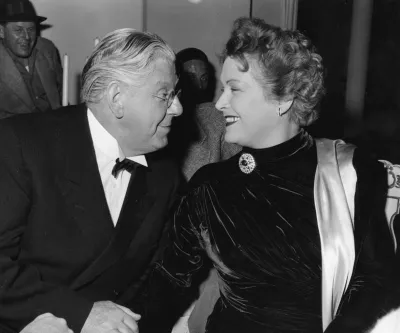
Walter Janssen
Human Design Chart
Biography
He died on 1 January 1976, aged 88, in Munich.
What does Projector 6/2 mean for Walter Janssen?
Projector 6/2 — Design at a Glance
Walter Janssen was someone who focused his energy on his environment. As a Projector, he had a dense aura that worked like a bright flashlight beam: it illuminated exactly where problems or 'dark spots' were in others. Walter Janssen could immediately see what wasn't working right in systems or relationships and found the fault in the mechanism.
However, this ability carried a risk. When he addressed these deficiencies directly, it often felt to his surroundings like blinding light, causing rejection. A more effective approach for him was to serve as an example – perhaps through a harmonious relationship or a successful work style. By simply 'shining', he attracted others who would then ask for his advice of their own accord. His strategy therefore involved waiting for respectful and honest invitations from others rather than taking the initiative himself.
Since his Sacral Center was undefined, Walter Janssen lacked a constant source of life energy. He experienced phases of high productivity followed by necessary rest periods to regenerate. The traditional work model did not fit this rhythm; without these breaks, he risked burning out. Living according to his nature and waiting for the invitation led to success. Ignoring this path sooner or later led to his non-self theme: bitterness over feeling unacknowledged or undervalued.
Self-Projected Authority
Walter Janssen was a Projector with rare authority in Self, which required extreme openness towards external influences. This configuration carried the risk of distraction by motoric energies and the danger of losing his own identity in this flood of stimuli or constantly chasing after external energy. His inner truth lay not in the mind but in his essence. Decisions for him arose on two paths: through spontaneous self-dialogues or dialogues when invited. Crucial was distinguishing between rational thought and the immediate voice of Self. What Walter Janssen spontaneously spoke without thinking revealed his true nature, making his uniqueness recognizable to others. Alternatively, he followed a physical feeling that guided him geographically or thematically towards or away from certain goals. By following this inner direction faithfully, he could become a guide for others. There lay his specific potential for success: not in constant action but in clearly radiating his authentic identity by listening to Self and following the body's attraction.
The 6/2 Profile — Role Model / Hermit
Walter Janssen's design pointed towards a two-phase life path, marked by the 6/2 line. In his youth, he acted as an Explorer, moving through trial and error and necessary retreat after failures. This phase served for gathering personal experiences before Saturn returned. After around thirty years, the traits of the sixth line were activated. Walter Janssen likely retreated into a metaphorical cave to look back at his earlier experiments from a distance. This period was characterized by intense reflection, healing, and deep self-knowledge. Finally, he emerged as a wise person, ready to let others partake in his life wisdom. His configuration combined the pessimism of 13/6 with unwavering hope for better relationships and union. Simultaneously, the 43/2 brought unique readiness and specific mental habits that were perceived as unusual. Through education and engagement, he developed insights that helped him not only possess theoretical knowledge but achieve real breakthroughs. Others sought him out to learn from his ability for deep introspection and understand his optimistic attitude towards necessary steps toward greater union.
Single Definition — Defined & Open Centers
Walter Janssen was characterized by a defined G Center, which gave him a firm internal identity and a clear sense of direction in life. This stable self-love allowed him to lead others without being dependent on them. In addition, the defined Ajna and Throat Centers provided a constant mental structure: He processed data conceptually and reliably expressed his thoughts, thereby shaping his mental field and serving as an intellectual authority for others.
In contrast, Walter Janssen was open in several areas to external influences. His open Head Center made him vulnerable to mental pressure; he tended to identify with other people's questions or seek inspiration that did not come from himself. The lack of consistent willpower in his open Heart Center could push him into a cycle of promises and disappointments, trying to prove his worth. Furthermore, his open Sacral Center absorbed the energy of his environment, leading to exhaustion if he did not trust his inner authority to set boundaries. His open Solar Plexus Center made him sensitive to others' emotions, putting him at risk of identifying with their moods and avoiding confrontation out of fear of rejection. The openness in his Spleen Center amplified survival fears and the tendency towards unhealthy dependencies, while his open Root Center took on external stress, potentially driving him into cycles of hyperactivity and burnout. These open centers required constant vigilance to avoid falling into conditioned patterns.
Channels for logical leadership, inspired expression and structured insight.
Walter Janssen was someone who influenced others through his authentic presence and clear articulation of insights. His design combined the power of an individual role model with the ability to structure complex connections in a comprehensible way. The Inspiration Channel 1-8 defined him: He lived out his unique identity rather than just explaining it. Through Gate 1 (Self-expression) and Gate 8 (Contributing), he drew attention by courageously showing his creative perspective. This inspired others not only through words but also through the presence of a self-determined life that demonstrated what it means to be a creative individual.
Parallel to this, the Alpha Animal Channel 7-31 was at work in him. Here, Gate 7 (Role of Self) connected with Gate 31 (Leading). Janssen sought logical and tested patterns for collective leadership. He gained trust through competence and adapted to existing structures to be invited by the majority. His authority was based on understanding current trends and acting as a representative of a group, always in dialogue with the collective.
The way he conveyed his knowledge was determined by the Structuring Channel 23-43. Gate 43 (Insight) provided spontaneous breakthroughs from the Ajna Center, which were processed and expressed through Gate 23 (Assimilation) in the Throat Center. Janssen had to exercise patience to explain these innovative perspectives clearly enough for them to be accepted. His thinking often felt ahead of its time; he developed techniques to increase efficiency that only showed their effectiveness when the timing was right and his gift was recognized.
Additionally, Gates 13 (Memory/Continuity), 11 (Visual Memory/Analysis) and 62 (Logic/Details) contributed. These gates promoted a reflective attitude: He gathered experiences, analyzed visual details, and sought logical frameworks. Gate 20 anchored him in the present moment where he integrated his authentic self. Overall, Janssen worked through a combination of inspiring presence, structured communication, and patient adaptation to collective patterns.
Individual Circuitry — Circuit Signature
Walter Janssen was characterized by a design with Simple Definition, which meant an energetically coherent, directly connected structure from the G Center, Throat, and Ajna Centers. This connection formed the basis for his expression. In the Knowledge Circuit, two channels were active in him: The Inspiration Channel (Gates 1–8) promoted spontaneous mental impulses, while the Structuring Channel (Gates 23–43) brought these into clear forms. Together they connected the Ajna, Throat, and Identity Centers into a single flow. This allowed him to not only think of new insights but also express them authentically through his own identity.
Parallel to this, the Understanding Circuit worked through the Alpha Animal Channel (Gates 7–31). This channel also connected the Throat with the Identity Center and promoted logical, strategic thinking as well as sharing rational insights. Since both circuits in Walter Janssen used the Throat and Identity Centers, creative inspiration and structural logic merged into his expression. His communication was thus carried by innovative impulses as well as clear strategy. The energy flowed directly from thought (Ajna) through voice (Throat) to personal presence (Identity), without interruption or inner conflict, since all three centers lay in a single group. This defined how he transformed knowledge and made it accessible to the world – always from a unified internal source.
Left Angle Cross of Masks 1
Walter Janssens Human Design reveals a tendency towards internal conflict, manifesting in the tension between the desire for social acceptance and the need for individual authenticity. This configuration, known as the left Mask Cross 1, describes someone who often appears to be playing a role to fit into groups while their inner experience diverges from this facade. Walter Janssen lived with the constant challenge of hiding his true identity behind a pleasing exterior, which could lead to feelings of not being seen for who he truly was. The mechanics of this cross suggest that he frequently felt torn between the urge to be loved and accepted by others and the deep desire to live out his authentic self. This dynamic shaped his actions through cautious adaptation to external expectations, which often came with an internal sense of alienation. Walter Janssen sought ways to bridge this discrepancy by trying to make his masked facade as credible as possible without fully revealing his true self. This led him to act cautiously in social situations to minimize conflicts between his public persona and private self. His design prompted him to use the complexity of human relationships as a space for constant balancing acts, learning to navigate the ambivalence of belonging versus individual freedom.
Saturn Return · Uranus Opposition · Chiron Return · 2nd Saturn Return — Life Cycles
Walter Janssens Human Design was marked by two critical Saturn Returns that structured his life path. The first Return occurred in 1915 when he was 28 years old and active in Munich. This cycle signified the transition from youth to full responsibility; often, years of groundwork condensed into a solid professional foundation during this period. His work in Munich signaled the establishment of a stable position based on inner maturity and external recognition.
The second Saturn Return happened in 1944 when he was 57 years old. At this point, Walter Janssen was listed as one of the Gottbegnadeten (geniuses). This cycle typically brings profound reflection on past life decisions and forces confrontation with the long-term consequences of his path. Being included on this list during a historical crisis underscored the ambivalence of this period: while Saturn demands structure and stability, it met a situation of political coercion. His design showed how external recognition in times of great uncertainty could serve both as protection and moral challenge. The mechanics of the second return called for a reordering of values and integration of experiences from the preceding three decades.
Projector · Self-Projected Authority — Synthesis
Walter Janssen lived a life marked by a profound ability to recognize patterns and shed light on darkness. His Projector design, combined with his defined mental center, points towards a natural aptitude for understanding complex systems and identifying areas for improvement (Channel 1-8). This capability was evident in his way of transforming knowledge and opening up new perspectives – a process amplified by the Knowledge Circuit. The role as an exemplar, initially through experience gathering and later through wisdom sharing, underscores this continuous cycle of observation, reflection, and inspiring expression.
Simultaneously, Walter Janssens chart revealed a central paradox: his openness to authority within himself stood in tension with a tendency to be distracted by external influences. While he intuitively knew what was right, it required conscious boundary setting and trust in his inner voice – a process intensified through the phases of life cycles (Saturn Returns) as well as the need for withdrawal and reflection. This dynamic between internal guidance and external pressure shaped his life and challenged him to remain authentic.
3 Defined Channels
Incarnation Cross - Left Angle Cross of Masks 1
Solar Return
The Solar Return shows the moment when the sun returns to its exact birth position - your personal solar year.
Life Cycles
Discover the life cycles with a detailed triple view (birth chart, cycle chart, composite).
Human Design Profile
- Type
- Projector
- Strategy
- Wait for the respectful invitation
- Authority
- Self-Projected Authority
- Profile
- 6/2 - Role Model / Hermit
- Definition
- Single Definition
- Incarnation Cross
- Left Angle Cross of Masks 1
- Date of Birth
- 07.02.1887 10:00
- Place of Birth
- Krefeld, Germany
Frequently Asked Questions
What was Walter Janssen's Human Design type?
What Profile did Walter Janssen have in Human Design?
What authority did Walter Janssen possess?
Which incarnation cross was active for Walter Janssen?
When was Walter Janssen born?
Discover your own Human Design
Are you also a Projector? Find out in a personal reading how to unfold your leadership qualities and recognize the right invitations.
More Personalities
Back to overviewSissy Spacek

Alain-Fournier

Anémone

Ann-Margret

Arletty
Arno