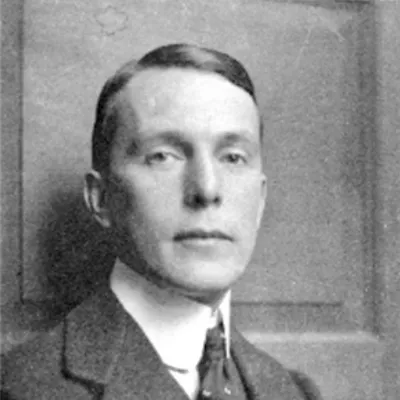
Walter Kaesbach
Human Design Chart
Biography
During the First World War, Walter Kaesbach volunteered for the medical service. He led an ambulance squad and thereby managed to include a number of artist friends in the medical service, saving them from direct deployment as a soldier at the front. Among these patronized artists were Max Beckmann, Erich Heckel, Anton Kerschbaumer, Heinrich Nauen and Otto Herbig.
From 1920 to 1924, Walter Kaesbach was director of the Municipal Museum in Erfurt. He was then appointed as Academy Director in Dusseldorf. During his directorate at the Erfurt Museum he exhibited Wassily Kandinsky, Lyonel Feininger, Paul Klee, Erich Heckel, Otto Mueller, Hermann Max Pechstein and Karl Schmidt-Rottluff.
As a result of the National Socialist (Nazi) art policy he went on leave in 1933 and then relinquished his position, and retired to Hemmenhofen on Lake Constance. He died on 24 June 1955 in Zülpich, aged 78.
Walter Kaesbach as a Generator 2/4 in Human Design
Generator 2/4 — Design at a Glance
Walter Kaesbach's design laid the groundwork for a high level of endurance and a strong inner drive. As a Generator, he had a lot of sacral energy, which made him a powerful and enduring personality, comparable to a workhorse that exerts its strength as long as it is driven by its task. However, his energy was not released through self-initiative but rather through reacting to impulses from the environment. His design's motto was not 'to initiate' but 'to respond'.
This mechanism contained two specific risks for his well-being. On the one hand, he tended to waste energy and exhaust himself when doing things that did not bring him inner joy. On the other hand, he suffered from frustration when prevented from working on his heart projects, even though his inner drive was still strong. Living in harmony with his strategy – that is, waiting for a signal and then acting when his gut feeling clearly said 'yes' – rewarded him with a deep sense of fulfillment. Initiating on his own, without waiting for this inner resonance, led to persistent frustration and a lack of energy. His path to satisfaction therefore did not lie in asserting his will but in confidently responding to what life offered.
Emotional Authority
Walter Kaesbach was someone who never made decisions immediately but consciously let them rest. His design carried emotional authority, meaning that his defined Solar Plexus Center took over inner leadership – regardless of which other centers were also defined. This configuration subjected him to a wave-like emotional dynamics. His perception of the world was always colored by his current mood: The same thing could inspire him in one moment and appear negative in the next. However, these immediate feelings were only snapshots, not the final truth. Spontaneous reactions to these first impressions would have had negative consequences. Instead, his system required patience and time. By repeatedly sleeping on decisions, he could let the intense feelings subside. Only with this emotional distance did clarity and calmness set in. This process was particularly crucial for long-term, life-defining steps. Walter Kaesbach had to be patient and take his time to truly recognize the depth of a situation. The emotional wave subsided only when he gained the distance needed to feel his true inner truth, separate from passing moods.
The 2/4 Profile — Hermit / Opportunist
Walter Kaesbach's design set a tendency to a pendulum rhythm between intense isolation and targeted social exchange. He was someone who actively managed the tension between the need for withdrawal and the desire for community. His Profile 2/4, the 'Natural Talent/Networker' profile, clearly described this dynamic: Line 2, the Hermit, demanded time alone to go through inner processes and gain clarity. Only when this need for undisturbed 'me-time' was fulfilled could he turn to Line 4, the Community.
This structure required precise communication outward. Walter Kaesbach had to clearly indicate when he sought company and when he withdrew to avoid disturbances. In his solitude, he reflected the knowledge he had gathered in his network. Line 4 brought the challenge of value externalization with it; it was vulnerable to weak social laws and corruption if enriching values were lacking. At the same time, Line 2 showed a high adaptability to restrictions, sometimes even in the form of rigid habits that persisted even when the original constraints had fallen away. Walter Kaesbach used this configuration to develop brilliant ideas in the silence, based on impressions from his social environment, always aware of the need to clearly communicate his boundaries.
Split Definition — Defined & Open Centers
Walter Kaesbach's design points to a clear, identity-defining expression driven by a deep inner direction. His defined G Center provided a consistent sense of self and a sense of personal mission. This inner security directly flowed into his defined Throat Center, making his communication and actions not impulsive but arising from a reliable source of identity. Thus, he spoke and acted from his Higher Self, giving him an authentic presence.
This ability to express was reinforced by his defined Sacral Center with immense vital energy. As a Generator, he had a constant power source that could only be correctly activated by reacting to external impulses. His strategy was to wait and respond when life called, then answer with full sacral power. This protected him from exhaustion and frustration that would arise if he initiated instead of reacting.
Simultaneously, his defined Solar Plexus Center shaped his emotional landscape. He was not a person of immediate, rational decision-making but someone who had to wait for the emotional wave to gain clarity. His inner authority lay in these feelings; he learned to trust the highs and lows rather than act impulsively. His defined Spleen Center complemented this with spontaneous intuition in the moment, helping him distinguish the healthy from the unhealthy, while his defined Root Center provided a steady pressure to move forward in the world and master existential challenges.
In contrast, his open Head Center revealed a vulnerability to mental confusion and the pressure to find answers to questions that were not his own. He tended to get stuck in intellectual monologues when he did not trust his emotional and sacral authority. His open Ajna Center meant he did not hold concepts and ideas as his own truth but took them in flexibly and reflected on them. Particularly defining was his open Heart Center, which made him vulnerable to the desire to prove his worth through willpower and promises. The trap was to overpromise and gain recognition, which he could not keep. His challenge was to let go of this pressure and accept that he did not need to prove anything but could simply be, guided by his sacral and emotional truth.
Channels for change, intimacy, reflection and care.
Walter Kaesbach's design points to a tendency towards deep, often melancholic change, coupled with a strong drive for intimacy and the role of the reflective observer. His innermost self was marked by the Mutation Channel 60-3, connecting the Root Center with the Sacral Center. This connection created a pulsing energy between accepting limitation (Gate 60) and striving to create order from new chaos (Gate 3). Walter Kaesbach had to learn to tolerate the unpredictable pauses of this energy as necessary developmental phases, rather than fighting them, to allow evolutionary impulses to take effect.
Parallel to this, the Pairing Channel 59-6, linking sacral sexuality with the emotional wave of the Solar Plexus, fostered a deep need for merging and intimacy, which required patience to gain clarity in relationships. Walter Kaesbach also emerged as a guardian of experiences through the Lost Son Channel 13-33. Here, he gathered information and secrets (Gate 13) to withdraw (Gate 33) and process these in deep reflection before sharing insights.
Care and the preservation of values flowed through the Preservation Channel 27-50, making him a natural caregiver who took responsibility to stabilize community and traditions. Individual Gates like Gate 56 (abstraction and storytelling), Gate 41 (evolutionary development through crisis), and Gate 9 (detail work and perfectionism) complemented this profile. Walter Kaesbach lived a mechanics based on the interplay of impulsive change, emotional depth, patient reflection, and careful preservation, always waiting for the inner reaction to constructively use these energies.
Tribal Circuitry — Circuit Signature
Walter Kaesbach's design reveals two separate, parallel operating energetic systems. One system connects the Sacral, Solar Plexus, and Spleen Centers. Here, the energies of the Protector Circuit operate: instincts and emotions serve to protect and preserve the genetic line. The Channels 'Preservation' and 'Pairing' ensure a primal power to nourish and defend the family. Alongside this, there exists a completely isolated segment connecting the Throat with the Identity Center. This part of the Meaning Circuit, marked by the Channel 'The Lost Son', directs the emotional reflection of the past into expression. Walter Kaesbach could thus share insights with laughter, without these directly flowing from his life force or instincts. A third, equally isolated aspect came from the Knowledge Circuit. The Channel 'Mutation' here connects the Sacral with the Root Center. This gave him the ability to generate new knowledge through spontaneous deviations from the known and to initiate change. Since these areas were not connected, Walter Kaesbach experienced these forces as separate impulses: once the deep concern for survival and family, once the emotional expression of past experiences, and once the impulsive drive for innovation. This divided definition meant he was always dependent on external confirmation to translate these various inner streams into coherent action.
Right Angle Cross of Laws 4
Walter Kaesbach's design carried the signature of the right cross of the laws of 4. This configuration established a specific inner dynamics that was less characterized by external, visible actions than by a profound, often hidden spiritual work. It was a structure designed to penetrate complex connections and process knowledge in a way that was not immediately accessible to others.
In Human Design, this cross marks an intensive engagement with the laws of nature and the spirit. The energy here is not aimed at immediate action or enlightenment, but at understanding and integration. Walter Kaesbach lived with a tendency to delve deep into the matter to grasp the underlying principles. This often required withdrawal and contemplation, as insights could not be gained superficially.
The challenge lay in the fact that these deep insights could not always be directly translated into the outside world. The design promoted a kind of inner growth that had its own rhythm. Walter Kaesbach thus revealed himself as someone whose true strength lay in the ability to understand the invisible and create inner order, even if this was not always perceived from the outside as active achievement. It was a path of silent transformation and deep understanding.
Saturn Return · Uranus Opposition · Chiron Return · 2nd Saturn Return — Life Cycles
Walter Kaesbach's design showed a tendency towards structured, institutional anchoring, which was evident in clear career steps. The first Saturn return often marked the transition from education to established roles. In 1907, at 28 years old, Kaesbach received the rank of scientific assistant under Hugo von Tschudi at the National Gallery in Berlin – a step that confirmed his professional competence and integrated him into the art system.
With the Uranus opposition, which often brings sudden changes or promotions that break the status quo, his appointment as director of the municipal museum in Erfurt took place in 1920, at 41 years old. This position fundamentally changed his areas of responsibility and established him as a decision-maker.
The Chiron return, a cycle of fulfillment and flowering of one's purpose, was evident in 1928, at 49 years old, when he donated works of various artists to a foundation. This was not a healing, but the concrete exercise of his influence and the securing of cultural heritage according to his life task.
However, the second Saturn return brought a severe crisis. In 1937, at 58 years old, his collection was confiscated, except for seven works, and later destroyed. This event violently disrupted the previously built structure and showed the limits of individual control over external power structures.
Generator · Emotional Authority — Synthesis
Walter Kaesbach was a Generator whose life was marked by deep, sacral energy. This energy, combined with emotional authority, led him through a wave of feelings that required time to mature before decisions could be made. His profile as a natural talent and networker revealed a constant oscillation between the need for withdrawal and the desire for community, which led him to create an environment in which he could live out this polarity. The Channel of Mutation (3-60) points to a capacity for transformation and an evolutionary drive that is nourished by the acceptance of limitations and the confusion of new beginnings.
A central paradox in his design lay in the tension between the generative potential and the accompanying stumbling blocks. On the one hand, he possessed the endurance to materialize things, on the other hand, there was the risk of getting lost in tasks that did not fulfill him or being hindered in the realization of his heart projects. The cycles showed that professional successes (1907, 1920) were also overshadowed by crises (1937), which underscores the necessity of accepting limitations and opening oneself to the mutations of life.
4 Defined Channels
Incarnation Cross - Right Angle Cross of Laws 4
Solar Return
The Solar Return shows the moment when the sun returns to its exact birth position - your personal solar year.
Life Cycles
Discover the life cycles with a detailed triple view (birth chart, cycle chart, composite).
Human Design Profile
- Type
- Generator
- Strategy
- To respond - wait for something to respond to
- Authority
- Emotional Authority
- Profile
- 2/4 - Hermit / Opportunist
- Definition
- Split Definition
- Incarnation Cross
- Right Angle Cross of Laws 4
- Date of Birth
- 18.01.1879 13:00
- Place of Birth
- Mönchengladbach, Germany
Frequently Asked Questions
What was Walter Kaesbach's Human Design type?
What Profiles did Walter Kaesbach have?
What Authority guided Walter Kaesbach?
What incarnation cross did Walter Kaesbach have?
When was Walter Kaesbach born?
Discover your own Human Design
Are you also a Generator? Find out in a personal reading how to use your sacral energy correctly and discover deep satisfaction.
More Personalities
Back to overviewAaliyah

Alexia

Angèle

Anne-Marie

Arcángel

Arno