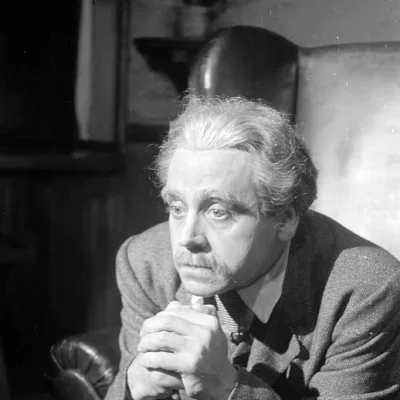
Walter Richter
Human Design Chart
Biography
The Human Design of Walter Richter: Manifestor 4/6
Manifestor 4/6 — Design at a Glance
Walter Richter revealed himself as someone who led with his own energy and vision. His Human Design type was Manifestor – an archetype designed to be a pioneer and leader. Like an emperor in ancient Rome, he carried the great idea of an empire within him but did not fight every battle personally; instead, he inspired or pushed others to achieve his goals. This role came with a specific challenge: His often broad perspectives led to misunderstandings from those around him. While some people loved and followed his visions, others rejected or even hated them. This polarization was not a mistake but a natural effect of his design. To minimize resistance and attract the right supporters, his ideal strategy was to inform others timely and precisely about his intentions and visions. When Walter Richter followed this informing strategy, his system rewarded him with a deep sense of inner peace. If he acted against this nature – for example, by uninvitedly entering other people's space without announcement – persistent anger arose in him. His design thus demanded clear communication as the path to harmonious functioning.
Emotional Authority
Walter Richter showed a decision-making stance characterized by emotional wave movements. His internal authority lay in his defined Emotional Center – a mechanism that can occur with every type except Reflectors and always takes precedence over all other defined centers, regardless of further chart configurations. This structure meant for Walter Richter that his perception was always colored by the current mood: A topic could appear inspiring at one moment and negative the next. Since this first impression was only a snapshot and not necessarily the deeper truth, spontaneous decisions based on emotion were often prone to error.
Instead, his design required patience. Walter Richter had to take time for decision-making – a process of multiple sleeps and reconsiderations. Only when intense feelings subsided and emotional distance was gained did clarity and calmness set in. This temporal processing phase was essential for long-term life decisions with significant impact. By waiting, he gained the necessary perspective to not be guided by fleeting mood swings but act on a stable inner truth. This mechanism shaped his way of firmly establishing himself as an exemplary role model through cooperation only after completing a full emotional cycle.
The 4/6 Profile — Opportunist / Role Model
Walter Richter's design set a tendency towards experimental action in the first decades of life. As a 4/6, the sixth profile line initially appeared like a third: He actively sought connections, tested relationships and friendships for their durability, and learned through diverse interactions. This phase served to gather experiences before his life focus changed.
With the activation of Line 6, an internal conflict emerged: The need for belonging (Line 4) stood in tension with the urge for distant observation and meaning-making (Line 6). Walter Richter lived this tension between heart and head. Later, he was expected to act as a wise role model that stood out through cooperation. His open nature remained cautious; he protected himself from opening his heart to false people and getting hurt.
The fourth line promoted a strong interest in knowledge and influence within the network. If this integration failed, isolation or mistrust threatened. The sixth line of Gate 49 added that he carefully weighed decisions based on principles and justice. He sought transformation through personal example, even if it took a long time. His attitude was marked by the question whether his engagement promoted positive change.
Single Definition — Defined & Open Centers
Walter Richter revealed himself through a strongly pronounced mental profile: His defined Ajna Center ensured a constant, trustworthy intellectual function. He processed data and creativity in the same way consistently, unaffected by external opinions. This mental stability flowed directly into his defined Throat Center; he spoke reliably what his mind conceptualized. Therefore, his communication was not a spontaneous reaction but rather the articulation of thought-through theories.
In addition to this clear ability to express himself, his defined G Center shaped his identity. Walter Richter had a firm sense of self and a clear direction in life. He could love others without becoming dependent on them, radiating magnetic security. His defined Heart Center also gave him constant willpower; he kept promises and enjoyed working independently to control his own resources. His emotional depth came from the defined Solar Plexus Center, which acted as an inner authority. He learned to give time to the emotional wave before making decisions, thereby avoiding chaos and gaining deep insights.
This stable interior contrasted with his open centers. His open Head Center made him vulnerable to mental pressure and others' questions; he tended to get stuck in doubts that were not his own. The open Sacral Center meant no constant energy flow; he had to learn not to mistake borrowed vitality from others as his own strength to prevent exhaustion. His open Spleen Center led him to seek the security of others and avoid spontaneous decisions, which often arose from fear or false conditioning. Finally, his open Root Center absorbed external stress; he was not designed to withstand permanent adrenaline-inducing pressure but had to learn to recognize this as foreign and protect himself from it instead of compensating with overactivity.
Channels for structure, presence, success and community.
Walter Richter revealed himself as someone who was awake at every moment and radiated a quiet authority simply by being present. This attitude stemmed from the Awakening Channel 10-20, which connected his G Center with his Throat Center. He lived the wisdom that self-love and trust are the foundation for a survivable, authentic life; by just being himself, he unconsciously inspired others to live their own truth.
Besides this inner clarity, Walter Richter had a drive to take on material responsibility. The Money Line Channel 21-45 connected his Heart Center with his Throat Center and gave him the energy of the Hunter (Gate 21) as well as the authoritative voice of the Gatherer (Gate 45). He sought independence to assert his will without being controlled. His success depended on his ability to steer his own work while protecting his interests and serving the "tribe" – a balancing act between hard work and the need to maintain control.
Intellectually, Walter Richter was geared towards structuring innovative perspectives. The Channel of Structuring 23-43 connected his Ajna Center with his Throat Center. Here, the spontaneous insight of Gate 43 merged with the assimilative processing of Gate 23. His challenge lay in not planning ahead but trusting his mind and clearly expressing his unique insights. When his timing was right, his innovative thinking was accepted by his environment; if it didn't fit, he often felt like an outsider.
Emotionally, Walter Richter sought belonging within a community. The Channel of Community 37-40 connected his Solar Plexus Center with his Heart Center. He waited for the right invitation to become part of something greater and understood the value of fair agreements. His actions were also shaped by Gate 49, which emphasized principles and sacrifice, as well as Gate 4, which developed logical formulas for future security. Additional gates like 2, 55, and 1 added receptivity to new directions, emotional fluctuations, and unique creativity, all of which always served his defined channels.
Individual Circuitry — Circuit Signature
Walter Richter revealed himself as someone who valued structure and community equally. His design was simply defined, allowing coherent, connected energy flows in a single network. The interconnected centers – G Center, Throat, Heart, Solar Plexus, and Ajna Centers – formed a closed circuit without energetic gaps or separate groups.
This flow began in the Knowledge Circuit through the Channel "Structuring" (Gates 43–23), connecting the Ajna with the Throat Center. This was about the ability to clearly formulate thoughts and express them verbally – a process that united creativity and melancholy.
In the Ego Circuit, two channels were at work: "The Money Line" (Gates 45–21) promoted material resources and prosperity, while "Community" (Gates 40–37) regulated giving and taking in relationships. These forces flowed from the Solar Plexus through the Heart to the Throat Center, guiding emotional reactions towards cooperation and exchange. Since no Sacral Center was involved, Walter Richter needed downtime for regeneration.
The Integration Circuit completed the circle with the Channel "Awakening" (Gates 20–10), connecting the Throat with the Identity Center. This channel supported the implementation of ideas in the present moment, based on intuitive knowledge and proper behavior. Thus, Walter Richter had a harmonious interplay between thinking, feeling, and acting – an entity that integrated both individual and communal aspects.
Right Angle Cross of Explanation 2
Walter Richter displayed a fundamental disposition marked by the right cross of explanation in his Human Design chart. This configuration describes a specific energetic focus: the drive to uncover hidden truths and convey these insights clearly, structured, and comprehensible to others. It was not just knowledge but a deeper understanding that needed to be shared to fully unfold its impact.
For Walter Richter, this meant that his life often revolved around the task of deciphering complex connections and formulating them in ways that other people could absorb and apply. This energy acted as an inner compass driving him not only to learn for himself but also to make his discoveries accessible to all. The structure of this cross promoted a clear, almost didactic mode of expression aimed at dispelling confusion and creating clarity.
In his interactions with the world, Walter Richter sought the essence lying beneath the surface. He conveyed these insights not as dogma but as results from his own profound engagement with matter. His ability to make knowledge manageable was central to his identity and shaped how he moved and acted in his environment. His design suggested that he served as a bridge between abstract truth and practical understanding.
Saturn Return · Uranus Opposition · Chiron Return · 2nd Saturn Return — Life Cycles
Walter Richter's life followed the classical rhythms of planetary cycles marking structure and change. The first Saturn return marked a phase of consolidation, where early impulses condensed into solid foundations. This cycle demanded discipline and laid the groundwork for subsequent life stages.
Following this, the Uranus opposition acted as a catalyst for necessary breaks. It questioned established patterns and forced detachment from structures no longer aligned with his growing self. Though often turbulent, this process paved the way for new freedoms.
The Chiron return then marked a phase of bloom. Here, Walter Richter's incarnation cross increasingly unfolded in everyday life; meaning and purpose became experiential if he had lived according to his strategy beforehand. This was an achievement cycle where inner truth manifested outwardly.
The second Saturn return rounded off this development by bringing final clarity to his life task and stabilizing the insights gained during the Chiron cycle. Walter Richter thus moved through phases of building, dissolution, and integration, each cycle setting specific tasks for his personal evolution. This sequence shaped his path towards mature self-realization supported by the cyclical forces of his design.
Manifestor · Emotional Authority — Synthesis
Walter Richter lived a life path marked by an inner drive toward initiation and transformation. As a Manifestor (Design) with emotional authority (Authority), he needed time to let decisions ripen, while his Profile role as Networker/Role Model combined the desire for community with the need for independent reflection. His defined mental centers provided a consistent way of thinking that, through the channel of awakening (Channels/Gates), led to active engagement and self-awareness – a process always guided by deep understanding of principles. This focus on inner processes and revealing new paths formed a red thread in his work.
Simultaneously, a tension revealed itself between the desire for influence and the emotional wave (Authority) running through him. The knowledge circuit promoted creative impulses and the development of unique perspectives, while the right cross of explanation pointed to the necessity of articulating these insights and bringing them into the world. This dynamic between inner maturity and the drive for external impact constituted a central paradox in his design.
4 Defined Channels
Incarnation Cross - Right Angle Cross of Explanation 2
Solar Return
The Solar Return shows the moment when the sun returns to its exact birth position - your personal solar year.
Life Cycles
Discover the life cycles with a detailed triple view (birth chart, cycle chart, composite).
Human Design Profile
- Type
- Manifestor
- Strategy
- To inform others before acting
- Authority
- Emotional Authority
- Profile
- 4/6 - Opportunist / Role Model
- Definition
- Single Definition
- Incarnation Cross
- Right Angle Cross of Explanation 2
- Date of Birth
- 13.05.1905 19:45
- Place of Birth
- Berlin, GER
Frequently Asked Questions
What was Walter Richter's Human Design type?
What profile did Walter Richter have in Human Design?
What authority did Walter Richter possess?
What incarnation cross did Walter Richter have?
When was Walter Richter born?
Discover your own Human Design
Are you also a Manifestor? Find out in a personal reading how to use your initiation power peacefully and dissolve resistance.
More Personalities
Back to overviewSissy Spacek

Anémone

Ann-Margret

Arletty
Arno

Artus