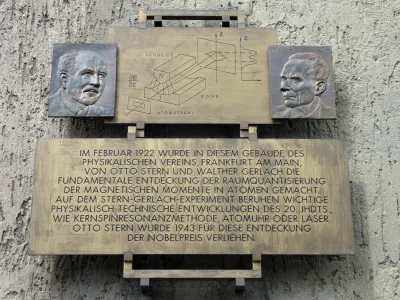
Walther Gerlach
Human Design Chart
Biography
He died on 10 August 1979 in Munich, aged 90.
The Human Design of Walther Gerlach: Projector 2/4
Projector 2/4 — Design at a Glance
Walther Gerlach was characterized by a dense, focused aura that directly engaged his environment. As a Projector, he did not have an intrinsic source of life energy in the Sacral Center but worked through phases of high intensity followed by necessary rest periods for recovery. His design predisposed him to immediately recognize weaknesses or errors in other systems – similar to a bright flashlight revealing dark spots. This direct perception could be perceived as unpleasant in his surroundings if it was not communicated gently. The optimal strategy for Projectors involved waiting for an honest and respectful invitation from others rather than taking the initiative himself or imposing advice. Through this patience and radiating harmony, he attracted people who actively sought after his insights. If Walther Gerlach lived according to these natural inclinations, he was rewarded with success; however, ignoring invitations and rest periods threatened him with a bitter experience of non-self-realization. His path therefore did not lie in constant action but rather in targeted, invitation-based leadership.
Splenic Authority
Walther Gerlach demonstrated decision-making based on a fine, immediate inner signal. His internal authority resided in the defined Spleen Center, which required both the Emotional and Sacral Centers to be open – a characteristic only Projectors or Manifestors exhibit. The Spleen Center served as his health and alarm system, providing him with an acute survival intelligence: spontaneous knowledge about whether a situation, environment, or society was right for him. His instinct and physical well-being acted as reliable indicators.
Decisions had to be made in the moment. The first, spontaneous impulse was correct and directly served his health. This allowed him to rigorously distance himself from harmful influences. However, this Spleen impulse was very subtle and only occurred once at a specific moment. It could easily be ignored or overshadowed by other influences, requiring high vigilance. A retreat for decision-making was often helpful.
Since Walther Gerlach knew what was right for him only in the moment, plans could change quickly. Long-term commitments were difficult; he needed much freedom and flexibility to follow this strategy.
The 2/4 Profile — Hermit / Opportunist
Walther Gerlach was marked by a constant interplay between a deep need for withdrawal and a longing for familiar community. His design created tension: on one hand, he withdrew to gain inner clarity; on the other hand, he sought exchange with a close circle of trusted individuals. This dynamic matched Profile 2/4, known as 'Natural Talent / Networker,' which precisely describes this pendulum swing between solitude and community.
For Walther Gerlach, it was essential to create a safe environment where he could clearly communicate his needs: when he sought company and when he wanted to be undisturbed. During his 'Me-Time,' he immersed himself in internal processes, reflected on experiences, and developed new insights from them. This phase of isolation was not an escape but a necessary strengthening.
The second line of his design promoted this reflective ability and the building of inner strength through processing experience. Simultaneously, the fourth line of Gate 24 aimed at externalization within a protected network. Walther Gerlach therefore did not share his knowledge broadly but slowly and selectively with those he trusted. Only after satisfying his need for solitude would he emerge from his 'cave' to share ideas gained in silence with his network and thus develop brilliant solutions.
Single Definition — Defined & Open Centers
Walther Gerlach's design inclined towards clear, identity-based communication supported by an intuitive body intelligence. His defined Throat Center acted as a constant focal point for expression, while the also defined G Center endowed him with a reliable sense of self-identity and direction. This configuration allowed him to speak from a stable inner core without being dependent on external expectations. The third defined Spleen Center ensured that he acted in the present moment; he tended to accept spontaneous intuitive warning signals and bodily health needs as ultimate authority rather than rationalizing them.
At the same time, Walther Gerlach was strongly exposed to his environment through several open centers. His open Head Center made him vulnerable to mental pressure; he tended to get entangled in other people's questions and doubts or seek inspiration instead of imposing his own mental solutions. The open Ajna Center reinforced this: He absorbed concepts and opinions from the environment without identifying them as his own truth. His open Heart Center lacked consistent willpower; he typically avoided making promises or getting involved in competitive dynamics to prove his worth, instead observing others' ego vibrations. His open Sacral Center meant no constant energy flow; Walther Gerlach was dependent on listening to his inner authority to avoid overloading through 'borrowed' energy and taking timely breaks. Finally, his open Solar Plexus absorbed emotions from the environment, making him prone to experiencing emotional waves of others as his own until he learned to use them merely for information. His open Root Center amplified external stress, making him vulnerable to burnout if he did not pause.
Channels for presence, intuitive form and clear expression.
Walther Gerlach exhibited a fundamental attitude based on intuitive security and the expression of self-love. His design featured the Awakening Channel 10-20, connecting his G Center with his Throat Center. This connection enabled him to recognize individual principles in the present moment and express them through his behavior. He lived from an inner clarity that signaled others: 'I am.' Through this authentic presence, he often unconsciously inspired those around him to be themselves as well, minimizing resistance and fostering genuine interactions.
This ability for spontaneous adaptation was reinforced by the Perfect Form Channel 57-10. It linked the intuitive insight of his Spleen Center (Gate 57) with the behavioral code of his G Center (Gate 10). Walther Gerlach acted not out of fear or future concerns but from a deep, acoustic sensitivity to his environment. He listened more to the quality of sounds than words and adjusted his behavior momentarily to secure his survival and well-being. This created a unique aesthetic in his existence; he perfected himself through spontaneous actions without seeking recognition.
Additionally, he possessed the Lightning Flash Channel 57-20, which directly channeled the intuitive wisdom of his Spleen Center to his voice in the Throat Center. Walther Gerlach could express his existential truth in the moment: 'I know that I am living now.' These verbal outbursts of pure intuition often hit the core of a matter faster than thoughtful analyses by others. His design promoted an unencumbered movement through the world, free from fear of the unknown as he relied on his inner impulses.
In the background, gates like 33 (Reflection) and 19 (Resources/Territory) signaled a need for rest and secure surroundings, while personality gates such as 56 (Narration) and 62 (Logic/Details) added mental processes and structural clarity. His design was thus a synthesis of intuitive survival tactics, authentic expression, and reflective structure.
Individual Circuitry — Circuit Signature
Walther Gerlach's design inclined towards innovative, creative flashes of insight. This energy flowed directly from his Spleen Center – the seat of intuitive knowledge and selection – to his Throat Center, the channel of articulation. Through this specific channel (20-57) in the Knowledge Circuit, he could not only internally process new insights but also articulate them immediately and precisely.
Additionally, his design connected his Throat Center with his Identity Center through two more channels: the Awakening Channel (20-10) and the Perfect Form Channel (10-57). This belonged to the Integration Circuit, dealing with securing survival through self-affirmation. Here, power from reacting to life, correct behavior, and intuitive knowledge worked together to be effective in 'now.' As Walther Gerlach had a simple definition, these centers – Throat, Spleen, and Identity – formed one continuous energetic flow. There were no separate groups; the energy flowed seamlessly from intuition through external expression to affirmation of self-identity. This marked him as someone whose inner perception directly translated into an authentic, self-affirming communication without internal energetic breaks or parallel, unconnected power fields.
Right Angle Cross of the Four Ways 2
Walther Gerlachs Human-Design profile featured the right cross of the four pathways. This configuration established a specific inner dynamic centered on seeking meaning and the desire to share personal experiences with others. In Human Design, this pattern represents an impulse to formulate personal truths and bring them into the world often through communication or teaching. It was not merely a tendency towards speaking but rather a deep drive to prepare what had been learned and experienced in such a way that it benefited others. Walther Gerlach carried this energy as part of his nature, which shaped how he interacted with information and relationships. The mechanics of this cross describe the process of understanding through personal action followed by sharing these insights. For him, this meant that his path was closely tied to building bridges between individual knowledge and collective comprehension. It was a structure aimed at making complex connections tangible and presenting them in a format that could be embraced by the community. This orientation influenced his interactions and contributions to his environment by focusing on exchange and conveying significance.
Saturn Return · Uranus Opposition · Chiron Return · 2nd Saturn Return — Life Cycles
Walther Gerlachs Human-Design profile indicated a tendency towards structured, cyclical developmental phases where inner maturity translated into concrete professional achievements outwardly. This configuration described a life path that did not rely on impulsive leaps but rather on the systematic condensation of knowledge and experience.
In 1916 at age 27, he habilitated himself and worked on measuring the Stefan-Boltzmann constant. For his design, this first Saturn return marked a typical moment: years of groundwork condensed into a solid result that strengthened his professional identity. This cycle signaled the transition from a learning phase to self-responsible practice of expertise.
Later in 1930 at age 41, he published the three-volume monograph on quantitative chemical spectroscopy analysis. This fell during the Uranus opposition period, a life stage where designs often demand profound reorientation or a peak of previous work. Here it showed how earlier structures were broken through and transformed into an expansive, public work. The mechanics of his chart thus shaped a path where academic milestones were closely tied to astrological maturation phases: first solidifying the foundation, later expanding publication of accumulated knowledge.
Projector · Splenic Authority — Synthesis
Walther Gerlach lived a life path marked by deep inner wisdom and a drive for clarity. As a projector with defined throat (linked to G Center and Spleen Center), he intuitively recognized patterns and flaws in systems (Spleen authority) but selectively projected this understanding – in harmony with the spontaneous, health-oriented impulse force of his internal authority. The profile as a natural talent and networker points to an interaction between the need for withdrawal for internal clarification (Line 2) and the desire for exchange and connection (Line 4), enabling him both to gain profound insights and share them purposefully with others. Key moments in his career marked by Saturn return and Uranus opposition underscore this pulsating rhythm of inner maturation and transformative innovation (Knowledge Circuit).
A central paradox lay in how Gerlach conveyed his insights outwardly. On one hand, he possessed the ability to recognize essentials and address them directly (Awakening Channel), on the other, his Spleen authority required waiting for the right moment to send these messages – a tension between the impulse for immediate correction and the necessity of maintaining healthy interactions. This dynamic shaped his approach to the world and was evident in his pursuit of knowledge and its targeted communication.
3 Defined Channels
Incarnation Cross - Right Angle Cross of the Four Ways 2
Solar Return
The Solar Return shows the moment when the sun returns to its exact birth position - your personal solar year.
Life Cycles
Discover the life cycles with a detailed triple view (birth chart, cycle chart, composite).
Human Design Profile
- Type
- Projector
- Strategy
- Wait for the respectful invitation
- Authority
- Splenic Authority
- Profile
- 2/4 - Hermit / Opportunist
- Definition
- Single Definition
- Incarnation Cross
- Right Angle Cross of the Four Ways 2
- Date of Birth
- 01.08.1889 08:15
- Place of Birth
- Wiesbaden, Germany
Frequently Asked Questions
What is Walther Gerlach's Human Design type?
What Profile did Walther Gerlach have?
What authority did Walther Gerlach have?
What incarnation cross did Walther Gerlach have?
When was Walther Gerlach born?
Discover your own Human Design
Are you also a Projector? Find out in a personal reading how to unfold your leadership qualities and recognize the right invitations.
More Personalities
Back to overviewSissy Spacek

Alain-Fournier

Anémone

Ann-Margret

Bourvil
Hergé