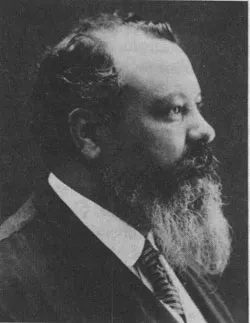
Walther Kossel
Human Design Chart
Biography
Walther Kossel died on 22 May 1956, aged 68, in Tübingen, Germany.
The Human Design of Walther Kossel: Manifestor 5/1
Manifestor 5/1 — Design at a Glance
Walther Kossel revealed himself as someone with the foundational orientation of a Pioneer and Visionary. His design indicated that he was destined to lead the world into a new future, much like an emperor in ancient Rome. This comparison highlighted his role: He possessed the vision of a great whole but did not personally wage the necessary wars or battles for it. Instead, he sent others out to conquer foreign lands on his behalf.
This configuration brought with it a specific pain point: Walther Kossel was often misunderstood and polarized his environment. Because he thought beyond many others, some loved and followed him while others disliked or even hated him due to his vast visions. For the right followership to find him, it was crucial for his design that he informed people timely and precisely about his plans. This strategy of informing before acting was key to his inner balance.
If Walther Kossel followed this strategy along with his authority, he was rewarded with a feeling of inner peace. If he lived against his design, however, he likely felt an enduring, deep-seated anger within himself. His path therefore lay in clearly communicating his visions to reduce resistance and win the right people for his goals, which ultimately enabled him the desired inner peace.
Splenic Authority
Walther Kossel demonstrated decision-making based on a subtle, immediate internal signal. His inner authority was located in the defined Spleen Center, meaning that his body and intuition served as reliable indicators of whether a situation or environment was healthy for him. With both the Emotional and Sacral Centers open, he possessed this specific survival intelligence typical of Projectors or Manifestors with this configuration.
This system functioned as an alarm system: It delivered spontaneous knowledge about what was right. The first impulse was considered the correct path since it directly served his well-being and protected him from harmful influences. However, Walther Kossel had to remain vigilant because this Spleen impulse was very subtle and only appeared once at each moment. It could easily be overshadowed by external expectations or internal noise.
Since knowledge of the right decision became available only in the moment of confrontation, his preferences often changed short-term. Long-term commitments were therefore difficult and went against his nature. Instead, he needed a lot of freedom and flexibility. A retreat for decision-making or leaving rigid plans behind helped him to hear this subtle impulse and rigorously distance himself from unhealthy circumstances.
The 5/1 Profile — Heretic / Investigator
Walther Kossel's design tended towards showing himself as an isolated researcher who gained deep insights through intensive isolation. As someone with the Profile 5/1 – Hero/Researcher – he first sought solitude (Line 1) to find clarity within himself. This phase of 'estrangement' and lone struggle was not a weakness but a necessary prerequisite for him. Only through this self-separation could he sharpen his intuitive perception and reduce the often confusing complexity of things to their essence.
Only when this inner structure had been established did he step into the role of the Hero (Line 5). Then, his acquired knowledge became available to others. His design possessed a near magnetic attraction: Others sought him out for solutions to their problems because they sensed that he held answers. This corresponded to the pattern of an expert who answered questions in conferences and thereby enjoyed immense respect.
This dynamic, however, carried a risk. As others constantly asked for his advice, Walther Kossel quickly faced exhaustion if he did not set clear boundaries. His Spleen Center, responsible for intuition and survival, could be overwhelmed by constant demand. The challenge lay in not isolating himself from others but preventing himself from always being available to them. Only through this 'saying no' could he maintain the balance between his private research and public problem-solving and optimally utilize his gifts without losing himself.
Single Definition — Defined & Open Centers
Walther Kossel's design inclined towards clear, identity-based communication. His defined G Center gave him a firm sense of self-identity and direction for life; he knew who he was and where he was going. This inner security flowed into his defined Throat Center, which served as a focal point to convey these messages to the world. He did not speak from fleeting moods or forced will but rather from a reliable source of love and identity.
Alongside this stability, his defined Spleen Center acted as an intuitive instance of survival consciousness. It provided spontaneous judgments about what was healthy and correct in the moment. Walther Kossel tended to trust these subtle warning or confirmation signals in the present instead of rationalizing them. His defined Root Center also generated a constant inner pressure that propelled him forward and helped him cope with stress by nourishing existential awareness.
At the same time, he was receptive to external influences through several open centers. The open Head and Ajna Centers meant that he did not have a consistent mental inspiration or conceptual truth. He tended to question whether certain thoughts were important and could easily fall into doubt when trying to find answers that didn't come from him. His open Heart Center made him vulnerable to the pressure of needing to prove his worth, even though he lacked a constant willpower for it; he risked making promises to gain recognition. The open Sacral and Solar Plexus Centers allowed him to absorb and amplify the energy and emotions of his environment, which could lead to feeling exhausted or personalizing foreign feelings instead of just observing them.
Channels for leadership, reflection, intuition and life purpose.
Walther Kossel exhibited a dynamic tension between the drive for collective recognition and the need for inner reflection. His design included the Alpha Animal Channel 7-31, linking logical leadership with foresight. This marked him as someone who had to demonstrate his competence to gain community trust; he did not seek influence through absolute authority but rather by representative presence within existing patterns. Simultaneously, the Lost Son Channel 13-33, connecting listening and withdrawal, gathered experiences and secrets that he processed in solitude before revealing deeper truths – a process requiring patience as premature speaking diminished its impact.
This reflective stance contrasted with the impulsive intuition of the Brainwave Channel 57-20. This channel linked intuitive insight from the Spleen Center directly to the voice in the Throat Center, enabling spontaneous, penetrating statements that hit the core of a matter. Walther Kossel had the ability to articulate existential knowledge in the present moment if he trusted his inner survival intelligence and was not distracted by external expectations.
The driving force behind these expressions formed the Life Struggle Channel 28-38. It connected the pressure for individual integrity with an awareness of the value of struggle, giving him the resolve to resist distractions and find personal meaning in life's challenges. The energy of this channel served to advance individuation through stubborn resistance against the status quo.
Additionally, individual Gates shaped his attitude: Gate 51 brought willpower and adaptability during shock, while Gate 39 provoked selective processes through provocation and analysis. Gate 19 connected him with community resources and territorial security, and Gate 58 promoted experiments for pattern perfection. Awareness (Gate 44) and the recognition of deeper, often frustrating connections (Gate 48) rounded out his profile, as did the impulse to contribute to group goals through Gate 8.
Individual Circuitry — Circuit Signature
Walther Kossel's design inclined towards impulsive, creative intuition that directly translated into communication. His simple definition linked the Throat Center with Spleen and Root Centers, creating a continuous flow of spontaneous impulses to verbal expression. In the Knowledge Circuit, two specific channels were at work: Channel 20-57 (Flash of Insight) promoted innovative, acoustically pulsating ideas, while Channel 28-38 (Life Struggle) brought deep-rooted endurance and survival willpower. This connection allowed him to not only think new insights but express them with emotional urgency and creative power. Parallel to this, Walther Kossel had components of the Understanding Circuit (Channel 31-7) and the Meaning Circuit (Channel 33-13). Both linked the Throat Center with Identity Centers, supporting logical structuring and reflective sharing of experiences. Since his design was simply defined, these energies formed a single coherent stream: intuitive creativity from Spleen and Root flowed through the Throat Center, supported by rational clarity and emotional reflection of identity. This marked him as someone who intuitively grasped knowledge, filtered it through logical and experiential lenses, and ultimately carried it into the world with an authentic voice.
Left Angle Cross of Individualism 2
Walther Kossel's design revealed a tendency towards a deep, often unspoken desire for individual authenticity. He was someone who used the inner compass for orientation rather than blindly adapting to external expectations or collective norms. This attitude stemmed from what is known as the 'left cross of individualism 2'. In Human Design mechanics, this configuration describes a specific life task: developing a unique self-understanding that does not stem from social adaptation but arises from personal intuition.
For Walther Kossel, this meant shaping his identity through his own experiences and inner truths. The focus was on differentiation from the general – what distinguished him as an individual beyond roles or status. It wasn't about rebellious separation but a quiet, persistent work on his substance. His energy was directed towards finding his voice and living it with integrity. This process required patience since understanding of his unique path often only became clear over time. Walther Kossel lived a dynamic that drove him to embody his personal truth even if it wasn't immediately understood or accepted by others. Thus, his design promoted an existence based on inner authenticity rather than external validation.
Saturn Return · Uranus Opposition · Chiron Return · 2nd Saturn Return — Life Cycles
Walther Kossel experienced increasing recognition and institutional affirmation in the second half of his life, closely aligned with his astrological fulfillment cycles. Around his 50th year, the Chiron Return around this time fostered the internal bloom of his incarnation cross, leading to a significant success when he was elected as a member of the Leopoldina in 1940. This cycle marks the moment when one's personal life purpose – if lived according to strategy and authority – is concretely realized in external life. His admission into this prestigious academy was no coincidence but an expression of his mature realization of inner potential.
Ten years later, in 1945, followed a second Saturn Return with the call to the Eberhard-Karls-University Tübingen to the chair for theoretical physics. The Saturn cycle condenses long-term work into sustainable structures and anchors the individual firmly in their social role. For Kossel, this step meant a definitive consolidation of his scientific activity at the highest level. Both events underscore how his chart dynamics led to external affirmation and firm positioning during these specific age phases without ignoring biographical details that do not directly emerge from given HD facts.
Manifestor · Splenic Authority — Synthesis
Walther Kossel lived a life marked by a deep drive for knowledge and its dissemination. As a Manifestor with defined Throat (communication and manifestation) and the Profile Hero/Researcher (5/1), he embodied the ability to generate knowledge and anchor it in the world. The Alpha Animal Channel (Gate 7-31) points to natural authority characterized by logical patterns and future orientation – an inner compass that drove him to forge new paths and lead others. Repeated evidence of professional success (membership in the Leopoldina, call to a chair position) underscores this ability to not only acquire knowledge but also effectively apply and disseminate it.
At the same time, an internal tension field became apparent between the Pioneer aspect of the Manifestor and the necessity to make decisions from Spleen authority. The spontaneous intuition (Spleen center) required immediate action, while visions and a need for guidance (Alpha Animal Gate 31) might encounter resistance or misunderstandings – a dynamic amplified by the natural polarization of the Manifestor type. This tension between impulsive, instinct-driven action and logical, future-oriented leadership shaped his path.
4 Defined Channels
Incarnation Cross - Left Angle Cross of Individualism 2
Solar Return
The Solar Return shows the moment when the sun returns to its exact birth position - your personal solar year.
Life Cycles
Discover the life cycles with a detailed triple view (birth chart, cycle chart, composite).
Human Design Profile
- Type
- Manifestor
- Strategy
- To inform others before acting
- Authority
- Splenic Authority
- Profile
- 5/1 - Heretic / Investigator
- Definition
- Single Definition
- Incarnation Cross
- Left Angle Cross of Individualism 2
- Date of Birth
- 04.01.1888 22:45
- Place of Birth
- Berlin, Germany
Frequently Asked Questions
What was Walther Kossel's Human Design type?
What Profile did Walther Kossel have in Human Design?
What Authority did Walther Kossel have?
When was Walther Kossel born?
Discover your own Human Design
Are you also a Manifestor? Find out in a personal reading how to use your initiation power peacefully and dissolve resistance.
More Personalities
Back to overviewChristian-Jaque
Kesha

Lucebert
Masaccio

Nadar
Papus