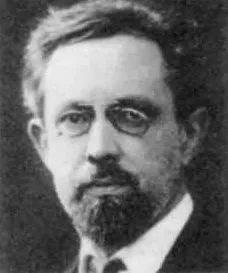
Werner Sombart
Human Design Chart
Biography
In 1902, appeared his magnum opus, "Der moderne Kapitalismus". It is a systematic history of economics and economic development through the centuries and very much a work of the Historical School. Even today it is still a standard work.
Only in 1917 Sombart became professor at the Friedrich-Wilhelms-Universität, then the pre-eminent university in Europe if not in the world, succeeding his mentor Adolph Wagner. He remained on the chair until 1931 but continued teaching until 1940. During that period, he was also one of the leading sociologists around, much more prominent than his friend Max Weber, who later of course eclipsed him to the point that Sombart is virtually forgotten in that field by now. However, in recent years sociologists have shown renewed interest in Sombart's work.
During the Weimar Republic, Sombart moved toward nationalism, and his relation to Nazism is still debated today.
He died 18 May 1941, Berlin.
The Human Design of Werner Sombart: Generator 3/6
Generator 3/6 — Design at a Glance
Werner Sombart's design laid a tendency towards great endurance and inner strength. As a Generator, he possessed much sacral energy, which made him extremely strong and durable like a workhorse – provided his task aligned with his inner drive. This configuration also described two specific risks: the danger of exhaustion through activities without inner joy or holding back from his heart project despite being fully powered.
The mechanics of his design did not require initiative but rather reaction. His energy was primarily released when he responded to impulses from life. Instead of starting on his own, his strategy was to wait for a signal and then act as soon as his sacral center gave a clear "yes". If Werner Sombart lived by this principle of reaction, the system rewarded him with deep satisfaction and a sense of fulfillment. Initiating against this inner compass or acting without corresponding resonance led to persistent frustration and a lack of energy sooner or later. His path involved reacting from the gut to effectively and fulfillingly deploy his immense power.
Sacral Authority
Werner Sombart's Design inclines towards spontaneous, physically grounded reactions to external impulses. As a Generator, he possessed sacral authority, which simplified his decision-making process: strategy and inner guidance merged into one mechanism. This worked only under the condition of an open emotional center. His responses did not come from the Head Center but as direct physical resonance – felt as a surge of energy or vocal sounds like an affirming "Mhm." When his sacral motor responded to a stimulus, he felt vital and acted with inexhaustible energy and enthusiasm. He was born to fulfill tasks without being bound by purpose, but rather out of pure joy in the doing.
Additionally, a supporting authority through his activated Spleen Center, which is directly connected to the Sacral Center, enabled him particularly quick and spontaneous decisions. He had immediate access to his instinctive well-being and relied reliably on this physical perception for guidance. The sacral authority always took precedence over other defined centers, regardless of which additional areas were active in his chart. This clear hierarchy ensured that his actions always sprang from the deepest, most authentic source of his life energy, without being blocked by emotional fluctuations or intellectual considerations.
The 3/6 Profile — Martyr / Role Model
Werner Sombarts design points to a life divided into two distinct phases, separated by the return of Saturn. Until around age 29, he primarily acted from Line 3 – characterized by experimenting, trial and error. During this time, he navigated through imposed limitations and broke free from constraints, often accompanied by feelings of pressure or melancholic depression that served as a catalyst for transformation. It was a phase of playful yet uncertain exploration where he still lacked clear direction.
Only after the age of 30 did the qualities of Line 6 become active. Werner Sombart withdrew to reflect on his previous experiences and gain wise guidance over his actions. His earlier enthusiasm for experimentation now took on the structure of consistent values. He chose leadership positions based on the significance of these values and the resulting demands. This configuration described a person who carried both the playful child and the wise elder within them. In his later years, around age 50 and beyond, Werner Sombart became a great role model for others through the combination of charm and reflective wisdom, sharing insights gained from many mistakes.
Single Definition — Defined & Open Centers
Werner Sombarts Design shows a tendency towards vital endurance and instinctive orientation. His defined Sacral Center generated a constant energy source that manifested as restlessness or the need for productive activity. This power was only available when he responded to inner signals rather than initiating on his own; mental decisions that suppressed this sacral response often led to frustration and exhaustion. Parallel to this, his open Spleen Center served as a wellspring of spontaneous intuition and physical health. It allowed him to make trustworthy judgments in the "now" and protect himself from existential dangers through awareness without needing rational justification. The pressure of his defined Root Center propelled him continuously forward to material advancement or problem correction, reinforcing his actions with a set form of stress management.
In contrast, several open centers shaped his vulnerabilities. His open Head Center made him susceptible to mental confusion and the pressure to find answers to questions that were not his business. He tended to get entangled in intellectual pursuits or be swayed by others' doubts rather than observing beyond the mental noise. The open Ajna Center amplified this: His thought work was flexible and open to many ideas, but not consistent; he could adopt concepts without holding them as personal truth, risking feeling unsure when clear answers were lacking. His open Throat Center led him to feel the pressure to gain attention or speak, even though his communication was spontaneous and dependent on external invitations – not driven by his own will. Additionally, in his open G Center, a firm identity was missing; he often adapted to his environment and sought direction through others, making him vulnerable to false relationships or places. His open Heart Center prevented consistent willpower; ideally, he avoided giving promises to avoid having to prove his worth. Finally, his open Solar Plexus absorbed the emotions of his surroundings, leading him to amplify foreign moods and feel emotionally unstable if he did not let them go.
Channels for evolutionary change, care and traditional values.
Werner Sombart's Human Design profile indicated a tendency towards sudden, profound transformation processes accompanied by a strong commitment to preserving existing structures. This dynamic was evident through Channel 60-3, which connected the Root Center with the Sacral Center. This channel brought forth an unpredictable, melancholic energy aimed at evolutionary change. Werner Sombart had to learn to accept limitations and move beyond the confusion of new beginnings in order to effectively utilize this mutative force. The energy pulsed – sometimes active, sometimes dormant – shaping his way of introducing innovation into his environment, often accompanied by inner tension during phases of rest.
At the same time, Werner Sombart possessed Channel 27-50, linking the Sacral Center with the Spleen Center. This channel promoted selfless care for others and the defense of traditional values and laws. It was about nurturing the "tribe" – whether through supporting communities or protecting what had been created. Werner Sombart's aura automatically drew trust; he took responsibility for the well-being of others but had to learn to maintain his own boundaries to avoid exhaustion. Only by responding appropriately to requests could he ensure that his energy flowed sustainably.
Additionally, Gates like Gate 56 contributed to abstracting mental processes, while Gate 19 emphasized the search for security and resources. Gate 28 demanded decisions in the here and now, coupled with the risk of losing personal meaning. Gate 57 offered intuitive clarity but without an appropriate channel it served more as a consciousness-raising tool. Gate 48 allowed for recognizing deeper patterns yet often led to frustration due to lack of implementation. Finally, Gate 5 set the fundamental rhythm of life by highlighting the significance of habits and energy accumulation. Overall, Werner Sombart exhibited a design oscillating between radical change and stable preservation, always relying on inner signals to balance these forces.
Individual Circuitry — Circuit Signature
Werner Sombart's design inclined towards defining himself through concrete action impulses and instinctive perception. As a simple definition, he possessed a continuous flow between the Sacral, Root, and Spleen Centers. This connection created a stable foundation of life energy and survival instinct.
The Knowledge Circuit worked through him via Channel 3-60, connecting the Sacral Center with the Root Center. The energy of this connection promoted the ability to break away from the old and venture onto new paths. It was about expressing a unique identity through deviation from the known, supported by the pulsating power of being present.
Parallel to this, the Archer Circuit shaped his essence via Channel 27-50, connecting the Sacral Center with the Spleen Center. Here, energies of care, preservation, and protection flowed together. This was a primal force for securing survival and nurturing the self. Both circuits utilized the defined Sacral Center as a common source, leading to a coherent orientation towards practical implementation and instinctive safety.
Right Angle Cross of Laws 4
Werner Sombarts Human Design was marked by the right cross of laws four, a configuration that suggests a deep connection to material and economic reality. This structure inclined him towards engaging with the fundamental mechanisms of action, exchange, and economic order. In Human Design, this cross often represents an effort to understand and align with the laws of supply and demand as well as market dynamics. It was not an abstract theoretical engagement but rather a practical confrontation with the forces that regulate societal prosperity and exchange. Werner Sombart thus showed himself to be someone whose attention naturally focused on the structures organizing material life. This orientation fostered an understanding of how individual actions impact larger economic contexts. The right cross of laws four underscores the importance of fairness and balance in the exchange process, aiming to grasp the rules governing resource flow and value creation. This mechanical foundation of his design profoundly shaped his perspective on social and economic phenomena.
Saturn Return · Uranus Opposition · Chiron Return · 2nd Saturn Return — Life Cycles
Werner Sombarts Human Design displayed a clear structure where professional milestones were closely linked to astrological cycles. In 1890, at age 27, he became a professor of state science at the University of Breslau. This coincided with his first Saturn return, a time when years of groundwork often solidifies into a stable foundation and initial major responsibilities are taken on.
Later, in 1902 at age 39, his magnum opus “Der moderne Kapitalismus” was published. This event corresponded to the Uranus opposition, a phase typically marked by sudden insights or breaking of old patterns, often leading to groundbreaking publications. The energy of this cycle supported the publication of such a significant work.
A third important milestone occurred in 1917 when Werner Sombart became a professor at the Friedrich-Wilhelms-University at age 54. This marked his second Saturn return. During this life phase, it often revolves around affirming one’s authority and establishing oneself on the highest level. Career trajectories thus did not follow chance but reflected rhythmic phases of his inner development: building in the first Saturn cycle, revolutionary expression during the Uranus opposition, and final consolidation in the second Saturn return. This sequence underscores how external successes were synchronized with deep structural time cycles of his design.
Generator · Sacral Authority — Synthesis
Werner Sombart primarily lived from his sacral energy (Sacral Center), driving him to sustained activity and a profound need for expression. Coupled with the ability to respond immediately to external stimuli with an inner body voice (sacral authority), this power source shaped his decision-making and engagement in activities that truly fulfilled him. The profile of an experimenter, which shifted into a role of reflection after age 30, points to a life path marked by initial experimentation before experiences were gathered and integrated – a process amplified by the Channel of Mutation (3-60).
A central tension in his design lay between the pulsating transformative potential of the knowledge circuit and the necessity of accepting limitations. Energy flowed through channels promoting innovation and creativity, yet simultaneously, Gate 60 demanded engagement with boundaries and letting go of old patterns. This likely led to an inner melancholy that acted as a driving force for evolutionary change – evident in professional breakthroughs coinciding with his first and second Saturn returns.
2 Defined Channels
Incarnation Cross - Right Angle Cross of Laws 4
Solar Return
The Solar Return shows the moment when the sun returns to its exact birth position - your personal solar year.
Life Cycles
Discover the life cycles with a detailed triple view (birth chart, cycle chart, composite).
Human Design Profile
- Type
- Generator
- Strategy
- To respond - wait for something to respond to
- Authority
- Sacral Authority
- Profile
- 3/6 - Martyr / Role Model
- Definition
- Single Definition
- Incarnation Cross
- Right Angle Cross of Laws 4
- Date of Birth
- 19.01.1863 17:00
- Place of Birth
- Ermsleben, GER
Frequently Asked Questions
What was Werner Sombart's Human Design type?
What Profile did Werner Sombart have in Human Design?
What Authority guided Werner Sombart?
What incarnation cross characterized Werner Sombart?
When was Werner Sombart born?
Discover your own Human Design
Are you also a Generator? Find out in a personal reading how to use your sacral energy correctly and discover deep satisfaction.
More Personalities
Back to overviewAaliyah

Alexia

Angèle

Anne-Marie

Arcángel

Arno