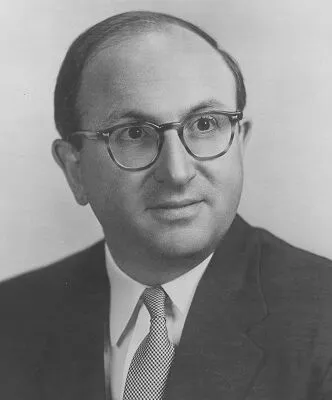
Wilbur Joseph Cohen
Human Design Chart
Biography
Human Design Analysis: Wilbur Joseph Cohen as Manifestor 3/5
Manifestor 3/5 — Design at a Glance
Wilbur Joseph Cohens design established a foundational stance as a pioneer and visionary destined to lead the world into a new future. His nature resembled that of an emperor in ancient Rome: He possessed the vision of a great empire but did not lead the necessary wars himself. Instead, he sent others to conquer foreign lands for him. This style of leadership inevitably polarized. Because he often thought ahead of others, he was misunderstood. Some people loved and followed him because of his great dreams, while others hated him precisely because of these visions. This formed one of his greatest pain points. For the right followers to find him, it was crucial that he informed others about his plans in a timely and precise manner. This strategy of informing was the key to his success. When he followed this strategy, he was rewarded with a sense of inner peace. If he lived against his design, he felt more often a persistent, deep anger. His essence was therefore designed to create resonance through clear communication and minimize resistance rather than getting entangled in conflicts.
Emotional Authority
Wilbur Joseph Cohen exhibited an inner decision-making structure that was characterized by his defined Solar Plexus Center. This determined his emotional authority, which in his design took precedence over all other defined centers. His perception of the world was subject to a constant up and down of emotions; he saw situations always colored by his current mood. What appeared inspiring in one moment could be felt as negative in the next. These emotional waves were, however, only snapshots, not the final truth. Spontaneous decisions made directly from this temporary emotion often risked negative consequences, as they were based on an impression not yet matured.
The mechanics of his authority required patience and time. Wilbur Joseph Cohen had to let decisions mature to experience the intense emotions and gain emotional distance. Only when the waves subsided did the necessary clarity and calmness set in. This process of multiple sleepovers and deliberations was crucial, especially for long-term life decisions. Only through this delay could he recognize the deeper truth behind the current mood and become action-ready. His inner voice thus did not speak immediately but only after going through the emotional cycle.
The 3/5 Profile — Martyr / Heretic
Wilbur Joseph Cohen showed himself as someone who gained his knowledge not from books but through his own, often risky experimentation. His design as a 3/5 Profile – the experimenter and hero – established a foundational stance of initial distrust. He learned through direct experience and mistakes to later offer practical solutions to others. This dynamic made him attractive to his environment, as he presented a rich treasure of lived life wisdom.
The Line 3 in his design emphasized the necessity of working on bonds and support within his tribe. Here, the danger of humiliation played a role: If he was not included, this could trigger aggressive reactions. Nevertheless, he always sought ways to be useful and integrate into the community. Parallel to this, Line 5, which promoted directness and unconventional solutions in crisis times, was at work. Wilbur Joseph Cohen often violated established behavioral norms when he was not in the mood to follow them. These mutative actions were sometimes negatively projected by others, as they were felt as disruptive. Yet, it was precisely this ability to pragmatically and directly act in difficult moments that defined his role as a savior. He carried the burden of failing before others to ultimately find the right path and fascinate his audience with his stories and solutions.
Single Definition — Defined & Open Centers
Wilbur Joseph Cohen was characterized by a consistent, clear mental foundation. His defined Ajna Center created a reliable ability to develop concepts and theories that he did not easily allow to be influenced from the outside. This mental stability flowed directly into his defined Throat Center, allowing him to communicate his thoughts with clarity and consistency. However, his inner authority lay in his defined Solar Plexus Center. This made him dependent on waiting for emotional waves before making decisions. The truth revealed itself to him over time, not in an impulsive moment.
This stable inner life contrasted with his high receptivity to external influences through his open centers. His open Head Center made him vulnerable to mental pressure and the questions of others, which he did not have to carry as his own. His open G Center meant that he did not have a fixed, unchanging identity but saw himself as initiated through the right places and relationships. He tended to wonder if he was in the right place, rather than dictating a rigid direction.
Furthermore, his open Heart Center freed him from the need to prove his worth through willpower or promises. He did not have to compete. His open Sacral Center was sensitive to the energy of the environment; he absorbed vital impulses from others but did not have a constant generative force that he could control himself. This required respect for his energy boundaries. Finally, his open Root Center absorbed stress from the environment, which he could not misinterpret as his own life impulse. His design challenged him to observe external chaos without being driven by it, and instead to trust his emotional clarity and mental stability.
Channels for emotional openness and logical acceptance.
Wilbur Joseph Cohen was characterized by a strong orientation towards the logical structuring of information and emotional resonance in communication. His design was marked by the ability to organize complex connections and convey them with a voice that deeply touched others.
The Accepting Channel 17-62 connected his Ajna Center with his Throat Center. This gave him the gift of organizing visual patterns and details mentally and translating them into clear speech. He constantly sought logical consistency; what he could not integrate into his inner system, he did not understand. This channel created an inner pressure to explain his opinions and what he had learned in detail as soon as he was invited to do so. It was a skill to present theories and hypotheses in such a way that they could be tested for feasibility.
At the same time, the Openness Channel 22-12, connecting the Solar Plexus Center with the Throat Center, depended on the emotional wave. Wilbur Joseph Cohen used the quality of his voice to exert an emotional impact on others. Gate 22 brought passion and creativity, while Gate 12 added a necessary restraint that directed the openness towards people with great mutative potential. He waited until he felt the mood to interact socially. When timing and mood aligned, he could encourage others to love change and experience new awareness.
Additionally, gates like 45 (Tribe Level, Energy) and 26 (Innovation, Conviction) contributed to him gathering energy and leading the tribe to new paths. Gate 47 helped him to recognize meaning from past experiences, while Gate 16 promoted experimentation. This configuration allowed him to be both logically precise and emotionally touching, by organizing details and through his voice, igniting a transformative effect.
Individual Circuitry — Circuit Signature
Wilbur Joseph Cohen was someone who translated inner emotional waves into clear, understandable speech. His design connected the Throat Center with the Solar Plexus Center through the Openness Channel (12-22). This flow allowed him to express feelings and intuition directly without intellectual filtering beforehand. The energy was pulsing and acoustic, driven by the need to make the tangible audible.
Parallel to this, there was a separate connection between the Ajna Center and the Throat Center through the Accepting Channel (17-62). Here, focused, visual logic was at work. Wilbur Joseph Cohen used this stream to formulate rational insights and strategic structures. Since the Solar Plexus Center was not included in this second stream, it was an 'emotionless ratio' based purely on logic and future perspective.
Although both connections touched the Throat Center, they were energetically separate. Wilbur Joseph Cohen did not have a direct bridge between his emotional intuition (Solar Plexus) and his logical strategy (Ajna). Instead, there existed two parallel forces: on the one hand, the expression of individual, felt truth, and on the other hand, the conveyance of structured, rational concepts. This simple definition created a clear separation between what he felt and what he logically understood, which he carried into the world through his voice.
Right Angle Cross of Rulership 2
Wilbur Joseph Cohen carried the right cross of Governing 2, a configuration that defined a specific kind of authority and influence. This design element combined the energy of enforcement with the necessity to operate within a larger context or system rather than acting in isolation. It was evident as a tendency to exercise leadership not through mere commands but through the ability to create structures in which others could find their role and unfold. The mechanics of this cross emphasized the importance of timing and proper alignment within a given order. Wilbur Joseph Cohen lived this dynamic by focusing on the creation of sustainable frameworks that offered stability and clarity. It was less about personal dominance and more about ensuring that the whole functioned and each part could contribute. This approach required patience and trust in the natural development of processes. His design promoted a stance that was both firm and adaptable, ready to pull the threads without forcing control over the entire fabric. This created an atmosphere in which authority was experienced as a serving force that supported the flow of life rather than hindered it.
Saturn Return · Uranus Opposition · Chiron Return · 2nd Saturn Return — Life Cycles
Wilbur Joseph Cohen's design showed a clear orientation towards structural responsibility and institutional integration. His life path followed a dynamic that combined personal authority with public duties.
In 1961, at the age of 48, he entered government service. This period fell into the phase of his Chiron Return. In Human Design mechanics, this cycle marks not a healing but a bloom period: the individual's incarnation cross unfolds increasingly. Those who have lived according to strategy and authority experience here the meaning and purpose as tangible reality. Cohen's entry into service was thus an expression of this inner maturation and the realization of his specific life purpose.
Later, in 1968 at the age of 55, he was appointed Minister for Health, Education, and Welfare. This correlated with his second Saturn Return. This cycle condenses long-term groundwork into sustainable results and solidifies one's position in the social fabric. Taking up this high office was no random escalation but the logical consequence of a years-long development oriented towards structure and responsibility. His design shaped an attitude that created stability and led complex systems through clear authority.
Manifestor · Emotional Authority — Synthesis
Wilbur Joseph Cohen was a Manifestor whose life was marked by a strong drive for innovation and a deep emotional resonance. His defined mental center (Ajna) and the connection through the channel of openness (22/12) indicated a capacity to form concepts and strengthen them emotionally through the quality of his communication. As an experimenter and hero (3/5 Profile), he actively sought new experiences to gain knowledge and make it accessible to others – a process amplified by the pulsating energy of the knowledge circuit. This was evident in career milestones.
A central paradox in his design lay in the combination of manifesting authority and emotional wave. He was destined to initiate and advance changes, yet his decisions had to mature through emotional depth and reflection. This tension between the impulsive drive to set things in motion and the necessity to consider the emotional landscape shaped his approach and led to a pattern of visionary action that both inspired and polarized.
2 Defined Channels
Incarnation Cross - Right Angle Cross of Rulership 2
Solar Return
The Solar Return shows the moment when the sun returns to its exact birth position - your personal solar year.
Life Cycles
Discover the life cycles with a detailed triple view (birth chart, cycle chart, composite).
Human Design Profile
- Type
- Manifestor
- Strategy
- To inform others before acting
- Authority
- Emotional Authority
- Profile
- 3/5 - Martyr / Heretic
- Definition
- Single Definition
- Incarnation Cross
- Right Angle Cross of Rulership 2
- Date of Birth
- 10.06.1913 09:40
- Place of Birth
- Milwaukee, Wisconsin, United States
Frequently Asked Questions
What is Wilbur Joseph Cohen's Human Design type?
What profile did Wilbur Joseph Cohen have?
What authority did Wilbur Joseph Cohen have?
What incarnation cross did Wilbur Joseph Cohen have?
When was Wilbur Joseph Cohen born?
Discover your own Human Design
Are you also a Manifestor? Find out in a personal reading how to use your initiation power peacefully and dissolve resistance.
More Personalities
Back to overviewChristian-Jaque

Kesha

Lucebert
Masaccio

Nadar
Papus