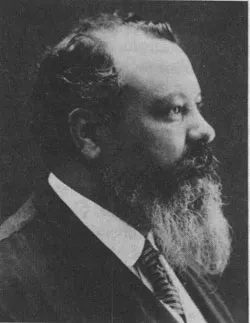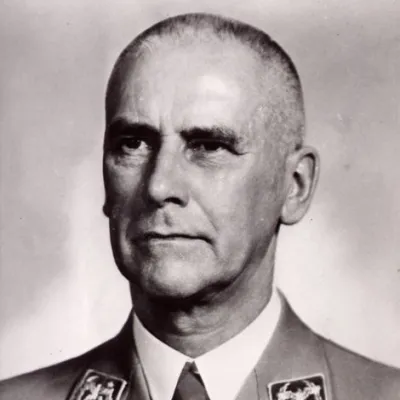
Wilhelm Frick
Human Design Chart
Biography
As the head of the Kriminalpolizei (criminal police) in Munich, Frick took part in Hitler's failed Beer Hall Putsch of 1923, for which he was convicted of high treason. He managed to avoid imprisonment and soon afterwards became a leading figure of the Nazi Party (NSDAP) in the Reichstag. In 1930, Frick became the first Nazi to hold a ministerial-level post at any level in Germany in Thuringia as state Minister of the Interior.
After Hitler became Chancellor of Germany in 1933, Frick joined the new government and was named Minister of the Interior. Additionally, on 21 May 1935, Frick was named Generalbevollmächtigter für die Reichsverwaltung (General Plenipotentiary for the Administration of the Reich). He was instrumental in formulating laws that consolidated the Nazi regime (Gleichschaltung), as well as laws that defined the Nazi racial policy, most notoriously the Nuremberg Laws. On 30 August 1939, immediately prior to the outbreak of the Second World War, Frick was appointed by Hitler to the six-person Council of Ministers for Defense of the Reich which operated as a war cabinet.
Human Design Analysis: Wilhelm Frick as Manifestor 6/2
Manifestor 6/2 — Design at a Glance
Wilhelm Frick's design established him as a pioneer and leader whose task was to guide the world into a new future. This profile acted similarly to an emperor in ancient Rome: He possessed the vision of a great empire, but did not lead the necessary wars himself; instead, he sent others to conquer foreign lands for him.
This nature often led to misunderstandings and polarization. Since his thinking frequently exceeded that of his surroundings, he was loved and followed by some because of his big dreams, while others disliked or even hated him precisely because of these visions. For the right followers to find him, it was crucial that he informed others about his plans at the right time and accurately. This formed the ideal strategy for his design.
Following Wilhelm Frick's path of information as well as his inner authority rewarded him with a sense of inner peace. Living against this design, however, likely caused persistent deep anger within him. His character trait as a Manifestor thus shaped a life between visionary leadership and constant interaction with others' reactions to his goals.
Emotional Authority
Wilhelm Frick's inner authority was rooted in the Emotional Center. This fundamentally determined his decision-making strategy: He was subject to an emotional wave that manifested in a permanent up-and-down of his feelings. The world appeared colored by his current mood; enthusiastic about something one moment, negatively influenced by the same situation the next. His feeling at any given moment was merely a snapshot, a first impression that did not necessarily represent the truth yet. Therefore, quick decisions based on emotion could have negative consequences.
The mechanics of his authority required patience and time. The longer Wilhelm Frick let a decision mature, the deeper and more comprehensive he could perceive the situation. This meant hesitating, being asked multiple times, and letting decisions rest overnight. Over time, intense feelings subsided, emotional distance was gained, and eventually clarity and calmness set in. Only then was the process complete. This approach was especially crucial for long-term decisions that could have a significant impact on his life course. As the Emotional Center was activated, it functioned as his inner authority, regardless of which other centers were defined in his chart.
The 6/2 Profile — Role Model / Hermit
Wilhelm Frick's design featured late maturation. In his youth, before the age of 30, the energy of Line 3 dominated: He experimented, sought personal experiences and learned through trial and error, with retreats after mistakes being typical. This phase served to accumulate raw data for his later understanding.
Around the age of 30, Line 6 of his profile (6/2) activated. This shift marked the transition to the role of 'Role Model' or 'Natural Talent'. Wilhelm Frick metaphorically withdrew into a distance to reflect on his earlier experiments. This period of isolation was not passivity but rather a process of healing and deep self-awareness. Through this introspection, he developed wisdom that he later made accessible to others.
The mechanics of Line 6 emphasized maturity, metamorphosis, and leadership qualities. It allowed him to use social interactions to create new models through mutation and nonconformism. Simultaneously, the second line of Gate 11 dealt with themes like strictness and inflexibility. Here, knowledge of his own process was crucial; without this self-awareness, boredom could have arisen as ideas were not carried outward. Wilhelm Frick overcame this by doing his homework and letting his ideas mature instead of projecting them onto others. His development thus showed the path from an experimenting youth to a wise mentor who brought out societal leadership qualities through distance and reflection.
Single Definition — Defined & Open Centers
Wilhelm Frick's Human Design profile indicated a tendency towards constant mental activity and strong willpower. His defined Head and Ajna centers created an ongoing internal pressure to question and form concepts; he thought continuously and was hard to influence in his perception of reality. This mental energy flowed directly into his defined Throat center, making his communication reliable as it sprang from his thoughts – he spoke what he conceptualized. Simultaneously, Wilhelm Frick had a defined Heart Center, which gave him clear willpower and the desire to control his life and fulfill promises. His defined Solar Plexus Center acted as an emotional authority; he relied on waiting out waves of feelings to gain clarity rather than acting impulsively.
At the same time, his open G Center revealed a lack of firm identity or direction. Wilhelm Frick tended to blend with his environment and often sought a 'borrowed' identity because he did not know who he was or where he was going. His open Sacral Center made him vulnerable to overloading; he absorbed others' energy, leading to exhaustion when boundaries were ignored and he overworked himself. Additionally, his open Root Center absorbed external stress, causing pressure that wasn't his own but interpreted as a personal drive. His open Spleen Center amplified fears of survival; he sought security from others and tended to cling to unhealthy situations for the feeling of well-being rather than making spontaneous decisions.
Channels for community, logic, openness, structure and abstraction.
Wilhelm Frick exhibited a mind shaped by constant skepticism and pattern filtering. The Logic Channel 63-4 connected Head with Ajna centers, ensuring that doubt was an essential part of thinking; statements were only accepted if they proved consistent in practice. This mechanical pressure led to little room for unfounded belief as answers gained validity through logical experimentation and verifiable evidence. Simultaneously, the Abstraction Channel 64-47 filtered experiences through a kaleidoscope of mental images. This mind sought stories and perspectives to understand the mysterious but was not designed to solve personal life problems; rather, it served collective sharing of inspiring insights once clarity emerged from initial confusion.
In the emotional sphere, the Openness Channel 22-12 shaped his social behavior. The articulation and emotional impact of his words depended heavily on timing; at the peak of his emotional wave, he could deeply touch others through voice and expression while compulsion led to harshness. His focus was on creating a receptive environment for his individual transformative effect rather than blindly conforming. In interpersonal relationships, the Community Channel 37-40 determined his stance towards connections. Here it was about closing fair deals and seeking a place in the whole, where willpower and emotional clarity were necessary to enter stable agreements. Individual Gates like Gate 11 (visual memory), Gate 30 (recognizing feelings) and Gate 55 (emotional awakening) underscored this dynamic: Frick evaluated situations before acting, recognized the illusion of freedom in the desire for positive emotions, and experienced extreme mood swings requiring patience. His design suggested that his influence was most effective when he waited for the right emotional timing to communicate logically verified or abstractly gained insights.
Individual Circuitry — Circuit Signature
Wilhelm Frick's Human Design profile indicated a tendency towards structured communication and logical analysis, influenced by emotional wave movements. As a simply defined person, he had a coherent energetic flow between Ajna, Head, Throat, Solar Plexus, and Heart centers. This formed the basis for his actions: thoughts were not only processed but directly expressed in words or emotionally experienced.
The Knowledge Circuit connected Ajna with the Throat center (structuring) as well as the Throat with the Solar Plexus center (openness). This allowed him to express his identity and transformative knowledge through speech, where emotional impulses rhythmically influenced expression. Simultaneously, the Understanding Circuit worked via the connection of Head and Ajna centers (logic). Here, rational, future-oriented strategy was in focus – an 'emotionless ratio' aimed at improving things and sharing logical insights.
In contrast, the Meaning Finding Circuit also through Head and Ajna centers (abstraction) brought energies from the past. This circuit focused on reflecting on past events to grasp their meaning and share these emotional experiences with the collective. The energy here was cyclical and wave-like, in contrast to the linear logic of the Understanding Circuit.
Finally, the Ego Circuit connected Heart with Solar Plexus center (community). This promoted cooperation and mutual support ('today I give, tomorrow you take'), yet without direct connection to Sacral energy. Therefore, rest periods were necessary to generate resources for the common tribe. Overall, Wilhelm Frick was someone who linked rational planning with emotional reflection and communicative structuring, always in exchange with his environment.
Left Angle Cross of Informing 1
Wilhelm Frick's design points to a clear and structured approach to communication. His inner nature is marked by the "Left Authority Cross," indicating a specific internal logic: the ability to prepare complex connections in such a way that they become understandable and comprehensible for others.
This configuration does not describe spontaneous expression but rather a conscious process of knowledge transmission. Wilhelm Frick emerged as someone who did not just receive information, but actively shaped it into forms that offered teaching or guidance. It was an energy aimed at clarity and precision.
In Human Design, this cross represents the connection between authority and knowledge. Wilhelm Frick lived with the task of organizing his own insights and then passing them on. This occurred not out of a desire to attract attention but from the necessity of bringing structure to the chaos of information. His way of speaking or writing was likely determined by a certain methodology.
He used this energy to build bridges between abstract knowledge and practical application. For Wilhelm Frick, communication was a means to carry inner certainty outward. It was about informing others not just with facts but providing them with a foundation for their own understanding. This dynamic shaped his interactions sustainably.
Saturn Return · Uranus Opposition · Chiron Return · 2nd Saturn Return — Life Cycles
Wilhelm Frick revealed himself as someone whose life path was structured by specific cyclical turning points. His design indicated a tendency to rise to significant political power in middle age and later secure this through institutional consolidation. This aligned with the energetic patterns of his Chart Cycles.
The Chiron Return marks in Human Design a fulfillment cycle where the incarnation cross unfolds, and the purpose of life becomes experiential – provided that strategy and authority are observed. For Wilhelm Frick, this moment of bloom occurred in 1924 when he entered the Reichstag as a deputy at age 47. This event was no coincidence but rather the concrete manifestation of what his design propelled him towards during this phase of life: the realization of the intended purpose in public space.
Later came the second Saturn Return, a cycle often associated with the consolidation of structures and the assumption of final responsibility. In 1934, at age 57, Wilhelm Frick signed the law on measures for state self-defence. This act illustrated the mechanics of the second Saturn Return: previous achievements were now cast in rigid legal forms. Thus, his design presented a clear arc from political establishment during the Chiron cycle to legislative enactment and systematization in the later Saturn cycle.
Manifestor · Emotional Authority — Synthesis
Wilhelm Frick lived a life path marked by a profound internal drive to formulate and inspire (Head-Ajna Definition). This constant urge to question patterns and find answers (Channel 63-4) laid the groundwork for his role as a pioneer and visionary (Manifestor Type). He sought stability in his insights and transformed this knowledge through emotional filtering (Knowledge Circuit, Emotional Authority), enabling him to initiate changes—even when encountering resistance. The experience of entering the Reichstag (Chiron Return) suggests that he found an early public platform for his ideas and pursued his visions.
Frick embodied a paradox between the desire for recognition of his wisdom and the resulting isolation. As a Role Model/Natural Talent profile, it implies a later withdrawal for reflection (Line 6), yet Manifestor energy pushed him to actively shape and implement his concepts simultaneously. The signing of the law on measures of state self-defence (Saturn Return) illustrates this inner conflict: a deep conviction about the righteousness of his actions coupled with awareness of their potentially polarizing impact.
5 Defined Channels
Incarnation Cross - Left Angle Cross of Informing 1
Solar Return
The Solar Return shows the moment when the sun returns to its exact birth position - your personal solar year.
Life Cycles
Discover the life cycles with a detailed triple view (birth chart, cycle chart, composite).
Human Design Profile
- Type
- Manifestor
- Strategy
- To inform others before acting
- Authority
- Emotional Authority
- Profile
- 6/2 - Role Model / Hermit
- Definition
- Single Definition
- Incarnation Cross
- Left Angle Cross of Informing 1
- Date of Birth
- 12.03.1877 23:00
- Place of Birth
- Alsenz, Germany
Frequently Asked Questions
What was Wilhelm Frick's Human Design type?
What Profile did Wilhelm Frick have in Human Design?
What Authority did Wilhelm Frick have?
What incarnation cross did Wilhelm Frick have?
When was Wilhelm Frick born?
Discover your own Human Design
Are you also a Manifestor? Find out in a personal reading how to use your initiation power peacefully and dissolve resistance.
More Personalities
Back to overviewChristian-Jaque
Kesha

Laurent-Eynac
Lucebert
Masaccio

Papus