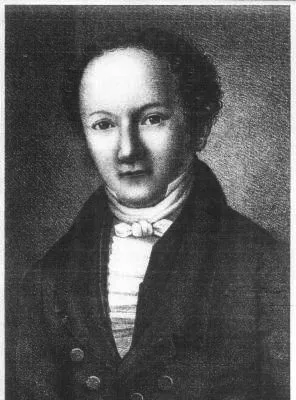
Wilhelm Gesenius
Human Design Chart
Biography
Human Design Analysis: Wilhelm Gesenius as Projector 2/5
Projector 2/5 — Design at a Glance
Wilhelm Gesenius was someone who could instantly identify weaknesses in other systems with a focused gaze. His Projector Design shone like a bright flashlight, illuminating dark areas and pinpointing where things weren't functioning properly in others. However, this ability to spot errors was only effective when not directly confronted; such directness would have quickly met resistance from his surroundings, akin to shining light directly into someone's face. Instead, Wilhelm Gesenius was most effective through a pleasant, harmonious presence. By being an example himself, he attracted others who then sought out his insights voluntarily. His strategy involved waiting for a respectful and honest invitation before taking on a leadership role. Since Projectors do not have a constant internal energy source, Wilhelm Gesenius required regular rest periods to avoid burnout. Living by this rhythm led to successful rewards; ignoring the need for recovery and invitation could lead to feelings of bitterness.
Splenic Authority
Wilhelm Gesenius demonstrated decision-making based on an immediate inner impulse. His design placed authority in the Spleen – a system for health and survival intelligence. For this authority to be effective, his Emotional Center and Sacral Center were open; only Projectors or Manifestors can have this configuration.
His intuition signaled instantly whether a situation or environment was beneficial. This first impulse served his immediate well-being and allowed him to rigorously distance himself from harmful influences. However, the Spleen voice is very subtle and appears only once in the moment, requiring high attentiveness; it could easily be drowned out by external noise or other opinions.
Since what's right was only apparent in the moment, his plans often changed at short notice. Long-term commitments were therefore difficult; he needed a lot of freedom and flexibility. A retreat for decision-making could be helpful to not ignore this fine impulse. Wilhelm Gesenius lived with the necessity of deciding in the present rather than adhering to future, rigid strategies.
The 2/5 Profile — Hermit / Heretic
Wilhelm Gesenius was someone who stood between a deep need for withdrawal and an external pressure to serve others as problem solvers. His Profile 2/5 defined this duality: Line 2 called for solitude and time alone, while Line 5 made others seek answers from him about their problems. He had to carefully weigh where he wanted to invest his energy to avoid breaking under the expectations of his environment.
This configuration described a person who could look inward in isolation to gain clarity. Line 2 promoted a selective stance; prejudices or some separation protected him from disturbances but also allowed him to gather deeper insights through listening. Simultaneously, Line 5 carried a large societal expectation field within him. When crises arose, his creativity could produce practical solutions, yet eccentric behavior risked slowing this process down. His steadfastness helped him endure interference and stay true to what he believed was right. Wilhelm Gesenius thus used his alone time strategically to determine when and how often he could help without forgetting himself. This balance between the monk in the cave and the rescuer in public space defined his life path.
Single Definition — Defined & Open Centers
Wilhelm Gesenius was characterized by a constant, trustworthy mental structure. His defined Ajna Center ensured consistent conceptual thinking; he processed data and creativity in the same way every time, unaffected by external influences. This inner clarity flowed directly into his defined Throat Center, which served as a pivot point to bring these concepts into the world as communication and action. Thus, his voice spoke reliably from his mind, expressing what he thought.
Parallel to this, Wilhelm Gesenius had a firm sense of self through his defined G Center. He knew where he came from and where he was going without having to blame others for it. This was complemented by his defined Spleen Center, which gave him spontaneous intuition and a sense of well-being in the present moment. He could make trustworthy judgments based on bodily intelligence rather than purely rational analysis.
However, his design also included sensitive areas. His open Head Center made him vulnerable to mental pressure and others' questions; he tended to get stuck in doubts when trying to solve problems that were not his own. His open Heart Center lacked consistent willpower, which could lead him to make promises to prove value only to later fail and disapprove of himself. Additionally, his open Solar Plexus absorbed the emotions of the environment, causing him to interpret others' moods as his own instability. Furthermore, his open Sacral Center amplified other people's energy, leading him to easily overexert himself due to a lack of consistent personal energy flow. Finally, his open Root Center took on external stress, which could throw him into cycles of hyperactivity to escape this pressure.
Channels for logical leadership, mental order and intuitive clarity.
Wilhelm Gesenius was someone who created logical structures to enable collective understanding. His design combined the ability for intuitive perception with a strict, detail-oriented language. This shaped an approach that not only articulated his own insights but translated them into verifiable patterns others could grasp.
This approach was supported by Channel of the Alpha Animal 7-31. It connected the G Center to the Throat Center and gave him a voice for logical leadership. Wilhelm Gesenius did not seek absolute command, but gained trust through understandable patterns. His authority arose from understanding trends and guiding society as an acknowledged representative of collective values. He led not by coercion, but by demonstrating competence that had to be chosen by the majority.
Parallel to this, his mind organized information through Channel of Accepting 17-62. This channel connected Ajna Center with Throat Center and drove him to translate visual patterns into precise details. For Wilhelm Gesenius, language was a tool for order. Only what he could logically structure and name counted as understood. This gave him the ability to clearly explain complex theories so they could be tested for feasibility. He found satisfaction in explaining his opinions in all their detail, provided that timing matched the receptiveness of his listeners.
At the same time, intuitive knowledge flowed through Channel of Flash of Insight 20-57. It connected Spleen with Throat Center and allowed him to express spontaneous truths in the present moment. This ability helped him grasp the essence of a matter faster than others. His verbal outbursts were not mere thoughts but expressions of deep, instinctive intelligence aimed at strengthening his own well-being and that of the environment through clear communication in the current moment.
Additionally, Gates like Gate 13 (Purpose, Continuity) and Gate 1 (Uniqueness) enhanced his perspective. He reflected experiences within a historical context and created new individual expressions free from limitations.
Collective Circuitry — Circuit Signature
Wilhelm Gesenius was someone who combined logical structures with creative impulses. His design was simply defined, allowing all energy flows to work in one single connected group: The G Center, Throat, Ajna, and Spleen Centers were directly interconnected. This allowed a seamless transition from identity through intuition to expression.
The Understanding Circuit connected his Ajna, Throat, and Identity Centers. Through the channels 'Accepting' (17-62) and 'Alpha Animal' (31-7), focused rational energy worked to share logical insights free of conditioning and strategically guide society towards a better future. This 'emotionless ratio' formed the foundation of his clarity.
Parallel to this, the Knowledge Circuit operated. It connected Throat Center with Spleen Center through Channel of Flash of Insight (20-57). Here innovative, creative ideas and new insights emerged. These were not isolated but directly woven into the common flow of understanding. The intuitive recognition of something new in the Spleen Center thus seamlessly flowed into rational structuring and verbal expression via Throat Center. Wilhelm Gesenius used this connection to express his unique identity through sharing transformed knowledge.
Right Angle Cross of the Sphinx 1
Wilhelm Gesenius was marked by the right cross of the Sphinx, a configuration often interpreted as the "Teacher's Cross" or "Healer's Cross." This design element gave him a profound intuition for hidden structures and connections, particularly in the areas of language, symbolism, and spiritual systems. He had the ability to decode complex information and convey it in a way that prompted others to think deeply—not through dogmatic teaching but by revealing deeper patterns.
The right cross of the Sphinx arises from the connection of certain channels in the Emotional Center and the Sacral Center, giving him an intuitive confidence when dealing with topics beyond the obvious. His energy was directed toward organizing knowledge and making it accessible so that others could understand and carry it forward. This did not happen through external pressure or coercion but through an inner clarity that drove him to create order out of chaos.
In his work, this inclination towards systematic processing of knowledge was reflected, always aiming to uncover the underlying principles. For Wilhelm Gesenius, this was not merely an intellectual exercise but a process that permeated his entire life energy and enabled him to build bridges between different fields of knowledge.
Saturn Return · Uranus Opposition · Chiron Return — Life Cycles
Wilhelm Gesenius demonstrated himself as someone who condensed his intellectual work into structured cycles. In 1813, at the age of 27, he earned his Doctorate in Theology and Philosophy and published the first edition of his "Hebrew Grammar." For his design, this marked a turning point: years of preparatory work coalesced into a solid achievement. This cycle often signaled the transition from a learning phase to established authority, during which fundamental works were produced.
Later, in 1836 at the age of 50, he received honorary citizenship from Nordhausen. This fell within his Chiron Return, a fulfillment cycle between the ages of 49 and 51. During this phase, the incarnation cross unfolds increasingly; meaning and purpose become experiential if strategy and authority are observed. It was not about healing old wounds but rather a blooming period in which one's life mission fully came into effect. The recognition from Nordhausen thus stood for the visible realization of his path. These two events illustrate how Gesenius' design set structured milestones: first, professional grounding through Saturn influence, later societal affirmation in the Chiron cycle as a sign of fulfilled destiny.
Projector · Splenic Authority — Synthesis
Wilhelm Gesenius’ life was marked by a profound drive to recognize patterns and transform them into structured systems (defined Ajna Center). This manifested not only in his ability to develop concepts and condition knowledge but also in how he perceived the world around him – always searching for flaws in the system (Projector Design). The connection between logical leadership (Channel 31/7) and a well-developed inner knowledge system, reinforced by spontaneous instinct (Authority in the Spleen Center), indicates that he consistently saw himself as a trailblazer and reference point. He lived the role of an observer who pointed out areas for improvement in others while simultaneously seeking solutions – a pattern evident in documented events such as his promotion and gaining recognition.
However, Gesenius’ design contained a central paradox: The necessity of withdrawal (Line 2 in Profile) stood in tension with the expectation to be available as a savior and problem solver (Line 5). This tension between the need for inner reflection and the desire to use his abilities shaped his work. The knowledge circuit reinforced individuality and creativity, while the right cross of Sphinx 1 hinted at some melancholy and letting go of old patterns – an interplay that drove him to constantly explore new paths while not forgetting his roots.
3 Defined Channels
Incarnation Cross - Right Angle Cross of the Sphinx 1
Solar Return
The Solar Return shows the moment when the sun returns to its exact birth position - your personal solar year.
Life Cycles
Discover the life cycles with a detailed triple view (birth chart, cycle chart, composite).
Human Design Profile
- Type
- Projector
- Strategy
- Wait for the respectful invitation
- Authority
- Splenic Authority
- Profile
- 2/5 - Hermit / Heretic
- Definition
- Single Definition
- Incarnation Cross
- Right Angle Cross of the Sphinx 1
- Date of Birth
- 03.02.1786 15:00
- Place of Birth
- Nordhausen, Germany
Frequently Asked Questions
What Human Design type was Wilhelm Gesenius?
What Profile did Wilhelm Gesenius have?
What Authority did Wilhelm Gesenius possess?
What incarnation cross did Wilhelm Gesenius have?
When was Wilhelm Gesenius born?
Discover your own Human Design
Are you also a Projector? Find out in a personal reading how to unfold your leadership qualities and recognize the right invitations.
More Personalities
Back to overviewSissy Spacek

Alain-Fournier

Anémone

Ann-Margret

Bourvil
Hergé