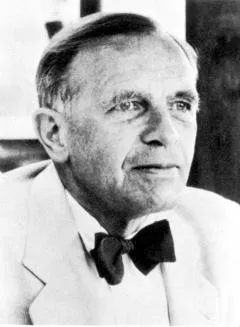
Wilhelm Ropke
Human Design Chart
Biography
Serving in the Germany army during World War I, he was shocked by the sheer brutality of war, and it had a profound effect on his life. A drive to understand the causes and crisis of World War I led Röpke to pursue the study of economics and sociology. He studied economics at the University of Marburg, receiving the Dr.rer.pol in 1921 and the Habilitation in 1922. The following year he married Eva Finke, and they raised three children. His first academic position was at Jena in 1924. Two years later, at the Vienna Convention of the German Association for Sociology, he met Ludwig von Mises. Röpke moved to Graz in 1928, and became a full professor at his alma mater in Marburg in 1929.
His uncompromising opposition to fascism earned him the honor of being one of the first professors to be forced out of his job. Röpke left Marburg for Frankfurt, and in early 1933, soon after giving a public address highly critical of the Nazis, he and his family left his homeland. Röpke then accepted an offer to become professor of economics at the University of Istanbul.
Röpke taught at Istanbul from 1933 to 1937, when he accepted a position at the Institute of International Studies in Geneva, Switzerland. There he joined Ludwig von Mises, who had been a part of the Institute's faculty since 1934. Although Mises left Geneva for the United States in 1940 following the beginning of World War II, Röpke chose to stay, and remained at the Institute until his death. To restore the broadest possible understanding of freedom, Röpke, along with Mises and F.A.
The Human Design of Wilhelm Ropke: Generator 2/4
Generator 2/4 — Design at a Glance
Wilhelm Ropke's design laid a tendency towards great endurance and inner strength. As a Generator, he had plenty of sacral energy that made him extremely strong like a workhorse – provided this power was used for tasks he actually enjoyed. His life force did not release through self-initiated action but only as a reaction to impulses from the environment. The strategy involved waiting for signals and then acting when his inner center responded with a clear "yes."
This mechanism protected him from two specific dangers: first, burnout from activities without intrinsic motivation, second, frustration if he was prevented from pursuing his heart's project even though he still had plenty of energy. If Wilhelm Ropke reacted rather than initiated and acted from the gut, this approach rewarded him with a feeling of deep fulfillment. Conversely, living against this rhythm, such as through constant self-initiative, eventually led to persistent frustration and a lack of energy. His design therefore did not demand blind perseverance but instead selective responsiveness to effectively and satisfyingly utilize his immense endurance.
Sacral Authority
Wilhelm Ropke's design inclines towards intuitive and physical decision-making. As a Generator, he had sacral authority, which simplified his orientation process: strategy and inner guidance merged into one mechanism. This mechanics acted as an immediate response to external stimuli. Instead of planning or analyzing, his system reacted with an instant physical response – often felt as a surge of energy or loud signals like grunting.
The clear guidance required an open Emotional Center, meaning he didn't rely on mood swings but rather the stable energy of the Sacral Center. When his sacral motor kicked in, Wilhelm Ropke felt vital and alive. He then had an inexhaustible source of energy that allowed him to engage in activities with great enthusiasm. This work was done without compulsion or purposefulness; it was marked by joy and satisfaction.
Additionally, an activated Spleen Center acted as a supportive instance. Combined with the Sacral Center, this gave Wilhelm Ropke the ability to react particularly quickly and spontaneously. He had direct access to his instinctive perception and physical well-being. This combination allowed him to reliably be guided by these deep, bodily signals instead of falling into excessive contemplation. His life thus showed a constant process of responding to what energetically spoke to him.
The 2/4 Profile — Hermit / Opportunist
Wilhelm Ropke's design shows a tendency to oscillate between intense periods of seeking solitude and the desire for familiar community. As a person with Profile 2/4, he constantly fluctuated between two poles: the need of Line 2 to be alone in order to clarify inner processes, and the impulse of Line 4 to spend time with his closest connections. This configuration required clear communication of his boundaries—when he sought company and when he wanted to remain undisturbed. During his "Me-Time," Wilhelm Ropke immersed himself inwardly to find peace and clarity. Once this need for solitude was satisfied, he emerged from his "cave" again to maintain his network. Line 2 endowed him with the ability to recognize values and ideals for survival through intuition; this was not a moral question but an intuitive decision-making skill that required determination. Simultaneously, Line 4, connected with Gate 53, offered assurance during times of crisis. It understood the cycle of experiences and reflection as part of collective well-being. Wilhelm Ropke could thus reflect on and evaluate the knowledge of his network during solitary periods, from which he developed brilliant ideas. The tension between hermit and community member shaped his lifestyle: Only through the balance of isolated reflection and social engagement could he fully realize his potential.
Single Definition — Defined & Open Centers
Wilhelm Röpkes design points towards clear self-determination and vital endurance. His defined G Center gave him a firm identity and a sense of direction, allowing him to naturally guide others into new paths without forcing their consent. This inner security was supported by his also defined Heart Center, which provided the willpower to keep promises and use resources autonomously; he preferred following his own internal mechanisms rather than yielding to external expectations.
The foundation of his ability to act was his defined Sacral Center. As a Generator, Wilhelm Röpke had a constant source of energy that only felt satisfying when he waited for and responded to external stimuli instead of initiating action himself. This sacral power combined with his defined Spleen Center gave him sharp body awareness and intuitive judgments in the present moment. His instinct chose spontaneously what was healthy and correct, while his defined Root Center provided the necessary pressure to push these decisions forward into the material world and ensure survival security.
At the same time, his design revealed specific vulnerability zones. His open Head and Ajna Centers meant he lacked constant mental inspiration; he tended to engage with foreign questions or doubts rather than trust his inner authority. Additionally, his open Solar Plexus Center made him susceptible to absorbing and amplifying the emotions of his surroundings instead of experiencing them as his own. This often led him to avoid emotional confrontations to maintain stability. His open Throat Center was also evident: Wilhelm Röpke had to learn not to actively seek attention but wait for an invitation to speak, otherwise he easily fell into unpredictable communication patterns.
Channels for intuitive power, transformation and authentic presence.
Wilhelm Ropkes design points towards profound self-acceptance and intuitive survival. He used his inner strength to act independently without considering the needs of others. This attitude stemmed from Channel Exploration 34-10, connecting his Sacral Center with his G Center. Gate 34 provided the power to hold onto personal convictions while Gate 10 initiated behavior from the deepest self. This allowed him to love and honor himself, making him independent.
Parallel to this, the Channel of Perfect Form 57-10 worked. It linked the intuitive insight of his Spleen Center (Gate 57) with his self-behavior (Gate 10). This configuration gave Wilhelm Ropke a rare clarity to react spontaneously and appropriately to his environment. He acted free from future anxieties, guided by acute sensitivity to the quality of his surroundings. His behavior served the perfection of his own life and secured his physical well-being in the present moment.
Additionally, the Channel of Power 34-57 shaped his existence. It connected the generative life force of his Sacral Center (Gate 34) with the existential awareness of his Spleen (Gate 57). This strengthened his intuitive capacity to recognize dangers and react quickly. Wilhelm Ropke was designed to protect his life actively through this defensive intelligence and remain vital.
In business or interpersonal contexts, the Channel of Devotion 44-26 worked. It linked the vigilance of his Spleen (Gate 44) with the willpower of his Heart Center (Gate 26). This gave him an instinct for what others needed before they knew it and the ability to convey this convincingly. He used his instincts to serve the tribe or market and secure his own benefit in exchange.
The Channel of Transformation 54-32 drove him through ambition (Gate 54) and a desire for continuity (Gate 32). He sought recognition through performance to improve his position and secure the stability of his environment. His talents were seen as means to advance socially and ensure community stability.
Individual gates like Gate 51 (Willpower), Gate 53 (Pioneer Spirit), or Gate 1 (Creative Mutation) complemented this picture with impulses towards freedom, adaptation, and unique creativity.
Individual Circuitry — Circuit Signature
Wilhelm Ropkes design points toward a strengthened individuality and courageous self-confidence. As someone with simple definition, he had a coherent energetic flow connecting his Heart, Spleen, and Root Centers. This configuration marked him as someone who created resources in cooperation and was dependent on mutual support – typical for the Ego Circuit. Here, channels Devotion (26-44) and Transformation (32-54) worked, but the absence of a direct connection to his Sacral Center required pauses for regeneration since there was no constant life force present.
Parallel to this, Wilhelm Ropke's Identity and Sacral Centers were linked through Channel Exploration (10-34). This strengthened his self-worth and inner conviction ('I am who I am'), but the lack of a direct connection to his Throat Center often made it hard for him to verbalize firm opinions.
The Integration Circuit completed the picture with channels Perfect Form (10-57) and Power (34-57). It connected Identity, Spleen, and Sacral Centers, helping him draw power from reacting to life, guiding this through intuitive knowledge, and realizing it in the present moment. The stream of consciousness in his Spleen Center underscored the tribal nature of his perception. Overall, Wilhelm Ropke appeared as an individualistic character who drew strength from inner centering and cooperative resource creation but needed pauses and did not always easily articulate his deep convictions.
Right Angle Cross of Penetration 3
Wilhelm Ropke's design revealed a tendency towards deep, almost painful intuition. He was someone who understood connections not just intellectually but experienced them on a visceral level. This configuration corresponds to the right cross of Perforation 3. It describes a specific kind of perception: The ability to penetrate the essence of situations or people with cutting clarity.
For Wilhelm Ropke, this was no abstract gift but an ongoing inner reality. He did not just perceive the world superficially; he immediately sensed what was truly happening – often before it could be verbally articulated. This penetrating power also brought a certain harshness. What he recognized was unalterable and direct. There was little room for illusions or gentle euphemisms. His internal compass always pointed to the core of things, regardless of how unpleasant this might have been.
This mechanism shaped his way of judging and acting. He did not act on superficial impulses but from a deep certainty that felt like an unshakable fact. For him, it was crucial to live this inner truth, even if it appeared cold or detached from the outside. His strength lay in this absolute authenticity and the ability to penetrate through the noise of the surface to the real substance.
Saturn Return · Uranus Opposition · Chiron Return · 2nd Saturn Return — Life Cycles
Wilhelm Ropke showed himself as someone who faced life phases with profound structural breaks. His design carried a specific tension: The necessity to question old orders and embark on new, often radically different paths. This corresponds to the mechanism of an Uranus opposition, which in Human Design is understood as cycles of sudden change and liberation from established patterns. Such constellations shape an attitude that is not geared towards continuous continuity but towards breaking through boundaries when the old path no longer serves.
This impulse for radical reorientation became concretely effective in 1937. At the age of 38, Wilhelm Ropke changed his position from Istanbul to the Institute for International Studies in Geneva. This career change was not just a geographical move but an expression of the underlying design dynamics: The ability and at the same time the demand to break free from a structure felt as too narrow or wrong and choose a new, often intellectually demanding environment. The step to Geneva marked the point where this inner struggle between old path and new impulse found its external form. It was a moment of liberation when Wilhelm Ropke seized the chance to fundamentally change his professional orientation driven by the energy associated with such Uranus cycles – the drive for autonomy and an environment that meets one's often unconventional demands.
Generator · Sacral Authority — Synthesis
He was a Generator whose life was profoundly marked by sacral energy and the need to work on tasks that truly fulfilled him. The ability to experience joy and satisfaction through work formed a red thread visible in his engagement with activities he responded to with a surge of energy (sacral authority). This drive towards active creation combined with an inner orientation at the G Center – a firm sense of direction and self-worth. The Channel of Exploration (34/10) indicates that he reached deep understanding through refining his own behavior and brought these insights into the world.
At the same time, he lived a tension between the need for inner collection and connection to community (Profile 2/4). Line 2 demanded withdrawal to gain clarity while line 4 nourished the desire for exchange and social engagement. This led to an ongoing interplay between individual process and the need to resonate with others – a paradox that also manifested in his transition from a position in Istanbul to the Institute for International Studies (Uranus opposition), where he both researched and interacted.
5 Defined Channels
Incarnation Cross - Right Angle Cross of Penetration 3
Solar Return
The Solar Return shows the moment when the sun returns to its exact birth position - your personal solar year.
Life Cycles
Discover the life cycles with a detailed triple view (birth chart, cycle chart, composite).
Human Design Profile
- Type
- Generator
- Strategy
- To respond - wait for something to respond to
- Authority
- Sacral Authority
- Profile
- 2/4 - Hermit / Opportunist
- Definition
- Single Definition
- Incarnation Cross
- Right Angle Cross of Penetration 3
- Date of Birth
- 10.10.1899 01:00
- Place of Birth
- Schwarmstedt, GER
Frequently Asked Questions
What was Wilhelm Ropke's Human Design type?
Which Profile did Wilhelm Ropke have in Human Design?
What Authority guided Wilhelm Ropke in Human Design?
What incarnation cross did Wilhelm Ropke have?
When was Wilhelm Ropke born?
Discover your own Human Design
Are you also a Generator? Find out in a personal reading how to use your sacral energy correctly and discover deep satisfaction.
More Personalities
Back to overviewAaliyah

Alexia

Angèle

Anne-Marie

Arcángel

Arno