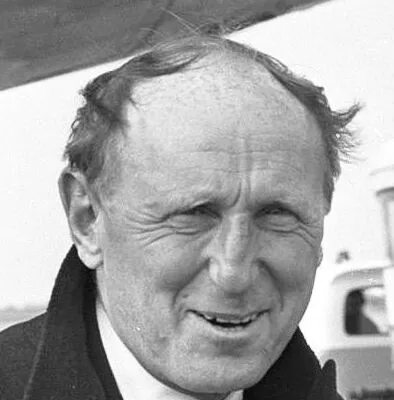
William Saliba
Human Design Chart
Biography
What does Projector 6/2 mean for William Saliba?
Projector 6/2 — Design at a Glance
William Saliba acts like a projector, focusing his attention on weaknesses in his environment much like a concentrated flashlight. His design allows him to immediately recognize where systems or people are not functioning optimally – he finds the flaw with precision that can be unsettling for others.
This intense, penetrating aura can be perceived as uncomfortable when used directly and without invitation. If William Saliba were to address these observations immediately, it would be like shining a bright light in someone's face; this could lead to resistance rather than acceptance.
Instead, his design suggests a more elegant approach: by radiating his own harmony and competence, he naturally attracts others who seek advice because they sense his clarity. The central strategy for William Saliba is to wait patiently for an honest invitation before sharing knowledge or taking action.
Since projectors do not have a constant internal energy source but rather work in phases, it's crucial to plan rest periods for regeneration to prevent burnout. If William Saliba accepts this dynamic and waits for the invitation, he will be rewarded with success. Ignoring this rhythm can lead to feelings of bitterness as an expression of his non-self. His influence thus unfolds not through constant pushing but through radiant presence and patient clarity.
Emotional Authority
William Salibas design inclines towards emotional wave motion where spontaneous impulses often appear deceptive. His inner authority lies in the defined Solar Plexus Center, meaning that his emotional center always takes precedence over all other defined centers regardless of additional chart features. He experiences a permanent fluctuation of feelings; the world appears either intensely positive or strongly negative depending on his current mood. However, an initial emotional impression is not the final truth but merely a snapshot. Quick decisions based on this immediate reaction can prove faulty as they are based on transient waves. Instead, his design shows the necessity for patience and time. By letting decisions sleep and reviewing them multiple times, he gains emotional distance. Intense feelings subside, leading to deeper clarity and calmness. This process of maturation was crucial for long-term realignments in his life. William Saliba had to endure and wait until the emotional wave subsided to recognize his true reality. This mechanism fundamentally shaped his decision-making profile: it wasn't about the first impression but what remained after emotions faded.
The 6/2 Profile — Role Model / Hermit
William Salibas design inclines towards intense experimentation and learning through trial and error in early years. Before the age of thirty, his 6-line acts as a 3-line, meaning that his focus was on gathering diverse personal experiences often accompanied by retreats following failures. This process of ignorance and inappropriate action, influenced by the Uranus influence of Gate 25, served not as an obstacle but as a necessary mutation in the here and now. The losses during this phase were integral to his path of self-discovery.
Around thirty years old, the full dynamics of line 6 activate. William Saliba then adopts a stance of deep distance and reflection, akin to retreating into a cave on a mountain to question past experiments. This phase is marked by healing and wise evaluation of one's own actions as well as those of others. Simultaneously, Line 58.2 fosters his readiness to provide energy for unconventional projects and challenge established authorities. From this combination emerges a figure who not only generates new ideas but also serves as an inspirational role model through their introspective depth, attracting others to learn from the ability to deeply observe oneself.
Single Definition — Defined & Open Centers
William Salibas' Human Design profile suggests a tendency towards profound emotional clarity that develops over time. His defined Solar Plexus Center acts as an inner authority: He was designed to wait out the ups and downs of his emotions before acting. Impulsive decisions made on emotional peaks or troughs would create chaos; true insight only emerged in the calm after experiencing the full cycle of emotion. This patience gives him a seductive aura, as others long for the warmth of his energy.
Parallel to this, he had a defined Spleen Center, which stands for spontaneous intuition and physical well-being. His survival instinct worked in the present moment; he needed to trust these sudden warning signals without being able to rationalize them. Combined with a defined Root Center, he possessed a constant inner pressure to move forward and master existential challenges. This stress was not an obstacle but rather the driving force for his material success and adaptability.
At the same time, his chart revealed areas of receptivity. His open Head Center tended to pick up mental questions from others, leading to confusion when he tried to find answers that weren't his own. The open Ajna Center made him susceptible to interpreting concepts and opinions from the environment as his own truth rather than flexibly using multiple perspectives.
His open G Center meant a lack of fixed identity or direction. He tended to reflect in relationships or environments to gain a sense of belonging, instead of having a stable inner orientation. The open Heart Center often led him to try proving his worth through promises or competitive thinking, despite lacking consistent willpower for it. Finally, his open Sacral Center made him prone to exhaustion as he amplified the generative energy of his environment and often didn't know when enough was enough, leading to overexertion if he did not listen to his inner authority.
Channels for synthesis and meaningful life struggle.
William Salibas' design suggests a tendency towards deep tribal loyalty and the struggle for individual integrity. He is someone who seeks belonging through emotional resonance but stubbornly follows his own path when it makes sense. This dynamic was particularly shaped by two channels.
The Synthesis Channel 19-49 connects the Root Center with the Solar Plexus Center. The Gate of Claims (19) pushes for closeness and tribal cohesion, while the Gate of Principles (49) rejects anything that does not meet the highest ideals. This channel is the emotional glue for family and community; it determines through frequencies of acceptance or rejection who belongs. For William Saliba, this meant a sensitive perception of his position in the collective: He wanted to be needed and find support, with loyalty and resource protection as central needs. His gift lay in being recognized as someone who finds balance between feasibility and fairness.
Parallel to this, the Life Struggle Channel 28-38, connecting the Root Center with the Spleen Center, was at work. The Gate of the Fighter (38) exerts pressure to defend individual integrity against external distractions, while the Gate of the Player (28) intuitively recognizes which struggles are worthwhile and rewarding. This channel drives finding meaning in life through resistance and stubborn determination. It wasn't about arbitrary conflict but rather asserting his own individuation process against the status quo. William Saliba used this adrenaline-fueled energy to stand up for what he perceived as right, helping him develop a deep sense of purpose and inspire others by example.
Additionally, Gates like 25 (Innocence/Mysticism) and 46 (Devotion/Body Love) promoted spiritual centering and full presence in the here and now, while 58/52 enabled pattern recognition and perfection through pressure and concentrated pause.
Individual Circuitry — Circuit Signature
William Salibas' design suggests a tendency towards pragmatic endurance paired with the ability to integrate complex information emotionally and rationally. He has a Simple Definition; his defined centers of Spleen, Root Center, and Solar Plexus form one continuous energetic flow. This means that his perception of danger or intuition (Spleen) is directly linked to his stress and survival instinct (Root), as well as his emotional waves (Solar Plexus) – everything flows into each other without internal dividing lines.
The Knowledge Circuit worked through him via the Life Struggle Channel between Spleen and Root Centers. This gave him an instinctive sharpness to distinguish what is essential from mere distraction, and this distinction was directly translated into tangible energy or pressure. It was less about abstract knowledge than survival knowledge of the moment: What must be done now?
Parallel to this, the Ego Circuit presented itself through the Synthesis Channel between Solar Plexus and Root Centers. Here his emotional waves connected with a drive to bring things together and understand them. Since this circuit belongs to tribal energy, it was about cooperation and resources, yet without direct connection to the Sacral Center he needed pauses to maintain this integrative power. The combination of instinctive clarity (Spleen-Root) and emotional synthesis (Solar Plexus-Root) created a profile that acted particularly clearly in crisis moments by directly translating intuition and emotion into action.
Left Angle Cross of Healing 1
William Salibas design shows a tendency towards a deep, often unspoken power that becomes effective in moments of silence or withdrawal. This configuration does not describe loud dominance but rather inner resilience proven by the ability to endure difficult situations and draw new strength from them.
The left cross of Healing 1 marks a process where personal challenges or crises serve as catalysts for fundamental inner transformation. It is not about superficial adaptation, but deep cleansing and renewal of oneself. William Saliba was marked by this mechanism with the ability to establish a viable foundation for the future out of seemingly destructive or burdensome experiences. The energy of this cross often works in secrecy; it builds resistance without having to be immediately visible.
This structure means that William Salibas path to strength did not follow a linear course but was characterized by phases of testing and inner processing. The 'healing' here is an active process of integrating experiences that challenge the ego, rather than a passive state. Through this configuration, William Saliba was enabled not only to recover after setbacks or intense trials but to move forward strengthened with clearer inner alignment. The power lies in accepting the process itself without needing to accelerate or control it.
Projector · Emotional Authority — Synthesis
A central red thread in this design is the ability to recognize deep patterns and shed light on darkness (Projector type, Channel Synthesis with Gate 19/49). This gift comes with emotional depth (defined Solar Plexus) that allows perceiving needs and values of others – though not in the present moment but through a process of time and maturation. Line 6 in the profile indicates that this person initially gathers many experiences to later act as a wise role model by reflecting from a distance and sharing insights. This combination of perceptiveness, emotional processing, and the pursuit of wisdom shapes a personality destined to support others on their path by uncovering hidden connections and conveying authentic principles.
The central paradox lies in the tension between the need for distance and the tendency towards deep emotional involvement. The defined Spiritual Center and emotional authority require time for clarity, while Channel Synthesis implies an immediate perception of needs and ideals. This discrepancy leads to an inner field of tension between the desire to withdraw for reflection (Line 6) and the urge to share one's insights with others – a dance between observing from afar and intervening in events to promote harmony and authenticity.
2 Defined Channels
Incarnation Cross - Left Angle Cross of Healing 1
Solar Return
The Solar Return shows the moment when the sun returns to its exact birth position - your personal solar year.
Life Cycles
Discover the life cycles with a detailed triple view (birth chart, cycle chart, composite).
Human Design Profile
- Type
- Projector
- Strategy
- Wait for the respectful invitation
- Authority
- Emotional Authority
- Profile
- 6/2 - Role Model / Hermit
- Definition
- Single Definition
- Incarnation Cross
- Left Angle Cross of Healing 1
- Date of Birth
- 24.03.2001 06:50
- Place of Birth
- Bondy, France
Frequently Asked Questions
Which Human Design Type is William Saliba?
Which profile does William Saliba have in Human Design?
What authority governs William Salibas decisions?
Which incarnation cross does William Saliba have?
When was William Saliba born?
Discover your own Human Design
Are you also a Projector? Find out in a personal reading how to unfold your leadership qualities and recognize the right invitations.
More Personalities
Back to overviewSissy Spacek

Alain-Fournier

Aldair

Anémone

Ann-Margret

Bourvil