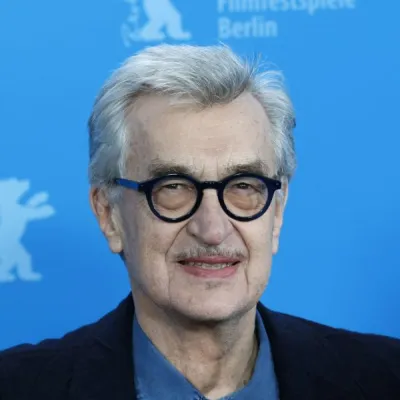
Wim Wenders
Human Design Chart
Biography
The Human Design of Wim Wenders: Generator 3/5
Generator 3/5 — Design at a Glance
Wim Wenders' design laid the groundwork for a fundamental approach: not to take the first step oneself but to wait until an impulse from outside set his inner self in motion - and then to respond with an endurance that was barely stoppable. This disposition corresponds to the Generator type, which has a large, evenly flowing work energy comparable to a working horse: immensely strong and enduring once the energy is directed towards a suitable task. This power sets itself free when it can react from the gut to a signal, not when it initiates a project on its own. For a design like this, two typical pitfalls are close at hand: putting energy into tasks over long periods that were actually not really enjoyable - which can also lead to exhaustion despite high productivity - or being pulled away from a heart project even though the energy for it was still there. If the reaction to a genuine gut-yes remained the basis of action, deep satisfaction set in, and little could stop this drive. When instead it repeatedly initiated itself rather than waiting, persistent frustration or a noticeable lack of energy threatened.
Emotional Authority
Wim Wenders' design showed a basic structure that did not make decisions in the moment but allowed them to ripen over a longer period. This is determined by the defined Solar Plexus Center as inner authority - emotional authority. It is based on the principle that whenever this center is defined, it automatically establishes inner authority regardless of what else is defined in the chart.
Practically, this meant for Wim Wenders a perception that was constantly under an emotional wave: an up and down of feelings through which everything appeared differently colored depending on mood - viewed with enthusiasm at one moment, rejected at another. A first impression in such a design is never already the full truth but only a snapshot within this wave. Quick decisions made from acute emotion carry the risk of later appearing hasty.
The corresponding consequence particularly affected long-term, far-reaching decisions: clarity set in only after sufficient time had passed for emotional intensity to subside - often over several nights. Only when initial fervor subsided and an emotional distance was established could the process be considered complete enough for a viable decision.
The 3/5 Profile — Martyr / Heretic
Wim Wenders' design laid a fundamental approach that moved between two poles: carefree experimentation on one's own and the need to pass on the knowledge gained later in a comprehensible way to others. This combination corresponds to Profile 3/5, the type of experimenter and rescuer: a person who initially does not believe anything simply but must test everything personally to gain their own practical knowledge - even through failures - which they then use to solve other people's problems.
Line 3 of this profile found its expression in Gate 4 Line 3: a tendency to discover connections and answers not through duty, but through trial and error - with Venus elevated seeking joy in art and formulas without always considering their practical application, and Pluto falling justifying the rejection of old connections as a path to new focuses.
Line 5 was visible in Gate 23 Line 5 - that point where individual insight impacts the collective. With Jupiter elevated, this part tended to present insights so others could practically use them, while Moon falling made it difficult to explain oneself clearly and remain independent of collective expectations.
Triple Split Definition — Defined & Open Centers
Wim Wenders' design revealed a fundamental tension between powerful driving energy and the necessity of not initiating it himself but waiting for it to come into play. His Sacral Center was defined - that power source which daily generates a fixed amount of energy and shows itself most reliably through an immediate, physical response to questions and offers from outside: a spontaneous yes or no indicating whether energy is available for something. Sustainable results emerged according to this pattern more out of reaction than self-initiation.
The Solar Plexus Center was also defined, keeping the inner authority bound by time: clarity did not set in at once but only after an emotional wave had run its course through highs and lows. Decisions made on the high or low point of this wave remained vulnerable to later regret; waiting brought calm and clarity. This was complemented by a defined Spleen Center, whose sense for what was appropriate in each moment announced itself immediately and without repetition.
These stabilized areas were contrasted with several open centers. The Head Center was open: mental pressure, questions, and inspiration were taken up from outside and amplified, with the tendency to get lost in others' doubts rather than seek one's own clarity. Likewise, the G Center, responsible for identity and direction, without a firm inner compass tends to repeatedly ask where it belongs, deriving identity more from changing places and relationships. The Heart Center remained open as well: instead of acting out of consistent willpower, there arose a tendency here to constantly prove one's worth, perhaps through commitments that are hard to keep.
Channel 59-6: Mating — Channels & Gates
Wim Wenders' design showed a tendency towards close, almost immediate proximity to other people, coupled with an inner drive to question and improve patterns, as well as a self-willed, often ahead-of-the-curve thought world that is only understood over time.
The first imprint appears in the Channel of Partnership 59-6, connecting the Sacral Center with the Solar Plexus Center: Gate of Sexuality (59) easily opens others' aura, while Gate of Friction (6) provides an emotional wave of attraction and repulsion. This combination describes a drive towards merging whose timing is determined by the wave - only waiting, not the first impulse, shows whether proximity actually leads to something sustainable.
The Channel of Judgment 58-18 connects the Root Center with the Spleen Center via Gate of Vitality (58) and Gate of Correcting (18): an insatiable energy that always wants 'better and more,' tempered by a sense for what doesn't fit or needs correcting. This configuration shapes a critical, perfectionist attitude towards existing conditions - healthy especially when correction is asked for rather than imposed.
In the Channel of Structuring 43-23, Ajna Center meets Throat Center: Gate of Insight (43) delivers sudden, individual breakthroughs, while Gate of Assimilation (23) processes and formulates them. This connection describes an independent, often ahead-of-the-curve thought process that depends on the right timing for communication to be accepted rather than rejected.
Additionally, two more themes emerged with Gate 4 (Formulating Logical Solutions for the Future) and Gate 49 (Principles and Overturning, especially within Family and Community), rounding out this basic orientation.
Tribal Circuitry — Circuit Signature
Wim Wenders was someone whose driving forces lay in three independent, non-interconnected areas rather than coming together in a continuous energy flow - what is known as a Triple Definition. These three power fields worked alongside each other at him, each for itself, without feeding into one another.
The first field connected the Consciousness Center with the Expression Center via a channel called 'Structuring': individual recognition found form that could be expressed there - more in spurts and moments than in a steady flow, often with creative, occasionally melancholic coloring. This field belonged to a larger pattern about going one's own way and bringing new insight.
Apart from this was a second field between the instinctive perception center and the drive center: a channel called 'Judgment' connected instinctive sensing with the impulse to act accordingly. This field aimed at clear, unsentimental clarity - without involvement of the Emotional Center - serving to share rational insights for improvement.
A third, also separate field linked the Life Force Center with the Emotional Center via a channel explicitly for pairing: an ageless, instinctive bonding energy carried by the emotional wave and marked by touch and smell senses - small in scope but influential across the entire chart.
These three fields ran parallel at Wenders without touching.
Right Angle Cross of Explanation 3
Wim Wenders revealed himself as someone who delved into connections and had the knack of presenting them in a way that others could understand - from his own orientation, not on behalf of or under the influence of foreign interests. This fundamental attitude stems from his Inkarnation Cross, which is named 'The Right Cross of Explanation 3'. The first part of the name, 'right cross', marks in Human Design mechanics the personal rather than the transpersonal orientation of a life theme: shaping one's own life from one's own center, independent of how involved others are. The second part of the name, 'of explanation', names the thematic content of this cross variant - an orientation revolving around making things understandable and preparing connections in such a way that they become comprehensible to others. In summary, this cross outlines for Wim Wenders a life task that remains personally anchored and revolves around explaining and making accessible insights.
Saturn Return · Uranus Opposition · Chiron Return · 2nd Saturn Return — Life Cycles
Wim Wenders' professional development followed a pattern of recurring condensation points where previous groundwork coalesced into visible results. In 1971, at the age of 26, he founded the Filmverlag der Autoren - his first Saturn Return, that cycle in which years of preparatory work typically condenses into a sustainable structure and responsibility is taken.
Fourteen years later, in 1985 at the age of 40, he received the British Academy Film Award for Best Direction for 'Paris, Texas' - a turning point set by the Uranus Opposition: a break with the familiar, suddenly making previously established skills visible to others.
In 1993, at the age of 48, he won the Grand Prix du Jury for 'Far Away So Close!' - in his Chiron Return, the cycle in which, if one lives by strategy and authority, the personal life task embedded in the design increasingly unfolds and the meaning of life becomes experiential: a bloom, not an injury.
In 2003, at the age of 58, he was among the founding members of the German Film Academy - his second Saturn Return, where earlier groundwork again takes institutional form.
Generator · Emotional Authority — Synthesis
In Wim Wenders' design runs a fundamental thread through several levels: Nothing counts until it has been experienced personally. As a Generator, he is designed to respond to impulses from life rather than initiate them, and draws constant strength from this response. His Profile reinforces this: Line 3 makes him suspicious of mere theory and leads him to try everything himself, including detours and failures, before Line 5 turns that experience into practical knowledge for others. Emotional authority adds the time dimension: Clarity emerges only when the emotional wave has subsided, never in the first moment. Reacting, experimenting, and waiting run as one fundamental impulse through type, profile, and authority.
At the same time, his design features two forms of knowledge that contradict each other and according to circuit structure are not directly connected because they belong to different, separate definition groups. The defined Spleen Center knows only the single, non-repeating moment: Its alarm is immediately valid and must be followed without delay. In contrast, the defined Solar Plexus Center explicitly states that there is no truth in the present - certainty sets in only over several waves with patience. So he carries an instance that trusts the moment and one that fundamentally mistrusts it, without both merging into a common logic - two separate running inner systems of truth.
3 Defined Channels
Incarnation Cross - Right Angle Cross of Explanation 3
Solar Return
The Solar Return shows the moment when the sun returns to its exact birth position - your personal solar year.
Life Cycles
Discover the life cycles with a detailed triple view (birth chart, cycle chart, composite).
Human Design Profile
- Type
- Generator
- Strategy
- To respond - wait for something to respond to
- Authority
- Emotional Authority
- Profile
- 3/5 - Martyr / Heretic
- Definition
- Triple Split
- Incarnation Cross
- Right Angle Cross of Explanation 3
- Date of Birth
- 14.08.1945 08:15
- Place of Birth
- Düsseldorf, Germany
Frequently Asked Questions
What is the Human Design type of Wim Wenders?
What Profile does Wim Wenders have?
What authority does Wim Wenders have?
What incarnation cross does Wim Wenders have?
When was Wim Wenders born?
Discover your own Human Design
Are you also a Generator? Find out in a personal reading how to use your sacral energy correctly and discover deep satisfaction.
More Personalities
Back to overviewSissy Spacek
Aaliyah

Alexia

Anémone
Angèle

Ann-Margret