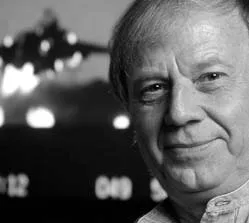
Wolfgang Petersen
Human Design Chart
Biography
Wolfgang Petersen married twice. He died of pancreatic cancer on 12 August 2022 at the age of 81 at his home in Brentwood, Los Angeles, USA.
Wolfgang Petersen as a Generator 1/3 in Human Design
Generator 1/3 — Design at a Glance
Wolfgang Petersen revealed himself as someone who possessed immense and enduring strength – comparable to a workhorse that could unleash its power once it found the right task. His design identified him as a Generator, a type whose energy source lies in the sacral center. This energy wasn't released through sheer will or initiative but reacted to impulses from the outside world. Therefore, his motto was: Not initiate, but react.
When a signal came from life and his inner self responded with a clear 'yes', he could respond with consistent action. In these moments, his energy was inexhaustible and no one could stop him. This led to a deep sense of fulfillment and satisfaction. Conversely, two specific risks loomed: If he did things that didn't bring him internal joy, he wasted this valuable power and tended towards exhaustion. Equally frustrating was being prevented from working on his heart project when his energy still wanted to keep going. Living against the principle of reacting to inner signals and constantly trying to initiate led to persistent frustration and a noticeable lack of energy. His path to effectiveness lay in reacting instinctively to life.
Sacral Authority
Wolfgang Petersen revealed himself as someone whose decision-making relied on direct physical resonance. His design inclined him towards receiving answers from his gut rather than seeking them in the head. As a Generator, his strategy was also his inner authority: sacral authority. This mechanism simplified the process of deciding significantly, as it didn't require complex deliberation but instead based itself on an immediate reaction to external stimuli.
A prerequisite for this clear guidance was his open emotional center, ensuring that no emotional clouding distorted the sacral response. The authority manifested in concrete physical signals: a surge of energy, an inner voice, or vocal expressions like grunting or humming. When these reactions occurred, he felt vital and energized. This energy was inexhaustible and allowed him to immerse himself enthusiastically in activities without needing a specific purpose in the background. Joy in doing stood at the forefront.
Additionally, his activated spleen center acted as a supportive instance. It lent his sacral reaction particular speed and spontaneity. Through this connection, he had an immediate access to his instinctive well-being. This enabled him to make decisions swiftly and reliably guide himself from this deep physical perception, which directly and authentically shaped his actions.
The 1/3 Profile — Investigator / Martyr
Wolfgang Petersen revealed himself as someone who didn't just collect knowledge theoretically but validated it through direct practice and trial-and-error. His design as a Researcher/Experimentor (Profile 1/3) established a fundamental stance: life was an ongoing process of learning and testing. Line 1 drove him to deeply explore resistances and crises to overcome uncertainty; without this confrontation with the crisis, progress remained impossible. Simultaneously, Line 3 challenged him to test ideas through trial and error. Often, a tension field emerged here: the inclination towards detailed planning (Line 1) could generate fear of implementation due to the feeling that one didn't know enough yet. Yet, the energy of Line 3 required precisely this practical application to recognize which ideas were viable and which fleeting.
This configuration meant his judgment on things or activities rested on a double-check: theoretical analysis and practical experience. When he made a decision or evaluated something as good, he had previously thought it through in his head and tested it thoroughly in reality. Lines 1 and 3 together created a mechanism where self-earned insights formed the foundation. He learned from failures, adapted, and reconnected ideas, with the willingness to make mistakes essential for arriving at the correct solution. His path was marked by the necessity of overcoming resistance to change to find true insights through concrete experience.
Split Definition — Defined & Open Centers
Wolfgang Petersen's Human Design profile inclined him towards consistent, enduring work driven by a clear inner direction. As a Generator, he had a defined Sacral Center, providing him with a reliable source of energy; his strategy was to respond to life’s offers rather than initiate actions himself to avoid frustration. His defined G-Center gave him a stable identity and the sense of correct direction in life, while his defined Ajna and Throat Centers allowed him to articulate conceptual thoughts clearly and persistently into words or actions. This combination created a person who not only thought but also verbally or actively manifested what they understood.
At the same time, his design was marked by several open centers, making him susceptible to external conditioning. His open Head Center meant he lacked an enduring source of mental inspiration and could easily be distracted by foreign questions or doubts; he tended to question whether he had found the right answer rather than trusting his inner authority. His open Heart Center lacked consistent ego-driven willpower; he was not designed to make promises or prove his worth through competition, making him vulnerable to self-doubt when failing. Additionally, his open Solar Plexus absorbed the emotions of his environment, causing him to be pulled between emotional waves of others without recognizing them as their own. His open Spleen Center led to risky spontaneous decisions; he learned to observe fears rather than succumb to them to avoid unhealthy dependencies on people with defined spleens. Finally, his open Root Center took on external stress, making him vulnerable to overburdening during high-stress phases if he did not pause to release the foreign pressure.
Channels for resource management and accepting logic.
Wolfgang Petersen's design inclined him towards innovative directions through access to material resources. This dynamic was primarily influenced by Channel 14-2. This channel connects Gate of Power Competence (14) in the Sacral Center with Gate of Higher Knowledge (2) in the G-Center, giving him the ability not only to understand mutation and novelty as an idea but also to transform them into concrete material reality through available means. Petersen was less a planning architect than someone who responded to his inner pulse. Through this reaction, he could give others or projects a reinforcing new direction simply by trusting and letting flow his generative energy.
Parallel to this, Accepting 17-62 shaped his cognitive structure. This channel links Gate of Opinions (17) in the Ajna Center with Gate of Details (62) in the Throat Center. Here it was about continuous logical organization of information. Petersen perceived visual patterns and translated them into precise language to name and evaluate them. Anything he could not integrate into his mental system, he did not understand; everything else was structured through words. This created a constant pressure to communicate analyses and understanding of details as soon as the opportunity arose.
Additionally, individual Gates like Gate 36 (Crisis as Cyclical Motion) and Gate 11 (Visual Remembrance for Situation Assessment) influenced him. They promoted an attitude of observation before action and utilized crises as impulses for development. Gate 46 emphasized the necessity of full commitment in the here and now, while Gate 25 brought mystical innocence and individuation. These configurations together created a person who paved new paths through logical detail work and rhythmic reaction to inner impulses.
Individual Circuitry — Circuit Signature
Wolfgang Petersen's design inclined him towards a pulsating, rhythmic expression style. His Knowledge Circuit connected the Identity and Sacral Centers directly via Channel 'The Beat'. This connection generated an internal energy that manifested as an acoustic pulse or rhythm – a force for creating new individual paths through mutations and creativity. Since he had a Shared Definition, these energetic centers did not exist as a single continuous flow throughout the entire chart.
Parallel to this, his Understanding Circuit connected the Ajna (Thought) and Throat Centers via Channel 'Accepting'. This allowed focused visual perception of strategies and structures. Here it was about rational analysis and sharing logical insights for future improvement, free from emotional coloring since the Solar Plexus Center was not involved.
These two systems – the emotional, creative rhythm on one hand and the sober, strategic clarity on the other – existed in Wolfgang Petersen as separate, parallel forces. They were energetically not fused but shaped his essence as two distinct areas: one for intuitive transformative identity and another for analytical future-oriented communication. The challenge lay in coexisting with these different formats without direct connection.
Right Angle Cross of Eden 1
Wolfgang Petersen carried the design of the right cross of Eden, a configuration often known as the 'Cross of Intuition' or 'Inspiration Cross'. This pattern in his Human Design chart established a specific inner architecture: it combined the power of manifestation with the depth of intuition and the impulse to create. For him, this meant that his creative impulses did not stem solely from logical planning but flowed directly from a deep, often unconscious knowledge. The mechanics of this cross show how intuitive insights can be translated into concrete actions without losing touch with reality. Wolfgang Petersen lived this dynamic by bringing his inner visions outward and shaping them into tangible forms. His energy was geared towards making the invisible visible, driven by clear, intuitive direction. This configuration supported him in structuring complex ideas and presenting them with a certain authority based on internal certainty. It was not arbitrary action but a process where intuition and action were closely intertwined. Through this design, he was able to effectively bring his unique perspectives into play while acting both creatively and decisively. The power of his design lay in the synthesis of deep feeling and clear doing.
Saturn Return · Uranus Opposition · Chiron Return · 2nd Saturn Return — Life Cycles
Wolfgang Petersen's design set a tendency towards structural consolidation followed by later explosive recognition. His first Saturn return around age 30 marked the phase where years of groundwork condensed into a solid foundation. This was evident concretely in 1971: at age 30, he worked for television – a step that established the necessary discipline and professional framework upon which his future work rested. The Saturn return functions here as a mechanism of crystallization; it anchors the individual in their role and creates external stability for future developments.
Later, the Uranus opposition became active, a cycle often associated with sudden breakthroughs or public visibility. This dynamic peaked in 1983: at age 42, Wolfgang Petersen was nominated twice for an Oscar for his film 'Das Boot'. This success was not a random bloom but the logical consequence of the foundation created by Saturn, now carried forward by Uranus's disruptive impulse into broader recognition. The nomination stood as confirmation of his work on an international level and demonstrated how inner maturity (Saturn) and external recognition (Uranus) could be linked in his design. Wolfgang Petersen lived this sequence: first structural anchoring in the media landscape, then explosive validation through the international film award.
Generator · Sacral Authority — Synthesis
Wolfgang Petersen was a Generator whose life was marked by a deep-rooted drive for productive activity. The sacral energy (Sacral Center) fueled an unrelenting work ethic, immersing himself in tasks that truly attracted him and gave him a boost of power (sacral authority). His profile as a researcher and experimenter (1/3) underscored this tendency; he constantly sought new insights through personal experimentation and thorough testing before making judgments. This combination of energy readiness and the need to learn and test led him to immerse himself in projects, finding his own unique direction (Knowledge Circuit).
Petersen lived an internal paradox: while his defined mind (Ajna Center) was geared towards consistent conceptual thinking, the energy of the Beat channel (14/2) seemed to continually drive him toward mutation and innovation. This led to a tension between the need for structure and the desire for newness. Documented events from cycles show that he acted in phases of intense work (1971) and creative success (1983) – an expression of this inner dynamic, driving him both to create and explore.
2 Defined Channels
Incarnation Cross - Right Angle Cross of Eden 1
Solar Return
The Solar Return shows the moment when the sun returns to its exact birth position - your personal solar year.
Life Cycles
Discover the life cycles with a detailed triple view (birth chart, cycle chart, composite).
Human Design Profile
- Type
- Generator
- Strategy
- To respond - wait for something to respond to
- Authority
- Sacral Authority
- Profile
- 1/3 - Investigator / Martyr
- Definition
- Split Definition
- Incarnation Cross
- Right Angle Cross of Eden 1
- Date of Birth
- 14.03.1941 07:10
- Place of Birth
- Emden, GER
Frequently Asked Questions
What is Wolfgang Petersen's Human Design type?
What Profile did Wolfgang Petersen have in Human Design?
What Authority did Wolfgang Petersen have?
What incarnation cross did Wolfgang Petersen have?
When was Wolfgang Petersen born?
Discover your own Human Design
Are you also a Generator? Find out in a personal reading how to use your sacral energy correctly and discover deep satisfaction.
More Personalities
Back to overviewAaliyah

Alexia

Angèle

Anne-Marie

Arcángel

Arno