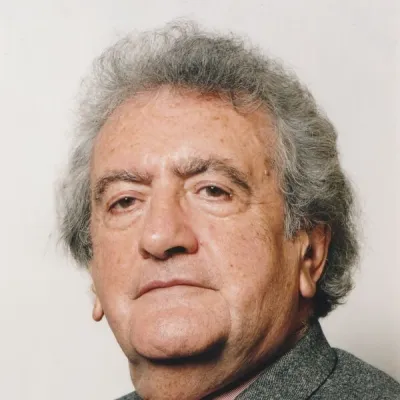
Yves Berger
Human Design Chart
Biography
What does Generator 3/5 mean for Yves Berger?
Generator 3/5 — Design at a Glance
Yves Berger's design points to a tendency towards great endurance, which is however set in motion by reacting to impulses. As a Generator, Yves Berger had plenty of sacral energy, comparable to that of a workhorse: extremely strong and durable as long as the energy was available for the task at hand. This strength did not manifest through spontaneous initiatives but rather through responding to signals from life. The motto was clear: initiate nothing, react instead.
When the sacral center sent an inner 'yes', Yves Berger would respond with action. This was the key to deep satisfaction and a sense of true fulfillment. If Yves Berger did not live by this principle – for instance, through constant initiating without internal confirmation – it led to frustration or energy loss. Two pitfalls characterized this pattern: either energy was invested in unwanted tasks, leading towards burnout, or Yves Berger was prevented from working on heart projects despite having full power available. Successfully utilizing this energy therefore required discipline in reacting. Only then could Yves Berger not be stopped and fully harness the materialization capability of his design without exhausting himself.
Sacral Authority
Yves Berger oriented his decisions around a clear inner authority: the sacral authority. As a Generator, this was not only his strategy but also his primary decision-making source, simplifying and directly informing the process of choice. His reactions to external stimuli were physically manifested as gut feelings or noticeable surges of energy. He learned to interpret these signals – often audibly as grunts, hums, or simple 'mmms' – marking moments when his sacral motor kicked in; he felt vital and energized, ready to tackle tasks with great enthusiasm and without rigid purposefulness.
This vitality was supported by an active spleen center. The connection between the sacral and spleen centers enabled Yves Berger quick, spontaneous reactions. He had immediate access to his instinctive perception and physical well-being. These instincts served as a reliable compass. With his emotional center open, the sacral authority could act without disruptive emotional delays. Thus, Yves Berger lived in resonance with what truly drove him, finding satisfaction in immersing himself in his tasks, guided by this physical confirmation and the resulting energy flow.
The 3/5 Profile — Martyr / Heretic
Yves Berger emerged as someone who acquired knowledge not from books but through personal, often painful experimentation – Line 3 of the experimenter. His design points to a tendency to initially be skeptical and test everything personally before deriving practical know-how for others. This dynamic shaped him as a problem solver: he learned from failures and then offered solutions, which gave him strong appeal in his environment. People around him often sought his advice due to their appreciation of his experiential wealth.
This role of helper or 'hero' (Line 5) came with risks. As Yves Berger experimented before others, public failures were possible and could be painful. His design also required flexibility; Line 5 demanded effortless adaptation to changes while Line 3 highlighted mutual dependence. He had to learn which relationships supported him and which did not, often through trial and error. The tension between the need for support and the drive towards autonomous adaptation characterized his path. He was dependent on rationally explaining his inner truth while involving others without being overwhelmed by their resistance or giving up on them. This created instability that he had to manage through constant realignment.
Single Definition — Defined & Open Centers
Yves Berger was a Generator whose design was based on triadic stability in the Sacral, Spleen, and Root Centers. This configuration gave him constant vital endurance and an inner drive to move forward that could only be unleashed through reaction. His primary energy source lay in his defined Sacral Center: He did not have initiative as a driving force but had to wait for external stimuli to release his full power. An immediate "yes" or "no" response from the gut was his compass; if he ignored this sacral voice in favor of mental deliberation, he would fall into frustration and exhaustion.
Parallel to this, his defined Spleen Center served as an intuitive protective instance in the here and now. It provided spontaneous, non-rational warning signals or confirmations for health and well-being that he had to follow without delay to stay protected. His also defined Root Center generated a steady, adrenalized pressure that kept him physically moving and helped him cope with stress as long as it was directed by his strategy.
In stark contrast, Head, Ajna, G, Heart, Solar Plexus, and Throat were open. These centers did not serve as their own authority but rather reflected the environment. Yves Berger tended to absorb mental inspiration or confusion from others (open Head and Ajna Centers) without owning it as his own truth. His open G Center meant he did not carry a fixed identity but mirrored relationships and environments; he found direction only through the right place and people. His open Heart Center made him vulnerable to feeling the need to prove his worth, often ending in cycles of promises and disappointment. Additionally, his open Solar Plexus absorbed foreign emotions, making him emotionally vulnerable if he did not identify them as non-self. His open Throat attracted attention only when he waited rather than actively sought it out.
Channels for ambition, intuitive power and personal maturation.
Yves Bergers Design sets a tendency towards persistent, ambitious effort driven by the desire for social recognition and service to the "tribe". This dynamic was shaped by Channel 54-32, which links ambition with the fear of collective failure. Yves Berger is shown as someone who improves his position through constant work, motivated by the need to involve the tribe in survival and secure its continuity.
This social ambition was bolstered by Channel 34-57, infused with individual vitality. This channel connects the intuitive insight of the Spleen Center (Gate 57) with the sacral life force (Gate 34). Yves Berger reacted spontaneously to dangers and protected his independence through auditory attention and physical alertness. This intuitive survival intelligence enabled quick, instinctive decisions that depended not on mental consciousness but on immediate environmental cues.
The Life Path followed Channel 42-53, structuring experiences in cycles from beginning to end. Yves Berger went through processes completely before reflecting and gaining wisdom. This cyclical approach combined the intense effort of transformation with individual survival power into a collective learning process.
Additionally, inner truth and logical precision served as a foundation. Gate 61 promoted the struggle for silence and individual knowledge, while Gates 62 and 9 enabled detailed work, pattern recognition, and perfection through patience. Provocation (Gate 39) served analysis and mutation, with genetic strategies of bonding (Gate 59) influencing interpersonal levels. Yves Berger lived this mechanism as a synthesis of social ascent, intuitive security, and cyclical maturation.
Individual Circuitry — Circuit Signature
Yves Bergers Design showed a tendency towards cyclical emotional processing, coupled with resource-based collaborations and a focus on the immediate present. As a simple definition, his energy was coherent: The Spleen, Root, and Sacral Centers formed one continuous energetic flow.
The Manifesting Circuit in Yves Berger connected through the Maturity Channel (Gates 42-53) the Sacral with the Root Center. This patterned a wave-like engagement with past experiences that only became clear after an emotional wave and could then be shared.
Parallel, the Personality Circuit operated through the Transformation Channel (Gates 32-54), which linked the Spleen to the Root Center without direct connection to his own Sacral Center. This configuration required periods of rest for regeneration in order to effectively manage resources for the community and enable mutual support.
The Integration Circuit completed the circle via the Power Channel (Gates 34-57) between the Sacral and Spleen Centers. Here, it was about survival in the present: power from reacting to life was guided by intuitive knowledge and immediately put into action. Together, these three circuits formed a system that united emotional depth, strategic cooperation, and spontaneous responsiveness, always dependent on the natural rhythms of his defined centers.
Right Angle Cross of Maya 4
Yves Bergers Design carried the signature of the right Maya Cross 4. This configuration shaped an attitude characterized by a deep connection to the life flow and intuitive adaptability. In Human-Design, this cross describes a specific energetic alignment where the individual relies less on conscious control or strategic planning and instead trusts that paths will open at the right moment. It is an energy that seeks harmony and balance by following natural rhythms rather than fighting against them.
For Yves Berger, this meant his inner orientation was strongly focused on sensing the "here and now." The mechanics of this cross support a way of existing that is less driven by external goals and more resonant with the environment. It's about recognizing the flow and aligning oneself within it, which often leads to a sense of ease when not trying to force the unexpected. This energetic structure promoted a lifestyle based on authenticity and trust in one’s intuition rather than rigid concepts or external expectations. Yves Berger lived this dynamic by adapting to circumstances and acting from that adaptation, allowing him to meet challenges with natural composure typical of this specific cross constellation.
Saturn Return · Uranus Opposition · Chiron Return · 2nd Saturn Return — Life Cycles
Yves Berger joined Grasset as literary director in 1960 at the age of 29. This position marked a phase of professional authority and institutional establishment for his design. The first Saturn return structurally functions as a maturation process: it demands taking responsibility and consolidating earlier impulses into stable structures.
In this cycle, years of groundwork often condensed into clear, socially impactful results. For Yves Berger, this meant not only a career change but also the establishment of a stable role within an established system. The Saturn return forces one to abandon frivolity and focus on what is essential – here concretely expressed through his leadership function at the publishing house.
This mechanism shows how inner maturity becomes visible externally. Taking over the director's position was an expression of a matured identity, now ready to take responsibility for others and content. It was a moment of structural affirmation in which Yves Berger solidified his place within his professional framework and laid the groundwork for future developments. The cycle concluded a phase of learning and opened up space for sustainable shaping power within his chosen sphere.
Generator · Sacral Authority — Synthesis
Yves Berger lived a life profoundly shaped by his deep reactions to immediate surroundings. His defined Sacral Center and sacral authority indicated that he possessed an enormous energy source, which only became free when he responded to impulses – not initiated them. This reactive capacity, enhanced by the Spleen Center, gave him a heightened body awareness and an instinctive access to perceiving his environment. The Channel of Transformation (54/32) suggests that he developed through experiences by taking on challenges and gaining wisdom from them, which he then passed on. This correlated with his engagement in promoting others, evident in his professional activities.
A central tension field in Yves Berger’s design lies between his ability for deep reactions and the openness of various centers, particularly the Throat, G, and Solar Plexus Centers. While the Sacral Center gave him a strong inner directive, the openness of other centers made him receptive to external influences and emotions. This dynamic led to an ongoing struggle with his own identity and the need for authenticity while simultaneously absorbing and reflecting others' energy – a paradox between inner strength and outer adaptability.
3 Defined Channels
Incarnation Cross - Right Angle Cross of Maya 4
Solar Return
The Solar Return shows the moment when the sun returns to its exact birth position - your personal solar year.
Life Cycles
Discover the life cycles with a detailed triple view (birth chart, cycle chart, composite).
Human Design Profile
- Type
- Generator
- Strategy
- To respond - wait for something to respond to
- Authority
- Sacral Authority
- Profile
- 3/5 - Martyr / Heretic
- Definition
- Single Definition
- Incarnation Cross
- Right Angle Cross of Maya 4
- Date of Birth
- 14.01.1931 10:30
- Place of Birth
- Avignon, France
Frequently Asked Questions
What was Yves Berger's Human Design type?
What Profile did Yves Berger have in Human Design?
What authority did Yves Berger possess?
What incarnation cross was assigned to Yves Berger?
Discover your own Human Design
Are you also a Generator? Find out in a personal reading how to use your sacral energy correctly and discover deep satisfaction.
More Personalities
Back to overviewAaliyah

Alain-Fournier

Alexia

Angèle

Angeli
Anne-Marie