Adolph Wagner
Human Design Chart
Biography
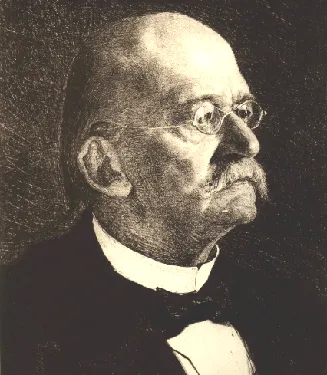
In 1870 Wagner was rector of the Friedrich Wilhelm (now Humboldt) University of Berlin, by that time not only the premier university in Germany but probably in the world. It was in Berlin, that Wagner unfolded his tenure as one of the intellectually and politically most influential economists of his time. A former student of his, Werner Sombart, was his successor at the economics chair of the University of Berlin.
Wagner died 8 November 1917, Berlin.
What does Manifesting Generator 1/3 mean for Adolph Wagner?
Manifesting Generator 1/3 — Design at a Glance
Adolph Wagner's design leans towards hybrid energy: He possesses the constant power of a Generator, yet also has the ability to skip steps and quickly draw results into his life. As an Manifesting Generator, he had to respond to inner impulses to use his energy efficiently, but unlike a pure Generator, he also had the potential to accelerate processes.
This configuration carries specific risks: His natural speed could lead to overlooking important intermediate steps, forcing him later to backtrack and fill in gaps – a source of potential frustration. Additionally, his system tended to take on multiple projects simultaneously as he responded to various life impulses. Without clear inner guidance, this complexity threatened to turn into overload.
However, when the strategy of reaction was adhered to and his inner authority aligned with the paths initiated, this dynamic transformed into deep satisfaction. Adolph Wagner then found fulfillment in his work by seeking variety and falling into a playful mode. For him, it was no obstacle to handle various tasks simultaneously; on the contrary, constant variation sustained his creative power and prevented boredom as long as he listened to the 'yes' of his sacral center.
Emotional Authority
Adolph Wagner's design leans towards emotional depth and wave-like decision-making processes. His inner authority is Emotional Authority, carried by the defined Emotional Center. In Human Design mechanics: Whenever this center is activated, it takes charge in decisions regardless of other defined centers in the chart.
This center operates under a constant emotional wave that manifests as an ongoing up-and-down of his feelings. Adolph Wagner saw the world colored through his current mood. At one moment he could be totally enthusiastic about something, only to view the same thing completely negatively the next. His feeling at any given moment was merely a snapshot, a first impression, not necessarily his truth.
Quick, spontaneous decisions based on emotion could therefore have very negative consequences. The more time he took to let a decision mature, the deeper and more comprehensive he could understand something. This required patience and multiple reconsiderations of decisions. He should take his time and ask himself several times. Over time, intense feelings subsided, he gained emotional distance, clarity and calmness set in. Then he was through the process. This mechanism primarily affected long-term decisions with significant influence on his life path.
The 1/3 Profile — Investigator / Martyr
Adolph Wagner's design leans towards a life path of active research and learning through direct experience. As someone with Profile 1/3, the Researcher and Experimenter, there was a need for him to practically test theoretical knowledge. The energy of Line 1 promotes openness to various opinions and discerning thought that looks ahead to future perspectives. This forms the foundation of his intellectual curiosity. However, this phase of planning could lead to feeling he didn't know enough yet to move into implementation.
Simultaneously, the energy of Line 3 from Gate 58 fosters independence and self-driven experiments. This component urges him to stimulate himself and learn from mistakes rather than rely on external support. For Adolph Wagner, this meant that he did not just accept insights but tested them against his heart and gut. His judgment thus rested on a combination of theoretical understanding and practical verification. When making decisions or evaluating objects, he had previously validated them both mentally and through trial and error. This process of self-testing was central to his development as only then could trustworthy results emerge. The tension between the desire for complete information and the urge to act characterized his characteristic path of learning.
Split Definition — Defined & Open Centers
Adolph Wagner's design inclined towards a tendency for persistent willpower and vital presence. As a Generator, he had a defined Sacral Center that provided him with an enormous source of energy; his strategy was to respond to external impulses rather than initiate them himself in order to use his energy correctly. This generative foundation was complemented by his defined Heart Center, which gave him the ability to keep promises and clearly articulate his own value. He tended to shape his life independently and seek recognition for his contributions.
His communication was characterized by a defined Throat Center, serving as a pivot point to translate messages from within into the world. This endowed his voice with a reliable yet limited quality. Simultaneously, his defined Solar Plexus Center indicated that he needed emotional clarity; he had to wait out the waves of his feelings before making decisions to prevent impulsive reactions. His defined Spleen Center provided spontaneous intuition and protection in the moment, while his defined Root Center supplied the necessary pressure for him to move forward in the material world and master existential challenges.
In contrast, his open Head Center revealed a vulnerability to mental stress and confusion. He tended to engage with questions that were not his own or seek inspiration to fill internal gaps. His open Ajna Center meant he absorbed concepts and opinions from the environment without identifying them as his own truth; he could easily give an impression of certainty beyond what he actually felt. Additionally, lacking a defined G Center left him without a firm identity and direction. He often adapted himself to those around him and sought the right place to feel at ease rather than following a rigid life plan. This openness allowed him to flexibly take on various roles but required patience until the correct environment was found.
Channels for clarity, focus, logic and value creation.
Adolph Wagner's design inclined towards extreme focus and logical correction. He was someone who gathered his energy through calm stillness, evaluating patterns precisely and perfecting them. This attitude stemmed from Channel of Concentration 52-9, connecting Root with Sacral Center: Gate 9 kept the focus on details while Gate 52 provided a passive pressure to keep distractions at bay. This was a formative energy that influenced his entire design, developing logically step by step and challenging or confirming forms.
Parallel to this, Channel of Judgment 58-18 between Root and Spleen Center also played a role. Gate 58 drove an insatiable desire for 'better and more', while Gate 18 intervened correctively to identify unhealthy patterns. Adolph Wagner thus had the ability to continuously review and optimize patterns based on his sense of what worked or didn't in the collective.
In the material realm, Channel of Money Line 21-45 shaped his approach. Connecting Heart with Throat Center, it linked Gate 21 (Hunter) with Gate 45 (Collector). This created a tension between the need for control to maintain his own rhythm and the authoritative voice taking responsibility for resources. Adolph Wagner had to learn how to assert his will in such a way that he could act independently without controlling others or exploiting himself.
Additionally, Channel of Recognition 30-41 propelled him forward. Gate 41 generated restlessness and fantasy about new experiences, intensified by the emotional wave from Gate 30 in Solar Plexus. This resulted in an intense desire for new impressions that required patience to gain clarity.
Influential Gates like 17 (Succession, logical teaching) and 26 (innovation within the clan) underscored his role as a bridge between old knowledge and new development. Gate 5 anchored him in his natural rhythm while Gate 60 promoted acceptance of limitations as a path to transcendence.
Collective Circuitry — Circuit Signature
Adolph Wagner's design inclined towards structured analysis and resource-oriented cooperation. As someone with split definition, his energetic system consisted of two clearly separated, parallel functioning blocks: a complex combination of Sacral, Root, and Spleen Center along with a separate connection between Heart and Throat Center. This separation meant that his cognitive processing did not directly merge with his willpower or communication; instead, these forces existed as independent, side-by-side poles.
In the first block, the Understanding Circuit worked through Channels of Concentration (9-52) and Judgment (18-58). In Adolph Wagner's case, this connected Sacral, Root, and Spleen Center into a closed loop. Here was displayed an ability for focused, logical strategy development free from emotional influence aiming at future-oriented improvements. Simultaneously, the Meaning Circuit flowed through Channel of Recognition (30-41), connecting Solar Plexus and Root Center. This generated a cyclical, emotional wave reflecting past experiences and translating them into collective learning. Both streams – cool ratio and emotional reflection – shared the Root Center but remained energetically separate.
The second block consisted of the Ego Circuit activated by the Money Line (45-21). This directly connected Heart with Throat Center. Here it was about material resources and mutual support in social structures. Since this area wasn't linked to the life force of Sacral Center, such cooperation required necessary rest periods for regeneration. Adolph Wagner thus moved between two independent spheres: on one hand internal processing of logic and emotion, on the other external negotiation of values and resources.
Right Angle Cross of Service 1
Adolph Wagner's design established a foundational disposition characterized by the principle of the 'Right Cross of Service.' This configuration marked him as someone who did not primarily orient his existence towards personal power or dominant assertion of his own goals, but rather placed his potential at the service of others. In Human Design, this pattern describes a specific energy distribution that anchors actions and decisions in contexts of support and care. Adolph Wagner thus appeared as a person whose inner logic aimed to apply resources, knowledge, or strength so they benefited their environment instead of merely securing their own status.
This orientation did not mean passive subordination but an active, strategic form of assistance. His energy flowed where there was need, finding its fulfillment in the effectiveness of giving. The 'Right Cross' often signaled a connection between his personal will and a higher order or communal task. Adolph Wagner lived this dynamic by knowing his individual strengths and strategically applying them where they could be perceived as service. It was a deeply rooted tendency to transcend ego boundaries to contribute to greater benefit. His life energy condensed in moments when he felt useful and contributed his skills to solving others' problems. This was not an external expectation but an inner, design-conditioned structure that constantly directed his actions towards support.
Saturn Return · Uranus Opposition · Chiron Return · 2nd Saturn Return — Life Cycles
Adolph Wagner's design established a tendency toward structural anchoring, manifesting in clear professional stations. In 1863, at the age of 28, he became a teacher of National Economics in Hamburg and an ordinary professor in Dorpat. This corresponded to his first Saturn Return: a time when years of groundwork often condense into a solid result. The mechanics of this cycle favor the establishment of authority and positioning within existing systems.
Later, tension arose when he resigned from the board of the Verein für Socialpolitik at age 37 in 1872. This coincided with his Uranus Opposition: an aspect that often leads to breaks or necessary separations when old structures hinder development. The dynamics of this transit pressed for release from collective bindings no longer aligned with his individual path.
The phase of fulfillment was marked in 1882, when Wagner at age 47 became a member of the Prussian House of Representatives. This signified his Chiron Return: a fulfillment cycle where one's incarnation cross unfolds and meaning becomes tangible. If he had lived according to his strategy, this period led to a flourishing of his purpose. Taking on political responsibility here corresponded to deepening his life task, not healing old wounds but realizing the prescribed plan.
Manifesting Generator · Emotional Authority — Synthesis
Adolph Wagner lived a path deeply marked by a profound drive for understanding and the desire to apply that knowledge. The combination of defined sacral energy, emotional authority, and the Profile of Researcher/Experimentor (1/3) points towards a personality characterized by constant learning and practical experimentation to gain insights. This energy was channeled through concentration (Gate 9/52), allowing him to focus intensively on details and bring formative energy into the world – a process amplified by the Right Cross of Service. Repeated career events, such as taking up a professorship or entering parliament, testify to a pattern where he implemented self-acquired insights in practice and actively advocated for changes.
Simultaneously, his design revealed an inner paradox: while he possessed fast, manifesting energy, his emotional authority required deep reflection and maturation of decisions. The Manifestor Generator tended to skip steps, contrasting with the necessity of thoroughly examining things before acting. This may have led to phases of rapid development followed by moments of pause and reassessment – as shown in the crisis during his resignation from the Verein für Socialpolitik – a tension field between impulsive action and emotional caution.
4 Defined Channels
Incarnation Cross - Right Angle Cross of Service 1
Solar Return
The Solar Return shows the moment when the sun returns to its exact birth position - your personal solar year.
Life Cycles
Discover the life cycles with a detailed triple view (birth chart, cycle chart, composite).
Human Design Profile
- Strategy
- To respond - wait for something to respond to
- Authority
- Emotional Authority
- Profile
- 1/3 - Investigator / Martyr
- Definition
- Split Definition
- Incarnation Cross
- Right Angle Cross of Service 1
- Date of Birth
- 25.03.1835 23:45
- Place of Birth
- Erlangen, GER
Frequently Asked Questions
What is Adolph Wagner's Human Design type?
What profile did Adolph Wagner have in Human Design?
Which authority guided Adolph Wagner?
What incarnation cross did Adolph Wagner have?
When was Adolph Wagner born?
Discover your own Human Design
Are you also a Manifesting Generator? Find out in a personal reading how to unfold your multi-talents and direct your energy wisely.
More Personalities
Back to overviewAldair

Alizée

Angeli

Arletty
Artus

Balthus