
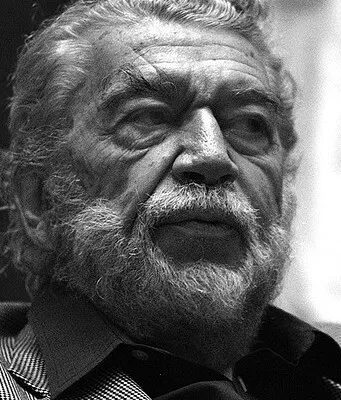
Alain Robbe-Grillet
Human Design Chart
Biography
Alain Robbe-Grillet was born of immigrant parents from the Jura. His father, Gaston Robbe-Grillet, was an engineer. His mother was Yvonne (Canu) Robbe-Grillet. He attended Lycées de Brest, Lycées Buffon and St. Louis. During World War II he was deported to work in a German tank factory. In 1944 he received a diploma from the National Institute of Agronomy. From 1945 to 1951 he studied at the National Statistical Institute in Paris and the Institute of Colonial Fruits and Crops. He has worked as an agronomist, and since 1955 as a literary consultant at a publishing house, Les Editions de Minuit, which publishes his own books as well as those of other several others associated with the "nouveau roman."
"The Erasers," 1953, was his first novel, featuring an ingenious transposition of the Oedipus myth into the framework of a modern detective story. Critical attention has focused particularly on Grillet’s obsessively detailed and mathematically precise description of things. "The Voyeur," 1955, illustrates his preoccupation with psychosadism. "Jealousy," 1957, is the most famous of this genre from the 1950s. "La Maison de Rendez-vous," 1965, used several contradictory points of view.
Robbe-Grillet’s emphasis on visuals led him to writing and directing films in the 1960s. The most famous dramatization of his literary theories is his screenplay for "Last Year at Mariebad," 1962.
The Human Design of Alain Robbe-Grillet: Generator 1/3
Generator 1/3 — Design at a Glance
Alain Robbe-Grillet revealed himself as someone who unleashed his immense endurance and strength not through spontaneous initiatives, but through reactive actions. As a Generator, he possessed a great sacral energy that made him extremely strong and enduring, like a workhorse, but only when he had energy for the task at hand. His design laid out a clear tendency: not to initiate, but to react to signals from life. This strategy was crucial, as the energy of his sacral center only became free when it could respond to impulses.
His greatest danger lay in doing things he actually had no desire to do, which wasted his energy and led to burnout. Equally frustrating was being prevented from working on his heart project, even though he still wanted to continue with full power. If Alain Robbe-Grillet lived in harmony with this principle – by waiting until his gut feeling sent a clear "yes" and then reacting to it through action – he was rewarded with deep satisfaction and a sense of fulfillment. If he ignored this inner resonance and instead tried to force things or initiate them, he inevitably encountered persistent frustration and a lack of energy. His success therefore depended on whether he followed this reactive approach and acted from the gut.
Sacral Authority
Alain Robbe-Grillet's decision-making process was characterized by a direct physical reaction. As a Generator, he had sacral authority that also served as his strategy, thereby simplifying the path to action. This inner guidance did not manifest in the Head Center but as an immediate gut feeling or a surge of energy triggered by external stimuli. His responses were expressed through bodily sounds like grunts, hums, or a simple "Mhm," which served as yes or no signals. A prerequisite for this clear guidance was his open Emotional Center, which did not introduce emotional delays into his quick physical responses.
As soon as his sacral motor engaged with a topic, he was endowed with vital energy and inexhaustible enthusiasm. He lived to immerse himself in activities driven by joy and satisfaction, without the need for strict purposefulness. Additionally, his activated Spleen Center acted as a supportive authority. This connection to the Sacral Center enabled him to react with lightning-fast spontaneity. He had immediate access to his physical well-being and instinctive perception, guiding him reliably. This configuration marked him as someone who did not make decisions through prolonged deliberation but through the direct, instinctive impulse of the body, which always took precedence over other defined centers.
The 1/3 Profile — Investigator / Martyr
Alain Robbe-Grillet emerged as a researcher and experimenter, whose judgment was based on a double test: theoretical knowledge and practical experience. His design as Profile 1/3 established a fundamental attitude that combined learning and testing solutions. Line 1, marked by the energy of Mars and the necessity of endurance, demanded time for growth and the accumulation of experiences. It taught him when to take on commitments and when to avoid conflicts to prevent avoidance. Parallel to this, Line 3, characterized by trial and error, emphasized adaptability, coupled with the disciplining of superficiality or hypocrisy, as hinted at in Gate 8. For Alain Robbe-Grillet, style was often more decisive than pure content. When he evaluated something as good, he had previously tested it both intellectually and through practical experience. This configuration meant that his trust in his own insights only developed after going through mistakes and adaptations. He was not a pure theorist who shied away from implementation, but someone who used the tension between the fear of insufficient knowledge and the urge to act to develop self-earned, tested truths. His path was one of constant validation through his own experience.
Single Definition — Defined & Open Centers
Alain Robbe-Grillet had a reliable inner identity and a clear life direction, shaped by his defined G Center. This gave him the ability to love himself and meet others without dependency, as well as a natural sense of his own mission. At the same time, as a Generator, he had an immense vital energy source in his defined Sacral Center. His design required him not to initiate but to react to life to correctly use this energy and avoid frustration.
In contrast, his Head Center was open. This made him vulnerable to mental pressure and the risk of losing himself in others' doubts or questions rather than trusting his inner authority. His Ajna Center was also open, which gave him a flexible mind but also the tendency to misinterpret concepts as his own truth or to feign uncertainty.
His open Throat Center meant that he could not communicate consistently. Instead, he naturally attracted attention when he waited, rather than actively seeking approval. His open Heart Center meant that he was not designed to prove willpower or make promises he could not keep, which protected him from the cycle of self-proofing.
Emotionally, he was a mirror for his environment through his open Solar Plexus Center. He absorbed foreign feelings, making him vulnerable to emotional conditioning but also giving him the wisdom not to personalize emotional waves. His open Spleen Center was vulnerable to survival fears and the temptation to cling to unhealthy situations to gain a false sense of security. Finally, his open Root Center took on external stress, which made him tend to amplify adrenalized pressure from the environment rather than generating it himself.
Channels for persistent discovery and self-determined yes.
Alain Robbe-Grillet showed a profound persistence that drove him to lose himself completely in experiences to grasp their true meaning only at the end. This attitude stemmed from the Discovery Channel 29-46. It connected his Sacral Center with his G Center, through which he developed an unshakable resolve based on a positive "Yes" (Gate 29) and a commitment to a goal (Gate 46). For him, it was essential to let go of all expectations of the process and trust that he was where he needed to be at the right time. Only through this clear commitment could he successfully complete his discoveries, which often required years of cycles, and communicate them to the collective.
His design also included a complex engagement with inner drives and social positioning. Gate 30 brought a desire for positive feelings, which were often recognized as an illusion, while the limitation had to be accepted as fate. This contrasted with Gate 8, which carried the impulse for individual contribution and the promotion of group goals. The skillful handling of power and the accumulation of influence, as described by Gate 14, provided a clear direction but required self-control.
On the level of personality, further forces were at work. Gate 25 promoted a spiritual stance of innocence and individuation, contributing to the centering of the individual. At the same time, Gate 59 pursued a genetic strategy of pairing and binding, overcoming barriers for relationships without considering personal preferences. Finally, Gate 7 projected patterns for the future and showed a need for leadership and hierarchy, which was tested through experiments. This configuration marked Alain Robbe-Grillet as someone who anchored his unique identity in the world through persistent experience and strategic binding.
Collective Circuitry — Circuit Signature
Alain Robbe-Grillet was characterized by an energetic connection between the Identity and Sacral Centers. This configuration formed the core of the Meaning-Finding Circuit, which focused less on cool logic or future-oriented planning and was deeply rooted in the processing of emotions and past experiences. Unlike rational analysis, this energy flowed in a wave-like and cyclical manner: feelings and insights went through a natural arc with a beginning, middle, and end, similar to the fluctuations of the Solar Plexus.
The central theme of this structure was reflecting on the past to derive a deeper meaning from events. The resulting, often hard-to-logically-explain emotional insights served not only for personal clarification but also had an inherent urgency to share them with the collective. Through this exchange, the possibility arose to learn collectively from history. In Alain Robbe-Grillet, this process flowed as a continuous stream between the center of identity and the Sacral Center, resulting in a direct, energetic coupling of self-image and life force. This simple definition ensured a clear, focused alignment of this specific emotional and meaning-making dynamic without mixing it with other, unrelated energetic areas.
Right Angle Cross of Contagion 3
Alain Robbe-Grillet's Human Design indicated a tendency towards a profound, often fateful entanglement with the unexpected. This configuration, the right cross of infection 3, describes more than mere curiosity; it denotes an existential commitment to what proves to be foreign, threatening, or uncontrollable. It was a dynamic that compelled him to immerse himself in situations where the boundaries between self and outer world blurred.
In Human Design, this cross marks a specific energetic quality: the readiness to expose oneself to the 'virus' of the new or foreign, not out of frivolity, but from a deep, often unconscious necessity to experience the essence of the Other. It is a pattern of radical immersion, where defense mechanisms fall away to absorb the raw truth of an experience. For Alain Robbe-Grillet, this meant that his life was marked by moments when he fully threw himself into foreign realities or intense, often confrontational encounters. This energy drove him to break through the surface of things, even when this was accompanied by a certain form of suffering or overextension. It was not passive experience, but an active, almost ritualistic approach to what challenged and changed him.
Saturn Return · Uranus Opposition · Chiron Return · 2nd Saturn Return — Life Cycles
Alain Robbe-Grillet's Human Design indicated a tendency towards structural condensation, which was evident in his early creative phases. In 1953, at the age of 31, he published his first novel, 'Les Radigeurs'. For his Human Design, this was a typical moment of the first Saturn return: a cycle in which years of inner preparation and identity formation often condense into a tangible, external result. The publication marked the transition from inner maturation to concrete manifestation in the public space.
Later, in 1962, at the age of 40, he published the screenplay for 'Last Year at Marienbad'. This fell into the phase of the Uranus opposition. In Human Design mechanics, this constellation marks a turning point where old structures are questioned and new, often radical forms of expression are sought. The shift from novel to screenplay illustrated this drive for renewal and a different kind of perception. Rather than clinging to established patterns, his design sought ways to break through the habitual reality and reorder it. Both events show how astrological cycles channeled his creative impulses: first to solidify his own voice, later to broaden his artistic horizon. His work thus followed not only personal interests but also the rhythmic demands of his energetic configuration.
Generator · Sacral Authority — Synthesis
Alain Robbe-Grillet lived a lifestyle deeply influenced by sacral energy and the spirit of research. As a Generator with sacral authority (Sacral Center), he responded to external stimuli with an inner surge of energy that immersed him in work when the task was right. The profile as a researcher and experimenter (Line 1/3) reinforced this drive to test things thoroughly and gain insights from personal experience. The defined G-Center gave him a clear direction and the ability to inspire others, while the Discovery Channel (Gate 29/46) led him to lose himself in experiences to explore their deeper meaning. This led to documented success (1953, 1962) when his work aligned with his inner reaction.
A central paradox in his design lay in the tension between the need for deep immersion in work (Sacral Center, Discovery) and the necessity to validate this through personal research (Profile 1/3). He was a Generator who did not simply act but had to confirm the rightness of a task through experimentation and verification. This combination of energetic response and intellectual rigor led to a work approach characterized by persistence and the quest for authentic insights, yet also the risk of getting lost in endless experiments if inner approval was lacking.
1 Defined Channel
Incarnation Cross - Right Angle Cross of Contagion 3
Solar Return
The Solar Return shows the moment when the sun returns to its exact birth position - your personal solar year.
Life Cycles
Discover the life cycles with a detailed triple view (birth chart, cycle chart, composite).
Human Design Profile
- Type
- Generator
- Strategy
- To respond - wait for something to respond to
- Authority
- Sacral Authority
- Profile
- 1/3 - Investigator / Martyr
- Definition
- Single Definition
- Incarnation Cross
- Right Angle Cross of Contagion 3
- Date of Birth
- 18.08.1922 07:30
- Place of Birth
- Brest, France
Frequently Asked Questions
What was Alain Robbe-Grillet's Human Design type?
What Profile did Alain Robbe-Grillet have in Human Design?
What Authority did Alain Robbe-Grillet have?
Which incarnation cross was active for Alain Robbe-Grillet?
When was Alain Robbe-Grillet born?
Discover your own Human Design
Are you also a Generator? Find out in a personal reading how to use your sacral energy correctly and discover deep satisfaction.
More Personalities
Back to overviewAaliyah

Alexia

Angèle

Anne-Marie

Arcángel

Arno
