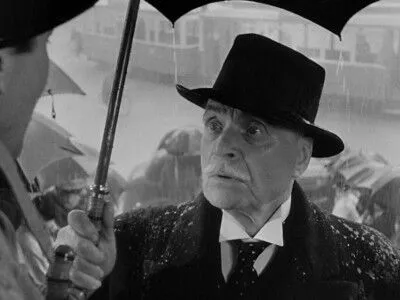
Albert Bassermann
Human Design Chart
Biography
Arriving in Hollywood in 1939, Bassermann was successful in character roles. His wife, Elsa, also appeared in some of his films, which included "The Moon and The Sixpence," 1942 and "Madame Curie," 1943.
Bassermann died in an air crash over the Atlantic on 15 May 1952.
Human Design Analysis: Albert Bassermann as Manifestor 4/6
Manifestor 4/6 — Design at a Glance
Albert Bassermann appeared as a pioneer and visionary whose design was destined to lead others into a new future. His Human Design type was the Manifestor. This type is often compared to an emperor in ancient Rome: he had the clear vision of a great empire but did not personally wage the necessary wars and battles himself. Instead, he sent his soldiers out to conquer foreign lands for him. Albert Bassermann showed this initiative without executing the details himself.
However, this superior perspective led to a central challenge: He was misunderstood and polarized people. Since his thinking often reached further than that of his surroundings, it was difficult for some to follow him. While some loved his great dreams and supported him, others felt rejection or even hatred precisely because of these huge visions. To find the right followers, Albert Bassermann had to inform others about his intentions in a timely and precise manner. This formed the strategy of informing.
If he followed this strategy and respected his authority, he was rewarded with a feeling of inner peace. If he lived against his design, however, he felt a persistent deep anger. His path consisted of minimizing resistance through clear communication and winning the right people for his visions instead of remaining in conflict.
Emotional Authority
Albert Bassermann's decision-making process was characterized by an imperative need for temporal distance; spontaneous reactions proved deceptive in his design. His inner authority lay in the defined Emotional Center, meaning he was subject to a constant wave of emotional highs and lows. The world appeared colored by his current mood: a moment of enthusiasm could suddenly turn into negative perception.
This emotional state was only a snapshot, not yet the truth. Quick decisions stemming directly from this immediate feeling carried high risk for negative consequences. The mechanics of his design required patience and conscious postponement of important questions. By allowing himself time and repeatedly putting off decisions, intense feelings gradually subsided.
Only when this emotional distance had been gained did Albert Bassermann experience clarity and calmness. This process of 'breathing through' was essential to recognize what truly mattered. Especially in long-term decisions that significantly influenced his life course, this strategy of delay was crucial. Only by waiting until emotional tranquility was achieved could he make well-founded judgments rather than becoming a victim of passing moods.
The 4/6 Profile — Opportunist / Role Model
Albert Bassermann's design laid out a clear structural development: In the first thirty years, an experimental approach to relationships and friendships dominated. This phase corresponded to Line 3, which acts as a probationary period before Saturn return. However, after this point, a fundamental inner conflict emerged. The desire for belonging to the network (Line 4) clashed with the need for distant meaning-finding on the mountain (Line 6). This contrast between heart and head often caused confusion, as emotional connection competed with rational distance.
In later years, he was expected to act as a wise role model. This role was characterized by cooperation, where the heart remained cautious to avoid false people and prevent injuries. Line 6 served here as a corrective instance that sought authenticity and only brought progress when absolutely necessary. Thus, Bassermann found himself in a tension field: He used his network for inspiration but had to learn to regulate his emotional openness at the same time. The initial confusion dissolved through the process of experience, so he later acted with inner certainty. His path was marked by the necessity to bridge the gap between the close circle of friends and the overarching question of life's meaning without sacrificing his own integrity.
Split Definition — Defined & Open Centers
Albert Bassermann revealed himself through constant mental tension and a firm will, which were modified by deep emotions and situational energy availability. His design was characterized by defined Head and Ajna Centers, creating a persistent inner pressure to ask questions and form concepts. This mental process ran continuously regardless of external circumstances, leading to a specific way of thinking that could inspire or put others under pressure.
At the same time, he had a defined Heart Center, which gave him constant willpower and ego strength. He was able to make promises and keep them, strengthening his self-esteem. His energy was further propelled by a defined Root Center, providing physical pressure to move forward in the world and process stress situationally. This power found expression through a defined Throat Center, serving as a focal point for communication and enabling him to clearly convey his thoughts and will decisions outward.
In contrast, his emotional authority lay in the Solar Plexus Center. Although this center was defined, it required patience: Albert Bassermann had to wait out the waves of his emotions to gain clarity rather than impulsively reacting to feelings. This emotional depth gave weight to his decisions but demanded time for maturation.
Notably were his open centers, making him vulnerable to external influences. His open G Center meant he lacked a fixed identity or life direction and instead adopted these from his environment and relationships. He tended to question who he truly was and adapt himself to those around him. Similarly, lacking a constant generative energy flow in the open Sacral Center, his vitality fluctuated and depended on others' energy, potentially leading to exhaustion if boundaries were ignored. His open Spleen Center left him without a stable intuitive basis for health and survival, making him prone to fears and often seeking security from others. This combination of strong inner pressure and lack of fixed identity significantly shaped his essence.
Channels for emotional depth, clarity and community.
Albert Bassermann's personality was marked by two dominant defined channels: Logic (63-4) and Abstraction (64-47). Both connected the Head Center with the Ajna Center, creating a permanently active, skeptical, and experience-based mind that filtered patterns, asked questions, and sought meaning. The Sun in Gate 64 was the energetic focal point: it drove the urge to see life through kaleidoscopic mental images, construct stories, and generate new perspectives or 'aha moments' from confusion. This energy was collectively oriented – the mind served to open up new viewpoints for others rather than solving personal problems.
The Logic channel 63-4 functioned as a filter for consistency. It connected the Gate of Doubt (63) with the Gate of Formulation (4). This doubting mind continuously filtered patterns to check their consistency. If a pattern was inconsistent, pressure intensified until it became a question demanding an answer. There was little room for unfounded belief; an answer was only valid if it led to a consistent, verifiable pattern.
Simultaneously, the Abstraction channel 64-47 acted as a Sun channel. It connected the Gate of Confusion (64) with the Gate of Understanding (47). This process transformed mental confusion and multiple possibilities into an inspiring story or clarity shared with the collective. The mind sifted every experience through mental images, sought an underlying narrative, and turned the mysterious into sense. While logic tested whether something worked, abstraction created a narrative framework that made this function understandable.
Additionally, other gates were at work: Gate 35 promoted change through interaction; Gate 5 established rhythms and habits for energy buildup. In his design, Gate 52 supported concentration on pattern correction in silence, while Gate 58 in the Root Center provided pressure for experimentation. Gate 43 enabled spontaneous insights that needed to be communicated, and Gate 21 directed material aspects through control and service to the community. This configuration created a mind constantly swinging between skeptical scrutiny and creative sense-making, always serving the collective.
Individual Circuitry — Circuit Signature
Albert Bassermann's design showed tension between future-oriented logic and emotional meaning-seeking, manifesting in two separate energetic blocks. Through his Split Definition, these forces existed parallel without direct exchange.
The Knowledge Circuit connected his Throat, Solar Plexus, and Root Centers. This allowed for the expression of unique identity through innovative flashes of insight and emotional waves. The pulsating, acoustic energy promoted mutations – deviations from the known – to transform new knowledge and initiate change.
Simultaneously, the Understanding and Meaning-Seeking Circuits worked as isolated segments in the Head and Ajna Centers. The Understanding Circuit brought focused, visual logic for the future, free of emotion. In contrast, the Meaning-Seeking Circuit cyclically processed past experiences through abstraction to draw collective meaning from them. This cool rationality stood in opposition to emotional reflection on the past.
Additionally, the Ego Circuit connected his Heart and Solar Plexus Centers. Here it was about community and balance between giving and taking. As there was no connection to the Sacral Center, rest periods were necessary to regenerate resources for the tribe. This structure shaped Albert Bassermann's path: individual transformation through emotional expression, flanked by separate rational and reflective processes as well as cooperative support.
Right Angle Cross of Consciousness 3
Albert Bassermann's design carried the structure of the right cross of consciousness 3. This configuration established a specific inner orientation that was less about external validation and more about a deep, often unconscious processing of experiences. The right cross of consciousness 3 describes a pattern where the individual learns through direct encounters with reality and finds their identity in these moments of immediate experience. It wasn't a strategy of planning or intellectual analysis beforehand but rather a process that only made sense in retrospect.
For Albert Bassermann, this meant his path through life was marked by constant adaptation to circumstances. He responded to what presented itself and integrated these impulses into his self-understanding. The mechanics of this cross show that true understanding for him did not come from abstract theories but from lived practice. Every situation became a lesson that could only be fully understood once it had been experienced. This structure fostered a kind of wisdom that was calm and grounding, as it was based on concrete, experienced facts rather than speculation. Albert Bassermann embodied this dynamic by facing challenges and constructing his own truth from them without seeking external validation. His inner programming knew through action.
Saturn Return · Uranus Opposition · Chiron Return · 2nd Saturn Return — Life Cycles
Albert Bassermann's design presented a dynamic where sudden breaks with traditions and the transformation of earlier uncertainties into authority were closely intertwined. Uranus cycles marked moments of radical reorientation or breaking out of established structures. This tendency towards disruptive change was evident in 1909, at age 42, when he worked at Max Reinhardt's theater – a step that broke the framework of traditional stage practice and embarked on a new artistic direction.
Parallel to this, the Chiron dynamic did not function as a process of wound healing in a medical sense but rather as an fulfillment cycle where his incarnation cross unfolded and meaning became experiential. Here, earlier vulnerability or uncertainty transformed into a source of teaching power and authority. This peak occurred in 1913 when Albert Bassermann, at age 46, made his film debut in 'The Other'. This event underscored the mechanics of Chiron return: previous experiences condensed into a meaningful expression of his life's purpose. Through this combination of Uranian disruption and Chironic unfolding, a profile emerged that both broke established forms and established deep, authentic authority in new media. The structure of his design indicated that such turning points were not random but necessary steps towards the realization of his inner architecture.
Manifestor · Emotional Authority — Synthesis
Albert Bassermann's life was marked by a profound internal drive to recognize patterns and transform them through expression. The connection between Head Center and Ajna Center (Knowledge Circuit) created an ongoing search for understanding, manifesting in the creative channel of openness (Gate 22/12) – a pulsating exchange of emotions and inspiration. This process was reinforced by his defined Heart Center, which gave him the willpower to articulate his inner insights and bring them into the world. The combination of mental sharpness, emotional depth, and the urge for self-realization formed a red thread through his work.
Yet this design harbored a central paradox: While he was destined as a Manifestor to be an Initiator and spread visions, his emotional authority required patience and waiting out the emotional wave. This tension between the impulsive trailblazer and the thoughtful reflector led to internal conflict expressed in the search for clarity and authenticity. The ability to recognize patterns (Gate 58/52) allowed deep insights but the necessity of filtering these insights through the emotional center demanded constant self-regulation and adaptation to the moment.
5 Defined Channels
Incarnation Cross - Right Angle Cross of Consciousness 3
Solar Return
The Solar Return shows the moment when the sun returns to its exact birth position - your personal solar year.
Life Cycles
Discover the life cycles with a detailed triple view (birth chart, cycle chart, composite).
Human Design Profile
- Type
- Manifestor
- Strategy
- To inform others before acting
- Authority
- Emotional Authority
- Profile
- 4/6 - Opportunist / Role Model
- Definition
- Split Definition
- Incarnation Cross
- Right Angle Cross of Consciousness 3
- Date of Birth
- 07.09.1867 22:30
- Place of Birth
- Mannheim, Germany
Frequently Asked Questions
What was Albert Bassermann's Human Design type?
What Profiles did Albert Bassermann have?
What Authority did Albert Bassermann have?
What incarnation cross did Albert Bassermann have?
When was Albert Bassermann born?
Discover your own Human Design
Are you also a Manifestor? Find out in a personal reading how to use your initiation power peacefully and dissolve resistance.
More Personalities
Back to overviewSissy Spacek

Anémone

Ann-Margret

Arletty

Arno

Artus