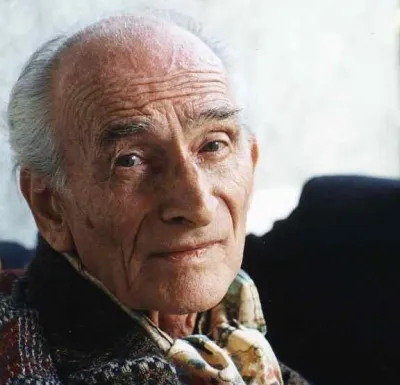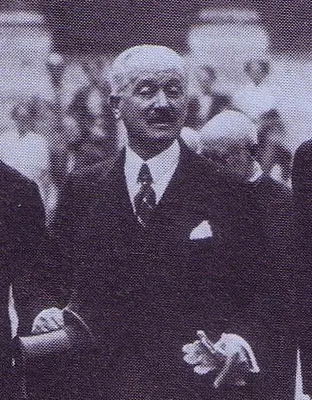
Albert Lebrun
Human Design Chart
Biography
He was re-elected in 1939.
He died of pneumonia on 6 March 1950, Paris.
The Human Design of Albert Lebrun: Manifesting Generator 1/3
Manifesting Generator 1/3 — Design at a Glance
Albert Lebrun showed himself to be someone with a hybrid energy structure: He possessed the constant power of a Generator combined with the ability to skip steps and achieve results quickly. This design required him not to act on his own initiative but to respond to inner impulses. Only when his Sacral Center gave a clear "yes" could he effectively use his fast implementation skills.
The challenge lay in his speed. Often, Albert Lebrun skipped necessary intermediate steps, which led to the need to return later and fill in gaps. This necessity for correction could cause frustration as it was contrary to his natural drive to move forward immediately. Additionally, his design tended to pursue multiple projects simultaneously, driven by various concurrent impulses.
However, when he learned to listen to his inner authority and regularly check whether ongoing work still brought him joy, this versatility transformed into a source of deep satisfaction. Instead of focusing on one thing alone, Albert Lebrun found his true creative power in the "play mode." Variety and parallel processing of different tasks were not distractions for him but essential to keep his energy flowing. His life task was to channel this speed through conscious reactions to impulses rather than letting it operate unchecked.
Emotional Authority
Albert Lebrun showed himself to be someone who never made decisions immediately but always let them ripen first. His inner authority was Emotional Authority carried by the defined Solar Plexus Center. In Human Design mechanics: When this center is filled, it always determines decision-making – regardless of which other centers are also defined. This priority rule is central to his design.
Albert Lebrun was subject to an emotional wave that showed in a constant up and down of his feelings. He saw the world always colored by his current mood. In one moment he was totally excited about something, in the next it seemed completely negative to him. His feeling in the moment, however, was only a snapshot, a first impression that did not necessarily represent his truth yet. Therefore, quick and spontaneous decisions based on emotion could have very negative consequences.
The more time Albert Lebrun took to let a decision ripen, the deeper and more comprehensive he could understand something. This required patience and repeatedly sleeping on a choice. He should take his time properly and ask himself multiple times. Over time, intense feelings subsided, he gained emotional distance, clarity, and calmness set in. Only then had he gone through the process. This was especially true for long-term decisions that could have a significant impact on his life course.
The 1/3 Profile — Investigator / Martyr
Albert Lebrun revealed himself as a researcher and experimenter whose judgment was based on double testing: theoretical knowledge and practical experience. His design with Profile 1/3 drove him to first study intensively (Line 1) before moving into implementation. Often, the fear of not knowing enough held back his step towards action; yet only through actual experimentation and learning from mistakes (Line 3) did he gain reliable insights. When Albert Lebrun considered something good, he had previously examined it both mentally and practically.
This dynamic was shaped by specific energetic patterns. His design's willpower depended crucially on rest periods; without recovery, his inner strength could not be built up, similar to how lunar phases dictate a natural rhythm. Simultaneously, he sought independence through self-generated talent (Gate 16). Timing was central here: He had to wait for the energy to come before bringing in skills. Since his design showed a need for validation from others, doubts could arise if this feedback was lacking or if there was insufficient motor drive despite having the talent present. His life path involved navigating the tension between the necessity of rest and the urge towards experimental action, acting only when inner energy and external validation aligned.
Split Definition — Defined & Open Centers
Albert Lebrun revealed himself as someone with a deeply rooted inner strength and a clear will. His design showed a tendency towards self-determined action, supported by defined Heart, Sacral, and Root Centers. The defined Heart Center endowed him with natural willpower; he worked independently and kept promises he made. This energy was used to control resources and take responsibility for family or community as long as he followed his inner guidance.
At the same time, Albert Lebrun had a strong motor in his defined Sacral Center. This generated constant vital energy that drove him to be active and find satisfaction through correct work. His strategy involved not initiating but responding to questions or situations to ensure his energy was actually available. The also defined Root Center provided the necessary pressure to move forward and master existential challenges, giving him stability in the material world.
In contrast, his design revealed specific vulnerabilities through open centers. The open G Center meant that Albert Lebrun did not have a fixed identity or direction. He tended to blend with his environment and often sought borrowed identity in relationships or places. A wrong place could quickly disorient or make him unhappy because he relied on external initiation to find the correct direction.
Furthermore, his Head and Ajna Centers were open. This led to him taking mental inspirations or concepts from the environment but not having a constant mental truth of his own. He could easily be overwhelmed by doubts or questions from others when trying to solve them with reason rather than trusting his emotional authority in the defined Solar Plexus Center. Here lay his key to clarity: he had to wait for the waves of his emotions before making decisions to avoid drifting impulsively into wrong directions.
Channels for community, intuition, logic and maturation.
Albert Lebrun showed a deep-rooted inclination towards perfecting patterns. His design combined intuitive depth with the need to sharpen skills through repeated experimentation. The Channel of Wavelength 48-16 linked Gate Depth (48), which seeks life-critical information, with Gate Skillfulness (16). This promoted gradual change towards precision and excellence. Talent did not arise spontaneously here but through engagement and identification with an activity.
This technical mastery was supported by the Channel of Judgment 58-18. It linked Gate Aliveness (58) with Gate Correction (18). This mechanism drove an insatiable urge to question and correct any patterns. Logic served to prove that it had the best answers. Albert Lebrun assessed whether what was perceived made life cheerful for the collective or needed correction. This process kept society in motion by ensuring everyone found satisfaction within a perfect pattern.
Additionally, the Channel of Community 37-40 shaped his social interactions. It linked Gate Friendship (37) with Gate Solitude (40). This created an emotional pressure wave that thematized the transition from survival struggle to liberation. Albert Lebrun sought recognition and his place in the whole while simultaneously needing breaks and rewards for his work. Good deals or connections did not arise spontaneously but through careful consideration over time.
The Channel of Maturation 42-53 complemented this with a cyclical experiential approach. It linked Gate Growth (42) with Gate Beginnings (53). Each new experience built on the previous one and had to be brought to a satisfying conclusion before a new cycle began. Reflecting on these cycles allowed wisdom for the collective to be gained.
Individual Gates like Gate 9 (Detail Work) or Gate 30 (Feeling Recognition) supported these structures through focus and emotional perception without overshadowing the dominant Channel mechanisms.
Collective Circuitry — Circuit Signature
Albert Lebrun's design showed a tendency towards rational structuring, paired with separate emotional processing. This 'split definition' meant two parallel, not directly connected power fields: One stream linked Throat, Spleen, and Root Centers; another Heart and Solar Plexus.
In the Understanding Circuit, Channels 16-48 (Wavelength) and 18-58 (Judgment) worked. They combined logical thinking with the ability to focus information further – an 'emotionless ratio' aimed at future improvements. Parallel to this, in the Meaning-Finding Circuit, Channel 42-53 (Maturation) flowed between Sacral and Root Centers. Here it was about cyclical emotional waves from the past that only became understandable when a feeling cycle completed.
A third, isolated aspect came from the Ego Circuit: The Channel 37-40 (Community) linked Heart and Solar Plexus Centers. This promoted a give-and-take relationship as well as mutual support within a group. Since no Sacral Center was involved, this dynamic required necessary rest pauses for resource generation. Albert Lebrun thus lived with the challenge of integrating cool strategy (Head-Spleen-Root-Throat) from emotional maturation (Sacral-Root) and interpersonal exchange (Heart-Solar Plexus) as separate, coexisting energies.
Right Angle Cross of Planning 3
Albert Lebrun's Human Design profile indicated the structure of the right cross of planning. This configuration established a fundamental orientation towards strategic approach and long-term goal setting. In Human Design, this pattern represents a specific combination of energies aimed at connecting inner clarity with outer implementation. Albert Lebrun was characterized by this alignment as someone who acted not impulsively but within the framework of an overarching plan. The mechanics of the right cross emphasize the importance of preparation and structured thinking before actual action. It is an architecture that promotes stability and perseverance, aligning various aspects of personality towards a common goal. For Albert Lebrun, this meant his life path was marked by a tendency to manage challenges in an organized manner. The energy of this configuration supports the ability to analyze complex situations and derive concrete strategies from them. This created within him an inner disposition of patience and calculated risk-taking. Rather than being driven by external circumstances, he sought ways to use his own resources purposefully. The right cross of planning often grants the capacity to think clearly under pressure and develop solutions that have lasting impact. Albert Lebrun lived this dynamic by focusing on long-term perspectives and integrating short-term fluctuations into a larger context. His way of being was thus defined by a deep connection with the concept of strategic planning, which helped him make consistent decisions throughout his life.
Saturn Return · Uranus Opposition · Chiron Return · 2nd Saturn Return — Life Cycles
Albert Lebrun moved through his life in rhythmic phases of consolidation and change. His design was marked by recurring cycles that combined structure with sudden breaks. The first Saturn return signified a time when he took on responsibility and solidified the foundations for his later work. This cycle challenged him to stabilize his identity and commit to long-term obligations.
Following this, the Uranus opposition arrived, a phase of upheaval that challenged established structures. Here, his potential for innovation and courage to leave traditional paths became evident as he followed new opportunities. The conflict between stability and change significantly shaped his development.
With the Chiron return, Albert Lebrun reached a peak period in fulfilling his life's purpose. In this fulfillment cycle, his inner purpose became tangible; he increasingly lived in alignment with his design, leading to a sense of meaning and completion. This was not a process of healing old wounds but rather the unfolding of what he was meant to be.
The second Saturn return marked the conclusion of this development. In this later phase, he reflected on his lived life, solidified his wisdom, and passed responsibility to the next generation. These cycles did not appear as isolated events but as a continuous movement from building up, changing, fulfilling, and concluding that structured Albert Lebrun's life path.
Manifesting Generator · Emotional Authority — Synthesis
Albert Lebrun lived a life marked by a deep drive for understanding and practical application. His design as an Manifesting Generator with emotional authority points to someone who could quickly set things in motion (through the connection of sacral energy and Throat Center), but also needed time for decision maturation. The Line 1/3 in his Profile reinforced this aspect: an unending cycle of gathering information, theoretical engagement, and subsequent experimentation to validate knowledge through experience. The defined Throat Channel (Wave) underscored his ability to articulate profound insights and communicate them outwardly – always filtered by the emotional wave.
Central to Albert Lebrun's essence was a paradox between speed and thoroughness. He had the potential for quick action and movement, yet his emotional authority required careful deliberation and maturation of decisions. The Profile as Researcher/Experimentor challenged him to constantly try new paths while the tendency towards rapid initiation (Manifesting Generator) carried the risk of skipping important steps or implementing incomplete insights into action. This tension between impulsiveness and prudence shaped his approach to challenges and opportunities.
4 Defined Channels
Incarnation Cross - Right Angle Cross of Planning 3
Solar Return
The Solar Return shows the moment when the sun returns to its exact birth position - your personal solar year.
Life Cycles
Discover the life cycles with a detailed triple view (birth chart, cycle chart, composite).
Human Design Profile
- Strategy
- To respond - wait for something to respond to
- Authority
- Emotional Authority
- Profile
- 1/3 - Investigator / Martyr
- Definition
- Split Definition
- Incarnation Cross
- Right Angle Cross of Planning 3
- Date of Birth
- 29.08.1871 14:30
- Place of Birth
- Mercy le Haut, France
Frequently Asked Questions
What was Albert Lebrun's Human Design type?
What profile did Albert Lebrun have in Human Design?
Which authority guided Albert Lebrun's decisions?
What incarnation cross did Albert Lebrun have?
When was Albert Lebrun born?
Discover your own Human Design
Are you also a Manifesting Generator? Find out in a personal reading how to unfold your multi-talents and direct your energy wisely.
More Personalities
Back to overviewAldair

Alizée

Angeli

Arletty

Artus

Balthus