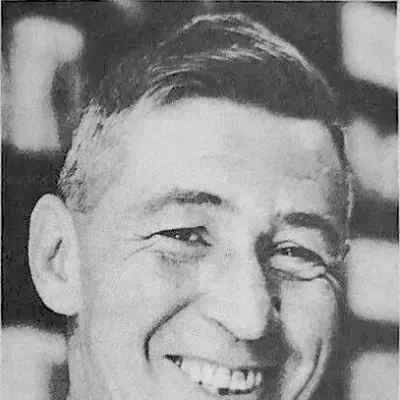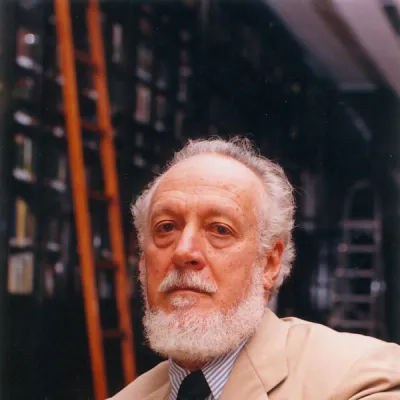
Alberto Da Costa e Silva
Human Design Chart
Biography
Da Costa e Silva was ambassador of Brazil in Portugal from 1986 to 1990, in Colombia from 1990 to 1993, and in Paraguay from 1993 to 1995.
Alberto da Costa e Silva died on 26 November 2023 at age 92 in Rio de Janeiro.
What does Projector 3/5 mean for Alberto Da Costa e Silva?
Projector 3/5 — Design at a Glance
Alberto Da Costa e Silva was someone who could immediately identify weaknesses in systems and relationships. His design as a Projector shaped a dense, focused aura, comparable to a bright flashlight. This quality allowed him to bring 'light into the dark' for others, showing paths where they were previously uncertain. However, this direct perception could also be perceived as unpleasant by the environment when he pointed out errors immediately, similar to a glaring light shining directly into someone's face.
The most effective way to express his essence was through his own harmonious behavior, attracting others to seek his advice naturally. His strategy was to wait for a genuine and respectful invitation before bringing in his knowledge. Since Projectors do not have a defined Sacral Center, they lack a constant, intrinsic source of life energy. Alberto Da Costa e Silva therefore went through phases of high activity followed by necessary rest periods to prevent burnout. If he lived according to this design, he was rewarded with success. If he neglected this structure and the necessity of the invitation, his non-self theme, bitterness, would eventually surface. His path was to make his specific perception effective through patient shining rather than intrusive correcting.
No Inner Authority
Alberto Da Costa e Silva lacked inner authority, a rare configuration that fundamentally shaped his decision-making. Instead of relying on a fixed, physical compass, he sought orientation through interaction with his environment. As a mental projector, he did not have defined centers below the throat. This openness allowed him to take in information and perspectives from many directions. Through dialogue with other people, dormant potentials in his open centers were activated, enabling him to view issues from multiple angles and express them diversely.
Evaluating these complex impressions required time and withdrawal. Alberto Da Costa e Silva needed moments of isolation to recognize the red thread and distinguish the essential from the trivial. This filtering and structuring of information formed his specific capital of success. A central key for him was the choice of an environment where he felt comfortable. Only in a trustworthy community with the right people could he maintain the necessary exchange that deepened his sense of the right thing. His strength did not lie in quick, intuitive reactions, but in the ability to develop a clear, individual intelligence through resonance and reflection.
The 3/5 Profile — Martyr / Heretic
Alberto Da Costa e Silva was someone who learned through his own experimentation and failure, later using this practical experience to solve the problems of others. His design as a 3/5 profile, the 'Explorer/Hero', set a tendency to not assume anything but to test everything himself. This line of the adventurer (3) required courage and acceptance of errors as a learning process. At the same time, he carried the burden of the hero line (5), which demanded practical solutions in times of crisis.
His experiential world was marked by individuality and trial and error. When he expressed his personality, it could evoke envy or suspicion in others, especially since his background was often shrouded in mystery. Nevertheless, he did not harm others; his goal was to convey knowledge from his own practice. Other people felt attracted to this charm and projected onto him the ability to create order in revolutionary times.
The line 5 expected him to distribute power and resources fairly and ensure smooth functioning of organizations without being distorted by personal interest. Alberto Da Costa e Silva had to learn that his role as a hero could be painful if he failed in public view. Yet it was precisely these public experiences that formed the treasure he offered others. He only explained his paths when it was absolutely necessary, as his knowledge primarily stemmed from action and not theory. His influence was based on the credibility that arose from lived, often hard practice.
Single Definition — Defined & Open Centers
Alberto Da Costa e Silva was characterized by a persistent, trustworthy mental function. His defined Ajna Center ensured that he created concepts and theories in the same way, regardless of external influences. This stable cognitive structure combined with his defined Throat Center allowed him to reliably express what he thought. His voice served as a pivot point to transform mental content into communication and action.
This firm framework of thinking and speaking contrasted sharply with the openness of his other centers. His open Head Center made him vulnerable to mental pressure and the temptation to solve other people's questions, not his own. He tended to question whether he was inspiring enough rather than simply observing mental pressure.
His open G Center meant that he did not have a fixed identity or direction. Instead, he reflected the environment and sought the right place to feel at home. The trap of not-self lay in questioning his identity or seeking love to know who he was.
The open Heart Center meant that he was not designed to prove willpower. He risked making promises to demonstrate his worth, which often ended in a cycle of self-disapproval if he could not keep them.
His open Sacral Center led him to run on borrowed energy from others, leading to exhaustion as he did not know when enough was enough. He tended to think he had to keep working to not miss out on something.
The open Solar Plexus Center absorbed emotions from the environment. He often avoided confrontation out of fear of angering others rather than speaking his own truth.
The open Spleen Center brought a fundamental survival fear with it. He might cling to unhealthy situations to feel secure and avoid spontaneous decisions not based on his inner authority.
Finally, his open Root Center absorbed stress from the environment. He might try to hurry to get rid of this pressure rather than recognizing that it was not his own.
Channels for spontaneous insight and insatiable curiosity.
Alberto Da Costa e Silva was someone who worked through storytelling and structuring new perspectives. His design tended to convey information not just as dry facts, but as living narratives that engaged the imagination of the listener. This happened through the Channel of Curiosity 11-56, which connected the Ajna Center with the Throat Center. This configuration drove him to constantly seek new stimuli and transform them into parables that taught or entertained. It was less about absolute truth and more about how an idea was felt; his stories served to help others evaluate new beliefs.
Parallel to this, the Channel of Structuring 23-43, which also linked mind and expression, showed his ability to translate spontaneous insights into clear, efficiency-boosting concepts. He could formulate complex connections in a way that changed people's thinking. However, this required patience, as his innovative knowledge was often only understood after repeated explanation and at the right time. Without this temporal distance, there was a risk of rejection.
Additionally, Gate 49 shaped his attitude towards principles and emotional waves. It brought a sensitive reaction to the environment, coupled with a readiness to sacrifice for the good of the tribe or family. His decisions were guided by this emotional wave, which helped him distinguish between sustenance and territory. Complementing this, Gate 4 enabled the formulation of logical processes and formulas. It helped him clarify suspicious patterns and develop strategies for future security, allowing him to act successfully despite uncertainties. This combination of narrative magic, structural clarity, and emotional principle fidelity shaped his way of sharing and protecting knowledge.
Individual Circuitry — Circuit Signature
Alberto Da Costa e Silva was characterized by a clear, direct expressive ability. His design connected the Ajna Center, the place of focus and idea, directly with the Throat Center, the place of realization and communication. This simple definition created a continuous energetic flow: thoughts and concepts could be translated into words or actions without internal blocks or delays.
This connection was marked by two specific circuits. The Knowledge Circuit worked through the Channel of Structuring. It promoted the ability to organize and communicate complex ideas. It was not about chaotic creativity, but about the precise formulation of one's understanding.
Parallel to this, the Meaning Circuit worked through the Channel of Curiosity. This aspect connected the need to look beneath the surface with direct articulation. Alberto Da Costa e Silva sought meaning in experiences and immediately expressed these insights. As both circuits used the same centers – Ajna and Throat – they reinforced each other. The structuring from the Knowledge Circuit gave the curious search for meaning a clear form.
The result was a person who carried their inner processes transparently outward. There was no separation between what was thought and what was said. This direct line allowed him to effectively convey his perspective based on a clear inner structure and a deep interest in the essence of things. The energy flowed cyclically and in waves, but always with the goal of articulating what was understood.
Right Angle Cross of Explanation 2
Alberto Da Costa e Silva carried the right cross of Statement 2, a configuration that marked a profound, often unconscious search for the meaning of his own existence. This design element set an internal tension: the drive to understand the hidden mechanisms of the world and to bring this understanding into a clear, tangible form. It was not about superficial knowledge, but rather a need to grasp the essence of things and explain them in a way that was understandable and applicable to others.
This mechanism acted as a constant inner compass. Alberto Da Costa e Silva sought the truth behind appearances, driven by the desire to transform chaos into order. The energy of this cross promoted an attitude of clarifying analysis, reducing complex connections to their foundation. It was about bringing light to the dark and resolving confusion through precise definitions. This inclination towards structural clarity and the search for the underlying logic of things significantly shaped his way of viewing and interpreting the world. He was programmed not only to see what was there but to understand why it was there, and to pour this understanding into a form that stood the test of time.
Saturn Return · Uranus Opposition · Chiron Return · 2nd Saturn Return — Life Cycles
Alberto Da Costa e Silva's life path was marked by recurring cycles of recognition and validation. His design dynamics set a tendency to receive external validation for his work at certain age phases, manifesting in concrete awards.
In 1973, at the age of 42, during the Uranus opposition, he received the Grand Officer of the Order of Prince Henry. This cycle often marked a turning point where established structures were broken through and new roles or status changes became effective. The award signaled a formal confirmation of his position or contribution in a changing environment.
Later, in 1978 at the age of 47, the Chiron Return occurred. In this fulfillment cycle, often seen as the flowering period of one's purpose, Alberto Da Costa e Silva received the Luísa Cláudio de Sousa Prize. This period described a phase in which his incarnation purpose increasingly unfolded and made sense, provided he lived according to his strategy and authority. The award served as evidence of this inner alignment and the associated success.
The second Saturn Return followed in 1991 when he was 60 years old. Saturn cycles condense long-term groundwork into sustainable results and often demand a redefinition of one's responsibility. In this year, he received the Grand Cross of the Order of Prince Henry. This highest level of award underscored the cumulative effect of his life's work and the final consolidation of his standing and role in society. Each of these moments was no coincidence, but an expression of the underlying mechanical rhythms of his design.
Projector · No Inner Authority — Synthesis
Alberto Da Costa e Silva was a mental projector, defined by his Ajna Center (mental consciousness) and the Channel of Curiosity (Gate 11/56), to recognize patterns and disseminate knowledge. He continuously sought new perspectives, shared his insights, and inspired others through his experiences. This constant search and storytelling was not only a personal necessity but also a social obligation that was inherent to him. His profile as an experimenter/hero and rescuer (3/5) reinforced this drive to learn himself and then make this knowledge accessible to others.
A central paradox in his design lay in the combination of his lack of inner authority and strong mental definition. While he relied on external stimuli and exchanges with others to make decisions, he simultaneously possessed a consistent, specific mental center that created concepts and influenced others. This led to a tension between the need for resonance and the ability to develop and convey his own, firm convictions – a dynamic that manifested in recurring successes (awards) through the transformation and sharing of knowledge.
2 Defined Channels
Incarnation Cross - Right Angle Cross of Explanation 2
Solar Return
The Solar Return shows the moment when the sun returns to its exact birth position - your personal solar year.
Life Cycles
Discover the life cycles with a detailed triple view (birth chart, cycle chart, composite).
Human Design Profile
- Type
- Projector
- Strategy
- Wait for the respectful invitation
- Authority
- No inner authority - learn more
- Profile
- 3/5 - Martyr / Heretic
- Definition
- Single Definition
- Incarnation Cross
- Right Angle Cross of Explanation 2
- Date of Birth
- 12.05.1931 10:30
- Place of Birth
- São Paulo, Brazil
Frequently Asked Questions
What was Alberto Da Costa e Silva's Human Design type?
What Profile did Alberto Da Costa e Silva have?
What Authority guided Alberto Da Costa e Silva?
What incarnation cross did Alberto Da Costa e Silva carry?
When was Alberto Da Costa e Silva born?
Discover your own Human Design
Are you also a Projector? Find out in a personal reading how to unfold your leadership qualities and recognize the right invitations.
More Personalities
Back to overviewSissy Spacek

Alain-Fournier

Anémone

Ann-Margret

Bourvil
Hergé