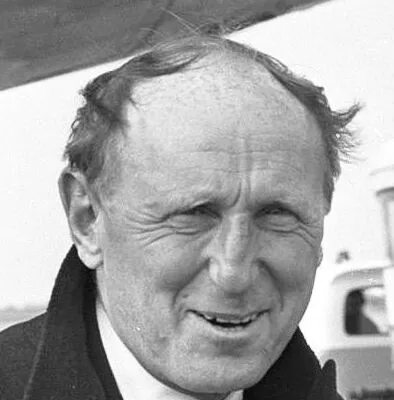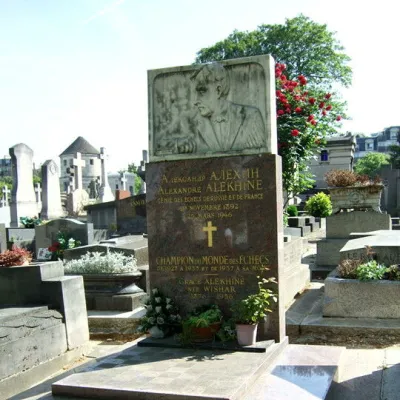
Alexander Alekhine
Human Design Chart
Biography
Alekhine died 3/24/1946 at Estoril, Portugal.
What does Projector 1/4 mean for Alexander Alekhine?
Projector 1/4 — Design at a Glance
Alexander Alekhine's design showed a tendency towards focused perception. He was someone who immediately recognized systemic errors in his environment – comparable to a bright flashlight that is directed specifically on dark spots. This dense aura could quickly be perceived as unpleasant by those around him when it pointed directly to the deficiencies of others.
The mechanics of the Projector type explain this dynamic: Instead of correcting prematurely and thereby provoking resistance, Alexander Alekhine's most effective strategy was waiting for a valuing invitation. By shining harmoniously on his own, he attracted others who would ask for advice voluntarily. This passive attractiveness replaced the need to aggressively shine his light in the faces of others.
Furthermore, his undefined Sacral Center decisively shaped his energy balance. Alexander Alekhine did not have a constant, intrinsic source of life energy. Instead, he experienced phases of high activity followed by mandatory rest periods for regeneration. Ignoring this rhythm led to the risk of burning out. Living according to this design rewarded him with success; deviating from it sooner or later brought up the theme of bitterness as a non-self issue. His path was to respect invitations and carefully dose his energy.
Emotional Authority
Alexander Alekhine's decision-making process was marked by an essential emotional detachment; immediate reactions proved unreliable. His inner authority lay in the defined Solar Plexus Center, meaning he was subject to constant emotional waves. The world appeared colored through his current mood: enthusiastic about something one moment, deeply rejecting it the next. This up-and-down of feelings made the first impression a mere snapshot, not the final truth.
Quick, spontaneous decisions from this emotional heat could have negative consequences as they ignored the fleeting nature of moods. His authority mechanics required patience and time to gain clarity. Alexander Alekhine had to let decisions mature, often through consciously 'sleeping on' important questions. This process of pondering and pausing multiple times allowed intense feelings to subside. Only with emotional distance did calmness set in and the true reality of a situation became visible. This strategy was particularly essential for long-term, life-defining decisions as it ensured that actions were not based on transient whims but on well-considered, stable insight.
The 1/4 Profile — Investigator / Opportunist
Alexander Alekhine's design inclined towards intense, isolated research that could only fully unfold in the shelter of familiar circles. As a person with Profile 1/4 (Researcher / Networker), he combined the deep thirst for knowledge of Line 1 with the need for a close community from Line 4. This configuration created a specific dynamic: His knowledge did not mature in public space but required a protected environment with a deep trust base to ripen and be shared.
A central motive in his disposition was the fear of exposure. Given that Line 4 is strongly oriented towards emotional connection, presenting incomplete knowledge or standing as unknowledgeable before loved ones would have been associated with great emotional pain. This sensitivity acted as a filter: Only in an environment offering security and acceptance could he utilize his networking abilities to build authority through deep understanding.
The mechanics of his lines underscored this. The connection to themes like hierarchies and harmony (Gate 44) showed that clear structures and agreements were crucial for him to maintain stability in the collective. Simultaneously, Line 4 brought potential for withdrawal and reflection (Gate 33). Without these phases of regeneration and contemplation about the meaning of his work, there was a risk of burnout. His path therefore did not lead through constant public performance but through a cyclical process of deep immersion into the topic, withdrawal for condensation, and finally sharing with a selected, trusted group.
Single Definition — Defined & Open Centers
Alexander Alekhine's Design laid a foundation of constant inner willpower and emotional depth. His defined Heart Center gave him the capacity for autonomous decisions, resource control, and clear self-worth; he acted on his own promises and sought recognition for his contribution. Parallel to this, his defined Solar Plexus Center determined his emotional authority: truth revealed itself to him not in the moment but through waiting out the emotional wave. This configuration created a stable core energy that required patience to find clarity before taking action.
This firm inner core stood in stark contrast to the situational nature of his open centers. His open Head Center made him vulnerable to mental pressure and doubt; he tended to get entangled in other people's questions or seek inspiration to clear confusion, rather than trusting his inner authority. The open Ajna Center reflected this flexibility: his mind was open to concepts and opinions from the environment, yet he risked interpreting answers as his own truth or pretending to be unsure to be accepted.
Furthermore, his open centers Throat, G, Sacral, Spleen, and Root shaped his experience through conditioning. His open Throat Center left him under pressure to attract attention or dominate conversation, though spontaneous invitations to speak were more effective. His open G Center meant a lack of firm identity; he sought direction and love from the environment and reflected others' energy rather than asserting his own path. The open Sacral Center led to unstable energy; he absorbed the vitality of his surroundings, which tended towards overexertion as he lacked natural limits for his work capacity. Additionally, his open Spleen Center was marked by a fundamental survival fear; he sought safety in others and clung to things that were not good for him to feel secure. Finally, his open Root Center absorbed external stress; he reacted to environmental pressure with hyperactivity or exhaustion as this adrenalized impulse did not align with his own rhythm.
Channels for authentic community and liberating connection.
Alexander Alekhine revealed in his Human Design as someone who did not enter into relationships and communities spontaneously but waited for a direct personal resonance. His Human Design featured the Community Channel 37-40, connecting the Solar Plexus Center with the Heart Center. This configuration suggested that emotional clarity and willpower formed the basis of any connection. He was not interested in superficial contacts but rather building bridges where everyone had an honourable place – without hierarchy but with clear agreements.
The Community Channel 37-40 linked Gate of Friendship (37) with Gate of Solitude (40). This meant that a "good deal" or partnership could not be closed impulsively. Instead, it required time for the emotional wave to mature and both sides to recognize mutual benefit: "I do this for you if you do that for me." The right invitation never came impersonally but through some form of touch or direct contact over an extended period.
Alongside this central channel, other energies worked in his system. Gate 33 called for reflection and withdrawal to process experiences; without this calm, repetitions threatened. Gate 19 connected him with the need for security, resources, and a supportive community while touching on the mystical path within the group. Gate 44 brought awareness and the ability to transform through proper interaction, requiring willpower to enact these changes. Gate 24 stood for mental mutations and the search for inner stillness amidst new ideas.
On the personality level, Gate 30 marked the recognition of feelings and engagement with longing as well as illusions, while Gate 51 represented strong will without social bonds – either competitively or mystically oriented. Finally, Gate 6 provided the elemental motor for further development through friction and emotional waves. Together, these elements formed a Profile aimed at deepening, maturing connections and inner processing, far from impulsive decisions.
Tribal Circuitry — Circuit Signature
Alexander Alekhine was marked by a clear orientation towards cooperation and the building of shared resources. His design connected the Heart Center with the Solar Plexus Center, establishing a dynamic of mutual support. This connection created a system of reciprocal exchange: "Today I give to you, tomorrow you give to me." It was a traditional form of collaboration where emotional waves rhythmically guided interactions – similar to a ratchet that enables forward movement but also requires pauses.
Since his circuit did not connect to the Sacral Center, he lacked a constant source of life energy. This did not mean weakness, but rather required a different pace: Alexander Alekhine needed mandatory rest periods to regenerate his inner resources and become action-ready again. Without these recovery phases, the balance between giving and taking would have been disrupted. His focus was therefore on the sustainable nurturing of relationships and material foundations within his community, driven by the necessity to consciously conserve and strategically use energy.
Right Angle Cross of the Four Ways 3
Alexander Alekhine's Human Design profile included the configuration of the right cross of the four pathways 3. However, this structure was defined in the available data without specific content, as its description was missing. The right cross of the four pathways 3 is part of a group of patterns within Human Design often associated with intense life paths or spiritual missions. In Alekhine's case, the mechanical significance remained undefined and could not be further elaborated.
The absence of a concrete description meant that no specific character traits or behaviors could be derived from this particular cross configuration. It was a neutral position in his chart, marking its presence without carrying positive or negative implications. Without additional details about the involved Gates or Channels within this cross, interpretation remained limited to naming the structure.
This state highlights that not every aspect of a Human Design chart automatically carries a profound narrative significance for an individual's life. For Alexander Alekhine, this specific configuration did not play a recognizable role in analyzing his energy or strategy. The mechanics here remained in the background and did not shape his design through visible tendencies or challenges as would be the case with better-defined crosses. It was an empty field within an otherwise complex energetic map.
Saturn Return · Uranus Opposition · Chiron Return — Life Cycles
Alexander Alekhine's life was structured by clear cyclical turning points. His Human Design indicated that certain age phases brought particular challenges and opportunities, significantly shaping his destiny.
One such point occurred during his first Saturn Return. This cycle often marks the transition from youth to full responsibility where earlier efforts can lead to concrete results. For Alexander Alekhine, this phase crystallized in 1920 at the age of 28 when he won the first national championship of Soviet Russia. This success was no coincidence but aligned with the typical dynamics of this cycle, where inner maturity and external recognition converge.
Later, another mechanical configuration came into play: the Uranus Opposition. This phase often brings unexpected changes or breaks, particularly in personal relationships. For Alexander Alekhine, it manifested in 1934 when he was 42 years old and his third wife died. This event underscores the power of this astrological passage, which can cause profound shifts in interpersonal relations. Both cycles – the Saturn Return as a moment of confirmation and the Uranus Opposition as a phase of change – shaped Alexander Alekhine's life through concrete events that carried his inner development outward.
Projector · Emotional Authority — Synthesis
Alexander Alekhine lived a life marked by the ability to recognize patterns and apply them within complex systems. This was evident not only in his strategic brilliance but also in his approach to relationships and environments – a tendency amplified by the open nature of many of his Centers. He picked up subtle cues, adapted, and reflected others' energy, helping him form connections and attract resources (Channel 37-40). However, this adaptability went hand-in-hand with an inner search for identity and direction (open G Center), a constant need to position himself in the world and find his place within communities.
A central paradox lay in his ability to gain deep insights (1/4 Profile) alongside a lack of consistent internal authority. While he could identify others' mistakes and point out potential paths (Projector Type), he was also vulnerable to external influences and conditioning (open Centers). This led to phases of intense activity followed by the need for rest and reflection – an ongoing oscillation between engagement and withdrawal, reinforced by emotional authority and undefined Root Center.
1 Defined Channel
Incarnation Cross - Right Angle Cross of the Four Ways 3
Solar Return
The Solar Return shows the moment when the sun returns to its exact birth position - your personal solar year.
Life Cycles
Discover the life cycles with a detailed triple view (birth chart, cycle chart, composite).
Human Design Profile
- Type
- Projector
- Strategy
- Wait for the respectful invitation
- Authority
- Emotional Authority
- Profile
- 1/4 - Investigator / Opportunist
- Definition
- Single Definition
- Incarnation Cross
- Right Angle Cross of the Four Ways 3
- Date of Birth
- 31.10.1892 12:00
- Place of Birth
- Moscow, Russia
Frequently Asked Questions
What is Alexander Alekhine's Human Design type?
What profile did Alexander Alekhine have?
What authority did Alexander Alekhine have?
What incarnation cross did Alexander Alekhine have?
When was Alexander Alekhine born?
Discover your own Human Design
Are you also a Projector? Find out in a personal reading how to unfold your leadership qualities and recognize the right invitations.
More Personalities
Back to overviewSissy Spacek

Alain-Fournier

Aldair
Anémone

Ann-Margret

Bourvil