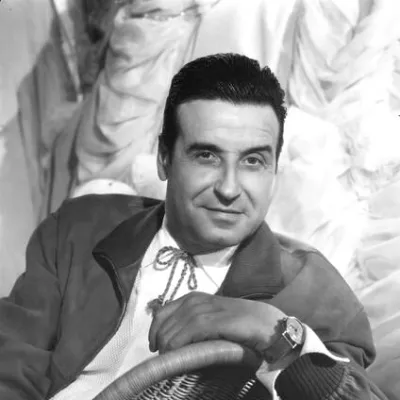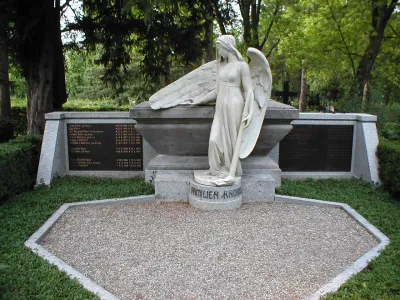
Alfred Knorr
Human Design Chart
Biography
Alfred Knorr took part in the Franco-Prussian War from 1870–1871 in the service of a medical corps. After the death of their father, the company founder, in 1875, Alfred and his brother Carl Heinrich Eduard Knorr (1843-1921) took over the company management.
They laid out experimental gardens to improve the soup ingredients and, with the construction of a mill in the southern district in 1884, laid the foundation stone for the company's long-standing premises (today at Knorrstrasse 1). The 1860s gave the company a tremendous upswing. In addition to soup preparations, it produced dried vegetables, canned military products and the well-known Knorr oatmeal. In 1885, packing stations were opened in Austria and Switzerland in order to avoid an increase in import duties in these countries. Knorr ready-made soups were not only offered as powder in bags, but from 1886 as bars, from 1889 in sausage form (the legendary Erbswurst pea sausage), in 1897 as tablets and in 1910 in the form of soup cubes.
Alfred Knorr married and had four children. He died on 28 May 1895 at the age of 48. His brother Carl Heinrich Eduard Knorr then took over sole management of the company.
Alfred Knorr — Projector with Profile 1/3
Projector 1/3 — Design at a Glance
Alfred Knorr revealed himself as someone who, with a focusing aura, directed a bright flashlight onto weaknesses in his environment. His design as a Projector shaped this ability to immediately recognize flaws in systems or relationships. However, this sharp vision, when expressed without restraint, could provoke resistance in others, similar to a glaring light shining directly into their faces.
The mechanics of his design suggested that Alfred Knorr could best unleash his impact by not actively imposing himself but by shining through his own harmony. As a Projector, he lacked a defined Sacral Center, meaning he did not possess constant, intrinsic life energy. Instead, he went through phases of high activity followed by necessary rest periods to avoid exhaustion. His design strategy involved waiting for an honest and appreciative invitation from others. Only then, when asked for advice, could he convey his insights in a way that was accepted without feeling preachy.
If Alfred Knorr lived by this strategy, he was rewarded with success. If he ignored it and acted out of his own drive without being asked, this led over time to his Non-Self theme: bitterness. His design demanded him to conserve his energy and only exercise his leadership function when the environment was ready to accept it.
Emotional Authority
Alfred Knorr's inner compass was marked by the defined Solar Plexus Center, making him an emotional authority. This configuration fundamentally determined his decision-making: he was subject to a wave-like dynamics of feelings that constantly changed his perception of the world. What appeared inspiring in one moment could be perceived negatively in the next. However, this emotional wave did not mean that the first impression was the final truth.
For Alfred Knorr, it was essential to take his time. Quick, spontaneous decisions made directly from a current mood often turned out to be problematic, as they were based on an unresolved snapshot. Instead, his design required patience and conscious waiting. By letting decisions mature overnight and questioning them multiple times, he gained emotional distance. Over time, intense feelings subsided, and a deep clarity and calmness set in. This process of maturation was particularly crucial for long-term life decisions, as it allowed him to transcend transient moods and reach his true inner truth. Emotional authority always took precedence over other defined centers in his design, regardless of further configurations.
The 1/3 Profile — Investigator / Martyr
Alfred Knorr's design inclined towards deep research and practical experimentation. As a person with Profile 1/3, he was naturally a researcher who combined learning (Line 1) with testing (Line 3). His life revolved around the process of trial and error. Often, the energy of Line 1 took control, leading him to fear implementation because he felt he did not know enough. This conflicted with Line 3, which urged him to try things out and learn from mistakes. Self-earned insights were his core theme. If he deemed something good, he had previously tested it both theoretically and practically.
Line 1 in Gate 9 emphasized precise detail work and attention. It required a balanced approach to problem-solving, often only resolvable after an intermediate step. By creating new forms, he could avoid frustrations. Certain patterns and habits were crucial for his concentration.
Line 3 in Gate 40 marked a lifelong process of humility through trial and error. Solitude was central to protect himself from negative influences. There were phases of withdrawal and collaboration, determined by his will process. This configuration promoted sensitivity for liberation without display. Arrogance could, however, prevent him from enjoying his rest periods and trap him in negative influences. His judgment was trustworthy, based on this intense inner and outer scrutiny.
Single Definition — Defined & Open Centers
Alfred Knorr was characterized by a defined Heart Center: he possessed a steady willpower and a clear sense of his own worth. This gave him the ability to keep promises and self-determinedly manage his resources. Simultaneously, his defined Solar Plexus Center acted as an inner authority. Here, patience was essential; he learned to wait for emotional waves to pass before clarity set in, rather than reacting impulsively to transient emotional surges. This combination of determination and emotional depth shaped his decision-making.
In contrast, his design revealed several areas of receptivity. His open Head Center meant that he did not have a constant mental focus. He tended to get entangled in doubts or questions that did not belong to him and sought inspiration to alleviate this pressure. Similarly, his open Ajna Center caused him to absorb concepts and opinions from the environment, leading him to hold ideas as his own truths or feel unsure when he did not have an immediate answer.
His open G Center allowed him to act without a fixed, unchanging identity. He sought direction and love through initiation by others and was dependent on the right place to feel comfortable. The open Sacral Center made him vulnerable to exhaustion, as he amplified foreign energy without generating his own. He had to learn to set boundaries and rest, rather than overexerting himself until collapse. Finally, his open Root Center absorbed external stress, leading to a feeling of hectic that he did not generate himself but took in from the environment.
Channels for authentic community and liberating connection.
Alfred Knorr was someone who bridged individual existence and collective cohesion. His design fostered an attitude that awaited personal invitation to find his place within a community. This happened through the Community Channel 37-40, connecting the Solar Plexus Center with the Heart Center. This configuration linked the emotional gift of affection (Gate 37) with the will to serve others (Gate 40). Alfred Knorr did not seek spontaneous agreements but carefully formulated contracts based on mutual benefit and respect. He understood that a good deal needed time to become viable for both sides and built connections where everyone had an honorable place.
Alongside this social architecture, further energies worked within him. Gate 9 in the Sacral Center gave him the ability to work with details and tame individual elements. This energy allowed him to focus purposefully and perfect patterns through repeated experiments, though the lack of energy input could lead to depression. Parallel to this, Gate 16 offered the possibility of reaching mastery through persistent experimentation and identification with skills, even if this process often primarily occurred on the verbal level.
In the material realm, Gate 21 shaped his actions. It stood for the control and direction of material things and overcoming obstacles through power. Alfred Knorr needed recognition and respect in the service of the community. Finally, Gate 30 reflected his emotional depth, representing the recognition of feelings and the control of inner fire. Here, the desire for positive feelings propelled the process of experiences while he learned to see through illusions of freedom and accept limitations as fate. This combination formed a person who navigated between practical mastery, social connection, and emotional reflection.
Tribal Circuitry — Circuit Signature
Alfred Knorr's design laid a tendency towards cooperative action and the building of shared resources. His energy flowed directly between Heart and Solar Plexus Centers, signifying a close connection between willpower and emotional processing. This connection formed the core of the active Ego Circuit in him.
Although the term 'Ego' suggests individuality, this circuit belonged to the Family Group and focused on cooperation. Alfred Knorr possessed the Community Channel (37-40), which promoted a balanced relationship of giving and taking. This created a foundation for mutual support and traditional, conservative values within a group. Since there was no connection to the Sacral Center, the constant life force was missing. Instead, his design required necessary rest periods to regenerate energy for communal creation. His experience was marked by emotional waves and a sense of the material, which, however, was not characterized by constant activity but by rhythmic phases of recovery and engagement. The simple definition focused his attention on this specific area of interpersonal dynamics and resource creation.
Right Angle Cross of Planning 4
Alfred Knorr's design showed a strong tendency towards strategic preparation. His inner mechanics required actions to be steered not impulsively, but through careful planning. This manifested as a need to maintain an overview and to set steps consciously before implementing them.
This attitude stemmed from the structure of the right cross of planning. In Human Design mechanics, this configuration represents the ability to penetrate complex situations and find clear paths. Alfred Knorr possessed a natural gift for distinguishing the essential from the trivial. He sought the right sequence and the optimal timing for his actions.
His energy was directed towards creating security through preparation. Instead of being driven by external circumstances, he organized his environment and thoughts. This planning competence helped him to minimize uncertainties and achieve his goals efficiently. It was less an act of will than an intuitive ability to recognize connections and derive a logical sequence from them.
Alfred Knorr lived this quality as a path to self-determination. Through planning, he gained control over the flow of his life. The mechanics of his design supported him in bringing clarity to confusing situations. He was someone who recognized the value of structure and used it to translate his intentions into reality. This planning strength shaped his approach to dealing with challenges and developing solutions.
Saturn Return · Uranus Opposition — Life Cycles
Alfred Knorr was someone who sought structure and stability to take on responsibility. His design showed a tendency to solidify in phases of maturation. The first Saturn return often marked the transition from preparation to a sustainable implementation. In 1875, at the age of 29, Alfred Knorr, together with his brother, took over the company leadership after the death of the founder. This event highlighted the mechanics of the Saturn return: years of groundwork condensed into a concrete, sustainable position. Alfred Knorr used this phase to establish leadership and set the direction.
Later followed a phase of expansion and physical build-up. The Uranus opposition stands for the desire for change and the creation of new infrastructure. In 1884, at the age of 38, the Knorr brothers laid the foundation for the long-term company grounds with the construction of a mill. This was not just a renovation but the establishment of a lasting base. Alfred Knorr demonstrated here how inner impulses towards stability were translated into tangible, external structures. The construction of the mill served as a foundation for future growth. Alfred Knorr's path thus combined the assumption of existing responsibility with the active shaping of new, stable frameworks. His actions followed a pattern of consolidation and material build-up, which reinforced his role as a shaper.
Projector · Emotional Authority — Synthesis
Alfred Knorr was a Projector, distinguished by a pronounced ability to recognize potential and weaknesses in systems and relationships (Gate 11). However, this talent went hand in hand with an emotional depth (emotional authority) that compelled him to careful consideration and multiple reconsiderations before sharing his observations. His profile as a researcher and experimenter (1/3) intensified this process, as he was always eager to validate his insights through practical experience before expressing them. This combination of perceptual strength and the need for thorough examination shaped his path, as he constantly sought ways to improve the existing and explore new paths – a process supported by the connection between Heart and Solar Plexus (Channel 37-40) in the ego circuit, which was oriented towards cooperation and resource distribution.
A central paradox in Alfred Knorr's design lay in the tension between his Projector nature, which pushed him to bring 'light into the darkness' for others, and his emotional authority, which required a slow, maturing decision-making process. He could identify weaknesses quickly, but the way he communicated these insights had to be carefully chosen to avoid resistance. This led to an internal dynamic where he felt the need to share his observations, yet also needed time to ensure that his statements were constructive and helpful. Verifiable events, such as taking over company leadership (1875) and building a mill (1884), showed that he successfully navigated this tension by translating his insights into concrete, communal projects.
1 Defined Channel
Incarnation Cross - Right Angle Cross of Planning 4
Solar Return
The Solar Return shows the moment when the sun returns to its exact birth position - your personal solar year.
Life Cycles
Discover the life cycles with a detailed triple view (birth chart, cycle chart, composite).
Human Design Profile
- Type
- Projector
- Strategy
- Wait for the respectful invitation
- Authority
- Emotional Authority
- Profile
- 1/3 - Investigator / Martyr
- Definition
- Single Definition
- Incarnation Cross
- Right Angle Cross of Planning 4
- Date of Birth
- 28.11.1846 17:30
- Place of Birth
- Heilbronn, Germany
Frequently Asked Questions
What was Alfred Knorr's Human Design type?
What profile did Alfred Knorr have?
What authority did Alfred Knorr have?
What incarnation cross did Alfred Knorr have?
When was Alfred Knorr born?
Discover your own Human Design
Are you also a Projector? Find out in a personal reading how to unfold your leadership qualities and recognize the right invitations.
More Personalities
Back to overviewSissy Spacek

Alain-Fournier

Anémone

Ann-Margret

Bourvil
Christian-Jaque