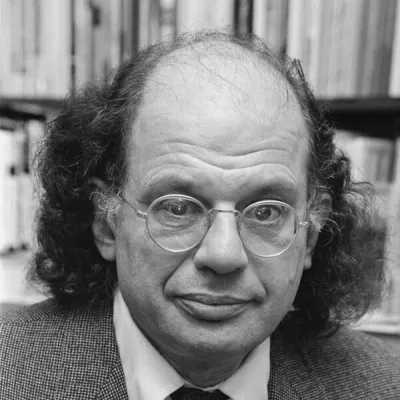
Allen Ginsberg
Human Design Chart
Biography
Best known for his poem "Howl", Ginsberg denounced what he saw as the destructive forces of capitalism and conformity in the United States. San Francisco police and US Customs seized copies of "Howl" in 1956 and a subsequent obscenity trial in 1957 attracted widespread publicity due to the poem's language and descriptions of heterosexual and homosexual sex at a time when sodomy laws made male homosexual acts a crime in every state. The poem reflected Ginsberg's own sexuality and his relationships with a number of men, including Peter Orlovsky, his lifelong partner. Judge Clayton W. Horn ruled that "Howl" was not obscene, asking: "Would there be any freedom of press or speech if one must reduce his vocabulary to vapid innocuous euphemisms?".
Ginsberg was a Buddhist who extensively studied Eastern religious disciplines. He lived modestly, buying his clothing in second-hand stores and residing in apartments in New York City's East Village.
What does Manifestor 1/3 mean for Allen Ginsberg?
Manifestor 1/3 — Design at a Glance
Allen Ginsberg acted as a pioneer and visionary whose task was to lead the world into a new future. His design corresponds to that of an Manifestor, comparable to an emperor in ancient Rome: He possessed the great vision of an empire but did not wage the necessary wars himself; instead, he sent others out to conquer foreign lands for him. This nature led to frequent misunderstandings because his thinking often exceeded that of those around him. This created polarization; while some loved and followed his big dreams, others liked or disliked him precisely because of these huge visions. For the right followership to find him, it was crucial that he informed others about his plans in a timely and precise manner. This strategy of informing served to gain the appropriate support. When Allen Ginsberg followed this strategy, he was rewarded with an inner sense of peace. If he lived against his design, however, he felt a persistent, deep anger within himself. His path was thus marked by the necessity of winning the right followers through clear communication and thereby managing the conflict between understanding and rejection.
Emotional Authority
Allen Ginsberg was subject to an emotional wave that permanently colored his perception of the world with current moods. His design foresaw that he could be enthusiastic about something at one moment, only to negatively judge it in the next. This shift manifested as a characteristic feature of his inner authority: the defined Solar Plexus Center. Since this center was activated, it functioned independently from other definitions in his chart as the primary decision-making instance.
The feeling in the moment represented for him merely a snapshot, not an ultimate truth. Quick, spontaneous decisions that directly stemmed from this transient emotion often had negative consequences. His mechanics required instead patience and allowing the process of 'ripening'. By taking time and sleeping on decisions multiple times, he could gain deeper insight. Over time, intense feelings subsided, enabling him to gain emotional distance. Only then did clarity and calm set in, meaning that he had gone through the necessary process. This approach was particularly important for long-term decisions that significantly influenced his life course. Allen Ginsberg needed to be properly challenged and asked multiple times to ensure that his choice was not merely an expression of a transient mood but rather his actual inner truth.
The 1/3 Profile — Investigator / Martyr
Allen Ginsberg emerged as someone whose judgments were based on a deep, double scrutiny. His design laid out a tendency to penetrate things not only theoretically but also practically test them. This attitude resulted from his Profile 1/3, the Researcher and Experimenter. The dominant energy of Line 1, reinforced by the Sun in Gate 35, drove him to seek development through humility and acceptance of rejection. He learned that creative progress often ran over setbacks and that it was important to store these as reflections, not as finalities.
At the same time, Line 3 demanded practical experimentation. Here, the trial-and-error process applied: he crashed into things to find answers. The tension lay between the desire for complete theoretical preparation and the necessity of action. If he deemed something good, he had previously examined it both intellectually and empirically on a heart level. His authority only emerged after both lines had done their work. Line 1 provided the necessary humility in the learning process, while Line 3 held fast to well-developed principles even when doubts arose. Thus, his experience became the basis of trustworthy insights.
Split Definition — Defined & Open Centers
Allen Ginsberg was marked by a constant, irreducible mental pressure. His design connected the defined Head and Ajna Centers, generating continuous inspiration as well as questions and doubts. This mind was always active; he thought constantly and could neither stop nor control this mental activity. The challenge lay in accepting this pressure without impulsively acting it out, since his brain lacked energy for direct implementation. Instead, this state served as a source of inspiration for others.
His defined Throat functioned as an expression organ that consistently translated these thoughts into communication and action. He spoke what his mind conceptualized, making his mental presence manifest outwardly. However, this required patience because his defined Solar Plexus acted as internal emotional authority. Decisions were clear only when he waited out the emotional wave; impulsivity led to chaos and regret. He tended to jump into experiences that later left him with remorse, so waiting until emotional calm was essential.
At the same time, his open G Center revealed a lack of firm identity. He blended with his environment and sought direction through external initiations rather than asserting it himself. His open Heart Center made him vulnerable to the pressure of proving his worth or making promises he couldn’t keep – a cycle of self-disapproval. His open Sacral Center left him running on “borrowed” energy from others, leading to exhaustion since he lacked consistent vital force and found it hard to set boundaries. Additionally, his open Root Center absorbed external stress, causing him to suffer under adrenal pressure not originating from himself. This constellation created a person who was mentally intense but emotionally and energetically dependent on clarity and calm to avoid conditioning.
Channels for logical doubt and emotional change.
Allen Ginsberg revealed himself as someone whose inner drive was propelled by a restless search for new experiences that were always filtered through a strict logical sieve. His design presented a tension between emotional urgency and skeptical analysis. The Channel of Transience 35-36 connected the Gate of Change (35) with the Gate of Crisis (36). Since Gate 35 was his Solar-Tor, he was driven by a strong impulse to question old ways ("I've been there") and experience new things. This emotional wave from the Solar Plexus Center sought depth and validation through direct experience, often creating crises to generate movement.
At the same time, the Channel of Logic 63-4 acted as an opposing element. It connected doubt in the Head Center (Gate 63) with formulation in the Ajna Center (Gate 4). This mind constantly checked whether patterns found by emotional impulses were consistent and verifiable. There was little room for unfounded belief; a response was only valid if it was logically consistent and practically functional.
The result of this constellation was a process where the emotional longing for experience was tested by the critical mind for its sustainability. If Head Center doubt did not recognize consistency, mental pressure built up until a logically sustainable formulation was found. Allen Ginsberg lived out this dynamic: he intensely sought new feelings and insights but accepted them only as truth if they passed the rigorous test of logic. This combination allowed him to gain profound emotional wisdom without blindly following impulses, instead always translating them into verifiable concepts.
Collective Circuitry — Circuit Signature
Allen Ginsberg was marked by a structural tension between cool strategy and emotional reflection. His design contained two separate yet parallel streams: the Understanding Circuit and the Meaning Circuit. Both shared the common theme of sharing insights with the collective, though from different origins.
The Understanding Circuit connected Allen Ginsberg's Head Center and Ajna Center through the Logic Channel (Gate 63 to Gate 4). This connection generated a focused, rational energy aimed at improving things through structure and intellect as well as guiding society towards a better future. It was "emotionless ratio," free from conditioning, visualizing logical insights and strategically placing them.
Simultaneously, the Meaning Circuit operated as a separate unit. Here, the Transience Channel (Gate 35 to Gate 36) connected his Throat Center with his Solar Plexus Center. This energy was wave-like and cyclical, rooted in emotions and experiences from the past. It served to reflect on the meaning behind past events. The resulting felt insights should also be shared to learn collectively from history.
Since Allen Ginsberg had a Split Definition, these two systems—the future-oriented logic on one hand and the past-focused emotionality on the other—existed as non-directly connected blocks. They did not form a cohesive unit but rather two parallel forces working independently: once through strategic clarity for what is to come, and at another time through emotional processing of the past, always with the impulse to carry these different perceptions outward.
Right Angle Cross of Consciousness 2
Allen Ginsberg's design featured a tendency towards a specific, conscious perception. This configuration, the right cross of consciousness 2, shaped his inner orientation not through external impulses or emotional waves but through a quiet, mental structure. It was an archetypal arrangement in Human Design that did not provide direct biological energy but created a framework for thought and self-experience.
Allen Ginsberg emerged as someone who formed his identity and worldview from this internal geometry. The right cross of consciousness 2 describes a life task less about doing than being and understanding. It was about integrating certain perception patterns that helped him recognize his own nature without actively creating them. This mechanism worked as a background structure: it did not provide driving force for projects or relationships but served as a compass for his inner experience.
Allen Ginsberg lived with this configuration by focusing on the quality of his attention. The design did not challenge him to prove something or achieve, but allowed him a certain kind of presence. This quiet, creative energy of the consciousness cross shaped how he viewed the world – less as a place of struggle than as a space for inner clarity and mental order.
Saturn Return · Uranus Opposition · Chiron Return · 2nd Saturn Return — Life Cycles
Allen Ginsberg's design was marked by a clear developmental line: from radical outsider status to institutional recognition. This tension between societal friction and later integration significantly shaped his life path.
Initially, the Saturn crisis came into play, a cycle that addresses structure, boundaries, and often prohibitions. In 1956, at age 30, his poem “Howl” sparked a scandal and was temporarily banned. This was not an accidental event but the concrete effect of this mechanical phase: confronting established norms led to resistance and exclusion, typical for the first Saturn return. Here, the necessity to distance oneself from system pressure became evident.
Later, this dynamic shifted in the Chiron return, a fulfillment cycle where inner purpose increasingly unfolds in outer life and becomes experiential. In 1973, at age 47, Ginsberg was elected into the American Academy of Arts and Letters. This step marked the transition from rejection to validation by established systems. The Chiron return did not bring emotional healing but structural confirmation: what had been felt as disruptive now found its place within recognized structures. This path from crisis to integration illustrates the archetypal tension in his design, where external conflicts ultimately led to a deeper embedding into societal fabric.
Manifestor · Emotional Authority — Synthesis
He was a Generator who moved through life constantly asking questions (Channel Logic: Gate 63-4). This unceasing mental pressure to question patterns and seek consistency shaped his approach to the world. He experimented and researched (Profile Researcher/Experimenter), not to accumulate knowledge but to gain solidified insights through trial and error – a process that continually led him in new directions. His authority lay in the emotional center, meaning decisions needed time to mature, yet he was still a trailblazer who inspired or pressured others (Manifestor).
A central paradox in his design involved the interplay of logic and emotion. While his defined Head Center propelled him to rationally analyze the world and recognize patterns, his emotional authority colored this analysis with a subjective, shifting perspective. This tension between cool intellect and felt perception led him to be perceived both as visionary thinker and impulsive rebel – a contrast evident in crises (like the scandal over a certain work at age 30) as well as successes (his admission into a prestigious academy at age 47).
2 Defined Channels
Incarnation Cross - Right Angle Cross of Consciousness 2
Solar Return
The Solar Return shows the moment when the sun returns to its exact birth position - your personal solar year.
Life Cycles
Discover the life cycles with a detailed triple view (birth chart, cycle chart, composite).
Human Design Profile
- Type
- Manifestor
- Strategy
- To inform others before acting
- Authority
- Emotional Authority
- Profile
- 1/3 - Investigator / Martyr
- Definition
- Split Definition
- Incarnation Cross
- Right Angle Cross of Consciousness 2
- Date of Birth
- 03.06.1926 02:00
- Place of Birth
- Newark, New Jersey, United States
Frequently Asked Questions
What was Allen Ginsberg's Human Design type?
What Profile did Allen Ginsberg have in Human Design?
Which Authority guided Allen Ginsberg's decisions?
What incarnation cross did Allen Ginsberg have?
When was Allen Ginsberg born?
Discover your own Human Design
Are you also a Manifestor? Find out in a personal reading how to use your initiation power peacefully and dissolve resistance.
More Personalities
Back to overviewAlain-Fournier

Angeli

Christian-Jaque
Juninho

Kesha

Lucebert