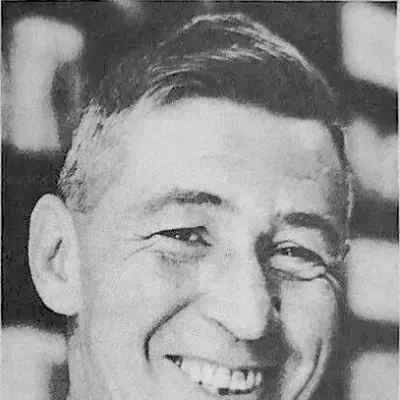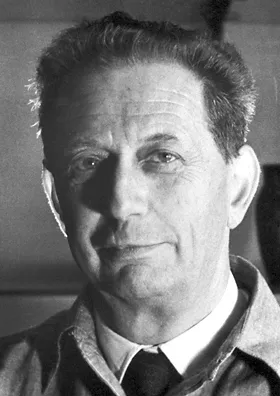
André Lwoff
Human Design Chart
Biography
Lwoff married on 5 December 1925. He died on 30 September 1994 in Paris, France.
The Human Design of André Lwoff: Projector 5/1
Projector 5/1 — Design at a Glance
André Lwoff's design pointed towards a tendency for precise diagnosis: he was someone who could immediately recognize weaknesses in systems. As a projector, he did not have a constant, intrinsic energy source, but rather acted like a focused flashlight that shone light on what was still in the dark in his surroundings. This dense aura allowed him to identify error structures immediately.
The challenge was not to communicate these insights directly and aggressively, which often triggered resistance in others. Instead, his strategy was to wait for an honest invitation. By appearing harmonious himself, he attracted others who then actively sought his advice. This passive approach was crucial to conserve his energy; without such pauses, he risked burning out, as his system did not offer a continuous power reserve.
If André Lwoff lived according to this pattern, he was rewarded with success. If he ignored the need for invitations and rest phases, his non-self theme of bitterness would eventually become apparent. Therefore, his path did not lie in constant action, but in targeted illumination and waiting for recognition from his environment before sharing his deep insights.
Splenic Authority
André Lwoff's design pointed towards a tendency for spontaneous, instinctive orientation. His inner authority lay in the defined Spleen Center, implying that both the Emotional and Sacral Centers were open – a configuration only projectors or manifestors exhibit. The Spleen Center functioned as a health and alarm system, equipping André Lwoff with a pronounced survival intelligence. This manifested as spontaneous inner knowledge about whether a situation, environment, or society was right for him. His instinct and physical well-being served as reliable indicators. Decisions had to be made in the immediate moment; the first impulse was the right one and directly served his health. This allowed him to rigorously shield against harmful influences. However, this Spleen impulse was delicate and only occurred once in the moment. It could easily be ignored or drowned out by other influences, requiring high vigilance. A retreat for decision-making could be helpful. Since he only knew what was right in the moment, plans could change short-term. Long-term commitments were difficult, so he needed a lot of free space and flexibility to avoid unnecessary binding.
The 5/1 Profile — Heretic / Investigator
André Lwoff's design was characterized by the Profile 5/1, presenting him as a researcher who gathered deep knowledge to offer others for problem-solving. His Line 1 drove him towards intensive, often isolated research, while Line 5 generated a nearly magnetic aura that drew others to him to find solutions. This constellation created a dynamic tension: he was unconsciously projected as an authority who knew the answers, which touched his ego but could also lead to overextension if he did not set clear boundaries.
The mechanics behind this drive lay in the connection between strategic thinking and the need to use resources intelligently. Gate 2 in Line 5 emphasized the use of intelligence as a guide, while the challenge was to take responsibility and acknowledge the abilities of others rather than wanting to do everything himself. At the same time, the Law of Necessity, which drives revolutions and profound changes, was at work. For André Lwoff, this meant that new principles could only become effective when they found support in the 'stem' – the base or community – and were proven to be viable. Without waiting for this emotional wave, the revolutionary potential risked turning destructive. His path was to find the balance between the researcher's withdrawal tendency and the hero's radiance, by learning to say no and use his gifts purposefully.
Triple Split Definition — Defined & Open Centers
André Lwoff's design sets a tendency towards constant internal mental pressure, paired with a clear, stable identity. He was shown to be someone who reliably generated concepts and theories, but did not bring them into the world through his own vital endurance or emotional waves, but rather through his voice and will.
His defined Head and Ajna Centers generated a permanent mental pressure to ask questions and find answers. This process was a source of inspiration for him, which he provided to others, without possessing the energy to directly transform these thoughts into material reality. Instead of fighting to immediately release the pressure, it was crucial for him to wait for the right moment to pass his ideas on to people who could implement them. His defined G Center gave him a firm sense of self-identity and direction, while the defined Heart Center gave him the willpower to keep promises and determine his own resources. His defined Throat enabled him to communicate his mental concepts and personal truth clearly and reliably. His defined Spleen Center provided an intuitive, momentary perception of health and well-being, guiding him in the present.
In contrast, his Sacral Center was open. This meant that André Lwoff did not have a constant access to generative life energy and was susceptible to absorbing and amplifying the energy of his environment. He tended to overextend himself by using "borrowed" energy, which could lead to exhaustion if he did not listen to his inner authority and take breaks. His open Solar Plexus absorbed and amplified the emotions of others, prompting him to avoid emotional decisions and not identify with emotional waves to maintain clarity. His Root Center was also open, causing him to absorb the adrenalized stress of his environment. Instead of succumbing to this pressure and becoming hyperactive, it was important for him to recognize that this stress was not his own and to find ways to avoid or consciously use it without being overwhelmed by it. This configuration shaped his life as a game of clear mental guidance and intuitive spontaneity, which, however, required a careful preservation of his own energy and emotional neutrality.
Channels for inspired presence, clear intuition and instinctive devotion.
André Lwoff's design inclined towards individual, exemplary leadership. He showed himself to be someone who drew the attention of others through his unique presence and authenticity, not through mere explanations, but by living his creative identity. This effect stems from the Channel of Inspiration 1-8, which connects the G Center with the Throat Center. Gate 1 enabled the bold, creative expression of his perspective, while Gate 8 carried this contribution into the public sphere. Lwoff was designed to act as a role model and inspire others to live out their own uniqueness, much like a virtuoso pianist who, through his performance, inspires listeners to play the piano.
Parallel to this, he possessed a mind oriented towards spontaneous insights. The Channel of Awareness 61-24 connected his Head Center with the Ajna Center. Here, his mind processed auditory inspirations (Gate 61) all the way to rational answers (Gate 24). His thinking did not aim at logical predictions but at sudden knowledge that arose in moments of silence or through external activation. He had to learn to wait for these mutations and distinguish what was worth knowing.
Moreover, Lwoff had an instinctive sense for the tribe and its needs. The Channel of Devotion 44-26 connected his Spleen Center with the Heart Center. Gate 44 gave him vigilance and the ability to recognize historical patterns, while Gate 26 provided the willpower to convincingly convey offers. This allowed him to intuitively grasp what a group needed and sell this with entrepreneurial creativity.
Additionally, Gates like Gate 2 (receptivity to new directions), Gate 49 (emotional principles), and Gate 4 (logical formulas for future security) shaped his perception. On the personality side, Gates like Gate 28 (willingness to take risks in the present), Gate 25 (spiritual innocence), and Gate 13 (collective memory) supported his attitude. In his design, Gates like Gate 35 (change through experience) and Gate 15 (collective rhythm) were also at work.
Individual Circuitry — Circuit Signature
André Lwoff's design established a tendency towards three separate, parallel operating energetic focal points. This tripartite definition meant that his strengths were not experienced as a single continuous flow, but as distinct, coexisting areas.
The Definition Circuit shaped two independent segments. On one hand, it connected the Head Center with the Ajna Center, fostering spontaneous, innovative flashes of insight. On the other hand, there was a separate connection between the Throat and Identity Centers, enabling the expression of new insights and unique individuality through speech, supported by the inspiration of the Head-Ajna part. Both aspects—the creative idea and the expression of identity—existed energetically apart from each other.
Parallel to this, the Ego Circuit operated through a direct connection between the Heart and Spleen Centers. This channel of dedication promoted cooperation and the joint creation of resources within a group. Since this connection lacked a link to the Sacral Center, this kind of support and give-and-take required necessary pauses to sustainably build the needed material and social resources.
André Lwoff thus moved within a field of impulsive creativity, the expression of his personal identity, and cooperation-oriented resource building. These three areas were clearly delineated from each other, which facilitated a focus on each aspect at a time, rather than activating all energies simultaneously.
Left Angle Cross of Defiance 1
André Lwoff's design indicated a tendency towards inner conflict, coupled with the drive to overcome these tensions through active confrontation. This configuration, known as the left challenge cross, described a life task where seemingly irreconcilable forces collided. Instead of avoiding these contradictions, André Lwoff emerged as someone who used conflicts not as obstacles but as necessary motors for personal development. The mechanics of this cross require one to directly address internal and external friction points to gain clarity and new perspectives. For André Lwoff, this meant engaging in situations that challenged him, growing through the resolution of these difficulties. It was not passive endurance but active shaping despite resistance. This attitude shaped his approach to life events: he sought confrontation with the difficult because he recognized that true understanding only arises through the passage of crises. His path was thus not a straightforward progression but a process of constant negotiation between opposing demands, with each hurdle overcome strengthening his inner structure and helping him anchor his own identity in the complexity of the world.
Saturn Return · Uranus Opposition · Chiron Return · 2nd Saturn Return — Life Cycles
André Lwoff's design indicated a tendency towards structural anchoring and long-term development. His path was marked by two prominent Saturn returns, which functioned as cycles of maturation and affirmation. The first Saturn return occurred in 1932 when he was thirty years old. In this year, he earned his doctorate in biology. For his design, this marked the transition from preparation to established position; years of groundwork condensed into a solid academic foundation.
The second Saturn return happened in 1959 when he was seventy-five years old. Here, he was promoted to professor of microbiology at the Sorbonne. This step underscores the mechanics of the Saturn return as a phase of authority affirmation and institutional anchoring. While the first return secured his qualifications, the second confirmed his leadership role within his field. Both events illustrate how André Lwoff's chart structure worked towards stable, hierarchically recognized positions. Career development did not proceed impulsively but followed a rhythm of gradual consolidation. Each Saturn return brought a new level of responsibility and visibility, building on the previous one. This shows that his design favored a slow but sustainable integration into established systems. The doctorate and the professorship were not isolated successes but expressions of a deep structural necessity to pour knowledge into lasting forms and achieve enduring impact.
Projector · Splenic Authority — Synthesis
André Lwoff was a projector whose life was marked by a deep drive for understanding and the ability to recognize hidden patterns. His defined Head and Ajna Centers (with the Channel of Inspiration) point to a constant search for knowledge and the ability to make this knowledge accessible to others. The Profile as Hero/Researcher (5/1) reinforced this impulse to gain deep insights and offer them as solutions for others' problems – a process illustrated by the Saturn returns during career phases (1932, 1959). He thus lived in exploring complexity and bringing it into understandable forms, always driven by the inner question and the desire to serve others.
A central paradox in his design lay in the combination of the projector strategy of waiting for the invitation and the strong, defining pressure of his Head Center. While he was dependent on being recognized and asked by others to optimally use his energy, his mind constantly generated questions and inspirations. This led to a tension between the need to hold back and wait and the inner drive to share his knowledge and shed light on the dark – a constant weighing between offering his expertise and accepting the given circumstances.
3 Defined Channels
Incarnation Cross - Left Angle Cross of Defiance 1
Solar Return
The Solar Return shows the moment when the sun returns to its exact birth position - your personal solar year.
Life Cycles
Discover the life cycles with a detailed triple view (birth chart, cycle chart, composite).
Human Design Profile
- Type
- Projector
- Strategy
- Wait for the respectful invitation
- Authority
- Splenic Authority
- Profile
- 5/1 - Heretic / Investigator
- Definition
- Triple Split
- Incarnation Cross
- Left Angle Cross of Defiance 1
- Date of Birth
- 08.05.1902 14:00
- Place of Birth
- Ainay-le-Château, France
Frequently Asked Questions
What was André Lwoff's Human Design type?
What Profile did André Lwoff have in Human Design?
What Authority did André Lwoff have?
What incarnation cross did André Lwoff have?
When was André Lwoff born?
Discover your own Human Design
Are you also a Projector? Find out in a personal reading how to unfold your leadership qualities and recognize the right invitations.
More Personalities
Back to overviewSissy Spacek

Alain-Fournier

Anémone

Ann-Margret

Bourvil
Hergé