
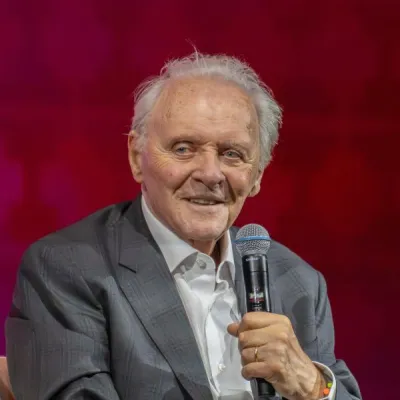
Anthony Hopkins
Human Design Chart
Biography
After graduating from the Royal Welsh College of Music & Drama in 1957, Hopkins trained at RADA (the Royal Academy of Dramatic Art) in London. He was then spotted by Laurence Olivier, who invited him to join the Royal National Theatre in 1965. Productions at the National included King Lear (his favourite Shakespeare play), Coriolanus, Macbeth, and Antony and Cleopatra. In 1985, he received acclaim and a Laurence Olivier Award for his performance in the David Hare play Pravda. His last stage play was a West End production of M. Butterfly in 1989.
Hopkins's early film roles include The Lion in Winter (1968), A Bridge Too Far (1977), Magic (1978), and The Elephant Man (1980). He won two Academy Awards for Best Actor for playing Hannibal Lecter in the horror thriller The Silence of the Lambs (1991) and an octogenarian with dementia in the psychological drama The Father (2020).
Anthony Hopkins — Generator with Profile 6/2
Generator 6/2 — Design at a Glance
Anthony Hopkins revealed himself as someone with immense inner endurance and strength, comparable to a workhorse ready to carry heavy loads - provided he finds the right task. His Generator design established a foundational structure in which energy is not initiated by mere will but through reaction to external impulses. Crucial for him was waiting for an internal signal from the sacral center, that area of gut feeling. Only when this inner compass gave a clear 'yes' could he unleash his full energy and act.
This mechanism of reacting rather than initiating protected him from two typical pitfalls: Firstly, from investing energy in things that went against his inner nature, which would have quickly led to exhaustion. Secondly, from being held back by his creative drive when he was still full of power. Living in harmony with this strategy - meaning reacting from the gut to life - rewarded him with a deep sense of fulfillment and satisfaction. If he initiated independently without this internal signal or ignored his impulses, sooner or later he would encounter persistent frustration and a lack of energy. His strength therefore lay not in pushing forward but in powerfully responding to what met him.
Sacral Authority
Anthony Hopkins revealed himself as someone whose decision-making was based on an immediate physical resonance. His design established sacral authority, a mechanism exclusive to the Generator type that aligns with his inner authority strategy. This alignment fundamentally simplified the process of decision-making: there was no separation between 'how' he acted and 'what' he felt.
His inner voice did not manifest as intellectual analysis but rather as a direct physical reaction to external stimuli. This manifested in the form of gut feelings or sudden surges of energy - audible through sounds like grunts, hums, or an affirming 'mm-hm'. As long as his emotional center was open, he could clearly perceive these signals. When his sacral motor engaged with something, he felt vital and alive, with an almost inexhaustible source of energy that allowed him to immerse himself fully in activities. The goal was not the forefront; rather, it was joy and satisfaction in the act itself.
Additionally, his activated spleen center acted as a supportive authority. This connection granted him quick, instinctive access to his physical well-being. He could react spontaneously and swiftly to situations, guided by a reliable inner perception that helped him recognize what was right at the moment of encounter without long thought or planning.
The 6/2 Profile — Role Model / Hermit
Anthony Hopkins revealed himself as someone who solidified his identity through years of intensive practice. His configuration as Profile 6/2, the Role Model or Natural Talent, suggested a specific development curve: In early years, he was under the influence of Line Three. This meant a phase of experimentation marked by trial and error. He sought experience directly but withdrew after failures to correct - a process of self-stimulation and self-surrender in action.
Only after his 30th year, with Saturn's return, did Line Six fully activate. Anthony Hopkins metaphorically retreated into a 'cave' to gain distance. This period no longer served blind experimentation but deep reflection and healing. He looked back on past experiments with new wisdom.
The mechanics of his Line 58/48 emphasized the necessity of giving energy only when the result is socially valuable. It was about identity preservation through practical improvements. Simultaneously, Gate 48's Two-Line warned against a decline in values if harmony came at the cost of deeper principles. Anthony Hopkins emerged as a wiser person whose wisdom resulted from this intense introspection. Others sought his advice to partake in his deep self-awareness - a natural effect of the completed 6/2 development.
Split Definition — Defined & Open Centers
Anthony Hopkins revealed himself as someone who constantly felt an internal pressure to ask questions and understand connections. His design linked the Head Center with the Ajna Center, creating a permanent mental inspiration – often accompanied by confusion or doubt until clarity emerged. This energy flowed further into his defined Throat Center, allowing him to articulate his thoughts and concepts reliably. His voice was not an impulse but the result of a structured thought process.
At the same time, Hopkins had a deep, reliable identity through his defined G Center as well as vital power from the Sacral and Spleen Centers. This combination gave him the endurance and intuition to fulfill his role in life without being led by external expectations. He responded to life rather than forcing it, allowing him to use his energy efficiently.
However, this stable foundation stood in contrast to his open centers. His open Heart Center made him vulnerable to trying to prove himself through performance or promises to validate his worth. Such a pursuit of external validation often led into a spiral of self-doubt as he lacked the constant energy for such competitions. Additionally, his open Solar Plexus absorbed the emotions of his surroundings. He tended to experience foreign moods as his own and avoid confrontation to not trigger emotional waves. This sensitivity required great mindfulness to not get lost in others' emotional conditioning but rather maintain his own boundaries.
Channels for focus, intuition, curiosity, experiment and abstraction.
Anthony Hopkins exhibited a fundamental disposition marked by calm, unshakable concentration. This stability came from the Channel of Concentration 52-9, a format energy between Root and Sacral Centers. It endowed him with potential for precise focus on details, supported by a passive urge (Gate 52) to remain still and ward off distractions until the Sacral Center responded.
At the same time, he possessed rare intuitive clarity in dealing with his environment. The Channel of Perfect Form 57-10 connected Spleen and G Centers and enabled behavior guided by intuitive insight (Gate 57), securing his survival. This was less creative reflection than a spontaneous adaptation to the moment that moved him existentially unburdened through the world.
His way of communicating and processing ideas was driven by deep curiosity. The Channel of Curiosity 11-56 linked Ajna and Throat Centers, using the energy of searching (Gate 56) to explore new perspectives. He connected ideas (Gate 11) not for fact-checking but to tell stories that taught or entertained others – life parables that stimulated imagination and feelings.
Additionally, he showed a capability to connect intuitive depth with technical mastery. The Channel of Wavelength 48-16 linked Spleen and Throat Centers. By looking out for vital information (Gate 48) and experimenting with new possibilities (Gate 16), he gradually perfected his skill into a talent that led to excellence through repeated practice.
His mind was also filled with abstract, experience-based activity. The Channel of Abstraction 47-64 linked Head and Ajna Centers. He filtered every experience through mental images (Gate 64) to understand patterns (Gate 47). This process could be confusing but often led to clear, inspiring insights that he then communicated.
Individual Gates like Gate 58 (Experiment/Perfection) and Gate 21 (Control of Material Things) underscored this focus on pattern recognition and material direction, while Gates such as 41 (Evolutionary Development) and 54 (Worldly-Spiritual Connection) reflected his deeper search for meaning and change.
Collective Circuitry — Circuit Signature
Anthony Hopkins revealed himself through his design as someone who linked logical structures with emotional depth. He had a split definition: two energetically isolated blocks existed parallel to each other. The first block included the Sacral and Root Centers; here, the energy of the Understanding Circuit operated over the Channel of Concentration (Gates 9, 52). This created a focused, strategic basis for future-oriented action. The second block connected Identity, Spleen, Throat, Ajna, and Head Centers. Here, the energies of the Understanding Circuit (Channel Wavelength: Gates 16, 48 between Spleen/Throat) combined with those of the Meaning-Finding Circuit (Channels Abstraction: Gates 64, 47 and Curiosity: Gates 11, 56, connecting Head/Ajna/Throat). Additionally, the Integration Channel Perfect Form (Gates 10, 57) worked between Identity and Spleen.
In the first block, concentration drove rational improvement forward. In the second block, cool logic merged with emotional waves from the past. Abstraction allowed for translating complex connections while curiosity stimulated information gathering. This insight was shared through the Throat. Simultaneously, the Integration Channel secured individual survival in the present through intuitive adaptation (Spleen) and correct behavior (Identity). Since the blocks were not connected, rational strategy and emotional meaning-finding acted as separate but coexisting forces without a direct energy flow between Sacral/Root and the large Head-Ajna complex.
Left Angle Cross of Demands 2
Anthony Hopkins revealed in his design an inner dynamism aimed at driving forward demands. His chart featured the signature of the "left cross of mandates." This configuration is not a passive stance but an active impulse: it drives one to set clear standards and enforce them consistently. It is about establishing order in the chaos of everyday life by defining what needs to be accomplished, rather than arbitrary actions.
For Anthony Hopkins, this meant that he often took on the role of someone who assumed responsibility for defining boundaries and expectations. The mechanics of this cross require a clear communication of what is expected. It is a pattern that does not avoid conflicts out of fear but uses them to create clarity. When demands were made, it was typically with the intention of establishing a functioning structure where all parties know their roles. This energy served to reduce uncertainties through definitive statements and thus created a stable framework for shared endeavors or personal projects. The challenge lay in formulating these mandates so that they were felt as necessary and fair rather than mere control.
Saturn Return · Uranus Opposition · Chiron Return · 2nd Saturn Return — Life Cycles
Anthony Hopkins’ design shows a clear structure of gradual consolidation and public ascent. His career followed a pattern where inner maturity was confirmed through external recognition. In 1965, at the age of 28, he experienced his first Saturn return – a cycle in which long-term groundwork is condensed into solid results. That year, he was discovered by Laurence Olivier and joined the Royal National Theatre. This step marked the transition from potential to established presence, typical of Saturn's consolidating power.
However, his development was not linearly stable alone. In 1976, at age 39, he went through a Uranus opposition. This phase often brings sudden changes or unexpected breaks in old structures. Hopkins won his first Emmy for playing Bruno Richard Hauptmann that year. The success did not come from gradual adaptation but from a disruptive force that made him visible and opened new paths.
The bloom of his incarnation purpose was evident during his Chiron return in 1985 (age 48). This cycle is not a healing process in the traditional sense, but an accomplishment: one's essence unfolds increasingly in life and becomes meaningful. Hopkins received the Laurence Olivier Award for "Pravda." This was the moment when his artistic identity fully came into its own – not as repair, but as completion.
In 1993 followed his second Saturn return (age 56). Here, the achieved position was finally solidified through formal recognition: His elevation to Knight Bachelor. The mechanics show a person whose life is marked by cyclical affirmation – from discovery over disruptive breakthrough to established authority.
Generator · Sacral Authority — Synthesis
Anthony Hopkins’ life seems to be marked by a deeply rooted, sacral energy (Generator Type), which manifests in a constant drive for activity and endurance. This power is not unbound; it is channeled and focused through the defined Head Center (mental pressure) (Channel of Concentration 9/52). This points to an ability to engage intensively with topics and direct this energy into specific areas – a process that alternates between phases of intense reflection and self-discovery (6/2 Profile). The repeated significant events marking professional success coincide with cycles in which this inner work turns outward and finds recognition.
A central paradox lies in the combination of this focused energy and the Role Model Natural Talent Profile. While the Sacral Center signals an immediate reaction to the present moment (sacral authority), the 6-line points toward a later withdrawal for reflection – a dance between active doing and passive contemplation. A tension field emerges between the need to immerse oneself in work and generate energy, and the deep desire for distance and wisdom from experience, which leads him to continually experiment and learn from it.
5 Defined Channels
Incarnation Cross - Left Angle Cross of Demands 2
Solar Return
The Solar Return shows the moment when the sun returns to its exact birth position - your personal solar year.
Life Cycles
Discover the life cycles with a detailed triple view (birth chart, cycle chart, composite).
Human Design Profile
- Type
- Generator
- Strategy
- To respond - wait for something to respond to
- Authority
- Sacral Authority
- Profile
- 6/2 - Role Model / Hermit
- Definition
- Split Definition
- Incarnation Cross
- Left Angle Cross of Demands 2
- Date of Birth
- 31.12.1937 09:15
- Place of Birth
- Port Talbot, United Kingdom
Frequently Asked Questions
What is Anthony Hopkins' Human Design type?
What profile does Anthony Hopkins have in Human Design?
What authority guides Anthony Hopkins?
What is Anthony Hopkins' incarnation cross?
When was Anthony Hopkins born?
Discover your own Human Design
Are you also a Generator? Find out in a personal reading how to use your sacral energy correctly and discover deep satisfaction.
More Personalities
Back to overviewSissy Spacek

Aaliyah

Alexia

Anémone

Angèle

Ann-Margret
