
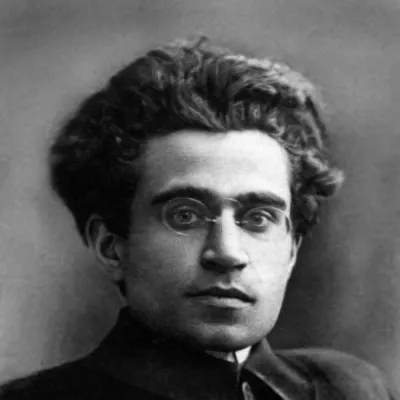
Antonio Gramsci
Human Design Chart
Biography
During his imprisonment, Gramsci wrote more than 30 notebooks and 3,000 pages of history and analysis. His Prison Notebooks are considered a highly original contribution to 20th-century political theory. Gramsci drew insights from varying sources—not only other Marxists but also thinkers such as Niccolò Machiavelli, Vilfredo Pareto, Charles Darwin, Sigmund Freud, Friedrich Nietzsche, Georg Hegel, Pierre Joseph Proudhon, Georges Sorel, and Benedetto Croce. The notebooks cover a wide range of topics, including the history of Italy and Italian nationalism, the French Revolution, fascism, Taylorism and Fordism, civil society, the state, historical materialism, folklore, religion, and high and popular culture.
Gramsci is best known for his theory of cultural hegemony, which describes how the state and ruling capitalist class—the bourgeoisie—use cultural institutions to maintain wealth and power in capitalist societies. In Gramsci's view, the bourgeoisie develops a hegemonic culture using ideology rather than violence, economic force, or coercion.
Human Design Analysis: Antonio Gramsci as Manifesting Generator 1/3
Manifesting Generator 1/3 — Design at a Glance
Antonio Gramsci revealed himself as a hybrid being who combined the enduring power of a Generator with the lightning-fast initiative force of a Manifestor. His defined Sacral Center supplied him with constant energy, yet his active connection to his Throat Center allowed him to skip steps and quickly pull things into his life. This speed was a double-edged sword: it enabled him to work on multiple projects simultaneously and fall into a productive play mode when his inner authority agreed. At the same time, there was a risk that he would miss important stages due to this rapid pace or become overwhelmed by multitasking, leading quickly to frustration – his specific non-self theme.
For Antonio Gramsci, it was crucial not to initiate himself but to react to external impulses. Only when his Sacral Center gave a clear 'yes' after an initial test and his inner authority confirmed the direction could he effectively use his creative power. With proper application of this strategy, he drew deep satisfaction from his work. The necessity to complete projects one at a time stood against his nature; rather, he needed variety and the freedom to pursue multiple threads simultaneously as long as each activity was carried by his inner resonance. Thus, his potential frenzy transformed into a dynamic, satisfying creative force based on constant review of his own motivation.
Emotional Authority
Antonio Gramsci displayed a decision-making stance characterized by emotional wave movements. His design featured Emotional Authority in his defined Solar Plexus Center. This configuration meant that his internal guidance was always influenced by his emotional state, regardless of which other centers were defined in his chart. Emotional Authority always took precedence over all other inner voices.
His perception of the world was colored by current moods; a topic could inspire him one moment and appear negative the next. Since these feelings were only snapshots, spontaneous decisions made from such situations often led astray. The mechanics of his authority required patience: he had to take time for decisions to mature. Only after initial emotional intensity subsided and questions were mulled over multiple times did clarity emerge. This waiting process was not an obstacle but a necessary strategy to reach true inner truth. Through this cycle of activation and calming, he gained emotional distance, enabling calmness. This approach particularly shaped long-term life decisions where the influence on his future path was significant.
The 1/3 Profile — Investigator / Martyr
Antonio Gramsci revealed himself as a researcher and experimenter whose life was marked by constant oscillation between theoretical learning and practical testing. His Profile 1/3 conveyed a tendency to not only accumulate knowledge but also test it through personal action. The first line of his design promoted intense inner reflection and the quest for solid foundations, sometimes leading him to feel unsure if his preparation was adequate. Simultaneously, the third line urged him to take risks and pursue personal goals with adventurous zeal. This dynamic meant that Gramsci only accepted insights as valid when they were verified both theoretically and practically. His judgments thus relied on double validation: rational assessment of important decisions and experience from trial and error. When he endorsed an idea or object, he had previously scrutinized and tested it intensively. This process of learning through direct confrontation with reality was central to his development. Over time, he learned to handle risks more selectively and recognize the value of his personal life goals by aligning impulsive aspects of his nature with a cautious, rational approach. His ability to understand complex connections through firsthand experience made his conclusions particularly robust.
Split Definition — Defined & Open Centers
Antonio Gramsci revealed himself through a defined G Center as someone with a firm inner identity and clear life direction. He had a natural sense of his mission without being dependent on others. This consistency worked in conjunction with his defined Sacral Center: As a Generator, he possessed a constant source of vital energy that was only correctly available when reacting to external impulses. His design suggested that he found satisfaction when using this power for activities that his body intuitively said "yes" to, rather than initiating arbitrarily.
His defined Solar Plexus Center determined his inner authority through emotional clarity. Gramsci was designed to make decisions not on impulse but by waiting out the waves of his feelings until a deeper truth revealed itself. This patience allowed him to grasp complex connections with great sensitivity instead of reacting impulsively.
At the same time, his open centers shaped specific vulnerabilities. The open Head and Ajna Centers meant that he did not have a constant mental focus; he tended to get entangled in the confusion or questions of others rather than asserting his own conceptual truths. His open Heart Center lacked consistent willpower for competitions; he was vulnerable to wanting to prove his worth through promises, which often led to frustration when these were unfulfilled. Instead, his design taught him not to need proof, but to feel the energy of other egos and trust that his own authority—whether emotional or intuitive from the Spleen Center—would guide him correctly.
Channels for rhythm, care, finding meaning and emotional change.
Antonio Gramsci revealed himself as someone deeply rooted in the flow of life and radiating a natural charisma. His design indicated that he was guided by rhythm: The Rhythm Channel 5-15 connected his Sacral Center with the G Center. Gate 5 held onto fixed habits, while Gate 15 integrated the diversity of society into the stream of life. This gave him intuitive timing; when he listened to this inner pulse, everything felt effortless and magnetically drew others into his energy flow.
At the same time, he carried a strong responsibility for the collective. The Preservation Channel 27-50 connected his Sacral Center with the Spleen. Through Gate 27, he practiced selfless care, while Gate 50 guarded traditional values and laws to protect the tribe. Antonio Gramsci was designed to provide support and maintain order, always aware that he first needed to take proper care of himself in order to help others.
His life energy was also marked by a stubborn fighting spirit. The Life Struggle Channel 38-28 connected his Root Center with the Spleen. Gate 38 urged him to defend individual integrity against external forces, while Gate 28 recognized which struggles made sense. This gave him the determination to walk his own path and find meaning in the difficulties he encountered.
Emotionally, he was driven by a search for new experiences. The Transience Channel 35-36 connected his Solar Plexus Center with the Throat Center. Gate 35 sought change and novelty, while Gate 36 took crises as an opportunity to set things in motion. Antonio Gramsci learned through these emotionally charged adventures and shared the wisdom gained.
Additionally, Gates of Transmission (31), Evolutionary Development (41), and Revolution (49) influenced him, as well as the Gate of Mutation (3) and Continuity (32). This constellation underscored his role as someone who transferred forces, drove change, and kept both the stability of the tribe and the necessity for radical adaptations in mind.
Collective Circuitry — Circuit Signature
Antonio Gramsci was marked by his design with two clearly separated but parallel acting energetic fields. On one side, a group connected the Sacral, Identity, Spleen, and Root Centers; on the other stood the connection between Throat and Solar Plexus Centers isolated from it. This separation meant that his logically strategic power was not directly fused with his emotional expressive power.
In the first field, the Understanding Circuit worked through the Channel Rhythm (Gates 15-5). It connected the Identity Center to the Sacral Center and promoted a focused, rational energy aimed at sharing structured insights. Parallel to this, the Knowledge Circuit (Channel Life Struggle, Gates 28-38) and the Archer Circuit (Channel Preservation, Gates 27-50) activated connections between Spleen and Root Centers as well as Sacral and Spleen Centers. This generated an instinctive alertness and a strong will to survive, supported by intuitive insights and vital endurance.
The second, isolated field was formed by the Meaning Circuit through the Channel Transience (Gates 35-36). It connected the Throat Center with the Solar Plexus. Here, a cyclical processing of emotions took place, drawing from past experiences and expressing itself in words. Since this group was energetically separated from the rest, this emotional expression remained an independent process not automatically steered by the logical or instinctive forces of the first field. Antonio Gramsci thus navigated between a strong strategic foundation structure and a separate, emotionally charged expressive flow.
Right Angle Cross of the Unexpected 4
Antonio Gramsci's design predisposed him to unexpected turns that often felt like challenges or confrontations. This configuration, the right cross of the Unexpected, shaped his experiential world through sudden insights or external events that disrupted routine and required quick adaptation. It was not a planned strategy but a dynamic force that brought him into situations where the unforeseen became the driving energy.
This mechanism describes a life task to constructively deal with surprises and use them as opportunities for new perspectives rather than being overwhelmed by them. Antonio Gramsci often found clear direction in such moments, even if it emerged from seemingly chaotic or surprising circumstances. The right cross of the Unexpected thus acted as a catalyst for inner clarity and outer action, forcing him to remain flexible and respond with determination to the breaking in of new circumstances. This trait defined his way of handling adversity and enabled him to maintain a stable internal stance during unpredictable times, allowing him to continue his path despite external uncertainties.
Saturn Return · Uranus Opposition — Life Cycles
Antonio Gramsci's design predisposed him towards structural re-founding that intensified during phases of collective upheaval. As a Generator, he responded to inner resonance, but the first Saturn return often marked the transition from individual search to public responsibility. In 1919, at age 28, Gramsci founded the weekly newspaper L’Ordine Nuovo and took over its editorship. This success was no coincidence but a typical expression of the Saturn cycle: years of groundwork coalesced into a viable institutional outcome. The energy of this configuration demands the creation of order structures that transcend ego and can shape communities.
Later, his chart showed another mechanical challenge: the Uranus opposition. This cycle often brings unexpected breaks or physical crises when old structures no longer hold. In 1932, at age 41, Gramsci suffered a severe cerebral hemorrhage. This event reflected the disruptive power of this astrological mechanism – a sudden tear in the fabric of daily life that demanded compulsive adaptation. While Saturn return aimed at building and confirmation, Uranus opposition tested the system's resilience under extreme pressure. Both cycles shaped his life path through clear, unavoidable turning points that defined his role in history.
Manifesting Generator · Emotional Authority — Synthesis
Antonio Gramsci lived a life marked by a profound drive for understanding and transformation. Through the combination of sacral energy (defined Sacral Center) and the ability to quickly set things in motion (Manifesting Generator), he developed a work style based on experimentation and testing – an ongoing search for new insights and their implementation (Profile Researcher/Experimenter). This energy was channeled through his defined Throat Center, allowing him to communicate transformed insights. However, emotional authority required time for decision maturation, bringing an inner process of weighing and integration (Authority).
Gramsci embodied a central paradox: the speed of his actions stood in tension with his need to emotionally digest things. He could react quickly through the Rhythm channel (Gate 5/15) to impulses and initiate changes, but his emotional wave demanded thorough engagement with consequences. This led him to successfully embark on new paths (documented event 1919), yet also experience crises when speed overtook careful weighing (documented event 1932).
4 Defined Channels
Incarnation Cross - Right Angle Cross of the Unexpected 4
Solar Return
The Solar Return shows the moment when the sun returns to its exact birth position - your personal solar year.
Life Cycles
Discover the life cycles with a detailed triple view (birth chart, cycle chart, composite).
Human Design Profile
- Strategy
- To respond - wait for something to respond to
- Authority
- Emotional Authority
- Profile
- 1/3 - Investigator / Martyr
- Definition
- Split Definition
- Incarnation Cross
- Right Angle Cross of the Unexpected 4
- Date of Birth
- 22.01.1891 11:00
- Place of Birth
- Ales, Italy
Frequently Asked Questions
What was Antonio Gramsci's Human Design type?
What profile did Antonio Gramsci have in Human Design?
Which authority guided Antonio Gramsci?
What incarnation cross did Antonio Gramsci carry?
When was Antonio Gramsci born?
Discover your own Human Design
Are you also a Manifesting Generator? Find out in a personal reading how to unfold your multi-talents and direct your energy wisely.
More Personalities
Back to overviewAldair

Alizée

Angeli

Arletty

Artus

Balthus
