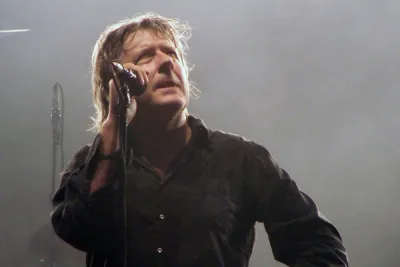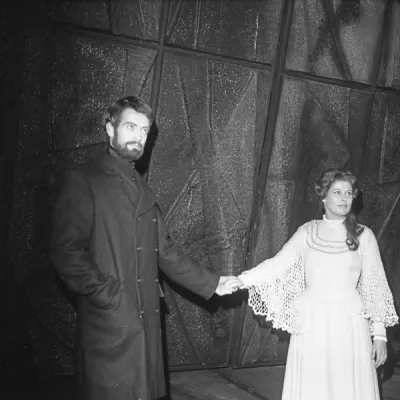
Arne Aas
Human Design Chart
Biography
Aas died after a short illness on 3 April 2000 aged 68.
What does Projector 5/2 mean for Arne Aas?
Projector 5/2 — Design at a Glance
Arne Aas appeared as someone who immediately recognized systemic weaknesses. His Human-Design type was Projektor, which describes an aura that functions like a bright flashlight: it directs its focused beam directly onto areas in the environment that are still "in the dark." This mechanism allowed him to identify errors in systems instantly.
However, this direct perception could be perceived as unpleasant by others, similar to being blinded by a harsh light. When Arne Aas pointed out these flaws immediately, he often provoked resistance rather than change. The more effective way of expressing his design was simply to shine pleasantly – for example, by exemplifying harmonious states. This made his presence attractive and others sought him out voluntarily to seek advice. Therefore, his strategy was to wait for a respectful invitation before sharing his knowledge.
Since Arne Aas as a Projektor did not have a defined Sacral Center, he lacked a constant source of intrinsic life energy. Instead, he experienced phases of high productivity that had to be balanced by periods of rest to prevent burnout. If he lived in accordance with this rhythm of activity and recovery, his design was rewarded successfully. Conversely, if he went against this structure, such as by constantly pushing without invitation or ignoring signs of exhaustion, it eventually led to bitterness as an expression of his non-self state.
No Inner Authority
Arne Aas did not have an internal, physical authority. His decision-making ability arose solely through external exchange and resonance in his open centers. As a mental projector without defined centers below the throat, he only found clear judgments through dialogue with others. Through energetic interactions, dormant potentials were activated, allowing him to view and express issues from multiple perspectives. This high resonant capacity helped him identify the appropriate environment and people for this exchange.
Evaluating these insights was a complex process that required time and solitude. Only in silence could Arne Aas discern the thread of truth, filter out the essential elements from the information overload, and structure them meaningfully. This ability to develop specific intelligence through order formed his central capital of success. An essential key lay in staying in a trustworthy environment where he could discuss decision-making processes with the right people. Over time, this deepened his sense of what felt right for him.
The 5/2 Profile — Heretic / Hermit
Arne Aas revealed an internal tension between a deep desire for withdrawal and a latent wish for public recognition. His design as a 5/2 Profile, the Hero and Natural Talent, suggested that he initially kept his gifts hidden. Instead of immediately being visible, Arne Aas used the "cave" of the second line to strengthen himself internally. This line requires protection from ego threats through isolation; it serves recovery and building inner willpower before stepping out into the world.
At the same time, the fifth line projected a capacity for rule-changing in crisis times. It seeks detours around obstacles rather than direct overcoming and can provoke when necessary to spread mutations. The challenge for Arne Aas was not to keep this internal strength isolated. Passive waiting for discovery by others risked bitterness and frustration, as the role of the "lone wolf" hardly functions.
The solution lay in actively stepping out with clear boundaries. As soon as Arne Aas carried his insights forged in solitude outward, he could take on the authority projected by the fifth line. Others would then be grateful for his presence and ability to navigate obstacles. Important was always maintaining balance: enough alone time to regenerate from the second line so as not to become exhausted by the pressure of the public stage but rather use it as a foundation for his performance.
Single Definition — Defined & Open Centers
Arne Aas revealed himself through a constant, trustworthy mental presence and reliable expression. His defined Ajna Center ensured consistent conceptual thinking; he was always engaged in a mental process that was not easily influenced from the outside. This internal stability directly flowed into his defined Throat Center, which served as a pivot point for communication and action. Arne Aas could express what he thought and translate his concepts into the world without waiting on external impulses.
This stable 'I' of thinking and speaking stood in stark contrast to his seven open centers: Head, G-Center, Heart, Sacral, Solar Plexus, Spleen, and Root. These areas did not provide a constant internal energy source but reacted situationally to environmental impulses. His open Head Center absorbed mental inspiration or pressure from the environment without identifying it as personal truth. The open G-Center meant that identity and direction were not fixed; he adapted to people and places around him and did not actively seek a firm purpose, but allowed himself to be initiated.
In his Heart Center, there was no consistent willpower; he tended to make promises to prove value, which often ended in a spiral of self-doubt as the energy for this was not sustained. His open Sacral Center made him vulnerable to 'borrowed' vital energy; he could overextend himself and perceive others' fatigue as his own without clear boundaries. Emotionally, his open Solar Plexus Center absorbed the moods of the environment, which could lead to personalizing other people's moods or avoiding confrontation out of fear of rejection.
The open Spleen Center carried a fundamental survival anxiety and made him sensitive to others' health vibrations; spontaneous decisions here were risky as they often stemmed from conditioned insecurity rather than true intuition. Finally, his open Root Center took on external stress and adrenaline, which could lead to inner restlessness when he tried to release pressure that was not his own. The challenge lay in not confusing the constant activity of Ajna and Throat with the fleeting impulses of these open fields.
Channels for logical order and accepting clarity.
Arne Aas showed himself as someone whose mind was constantly engaged in logically organizing visual patterns and translating them into language. Only what he could categorize this way did he truly understand. This tendency came from Channel Acceptance 17-62. It connects the Ajna Center with the Throat Center: Gate 17 visualizes patterns, while Gate 62 names them through words and structures details. This created a constant pressure in his throat to express opinions in detail. His strength lay in condensing complex content into clear formulas or theories, which naturally made him suited for teaching. Timing was crucial here: he should wait until invited to speak to ensure clarity and effectiveness and avoid resistance. Logic does not give way by nature; debates served to examine existing patterns precisely.
Additionally, other gates worked in his design. Gate 38 represented pressure in the struggle for life meaning and set boundaries to preserve individual integrity. Gate 57 brought intuitive clarity and promoted self-awareness through presence in the here and now. Gate 39 provided fuel for mutations through analysis and provocation, while Gate 51 showed strong willpower without social bonds as well as the ability to respond to shocks with insight. In the emotional realm, Gate 12 stood for restraint and the influence of mood on communication, often associated with poetry. Gate 56 allowed abstracting mental processes into pictorial representations and narratives. This configuration marked Arne Aas as someone who did not just receive information but actively integrated it into a coherent mental system before passing it on.
Collective Circuitry — Circuit Signature
Arne Aas showed through his design as someone who structured the dissemination of logical and rational insights. His focus was on improving societal processes and leading towards a better future, driven by clear, emotionless logic. This orientation resulted from the active Understanding Circuit in him, which specifically connected the Ajna Center with the Throat Center.
This connection occurred through Channel 'Acceptance', which represents the ability to analyze information and translate it into understandable formats. As Arne Aas had a simple definition, these two centers formed a continuous energetic flow without being interrupted by other separate systems. The left side of his chart stood for future energies, emphasizing his orientation forward and interest in visual aspects of format energy.
The central theme of this configuration was sharing strategy and structure ideally free from personal conditioning or emotional coloring. Arne Aas did not just use his mind for internal processing but primarily for external communication. Through the direct connection between the center of thinking (Ajna) and that of expression ability (Throat), he could prepare complex connections in a way that made them useful to others. This marked his way of imparting knowledge: factually, focused, with the clear aim of triggering positive changes through logical clarity. The energy flowed directly from analysis into articulation, enabling an efficient dissemination of his visions.
Left Angle Cross of Individualism 1
Arne Aas' design showed a tendency towards clear individuation. His character was marked by a focus on personal perception and the drive for self-determination. This attitude did not arise from isolation but rather from the necessity to listen to his inner voice, instead of losing it in collective expectations.
This trait could be attributed to the left cross of Individualism 1. This configuration emphasized the basic stance of independence. It challenged Arne Aas to walk his own path without dissolving into groups or social structures. The mechanics of this design supported a lifestyle where personal integrity took precedence over adaptation. It was about acknowledging one's reality as valid and deriving decisions from it, not under pressure to conform or fit in.
For Arne Aas, this meant that his identity rested strongly on this individual basis. He lived in a dynamic that led him to always look inward for clarity about his position. This inner orientation protected him from confusion caused by external opinions and helped him act authentically. The emphasis was not on rebellion but on the calm certainty of being oneself. Through this structure, he could assert himself as an independent unit that drew its values from itself rather than adopting them from outside. This shaped his way of dealing with the world: directly, personally, and unmistakably.
Saturn Return · Uranus Opposition · Chiron Return · 2nd Saturn Return — Life Cycles
Arne Aas showed a career marked by clear structural turning points. His design suggested that recurring astrological cycles signified crucial phases in his self-image and professional development. In 1957, at age 26, he debuted at Trøndelag Theater in Strindberg's Erik XIV. This coincided with his first Saturn Return, a cycle often symbolizing the transition from education to serious professional commitment and laying foundations for long-term structures.
Another structural event occurred in 1970 when he was appointed director of Trøndelag Theater at age 39. This corresponded with the Uranus Opposition, a phase typically associated with profound changes, breaking away from old patterns, and embracing new responsibilities often unexpectedly. It was a moment of transformation where his role fundamentally changed.
The peak of this cyclical development was evident in 1980 when he received the Stiklestad prize for his staging at age 49. This marked his Chiron Return. From a Human Design perspective, this is not a healing process in a psychological sense but rather an achievement cycle. Here, one's incarnation cross unfolds increasingly; meaning and purpose become experiential, and the person reaches a kind of bloom or fulfillment of their life task if they have lived according to their strategy. For Arne Aas, this award was visible proof that he had found and realized his inner compass.
Projector · No Inner Authority — Synthesis
Arne Aas' life was characterized by a deep ability to recognize patterns and communicate them precisely (Channel 17/62). This mentally focused energy, drawn from a defined Ajna and Throat Center, led him to quickly identify errors in systems. Yet the design did not call for immediate confrontation but rather a radiant presence that naturally drew others – a strategy manifesting in his career at theater. The openness of various centers (especially Root, Sacral, and Solar Plexus) made him receptive to environmental energies, which both fueled his creativity and made him vulnerable to conditioning.
A central paradox in Arne Aas' chart lies in the interplay between inner clarity and outer openness. He possessed sharp analytical skills (Gates 39, 56), yet was not firmly anchored in a defined self. This tension field between the drive to recognize and name patterns and the tendency to be carried away by external influences shaped his decisions and actions. The ability to perceive and amplify others' energies made him sensitive to their pressure and required conscious boundaries to avoid burnout.
1 Defined Channel
Incarnation Cross - Left Angle Cross of Individualism 1
Solar Return
The Solar Return shows the moment when the sun returns to its exact birth position - your personal solar year.
Life Cycles
Discover the life cycles with a detailed triple view (birth chart, cycle chart, composite).
Human Design Profile
- Type
- Projector
- Strategy
- Wait for the respectful invitation
- Profile
- 5/2 - Heretic / Hermit
- Definition
- Single Definition
- Incarnation Cross
- Left Angle Cross of Individualism 1
- Date of Birth
- 07.07.1931 07:00
- Place of Birth
- Oslo, Norway
Frequently Asked Questions
What is Arne Aas' Human Design type?
Which Profiles did Arne Aas have?
What Authority did Arne Aas have?
What incarnation cross did Arne Aas have?
When was Arne Aas born?
Discover your own Human Design
Are you also a Projector? Find out in a personal reading how to unfold your leadership qualities and recognize the right invitations.
More Personalities
Back to overviewSissy Spacek

Alain-Fournier

Anémone

Ann-Margret

Arletty
Arno