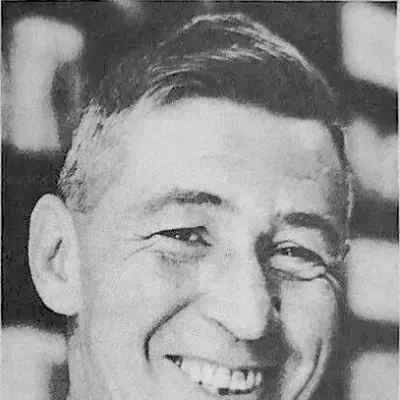
August Losch
Human Design Chart
Biography
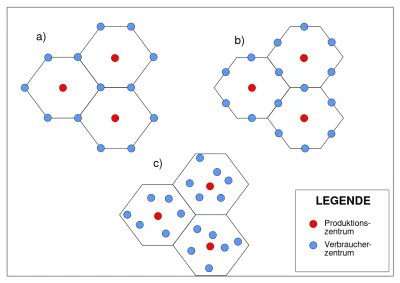
During the 1930s and 1940s, his original work on the economics of location led to the formulation of his model of hierarchy of market areas. However, Lösch’s unconventional point of view contradicted the prevailing belief of the time; as a result, his theories were not accepted.
Died on 30 May 1945, Kiel, Germany
The Human Design of August Losch: Projector 1/3
Projector 1/3 — Design at a Glance
August Losch was a Projector. His design indicated a tendency towards a focusing aura that directly influenced his environment. One can imagine this trait as a bright flashlight whose beam is directed precisely onto areas still in darkness for others. August Losch immediately saw what was wrong in systems or relationships of others; he found the fault in the system.
If he addressed these deficiencies directly, it often felt like glaring light into someone else's face and led to defensive reactions. More elegant for him was simply shining harmoniously himself. Through his own example, he became attractive; other people came automatically to him and asked about his insights. The best strategy for August Losch therefore consisted in waiting for a respectful and sincerely meant invitation from others before giving advice.
As a Projector, he did not have a defined Sacral Center and thus no constant intrinsic source of life energy. He experienced phases of high energy where he could work quickly, followed by necessary rest periods to avoid burnout. The traditional school system or rigid work structures often did not take this need for breaks into account. If August Losch lived according to his design and waited for the invitation, he was rewarded with success. Ignoring this strategy led him sooner or later to experience the non-self theme of bitterness.
No Inner Authority
August Losch lacked inner authority, a rare configuration that fundamentally shaped his decision-making process. As a mental Projector, he did not have an activated Center below the Throat Center. This openness allowed him to absorb information through exchanges with various people. In these dialogues, dormant potentials in his open Centers were activated, enabling him to view and express matters from many perspectives. His high resonance ability helped him find the right environment and suitable conversation partners.
Evaluating these impressions was a complex process that required time and solitude. Over the years, August Losch learned to recognize the red thread and filter out the essential from an information overload. This ability to meaningfully organize and structure insights formed his specific capital of success. A key for him was choosing an environment where he felt comfortable and could exchange trustingly. Through this process, over time, he deepened his sense of what truly belonged to him and what made sense. By this method, he developed his specific intelligence not through inner commands but through the careful integration of external influences.
The 1/3 Profile — Investigator / Martyr
August Losch appeared as a person who did not just collect knowledge theoretically but tested its practical worth through active experimentation. His design as a 1/3 Profile – the Researcher and Experimenter – determined this fundamental attitude: He learned through trial and error. The Line 1 in him drove the urge to preserve details and observe processes with instinctive attention to ensure continuity. At the same time, Line 3 challenged him to embrace the unusual, accept errors as a necessary part of learning, and start anew if something did not fit.
This combination created a specific dynamic: August Losch often had to overcome inner resistance stemming from fear that he did not know enough before acting. The energy of Line 1 could tend to delay implementation because there was a feeling of needing more information. Yet only through the practical experience of Line 3 – pressing buttons and entering into commitments, which might later be dissolved – did truly trustworthy judgments form in him. If August Losch evaluated something as good, he had previously tested it both theoretically in detail and practically on his heart and conscience. His insights were thus not mere conjectures but self-earned and verified truths validated through the process of failure and starting anew.
Single Definition — Defined & Open Centers
August Losch's design created a constant mental pressure: to question, to understand, and to comprehend consciousness itself. This definition between the Head Center and Ajna Center established a trustworthy, specific mental function; he was always thinking, constantly in the process of conceptual understanding. Since there was no energy available for direct implementation of these ideas, attempts to relieve this pressure through hasty action often led to frustration or disappointment. His strength lay in inspiring others with thought-provoking questions rather than forcing them to accept his answers.
This intense mental process contrasted with his open centers, making him susceptible to conditioning. His open Throat Center naturally attracted attention; however, the attempt to force attention or control speaking often led to unpredictable statements and stress. He tended to wonder if he was noticed instead of waiting for an invitation to speak.
His open G Center meant a lack of fixed identity; he adapted to his environment and collected directions through interaction. The non-self question “Who am I?” or “Where do I find love?” could drive him to seek titles or roles to gain security, rather than trusting that the right place and people would reveal themselves when he was in the correct position.
The open Heart Center lacked consistent willpower; he tended to make promises to prove his worth, often ending in a cycle of failure and self-doubt because he did not have the energy to uphold these commitments. His open Sacral Center absorbed the vital energy of others; without his own generative power, working on borrowed energy or setting boundaries risked exhaustion, instead of trusting his fluctuating energy flow and resting appropriately.
Channels for abstract images, logical doubt.
August Losch's design inclined towards analytical skepticism coupled with a constant drive to translate experiences into narrative contexts. His mind was not a passive observer but an active instrument for pattern recognition and abstraction. This attitude resulted from the interaction of two defined channels in the Head Center and Ajna Center.
The Logic Channel 63-4 connected the Gate of Doubt with the Gate of Formulating. This created a mind that constantly filtered patterns to test their consistency. For August Losch, doubt was not a weakness but essential for logic; an answer was only valid if it confirmed in a consistent and verifiable pattern. This channel drove him to ask questions and seek answers, not out of personal need, but to provide useful predictions or explanations for the collective. The mental pressure arose where a pattern was inconsistent and subsided through logical verification.
Parallel to this, the Abstraction Channel 64-47 connected the Gate of Confusion with the Gate of Understanding. This channel filtered every experience through a kaleidoscope of mental images. August Losch felt compelled to understand the past and gain perspective by seeking stories – whether about his own life or others'. His mind constantly played with possibilities, regardless of established rules, until something mysterious emerged that made sense. This configuration rendered him ill-suited to solve personal problems purely intellectually as the mind lacked an inner authority here. Instead, this mental power served to uncover inspiring stories or new perspectives which he could then share.
Additionally, individual gates shaped his profile: Gate 32 ensured continuity and tested situations for material success and stability while performing radical changes when necessary. Gate 42 emphasized the importance of experience and completing processes before taking on new commitments. Gate 62 promoted patience and concentration in detail search and naming to logically order facts. Finally, Gate 61 stood for the pressure of individual spontaneous knowledge mutations in the struggle for inner peace and self-awareness. Together these elements formed a person whose mind constantly oscillated between skeptical scrutiny and abstract storytelling.
Collective Circuitry — Circuit Signature
August Losch's design established a clear, bifurcated cognitive structure. As he was simply defined, his energetic connections did not exist as an interconnected whole but rather as separate segments. This marked him as someone whose thought processes ran in two parallel tracks that did not directly communicate with each other.
The Understanding Circuit connected his Head Center and Ajna Center through the Logic Channel (Gates 63/4). This configuration promoted a rational, emotionless analytical capability aimed at improving things and structuring logical insights free from conditioning. It was focused energy looking towards the future and seeking visual clarity.
Parallel to this, the Meaning Circuit also activated between Head Center and Ajna Center but through the Abstraction Channel (Gates 64/47). Here, cool reason did not take precedence; instead, emotional reflection on past experiences prevailed. This energy flowed in wave-like and cyclical patterns: it sought meaning behind events from the past to learn collectively.
Although both circuits utilized the same centers (Head and Ajna), they did not form a continuous connection due to simple definition. August Losch experienced these aspects as coexisting forces: on one hand, strategic future-oriented logic; on the other, emotional past-focused meaning-seeking. This separation prevented confusion of energies; instead, it showed a clear pattern where rational structure and emotional reflection stood as separate yet equally valuable tools.
Right Angle Cross of Maya 3
August Losch's design was marked by the right cross of Maya 3, a configuration that drove him towards profound inner transformation and spiritual awakening. This structure did not offer external authority or strategic planning but rather an intuitive, almost mystical connection to the essence of life. It fostered humility and trust in one's own path, even when it appeared invisible or unpredictable. For August Losch, this meant he was guided by a sense of internal correctness and meaningfulness rather than external recognition or logical arguments. His decisions arose from deep resonance with the moment, less from calculated action. This energy supported him in releasing superficial expectations and instead developing an authentic, more personal life form. It was a process of letting go and rediscovery that helped him recognize and live his true nature – free from conventions or societal pressure.
Saturn Return — Life Cycles
August Losch's design showed a tendency towards structural rigidity, which found its classical expression during the first Saturn return. This cycle marks the transition from the exploratory phase of early adulthood to taking on long-term responsibility and building stable life foundations. For August Losch, this was a time when years of groundwork and experimental phases condensed into a viable outcome. The mechanics of this return acted like an inner compass, guiding focus towards sustainability, conscientiousness, and consolidation of personal values. It wasn't a sudden transformation but rather a gradual anchoring in reality, where August Losch learned to use his energy purposefully and set boundaries. This process significantly shaped his further development by helping him distinguish between transient interests and enduring commitments. The resulting stability served as the foundation for all subsequent life stages, providing clear orientation and emphasizing the necessity of discipline and patience. Through this phase, August Losch's character was strengthened, enabling him to look more confidently into his future and make decisions based on solid ground.
Projector · No Inner Authority — Synthesis
August Losch was a projector whose life was marked by a profound drive towards understanding and the need to recognize and formulate patterns (Logic Channel: Gates 63/4). He fully embodied the Explorer Profile – always seeking new insights through experimentation and verification. This combination led him to perceive the world around him with a sharp eye for inconsistencies, trying to resolve them without adhering to prescribed paths. His defined Head Center intensified this inner pressure to ask questions and find answers, making him an inspiring yet possibly challenging presence for others.
The essence of August Losch lay in a paradox between the need for deep understanding and the absence of internal authority. He relied on interactions with other people to gather and filter information (open centers), while simultaneously feeling a persistent mental pressure to recognize patterns and draw logical conclusions. This tension between external resonance and inner drive shaped his approach to the world, revealing an ability to grasp complex connections and make them accessible to others – always with awareness of the need for continuous review and adaptation.
2 Defined Channels
Incarnation Cross - Right Angle Cross of Maya 3
Solar Return
The Solar Return shows the moment when the sun returns to its exact birth position - your personal solar year.
Life Cycles
Discover the life cycles with a detailed triple view (birth chart, cycle chart, composite).
Human Design Profile
- Type
- Projector
- Strategy
- Wait for the respectful invitation
- Authority
- No inner authority - learn more
- Profile
- 1/3 - Investigator / Martyr
- Definition
- Single Definition
- Incarnation Cross
- Right Angle Cross of Maya 3
- Date of Birth
- 15.10.1906 04:30
- Place of Birth
- Öhringen, Germany
Frequently Asked Questions
What was August Losch's Human Design type?
What profile did August Losch have in Human Design?
What authority did August Losch have?
What incarnation cross did August Losch have?
When was August Losch born?
Discover your own Human Design
Are you also a Projector? Find out in a personal reading how to unfold your leadership qualities and recognize the right invitations.
More Personalities
Back to overviewSissy Spacek

Alain-Fournier

Anémone

Ann-Margret

Bourvil
Hergé