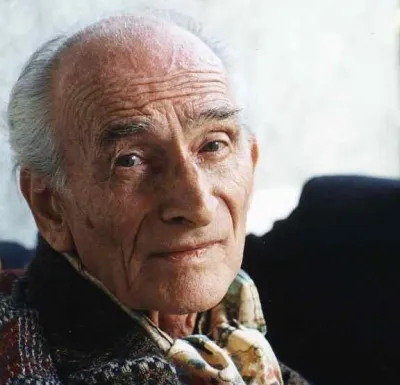
Ben Askren
Human Design Chart
Biography
A Bellator and ONE Welterweight Champion, he remained undefeated for over a decade before competing in the Ultimate Fighting Championship (UFC).
An accomplished grappler, he was the 2008 US Olympic Team Member and National champion and the 2005 Pan American champion in freestyle wrestling, a two–time NCAA Division I national champion (four–time finalist), and three–time Big 12 Conference champion (four–time finalist) for the Missouri Tigers, and was the second wrestler to secure multiple Dan Hodge Trophies (the wrestling equivalent of the Heisman Trophy) in folkstyle wrestling. He was also a world champion in submission wrestling.
After a back-and-forth on social media, Askren fought YouTube personality Jake Paul in a boxing match on 17 April 2021, losing by TKO.
The Human Design of Ben Askren: Manifesting Generator 6/3
Manifesting Generator 6/3 — Design at a Glance
Ben Askren's design indicated a tendency towards high dynamism: He was someone who could achieve quick results by skipping steps. This ability stemmed from his configuration as an Manifesting Generator – a hybrid type that combines the constant sacral energy of a Generator with the direct expression of a Manifestor.
His natural strategy involved not initiating himself but responding to external impulses. Only when his Sacral Center signaled a clear "yes" could he effectively channel his energy. If he ignored this inner consent or tried to act against his impulse, his natural speed quickly turned into frustration – the central theme of his non-self.
Especially pronounced in him was the ability for multitasking. Unlike pure Generators, Ben Askren did not suffer from the compulsion to complete one thing at a time. On the contrary: His deepest satisfaction and creative power arose from a "play mode," where he worked on various projects simultaneously as long as each individual impulse was affirmed by his authority. This parallel engagement was not a sign of lack of concentration, but rather the optimal use of his energy.
The risk, however, lay in the speed itself. If he acted too quickly and skipped important intermediate steps, he often had to backtrack and make up for what was missing. This led to friction losses and frustration. Only through consciously waiting for sacral confirmation before each step – even during fast actions – did his hybrid energy become a source of deep satisfaction rather than an origin of inner conflict.
Sacral Authority
Ben Askren's design inclined him to make decisions not through intellectual analysis but rather through immediate physical signals. As a Generator with defined Sacral Authority, his primary decision-making instance was this "gut feeling." It manifested as a reaction to external stimuli in the form of grunts, hums, or a noticeable surge of energy. This mechanism simplified his process: instead of thinking it over, he responded physically.
When resonating, Ben Askren felt vital and had inexhaustible energy that allowed him to immerse himself enthusiastically in activities – without an external goal being necessary. The joy of the activity itself was paramount. Without this sacral response, he remained inactive to avoid wasting energy on false initiatives.
Supporting his instinctual decision-making was his activated Spleen Center. This gave him the ability for quick, spontaneous reactions and a reliable access to intuitive perception of physical well-being. Distinguishing between genuine, vital resonance and mere reaction was crucial. Only following these sacral signals guaranteed satisfaction and efficiency, while ignoring them led to frustration. His system was designed to navigate through this direct physical feedback rather than searching for solutions in his mind.
The 6/3 Profile — Role Model / Martyr
Ben Askren's Human Design profile is characterized by a dynamic tension: the constant need for extreme self-experimentation contrasts with the later-developing responsibility as a wise role model. In the first three decades of life, Line 3, the experimenter, dominates. It drives him to test biological limits and survive through mutation and experiencing all extremes. This phase is marked by inner restlessness and the pursuit of an extraordinary life far from standardized norms.
After about thirty years, the orientation shifts towards Line 6. Here, self-discipline, attention to detail, and correct communication come to the forefront. The previously gathered, often chaotic experiences are now structured and serve the development of foresight and humor. Thus, Ben Askren is shown as someone whose early years were defined by constant adaptation and searching for the perfect, unique path, while the later phase is marked by the ability to share these unusual insights authentically as a role model. Line 3 ensures that this experimenting never fully ends but transforms into a deeper, more disciplined form based on material success and clear communication.
Single Definition — Defined & Open Centers
Ben Askren's design indicated a tendency towards constant inner stability and reliable expression. His defined Sacral Center provided an enormous source of vital energy, which was guided by the principle of reaction – a clear yes or no to external triggers. This power allowed him to engage only where true satisfaction was possible and protected against exhaustion from false initiatives. This was complemented by his defined G Center, which offered a firm sense of self-identity and clarity about life direction. Ben Askren emerged as someone who acted from this inner security without relying on others.
The defined Throat served as a reliable pivot point for communication and action. It enabled him to express his truth with clarity and honesty, drawing directly from the stable energies of the Sacral and G Centers. Additionally, the defined Spleen Center provided spontaneous intuition and strong body awareness in the present moment. This helped him make health-promoting decisions intuitively and protect himself from danger without having to rationalize it.
In contrast, Head, Ajna, Heart, Solar Plexus, and Root were open. These centers did not form personal traits but acted as mirrors for their environment. Ben Askren tended to absorb mental pressure or inspiration from the world (open Head and Ajna Centers) without identifying these thoughts as his own truth. The open Heart Center made him vulnerable to feeling others' willful pressure or developing a sense of needing to prove his worth, although he did not consistently generate this energy himself. Similarly, his open Solar Plexus absorbed emotions from his surroundings and amplified them, potentially leading to misunderstanding external moods as personal instability. Finally, the open Root Center absorbed environmental stress and adrenaline surges. The challenge lay in not personalizing these taken-in impulses but using the defined inner sources – Sacral, G Center, Throat, and Spleen – as the sole authority for decisions and actions.
Channels for powerful action, presence, self-expression and care.
Ben Askren's design indicated a tendency towards a strong, constant presence of self-love and self-confidence in the here and now. This radiance of clarity and awareness unconsciously inspired others to be authentic; the goal was mastering self-expression as living proof of self-acceptance.
This attitude rooted in the Awakening Channel 10-20 of Personality. It connects the G Center with the Throat Center through the Gate of Appearance (10) and the Gate of Now (20). For awakening, every moment offers an opportunity to recognize principles and commit to them by transforming personal knowledge into proper action. This is action guided by a subconscious behavioral code that successfully secures interaction with others. The channel says: “I AM! I live NOW!” The two pillars of such a life are self-love and self-confidence: “I am, and I can do this because I (myself) love.” Being awake here means making decisions as yourself and living by them. By simply being himself, Ben Askren influenced those around him to be themselves, often without knowing it.
This potential was reinforced by the Exploration Channel 34-10. It connects the Sacral Center with the G Center through the Gate of Power (34) and the Gate of Self Behavior (10). Gate 10 initiated behavior from the deepest inner self leading to self-acceptance, while Gate 34 provided supportive power to hold onto beliefs that shaped faith in oneself. This energy served to perfect personal behavior for survival without imposing on others.
Additionally, the Charisma Channel 34-20 worked in his design. It connected the Sacral Center through the Gate of Power (34) with the Throat Center through the Gate of Now (20). This was the classic Manifesting Generator configuration where the drive to act was guided by sacral reaction. The raw power of Gate 34 was channeled through the thyroid system and became a key component for survival energy. The Sacral exerted pressure to express in the moment. Without consciousness, this energy could lead to obsession; with inner guidance, it showed as true vitality and self-reinforcement that inspired others.
Individual Circuitry — Circuit Signature
Ben Askren's design indicated a tendency towards fortified, courageous individuality. His internal orientation was strongly fixed on self-worth and unshakable convictions. This resulted from the Centering Circuit: The Channel 10-34 connected his Sacral Center (life force) directly with the Identity Center (who he is). This connection created an inwardly focused, stable energy base. Since there was no connection to the Throat Center, these deep certainties often remained hard to verbalize; they were lived, not explained.
Parallel, the Archer Circuit worked through Channel 27-50 (Preservation). Here, the life force of the Sacral Center flowed into the Spleen Center (instinct/protection). This imprinted a primal need for preservation and care rooted in instinct.
The Integration theme further linked these forces. The Channels 20-10 (Awakening) and 20-34 (Charisma) created a direct bridge between Sacral, Identity, and Throat Centers. This allowed the inner power to be effectively expressed through proper behavior and intuition in “Now.” Although the Centering Circuit alone had no verbal connection, Integration allowed an expression form based on charisma and immediate presence rather than analytical explanation. Ben Askren thus emerged as someone whose identity was strengthened by internal affirmation while protective instincts and current action capability coexisted.
Left Angle Cross of Obscuration 1
Ben Askrens design points to a fundamental tendency towards hiding or not revealing certain aspects, which acts as a structural background. This configuration is described by the left cross of Concealment 1. It does not imply conscious deception in everyday terms but rather a deeper architectural property: essential aspects of personality or intentions remain hidden from general perception. The design does not work with open transparency as its primary tool but uses concealment as an integral part of its functionality.
This mechanism means that Ben Askren tended to hold back on a structural level, keeping certain dimensions of his being from direct illumination. The energy of this cross ensures that the essential often remains in the background while only fragments become visible. It is a quality of discretion and protective space, preventing everything from being revealed at once. For Ben Askren, this was not a flaw or lack of openness but rather the defining way his system dealt with attention and self-giving. Concealment served to preserve the integrity of the inner structure by not making it accessible to every curiosity. This created a distance between what was shown and what actually existed – a protective mechanism prescribed by the design that reflected in his presence.
Saturn Return · Uranus Opposition — Life Cycles
Ben Askrens design points towards structural consolidation and identity testing, especially during phases of maturation. This configuration often manifests as a moment when internal stances become visible and solidify externally. The first Saturn return marks such a turning point in Human Design: it is not just an age limit but a cycle where years of groundwork condense into a viable result. It's about questioning which structures truly hold and who one really is within oneself.
In 2010, at the age of 26, Ben Askren won the Bellator title in welterweight. This event exemplifies this mechanism: winning the title was not just a sports success but the concrete manifestation of a long-term development line. During this period, what previously existed as potential or training became tangible reality. The design's structure demanded an identity test through external validation and performance. Winning the title confirmed his inner alignment and anchored it in the outside world. It was a moment of clarity showing that the chosen direction is viable. Structural consolidation did not happen silently but through a measurable, public milestone translating internal work into stability.
Manifesting Generator · Sacral Authority — Synthesis
A central red thread runs through the design: the dynamic balance between inner reaction and outer expression. The defined sacral authority paired with the manifesting generator type points to someone whose energy springs from reacting to impulses – a constant 'yes' or 'no' of the body as a compass. This energetic foundation is reinforced by connections in the Centering Circuit (Sacral and G-Center), signaling deep self-determination and inner drive. However, openness in key centers like Head, Heart, and Root indicates that this internal power is not isolated but strongly perceives and is influenced by its environment – continuously taking in and processing external stimuli, bringing both strength and vulnerability.
The central paradox lies in the tension between the need for inner drive and openness to external influences. The design shows a person who naturally tends towards quick action and setting things in motion (manifesting generator), while simultaneously being vulnerable to conditioning and pressure from others due to open centers. This discrepancy leads to an internal struggle between authentic expression of one's energy and attempts to meet expectations or adapt. Mastering this tension – honoring one's inner authority while consciously perceiving external influences – seems key to well-being.
4 Defined Channels
Incarnation Cross - Left Angle Cross of Obscuration 1
Solar Return
The Solar Return shows the moment when the sun returns to its exact birth position - your personal solar year.
Life Cycles
Discover the life cycles with a detailed triple view (birth chart, cycle chart, composite).
Human Design Profile
- Strategy
- To respond - wait for something to respond to
- Authority
- Sacral Authority
- Profile
- 6/3 - Role Model / Martyr
- Definition
- Single Definition
- Incarnation Cross
- Left Angle Cross of Obscuration 1
- Date of Birth
- 18.07.1984 13:21
- Place of Birth
- Cedar Rapids, IA, United States
Frequently Asked Questions
What is Ben Askren's Human Design type?
What Profile does Ben Askren have in Human Design?
What authority does Ben Askren possess?
What incarnation cross does Ben Askren have?
When was Ben Askren born?
Discover your own Human Design
Are you also a Manifesting Generator? Find out in a personal reading how to unfold your multi-talents and direct your energy wisely.
More Personalities
Back to overviewAldair

Alizée

Angeli

Arletty

Artus

Balthus