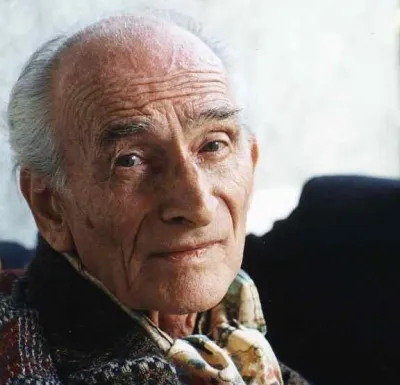
Bernard Arnault
Human Design Chart
Biography
Born in Roubaix, Arnault was raised in a devoutly Catholic household. He studied civil engineering and mathematics at École Polytechnique, graduating in 1971. He began his career in his father's company, Ferret-Savinel, shifting its focus to real estate, which laid the groundwork for his future career in the luxury goods market.
Arnault's entry into the luxury sector was marked by his strategic acquisition in 1984 of the financially-struggling textile and retail conglomerate Boussac Saint-Frères, which included the prestigious fashion house Christian Dior. His aggressive business strategies earned him the nickname "The Terminator", as he revitalized Dior and sold off other assets for profit. In 1987, he played a key role in the creation of LVMH (an abbreviation for Louis Vuitton Moët Hennessy), a global luxury goods company, by merging Louis Vuitton with Moët Hennessy.
Bernard Arnault as a Manifesting Generator 4/6 in Human Design
Manifesting Generator 4/6 — Design at a Glance
Bernard Arnault's design features a tendency towards hybrid energy: the speed of a manifestor combined with the constant power of a generator. This allowed him to skip steps and quickly draw results into his life. Yet, this speed contained a paradox. Often it led to important stages being skipped, necessitating a return to catch up later. Alternatively, he worked on many projects simultaneously as his nature responded equally to numerous impulses at once.
The success of this dynamic strictly depended on the strategy of responding. Instead of initiating himself, it was crucial to react to external stimuli and only act when the Sacral Center – the source of his energy – gave a clear "yes." Only this confirmation ensured that his creative power did not turn into frustration. Additionally, his design required a playful, varied mode. The demand to finish one thing before starting another contradicted his nature. Instead, he drew deep satisfaction from working on various projects simultaneously as long as they were enjoyable and aligned with his inner authority. Without this balance of responding to impulses and playful variety, the immense energy risked running into nothingness or becoming inefficient through hasty actions.
Emotional Authority
Bernard Arnault's design indicates a tendency towards temporal distance in important decision-making; spontaneous reactions appear unreliable in his system, while clarity emerges only after the mood has subsided. This structure results from his emotional authority, carried by the defined Solar Plexus Center. This center is always active when it is defined—regardless of other configurations in the chart—and is subject to a constant up-and-down of emotions. The world thus appears colored by the current mood: what excites at one moment can seem negative in the next. Since this feeling represents only a snapshot, quick decisions made from emotional highs or lows are risky and can have negative consequences.
The mechanics here require patience: the more time Bernard Arnault took to let a decision mature, the deeper his understanding became. This involved consciously "sleeping on questions" and repeatedly questioning himself. Over time, intense feelings subsided, emotional distance gained strength, and calmness set in. Only then was the process complete. This mechanism is particularly relevant for long-term decisions that can have a significant impact on life's course. The strategy consisted of not acting impulsively but waiting until the emotional wave had lost its power, leaving behind a clear, calm perspective.
The 4/6 Profile — Opportunist / Role Model
Bernard Arnault's design set a tendency for him to experience his life as a field of tension between the deep emotional need for belonging and the later development into the broad perspective of a role model. In the first three decades, Line 6 still acted like Line 3, which led him to experiment extensively in relationships and friendships to recognize patterns. This corresponded to Profile 4/6 (Networker/Role Model), which characterized this early phase.
With the activation of Line 6, a frequent contradiction arose: between the desire to belong to a community (Line 4) and the longing to contemplate the meaning of life (Line 6). This conflict of heart versus head could be confusing. Line 4 brought precision, focus on details, and externalization of doubts, while Line 6 taught acceptance of the unforeseen and growth through ego development.
In his later years, it was expected that he would meet the high standards of a wise role model and stand out particularly through cooperation with other people. Throughout this time, the great heart of Line 4 remained cautious to avoid being hurt by false individuals. The mechanics described an internal conflict between this protective instinct and the requirement to be a wise example through collaboration.
Split Definition — Defined & Open Centers
Bernard Arnault's Human Design indicates a tendency towards immense, constant vitality that is filtered through emotional depth and clear identity. His defined Sacral Center generates a daily constant energy source serving as the motor for endurance. However, this power does not stand ready for impulsivity but must wait on stimuli to respond correctly.
The mechanics show that this sacral energy is steered by his defined G Center, which offers reliable inner direction and self-identity. Arnault was someone who found his path from this inner compass needle without needing to direct others. Simultaneously, his defined Solar Plexus acts as an emotional authority: decisions require time until the emotional wave subsides and clarity sets in. Only then can energy be transformed and communicated through his defined Throat Center – reliably but limited to what comes from these sources.
In contrast, five open centers reveal situational flexibility. His open Heart Center means no constant willpower; Arnault did not tend to make promises or prove himself through competition but rather absorbed the vibrations of others' egos. The open Ajna and Head Centers lacked mental pressure or conceptual fixation. Instead of solving endless questions, he could take in inspiration from his surroundings without identifying with foreign confusion. His open Spleen Center offered no spontaneous intuition for health; here discipline was required to avoid making impulsive decisions in the moment that would lead to unhealthy external dependencies. Finally, his open Root Center absorbed external stress which he could not carry long-term but had to recognize and let go of to prevent burnout. This openness was not a deficit but room for wisdom through observation rather than constant self-production.
Channels for rituals, emotional depth and expressive openness.
Bernard Arnault's Human Design indicates a tendency towards a magnetic, impersonal life flow. He showed himself as someone who could determine the energy flow of a group or environment by his own inner rhythm and timing. This ability is based on the Rhythm Channel 5-15 connecting the Sacral Center with the G Center. Gate 5 holds onto fixed habits while Gate 15 integrates the diversity of society into the flow. This channel generates universal magnetism, drawing others into his rhythm and moving them forward without relying on intellectual arrogance or emotional waves.
Additionally, the Openness Channel 22-12 connecting Solar Plexus with Throat Center was at work here. Here, the emotional wave – mood and feeling – determines the timing for social interaction and articulation. Gate 22 expresses passion and drama while Gate 12 exercises cautious restraint limiting this openness to people with great mutative potential. This allowed Bernard Arnault to use his words in a way that could evoke an emotional response from listeners, provided he acted in alignment with his inner emotional authority rather than impulsively.
Further gates underscored this dynamic: Gate 63 urged towards security through resolving doubts, while Gate 64 served to interpret past experiences. Gate 35 promoted change through interaction, Gate 42 emphasized the importance of closure for new commitments. Gate 2 represented receptivity as a basis for evolutionary directions, and Gate 13 ensured continuity through collective memory. Gate 55 stood for extreme mood swings, Gate 59 pursued a genetic strategy of bonding without personal preferences, and Gate 27 brought caring warmth. Gate 1 emphasized uniqueness in the here and now while Gate 7 projected a need for leadership and hierarchical structure. Together these elements formed a profile marked by rhythmic constancy and mood-driven openness.
Individual Circuitry — Circuit Signature
Bernard Arnault's Human Design indicates an inner tension: between impulsive, emotional creativity and cool, strategic rationality. This duality results from his Split Definition creating two non-directly connected energetic groups. Clarity emerges for him only through external resonance; internally these forces exist parallel without forming a common flow.
One group connects Throat with Solar Plexus Center via the Knowledge Circuit. Here operates Channel 12-22 (Openness). This does not mean the general transformation described in the circuit by mutation or inspiration but specifically an emotional wave expressing as pulsing, acoustic creativity. It is about the expression of a unique identity driven by melancholic or inspiring emotions that must be immediately put into words.
The second group connects Identity with Sacral Center via the Understanding Circuit. Active here is Channel 15-5 (Rhythm). This represents focused visual energy aiming at logical structure and future-oriented strategy. Since Solar Plexus Center is missing in this circuit, it's 'emotionless ratio'. Bernard Arnault shows himself as someone sharing rational insights free from conditioning with a clear focus on improvement and progress.
These two systems – the emotional, individual expression on one hand and the factual, strategic planning on the other – stand side by side. They do not directly influence each other energetically but require their own conditions for unfolding: resonance for emotional clarity and rhythmic affirmation for strategic implementation.
Right Angle Cross of Consciousness 1
Bernard Arnault's design laid a tendency towards strategic alignment and the pursuit of a clear life purpose. This fundamental orientation stems from his configuration as a carrier of the right consciousness cross 1. In Human Design mechanics, this archetypal pattern defines the developmental path of a personality. It describes not just individual traits but the overarching framework that structures perception and action.
The right consciousness cross 1 marks a specific inner architecture. It connects the search for meaning with the ability to translate it into concrete strategies. Those who carry this structure often orient themselves towards long-term goals that go beyond daily business operations. It's about integrating conscious attitudes into a coherent whole. This mechanism acts as a compass-like instance in the background of decision-making, shaping how challenges are interpreted and resources allocated.
For Bernard Arnault, this means a natural inclination to align his actions with an overarching purpose. The underlying structure ensures that strategic pivots do not appear arbitrary but are part of a larger pattern. This archetypal formation defines the overall picture of the personality. It provides a framework within which development unfolds. Without inventing external events, this configuration shows the basis for a goal-oriented life path. Thus, the mechanics of the right cross 1 provide the key to understanding his inner compass needle.
Saturn Return · Uranus Opposition · Chiron Return · 2nd Saturn Return — Life Cycles
Bernard Arnault's design showed dynamics where outer shocks acted as catalysts for fundamental realignment. Rather than clinging to established structures, he responded to sudden upheavals with a clarifying liberation from the old. This Uranus opposition in the cycle marks phases where disruptive events break down old frameworks and open up new action spaces.
This mechanism became concretely active in 1989: At age 40, he took over the presidency of luxury goods conglomerate LVMH. This event was not a gradual ascent but an abrupt shift forced by external circumstances. The Uranus energy accelerated this process by dissolving existing bonds and forcing a new positioning. For his design, this means that his greatest impact often occurs when situations unexpectedly turn and old patterns no longer work.
The opposition signals not destruction for its own sake but the necessary breaking of shells so that the essential can emerge. Arnault used this disruptive power to free himself from previous structures and assume a new authority. The focus was not on preserving the status quo, but on quickly adapting to the new reality created by the external shock. This underscores his ability to make clear decisions in moments of highest uncertainty, initiated from outside but immediately understood and implemented internally.
Manifesting Generator · Emotional Authority — Synthesis
A central red thread runs through the chart: the dynamic balance between inner reaction and outer expression. The combination of manifesting generator type, defined G center, and sacral authority points to a person whose energy is fueled by deep, authentic impulses (sacral), yet strengthened by the need to articulate these impulses and bring them into the world (defined throat center). The profile as networker/role model emphasizes this aspect further, hinting at a natural tendency towards connection and sharing of insights – though always with the caveat of first listening to inner authority. The openness of various centers (Ajna, root, heart) indicates that this person is receptive to external influences but always maintains their own unique perspective and does not get lost in conditioning.
The central paradox lies in the tension between the need for inner clarity (emotional authority) and the ability for quick action (manifesting generator). While the emotional center requires time to let decisions ripen, the connection to the sacral center enables a lightning-fast implementation of impulses. This discrepancy carries the risk of skipping important steps or getting lost in too many projects simultaneously but can also lead to a unique form of creative productivity if strategy and authority are in harmony.
2 Defined Channels
Incarnation Cross - Right Angle Cross of Consciousness 1
Solar Return
The Solar Return shows the moment when the sun returns to its exact birth position - your personal solar year.
Life Cycles
Discover the life cycles with a detailed triple view (birth chart, cycle chart, composite).
Human Design Profile
- Strategy
- To respond - wait for something to respond to
- Authority
- Emotional Authority
- Profile
- 4/6 - Opportunist / Role Model
- Definition
- Split Definition
- Incarnation Cross
- Right Angle Cross of Consciousness 1
- Date of Birth
- 05.03.1949 17:00
- Place of Birth
- Roubaix, France
Frequently Asked Questions
What is Bernard Arnault's Human Design type?
What profile does Bernard Arnault have?
What authority does Bernard Arnault have?
What is Bernard Arnault's incarnation cross?
When was Bernard Arnault born?
Discover your own Human Design
Are you also a Manifesting Generator? Find out in a personal reading how to unfold your multi-talents and direct your energy wisely.
More Personalities
Back to overviewAldair
Alizée

Angeli
Arletty
Artus

Balthus