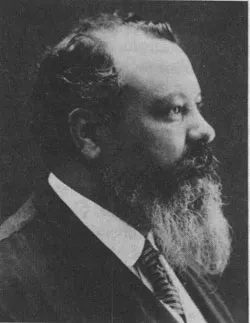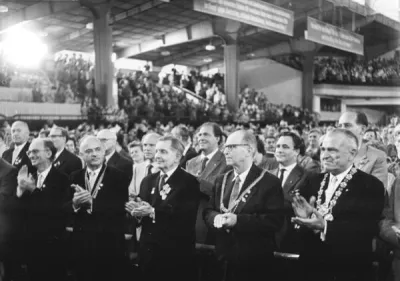
Brunolf Baade
Human Design Chart
Biography
Brunolf Baade retired in March 1969. He died on 5 November 1969 from complications caused by stomach cancer at age 65.
Human Design Analysis: Brunolf Baade as Manifestor 2/4
Manifestor 2/4 — Design at a Glance
Brunolf Baade's Design establishes him as a pioneer and visionary whose task is to lead the world into a new future. This profile works similarly to that of a Roman emperor: He possesses the grand vision of an empire but does not wage the necessary wars himself; instead, he sends others out to achieve his goals for him.
This configuration brings with it a specific pain point: Misunderstanding and polarization. Since Brunolf Baade often thinks further ahead than his surroundings, he is loved and followed by some while being rejected or even hated by others precisely because of his enormous visions. To minimize this friction and gain the right following, his strategy lies in timely and accurate communication about his intentions.
If he follows this strategy, he is rewarded with a sense of inner peace. However, if he lives against his design, persistent, deep-seated anger takes its place. Thus, his Human-Design shows a clear mechanism: By preparing his environment for his initiatives, he can avoid resistance and lead as a leader with less friction rather than getting entangled in conflicts arising from lack of information.
Emotional Authority
Brunolf Baades inner authority was the defined Solar Plexus Center, making him an Emotional Authority. This mechanism determined that his decision-making could never be based on a first emotional reaction. The truth did not lie in the immediate feeling but rather in the rhythm of the emotional wave, which showed itself through constant ups and downs in his moods. At one moment he could be excited about something, and at the next, view the same thing negatively. His current feeling was merely a colored snapshot, not yet his deeper truth.
Quick, spontaneous decisions based on an immediate mood were therefore prone to error and could have negative consequences. The mechanical prerequisite for clarity was time and distance. He needed patience to let decisions mature, often through multiple "sleeping on it." Only when the intense feelings subsided and he gained emotional distance did calmness and true insight set in. This process of delay was absolutely necessary, especially with long-term questions that had a significant impact on his life course. Through waiting, he went through the necessary maturation process until the emotional haze cleared, leaving behind a clear and calm perspective.
The 2/4 Profile — Hermit / Opportunist
Brunolf Baades Design creates a fundamental tension between the deep desire for withdrawal and the strong longing for community. He was constantly swinging between these poles: On one hand, he sought the isolation of the hermit (Line 2), while on the other hand, he yearned for connection with his "favorite people" (Line 4). For him, it was crucial to create a safe environment where he could clearly communicate his availability. He made it clear when he wanted company and when he needed to be left alone.
This structure allowed him to clarify internal processes during his solitary time. In this "Me-Time," he withdrew, found peace, and gained clarity. Once the need for withdrawal was satisfied, he returned from his "cave" into the social field. This dynamic was productive: The knowledge he absorbed in his network he reflected upon during periods of solitude. He evaluated these information and developed brilliant ideas that he could then share in a social context. Line 2 gave him a selective readiness to help; he supported others in crises, often unconsciously, used imagination for useful projects, and helped only those who asked for support. Line 4 complemented this by enabling him to convey complex ideas in such a way that they were accessible even to laypeople. Thus, his design connected the transpersonal perspective with concrete inspiration within the network.
Split Definition — Defined & Open Centers
Brunolf Baade's Human Design profile presented a stable axis of willpower and expression that had to be filtered through emotional waves. His defined Heart Center gave him consistent willpower and the desire for self-determination; he possessed the potential to keep promises and control his resources independently. This energy flowed into his defined Throat Center, enabling reliable communication – he spoke from within rather than merely repeating thoughts. However, this form of expression was connected with his open Solar Plexus Center, so that his words and actions were always marked by emotional fluctuations. His inner authority lay in patience: He had to wait for the emotional wave to clear before making decisions or taking action. The defined Root Pressure drove him forward physically but only kept him healthy if he did not impulsively vent this stress.
In contrast to this internal stability, four open centers made him vulnerable to external influences. His open G Center meant a lack of fixed identity; he tended to lose himself in relationships or seek direction given from outside. Without a defined Sacral Center, he had no constant energy flow and risked overexertion through borrowed vitality from the environment. Additionally, his Head and Ajna Centers were open: He was prone to mental confusion or doubts that were not his own, tending to identify with foreign concepts rather than trusting his emotional clarity. His open Spleen Center finally made him vulnerable to fears of survival; he unconsciously sought security from others instead of acting spontaneously, which often led to unhealthy attachments.
Channels for ambitious action and intuitive emotional clarity.
Brunolf Baade showed a dynamic tension between material claim and emotional unrest. His structure was marked by the Money Line 21-45, driving willpower for control and resource acquisition. This channel connected Heart with Throat through the Hunter's Gate (21) and the Gatherer's Gate (45). It represented the authoritarian voice “I have or I don’t” and required independence to avoid stress. Brunolf Baade had to learn to work hard but follow his own rhythm, as control over his environment was essential.
At the same time, the Recognizing Channel 30-41 worked. It connected Root with Solar Plexus through the Limitation Gate (41) and the Feelings Recognition Gate (30). This generated an insatiable urge for new experiences driven by restlessness and intense emotions. The challenge lay in not blindly following this desire but waiting out the emotional wave to gain clarity.
Additionally, gates like 36 (Crisis as Movement), 6 (Friction for Development), and 11 (Visual Reminder for Situation Assessment) contributed. Gate 12 promoted restraint and creativity, while Gate 49 emphasized principle loyalty and sacrifice. Gate 38 set boundaries in the fight for integrity, and Gate 52 demanded a concentrated pause for pattern correction. Brunolf Baade's design required balance: material sovereignty through willpower and emotional clarity through patience in processing his deep inner waves.
Collective Circuitry — Circuit Signature
Brunolf Baade’s Human Design profile was characterized by two separate yet parallel operating energy fields. On one side, he processed emotions and experiences from the past in a wave-like manner. The Meaning Circuit connected his Solar Plexus with his Root Center via Channel 30-41 (‘Recognizing’). This configuration promoted cyclical reflection: feelings arose, were processed, and served to share collective learning from the past. Energy followed no linear plan but a natural rhythm of beginning, peak, and end.
Simultaneously, there existed a second independent field of cooperation and resource building. The Ego Circuit connected Brunolf Baade’s Heart with his Throat Center via Channel 21-45 (‘The Money Line’). This concerned the material world, giving and taking as well as traditional values. Since this group lacked connection to Solar Plexus, pauses were essential. Without the constant life force of Sacral Center, he could only generate resources during phases of rest; continuous activity would have exhausted him. The Shared Definition meant that these two areas – emotional meaning-making and material cooperation – did not directly overlap with each other. They were separate forces: one reflected the past emotionally, the other acted in the here and now cooperatively oriented. Brunolf Baade therefore had to switch between wave-like processing of old experiences and timeless work on material foundations, pauses for regenerating his power to produce resources being indispensable.
Right Angle Cross of Eden 1
Brunolf Baade's design was marked by the right cross of Eden 1. This configuration established a fundamental archetypal structure that determined his spiritual theme and inner orientation. The right cross of Eden 1 describes a path of deep inner transformation and the search for authentic truth. It is not about external recognition or social status, but rather about developing a strong, unwavering internal stance.
This structure promoted a lifestyle focused on integrity and clarity. Through this mechanism, Brunolf Baade was shown to be someone who strove to live his own truth and guide others by example, rather than directly instructing them. The focus was on preserving one's center and rejecting external influences that contradicted this inner clarity. It was an energy that created stability and constancy in an often chaotic environment.
The cross emphasized the need to concentrate on what is essential and minimize distractions. This resulted in a stance of patient observation and internal growth. Brunolf Baade's path was thus characterized by constant engagement with his own being, where external circumstances often served only as mirrors for this inner work. The structure supported a deep connection with one’s essence and fostered a way of living based on long-term development rather than short-term success.
Saturn Return · Uranus Opposition · Chiron Return · 2nd Saturn Return — Life Cycles
Brunolf Baade's life followed a clear structural progression marked by four classical astrological cycles. Each of these turning points correlated with a specific event that symbolized the transition into a new level of responsibility.
The first Saturn return around age 28 marks the condensation of groundwork into solid foundations. This was evident in 1932 when Baade married Anna Stierle, establishing a private base. The Uranus opposition at about age 41 often brings disruptive changes and new roles. In 1945, he was appointed to the board of Junkers Flugzeug- und Motorenwerke AG, a step that fundamentally reoriented his professional career.
The Chiron return between ages 49 and 51 is a fulfillment cycle in which one's incarnation cross unfolds and meaning becomes experiential. During this phase of bloom, he was appointed chief designer of the GDR aircraft industry in 1954; he took responsibility for developing the jet transport plane "152". This marked the realization of his professional destiny.
The second Saturn return around age 56 solidifies the achieved status and brings recognition for work done. In 1959, at age 55, Baade was awarded the National Order of Merit of the GDR. This award confirmed the structural significance of his previous achievements within the system. The sequence of these cycles illustrated how external milestones reflected his inner development and growing responsibility.
Manifestor · Emotional Authority — Synthesis
Brunolf Baade lived a life characterized by an inner dynamic between vision and pragmatic implementation. This is evident in the combination of his Manifestor type, emotional authority, and the Profile of Natural Talent/Networker. He possessed the ability to develop ideas (Gate 11), which were then brought into concrete forms through the Heart Center and its associated willpower (defined Throat) – an impulse that also manifested in the Channel of the Line of Money. The connection between Root and Solar Plexus Centers indicates a deep capacity to take on challenges and learn from experiences, while his emotional wave gave him time for clarification. His life was thus a constant oscillation between the inner drive to create something new and the necessity to implement this in the real world – a dynamic that is also reflected in documented events such as appointments and awards.
A central paradox in Brunolf Baade's design lies in the tension between his need for solitude (Line 2) and his desire for community (Line 4). As a Manifestor, he required space for his visions, while the connection to the Heart Center simultaneously pushed him to take responsibility and manage resources – tasks that often require interaction and collaboration. This field of tension between individuality and collective obligation was intensified by the open Spleen Center, bringing with it a constant sensitivity to the needs of others but also the risk of losing oneself in their expectations.
2 Defined Channels
Incarnation Cross - Right Angle Cross of Eden 1
Solar Return
The Solar Return shows the moment when the sun returns to its exact birth position - your personal solar year.
Life Cycles
Discover the life cycles with a detailed triple view (birth chart, cycle chart, composite).
Human Design Profile
- Type
- Manifestor
- Strategy
- To inform others before acting
- Authority
- Emotional Authority
- Profile
- 2/4 - Hermit / Opportunist
- Definition
- Split Definition
- Incarnation Cross
- Right Angle Cross of Eden 1
- Date of Birth
- 15.03.1904 01:00
- Place of Birth
- Berlin, Germany
Frequently Asked Questions
What was Brunolf Baade's Human Design type?
What profile did Brunolf Baade have in Human Design?
What authority did Brunolf Baade have?
What incarnation cross did Brunolf Baade have?
When was Brunolf Baade born?
Discover your own Human Design
Are you also a Manifestor? Find out in a personal reading how to use your initiation power peacefully and dissolve resistance.
More Personalities
Back to overviewChristian-Jaque
Kesha

Laurent-Eynac
Lucebert
Masaccio

Papus