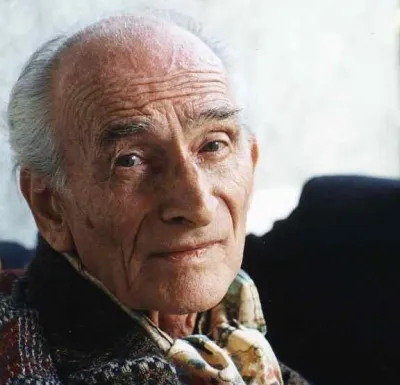
Carl Boese
Human Design Chart
Biography
Boese was married three times, namely with the actresses Grete Hollmann (1920), Margot Hollaender (1932) and Elena Luber (1938).
He died on 6 July 1958, aged 70, in Charlottenburg, West Berlin.
Carl Boese — Manifesting Generator with Profile 4/6
Manifesting Generator 4/6 — Design at a Glance
Carl Boese revealed himself as a Hybrid being that combined the constant energy of a Generator with the lightning-fast effect of a Manifestor. His design indicated a tendency towards extreme speed and parallel processing of multiple tasks. He had the ability to skip steps and quickly draw results into his life, which however also caused frustration if he overlooked important intermediate steps or lacked inner consent.
The mechanics of the manifesting generator require not initiating oneself but reacting to external impulses. Carl Boese possessed sacral energy that only flowed effectively when he waited and responded. When his sacral center confirmed with a clear “yes”, a state of deep happiness ensued, which can be described as “play mode”. In this mode it was natural and satisfying for him to work on various projects simultaneously. The advice to focus on one thing did not suit his nature; rather, he needed variety and fun to maintain his creative power.
The tension field in his design lay between the joy of multitasking and the danger of frustration through lack of inner confirmation or hasty action. If Carl Boese reacted and ensured that his inner self followed along, he could use his speed without blocking himself. His satisfaction depended directly on whether he applied this strategy of waiting for the impulse and constantly checking his sacral consent. Thus potential friction turned into flowing, playful productivity.
Emotional Authority
Carl Boese showed a decision-making strategy based on emotional distance and patience. Spontaneous reactions were deceptive in his design; his inner truth did not reveal itself in the first affect but only after the initial wave movement subsided. This resulted from his Emotional Authority: The defined Solar Plexus Center steered his internal guidelines.
In this center a permanent emotional wave worked, constantly coloring his perception. In one moment he could be enthusiastic about something, in the next view the same situation negatively. However, these mood swings did not mean that the first impression was his final truth. Quick decisions based on the immediate impulse often risked negative consequences as they were based on a fleeting snapshot.
His design required taking time to let decisions mature. The process of “sleeping on it” served to gain clarity. By hesitating and asking himself multiple times, intense feelings gradually subsided. Only when emotional distance arose did calmness set in and the true direction became visible. This method was especially important for long-term decisions as it allowed deeper insights than an immediate impulse would permit. Through this patience Carl Boese navigated his emotional landscape towards grounded judgments.
The 4/6 Profile — Opportunist / Role Model
Carl Boese revealed himself in his youth as an experimental networker. His 4/6 Profile defined this phase: Before the Saturn Return, Line 6 acted like a Line 3, driving him to promising attempts in relationships and friendships. This early life period served exploring social dynamics before his essence shifted.
With the activation of Line 6, an inner conflict emerged: The deep need for belonging and brotherhood (Line 4) stood in contrast to the call for transpersonal wisdom and role as a role model (Line 6). This tension between heart and head shaped his entire life. The strategy was to prioritize friendship and non-sexual intimacy over sexuality. This protected Line 4’s great heart from false bonds and enabled true union by breaking barriers.
In later years, Carl Boese was expected to meet the high standards of a wise mentor. Line 6 empowered practical implementation of understanding through three phases: Self-endorsement, Transpersonalism, and authenticity in role modeling. His values now served societal benefit. While children in this phase took long to recognize their wisdom potential, Carl Boese used mental challenges to encourage his ego. He imparted insights that transcended the individual and contributed to general awareness, always with cooperation with others at the forefront.
Split Definition — Defined & Open Centers
Carl Boese revealed himself through constant vital energy and reliable expression paired with emotional depth and inner pressure. His defined Sacral Center generated a tremendous daily power source that manifested as restlessness or the need for activity. This energy was only available when reacting correctly, not through mental initiatives. His defined Throat served as a pivot point for communication and action, transforming information from the body into reliable expression. The Solar Plexus provided emotional depth; truth revealed itself here only after waiting out the emotional wave, not in the moment of impulse. The Root Center generated physical pressure to maintain the life impulse and ensured steady forward movement.
In contrast, Head, Ajna, G-, Heart, and Spleen Centers were open. Carl Boese tended to be distracted by mental inspiration or doubts from others rather than trusting his own inner clarity. His open Ajna Center made him receptive to foreign concepts; he risked interpreting opinions as personal truth or pretending to be sure in order to be accepted. The open identity in the G Center led him to blend with his environment and take directions from outside, lacking a firm internal orientation. He did not actively seek love or direction but waited to be initiated. His open Heart Center prompted him to prove worth through promises or competition, leading into a cycle of self-doubt as he lacked energy for consistent willpower. Finally, the open Spleen Center brought fundamental survival anxiety and sensitivity to well-being; he tended to cling to uncertain situations or make spontaneous decisions to avoid fear rather than trusting long-term intuition. These opennesses made him a reflection of his environment while the defined centers formed his powerful but reactive foundation.
Channels for powerful action and emotional waves.
Carl Boese revealed himself through a charismatic presence that was based on a specific inner reaction. His design included the Channel of Charisma 34-20, which connected raw physiological energy from the Sacral Center with expression in the "now". This meant for him that his powerful manifestation was only effective when he responded to external stimuli and not out of pure will. The speed of this energy required discipline: He had to wait until the inner "yes" came to conserve his vitality and avoid obsession. His influence rested on losing himself in satisfying activities, which often made him seem inaccessible to others but simultaneously created an inspiring authenticity.
Parallel to this, the Channel of Emotional Release 39-55 shaped his emotional landscape. This channel connected root energy with the Solar Plexus and generated a pulsing wave between joy and melancholy. For Carl Boese, this moodiness was not a defect but a tool for finding truth. Through the authentic experience of this emotional alchemy – without rationalizing it or compensating through distractions like food or drugs – he sharpened his mind. His provocation served to find the correct mood and the right people. Only when he was in the right mood could he let his spiritual depth and passion be effective. This emotional authenticity allowed him to radiate a seductive warmth or passionate sadness through art or life itself, touching others. His strategy consisted of respecting his own rhythm and only acting or engaging when both the sacral energy and the emotional wave were aligned.
Individual Circuitry — Circuit Signature
Carl Boeses Design set a tendency towards a pulsating, creative-melancholic expression driven by the need to follow an authentic path. This attitude resulted from the knowledge circuit, specifically activated through the channel "Release Emotions" (39-55) in his case. This channel connected his Solar Plexus Center with the Root Center. Since both centers are within the same group, energy flowed directly: emotional waves from the Solar Plexus were transformed into an acoustic or pulsating expression via the Throat Center. This served to develop a unique identity through deviation and mutation from the existing norms.
Parallel to this, there was a separate, unconnected current: the integration circuit. Due to the "Shared Definition," these two energetic areas existed alongside each other in Carl Boese without direct interaction between them. The second area consisted of the channel "Charisma" (20-34), which connected his Throat Center with the Sacral Center – also within its own group. Here, it was about survival and gaining strength through reacting to life. This energy manifested itself in the present moment, supported by correct behavior and intuitive knowledge.
While the first area thus created a new identity through emotional transformation, the second area secured physical existence through reactive adaptation. Carl Boese therefore showed himself as someone whose expression was marked both by deep emotional mutations and based on a strong, deeply rooted survival energy in the here and now. The two systems worked parallel: one for the individual, transformative voice, the other for the fundamental life force.
Right Angle Cross of the Sleeping Phoenix 3
Carl Boese's design points towards a tendency for cyclical renewal and inner transformation. His life path was marked by the configuration "the right cross of the sleeping Phoenix 3," which focused on reviving potential. This archetypal dynamic served as a central theme for his self-actualization and defined his specific life purpose.
In Human Design, this cross describes an energy that does not progress linearly but rests in phases before rekindling anew. It is less about external achievements than a profound inner process of change. Carl Boese thus revealed himself to be someone whose identity was closely tied to the ability to draw new strength from seemingly dormant or inactive states. The energy of this cross supports transforming old material and making it useful for higher levels of development.
This mechanism does not necessarily mean constant activity but rather trusting in the necessity of rest phases before each new bloom. For Carl Boese, this cyclical nature was no obstacle but the fundamental rhythm of his existence. He lived the truth of this design by surrendering to processes of inner metamorphosis and thus releasing his full potential in recurring cycles of renewal.
Saturn Return · Uranus Opposition · Chiron Return · 2nd Saturn Return — Life Cycles
Carl Boese's design was characterized by structural turning points where inner maturity was poured into concrete institutional forms. This tendency became evident during his first Saturn return: in 1918, at the age of 31, he founded Firmament Gesellschaft für Filmfabrikation mbH together with his brother and Ernst Sachs. This cycle marked the transition from individual work to a stable structure, a classic moment of condensing years of groundwork into a solid foundation.
The dynamics changed during his Uranus opposition, a period of breaking free from established patterns in favor of new autonomy. In 1926, at the age of 39, Carl Boese founded Carl Boese-Film GmbH. Here, the energy of differentiation was at work: he separated himself from the previous framework to independently realize his own vision. This step underscored the need for self-determination and the creation of a personal space for his work.
His Chiron return, an achievement cycle between the ages of 49 and 51, brought the experience of meaning and wholeness. During this phase, the incarnation cross unfolds increasingly in everyday life. For Carl Boese, this peak period culminated in 1938, at age 51, with his marriage to Elena Luber. This was not just an event but a tangible anchoring of his life's purpose in a deep personal connection. The three cycles together formed a clear arc: from founding stable structures through the separation to establish his own company to personal fulfillment and meaning in the private sphere.
Manifesting Generator · Emotional Authority — Synthesis
Carl Boese lived a life marked by the dynamic tension between inner reaction and external expression. As an Manifesting Generator with defined Sacral, Root, and Solar Plexus Centers, he possessed a constant energy source that was activated only through reacting to impulses. This combination of potential power and the necessity to respond to life led him to quickly set things in motion (Channel 34-20) while simultaneously learning to wait out his emotional wave (emotional authority center) to gain clarity for decisions. The ability to accept and work with the energy of the moment was central to his path – a constant balancing act between the drive to manifest and the need to be guided by inner processes.
A central paradox in Carl Boese’s design lay in the interplay of his defined centers and open areas. While Sacral, Root, and Solar Plexus provided him with a solid foundation, Head, Ajna, and G Centers were open, making him receptive to external influences. This openness allowed him to embrace new ideas and adapt to various contexts but also carried the risk of losing himself in others' identities or being overwhelmed by spontaneity. The challenge was to maintain his own inner truth while exploring the diverse possibilities of life and unfolding his creative energy.
2 Defined Channels
Incarnation Cross - Right Angle Cross of the Sleeping Phoenix 3
Solar Return
The Solar Return shows the moment when the sun returns to its exact birth position - your personal solar year.
Life Cycles
Discover the life cycles with a detailed triple view (birth chart, cycle chart, composite).
Human Design Profile
- Strategy
- To respond - wait for something to respond to
- Authority
- Emotional Authority
- Profile
- 4/6 - Opportunist / Role Model
- Definition
- Split Definition
- Incarnation Cross
- Right Angle Cross of the Sleeping Phoenix 3
- Date of Birth
- 26.08.1887 14:45
- Place of Birth
- Berlin, Germany
Frequently Asked Questions
What was Carl Boese's Human Design type?
What Profile did Carl Boese have in Human Design?
What Authority guided Carl Boese?
What incarnation cross did Carl Boese have?
When was Carl Boese born?
Discover your own Human Design
Are you also a Manifesting Generator? Find out in a personal reading how to unfold your multi-talents and direct your energy wisely.
More Personalities
Back to overviewAldair

Alizée

Angeli

Arletty

Artus

Balthus