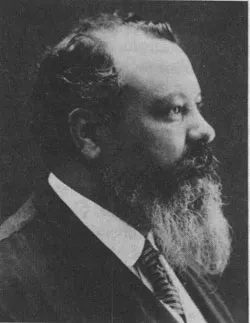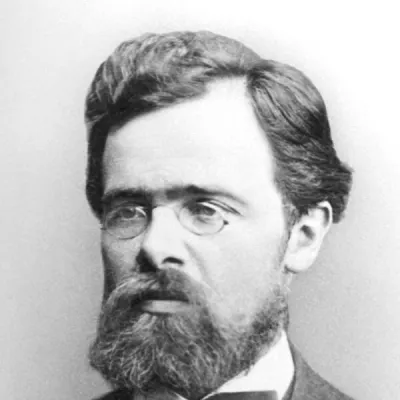
Carl von Linde
Human Design Chart
Biography
Linde was the founder of the company now known as Linde plc but formerly known (variously) as the Linde division of Union Carbide, Linde, Linde Air Products, Praxair, and others. This company is the world's largest producer of industrial gases and ushered in the creation of the global supply chain for industrial gases.
Linde was a member of scientific and engineering associations, including being on the board of trustees of the Physikalisch-Technische Reichsanstalt and the Bavarian Academy of Sciences and Humanities. He was knighted in 1897 as Ritter von Linde.
The Human Design of Carl von Linde: Manifestor 4/6
Manifestor 4/6 — Design at a Glance
Carl von Linde revealed himself as a pioneer and visionary whose design predisposed him to lead the world in new directions. Like an emperor in ancient Rome, he possessed a comprehensive vision but did not wage the necessary wars himself; instead, he delegated their implementation to others. This configuration brought with it a specific pain point: He was often misunderstood and polarized his environment. His great dreams captivated some people while eliciting rejection or even hatred from others due to his thinking frequently surpassing that of contemporaries.
To find the right following, it was crucial for Carl von Linde to inform others about his plans in a timely and precise manner. This strategy of informing served to minimize friction and foster understanding. Living according to this strategy as well as his inner authority rewarded him with a sense of internal peace. Acting against his design, however, he felt instead a persistent, deep-seated anger within himself. His path was thus marked by the tension between the necessity of clearly communicating his vision and the inevitable polarization that great ideas often evoke.
Emotional Authority
Carl von Lindes inner compass was determined by the defined Emotional Center, making him an emotional authority. This configuration gave him a specific decision-making strategy: He constantly fluctuated between enthusiasm and skepticism, with his current mood coloring his perception of reality. A sudden burst of excitement or doubt were only fleeting moments, not final truths. Quick, spontaneous judgments from this emotional heat would often have led him astray as they did not reflect his deeper clarity.
The mechanics of his authority therefore required time and distance. Carl von Linde had to learn to postpone important decisions in order to let the waves of emotions subside. Only after 'sleeping on' an issue, when the initial emotional intensity faded, true calmness and insight emerged. This process of waiting was not a hindrance but rather the essential path to proper orientation. Since the Emotional Center carried his authority, this inner voice always took precedence over other defined areas of his design; he could not simply decide rationally or intuitively without going through an emotional maturation process. His strength lay in patience, which allowed him to distinguish superficial impulses from lasting clarity.
The 4/6 Profile — Opportunist / Role Model
Carl von Linde showed himself as someone who used his early years intensively to experiment – especially in interpersonal relationships. His design as a 4/6 profile ("Networker/Roles Model") established that the Line 6 acted like a Line 3 before the first Saturn Return: impatient and curious about new contacts. This created a phase of testing before the deeper structure unfolded.
With maturation, an inner conflict emerged: The Heart (Line 4) yearned for belonging and connection to the community, while the Head (Line 6) wished to gain distance and ponder higher questions of meaning. This tug-of-war between emotional bonding needs and the call for a broader perspective shaped his development.
His design also carried the task of creating new societal models through mutation power (Gate 22). This required nonconformist openness and the ability to bring leadership qualities into social interactions. Simultaneously, Gate 45 worked with the gift of aligning material actions so that they benefited the 'tribe' – i.e., the community or family – in a concrete way. The greatest effectiveness arose when this direction-giving served transpersonal principles and took advantage of favorable opportunities for collection.
In his later years, he was expected to take on the role of a wise model. His large heart remained cautious, however; it did not open up to everyone to avoid being hurt by false people. Instead, he focused on cooperation with those who shared his vision of material and social metamorphosis.
Split Definition — Defined & Open Centers
Carl von Linde revealed himself as someone with a clear, consistent voice and a deep sense of his own identity. His defined Throat Center gave him the ability to reliably transform information from within into communication and action. This expressive strength was rooted in his defined G Identity: He possessed a reliable self-worth and a clear compass for his life direction without being dependent on others. Parallel to this, he had a firm willpower through the defined Heart Center. This allowed him to keep promises and control resources autonomously while valuing personal responsibility and recognition.
His emotional depth was marked by a defined Solar Plexus Center. Here lay his inner authority: He learned to give time to the emotional wave before making decisions, gaining clarity instead of impulsiveness. The constant pressure of his defined Root Center propelled him forward and helped him deal with existential stress in a structured manner.
At the same time, Carl von Linde was receptive to external influences through several open centers. His open Head and Ajna Centers meant that he did not have a fixed mental strategy; he tended to engage with foreign questions or concepts that were not his own theme, which could confuse him. The open Sacral Center made him vulnerable to “borrowed” energy: He risked exhausting himself by overworking other people's energies since he lacked a consistent personal flow of energy. Additionally, the open Spleen Center was a source of survival fears; he had to learn to avoid spontaneous decisions and not impulsively cling to things that did not serve him just to gain a false sense of security.
Channels for pioneering spirit, emotional waves and provocation.
Carl von Linde showed a fundamental disposition strongly influenced by emotional waves. His design tended towards moody openness, which revealed itself as deep, mood-dependent listening and articulation rather than constant friendliness. The Openness Channel 22-12 connected his Solar Plexus to the Throat Center; this meant that his ability to touch others through voice or word depended on his inner mood. He did not act impulsively but waited for the right moment when the emotional tide allowed him to communicate authentically and effectively. This mechanism promoted an individual radiance that could bring others into new states of consciousness, provided Carl von Linde did not force himself against his own rhythm.
Parallel to this, the Initiation Channel 51-25 in the Heart worked. This channel connected the Shock Gate with the Self Spirit and gave him a natural competitive edge that stood in higher service: strengthening others towards individualization. Carl von Linde had the ability to initiate and advance others through his own authenticity and the “shock” of his presence. This was not a controllable act but a mystical process that became effective when he remained true to himself and did not try to impose initiation.
Another defining factor was the Emotion Release Channel 39-55 between Root and Solar Plexus. This channel set the pulsating wave of joy and melancholy in motion. Carl von Linde used this provocation to test the spirit of his environment and find resonant partners. His emotional depth served to open others up to mutative qualities, but required that he accept his moods rather than suppress them or compensate through distraction.
Additionally, prioritized Gates like 45 (Tribe Level/Energy) and 26 (Innovation/Immune System) contributed to summarizing energy on a collective level and moving the tribe towards accepting new ideas. Gates like 62 (Logic/Pattern Recognition) and 47 (Purpose/Clearness) supported him in building logical frameworks from complex information and giving past experiences meaningful context, which strengthened his ability to clearly present facts and convince others.
Individual Circuitry — Circuit Signature
Carl von Linde revealed himself as a personality with two clearly separated, parallel functioning energetic poles. Through his split definition these areas did not exist as a continuous flow but as independent energy fields.
The Knowledge Circuit connected his Throat, Solar Plexus, and Root Centers into a unit. This generated a pulsating energy aimed at transforming new knowledge and initiating change. The Channels “Openness” (Gates 12–22) promoted creative flashes of insight and innovations, while the Channel “Emotion Release” (Gates 55–39) ensured that these insights were filtered through emotional waves in the Solar Plexus and finally expressed through the Throat Center. This marked a tendency towards acoustic or visible manifestation of individual ideas.
At the same time, there existed an entirely separate field: The Centering Circuit connected exclusively the Identity with the Heart Center (Channel “Initiation”, Gates 25–51). This connection strengthened self-worth and fortified bold, personal convictions. However, since there was no connection to the Throat Center here, these deep inner certainties often remained unspoken or hard to put into words.
Thus, at Carl von Linde’s side, the ability for external transformation through expressed knowledge and the internal strength of personal identity worked alongside each other – not as a continuous process but as two different yet equally valid expressions of his design.
Right Angle Cross of Rulership 2
Carl von Linde was marked by a specific internal structure known as the Right Authority Cross. This configuration in Human Design indicated a tendency towards strategic action and the ability to oversee complex situations from a higher perspective. It enabled him to make clear decisions during moments of uncertainty by weighing various options and choosing the one that best aligned with his inner values.
The Right Authority Cross describes an energy aimed at bringing order and structure into chaotic environments. It allowed Carl von Linde to present himself as someone who not only reacts but actively shapes situations. This trait characterized his approach to problems: he sought solutions that were sustainable and promoted long-term stability. Through this internal alignment, he could master challenges by focusing on the essentials and ignoring distractions.
His ability to utilize governing energies helped him exert influence without appearing authoritarian. Instead, his presence was calming and stabilizing for those around him. Carl von Linde used these gifts to find a balance between control and flexibility in his life and work. This created spaces where others felt secure and could develop their own potentials.
Saturn Return · Uranus Opposition · Chiron Return · 2nd Saturn Return — Life Cycles
Carl von Lindes design showed a clear tendency towards structural consolidation and public recognition later in life. This development was marked by Saturn Returns: In 1871, at the age of 29, he published an essay on improved cold technology methods – a typical moment of the first Saturn Return when years of groundwork condenses into a viable result.
The Uranus Opposition around the 37th year brought a fundamental shift: in 1879, he left his teaching position and founded the Linde’s Ice Machine Stock Company. This cycle often demands breaking with old structures for new, independent paths.
The Chiron Return, a fulfillment cycle of bloom starting around age 49, was marked in 1890 when he turned 48: He transferred the board chair position to an employee and became chairman of the supervisory board. Here his internal alignment entered a phase of maturity and delegated responsibility where personal purpose became tangible.
The second Saturn Return around the 59th year crowned this development: in 1897, at age 55, he was elevated to the nobility as Knight of Linde. This cycle often confirms long-term integrity and anchors achieved positions socially sustainably. The sequence of these events underscores a life marked by continuous structuring and increasing public affirmation.
Manifestor · Emotional Authority — Synthesis
He was a Manifestor who moved through life always wanting to change the world. His emotional authority (Emotional Center) required time for decisions to mature, yet his open channel of openness (Gate 22/12) also allowed him to be guided by the whims of his feelings and express them outwardly. This combination of internal maturation and external expression shaped his path as he ventured new paths while always paying attention to interactions with others – a dynamic that showed in professional turns (documented events).
A central paradox lay in being both a pioneer who initiated new things (Manifestor) and a person deeply feeling the need for community and belonging (Line 4 in Profile). This conflict between the desire for independent shaping and the longing for connection ran through his life. He was driven to acquire and transform knowledge (Knowledge Circuit), yet his emotional wave ensured that this process never followed a linear path, but was marked by melancholy and creative impulses.
3 Defined Channels
Incarnation Cross - Right Angle Cross of Rulership 2
Solar Return
The Solar Return shows the moment when the sun returns to its exact birth position - your personal solar year.
Life Cycles
Discover the life cycles with a detailed triple view (birth chart, cycle chart, composite).
Human Design Profile
- Type
- Manifestor
- Strategy
- To inform others before acting
- Authority
- Emotional Authority
- Profile
- 4/6 - Opportunist / Role Model
- Definition
- Split Definition
- Incarnation Cross
- Right Angle Cross of Rulership 2
- Date of Birth
- 11.06.1842 08:30
- Place of Birth
- Thurnau, Germany
Frequently Asked Questions
What is Carl von Linde's Human Design type?
Which Profile did Carl von Linde have?
What authority did Carl von Linde possess?
What incarnation cross was assigned to Carl von Linde?
When was Carl von Linde born?
Discover your own Human Design
Are you also a Manifestor? Find out in a personal reading how to use your initiation power peacefully and dissolve resistance.
More Personalities
Back to overviewChristian-Jaque
Kesha

Lucebert
Masaccio
Nadar
Papus