
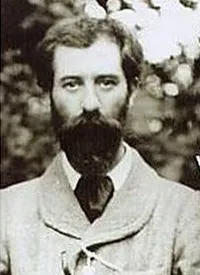
Charles Koechlin
Human Design Chart
Biography
He had a horror of publicity.
Died on 31 December 1950 Le Canadel, France.
What does Manifesting Generator 5/2 mean for Charles Koechlin?
Manifesting Generator 5/2 — Design at a Glance
Charles Koechlins design inclines towards hybrid dynamics: He combines the constant energy of a Generator with the lightning-fast implementation power of a Manifestor. As an Manifesting Generator, he had a defined Sacral Center, which provided him with continuous life energy. At the same time, he possessed a direct connection from a Motor Center to his Throat Center, enabling him to skip steps and quickly draw things into his life.
This configuration brought specific challenges with it. His natural speed led to sometimes skipping important stages or pursuing multiple projects simultaneously in response to various impulses. Without clear inner guidance, this multitasking ability could quickly turn into frustration – the non-self theme of his type.
His strategy was not to initiate himself but to react to external life impulses. Only when his Sacral Center responded with a clear "yes" and his inner authority agreed should he act. Regularly checking whether the work in progress still brought joy was crucial. When applied correctly, this strategy led Charles Koechlin to find deep satisfaction in his creations. He thrived in the "play mode," where variety and parallel working were not burdens but sources of his creative power.
Emotional Authority
Charles Koechlin exhibited an inner decision-making structure that was characterized by his defined Solar Plexus Center and functioned as an emotional authority. This center fundamentally shaped his perception: he always experienced the world colored by his current feelings, which fluctuated in wave-like up-and-down movements. What excited him at one moment could appear negative in the next. His design suggested that such spontaneous impressions were often just temporary mood swings, not his deeper truth. Therefore, it was crucial for Charles Koechlin to take time and avoid making impulsive decisions. Instead, he let emotions settle over days, gaining emotional distance. Only when this clarity and calmness set in did he make his choice. This strategy of patience served to integrate the intense fluctuations of his Solar Plexus Center and ensure that long-term life decisions were based on a stable foundation, not fleeting feelings.
The 5/2 Profile — Heretic / Hermit
Charles Koechlin was marked by the Profile 5/2, characterized by an internal tension field: the desire for public recognition as a hero paired with a deep need for withdrawal and solitude. He tended to initially hide his gifts in the "cave," where he worked hard on himself to strengthen his role as a natural talent later on. This design required him not to passively wait for discovery by others, which often led to frustration and bitterness, but rather to actively show his presence.
The mechanics of his lines reinforced this dynamic. The fifth line in Gate 34 projected a powerful presence that was effective during crises; it could be perceived as intimidating when interpreted as resistance against destruction or as calming authority. At the same time, the second line from Gate 40 demanded decisiveness and willpower, which could only be maintained through adequate rest periods. Without these recovery times, he risked being seen as a "paper tiger" – weak or unprepared. His path involved setting boundaries: taking time for himself to gather strength, and then stepping out with clearly formulated insights where his presence was appreciated.
Triple Split Definition — Defined & Open Centers
Charles Koechlin revealed himself as someone with immense inner strength and a clear self-image. His design was characterized by numerous defined centers: The Sacral Center provided the vital energy source, the Heart Center stood for willpower and ego strength, while the G Center conveyed a firm identity and direction. Additionally, his Root, Solar Plexus, and Throat Centers were also defined, as well as the connection between Head and Ajna Centers. This configuration created a constant mental pressure to question and understand, paired with the ability to express these concepts through the defined throat. The emotional wave of the Solar Plexus served as an inner authority that had to be waited out to gain clarity.
In contrast, Charles Koechlin possessed an open Spleen Center. This made him vulnerable to conditioned fears regarding health and survival. Rather than trusting spontaneous intuition, he tended to be drawn to others' comfort frequencies or cling to unhealthy situations out of fear of loss. The non-self pattern here often manifested as chatter like “I am afraid I will feel inadequate” or the fear of being abandoned. This uncertainty stood in contrast to his otherwise inner stability. The challenge lay in not interpreting these conditioned reactions from the open Spleen Center as personal truth, but rather observing them and navigating through strategy and authority instead of impulsively reacting to fear.
Channels for charisma, rhythm, logic, community, emotion and abstraction.
Charles Koechlin revealed himself as someone who was driven by powerful, mutative energy. Channel Beat 14-2 connected his Sacral with G Centers, giving him the ability to set innovative directions. Through Gate 14 he had resources for mutations, while Gate 2 channeled this movement in space and time. This allowed him to bring new perspectives into the collective by trusting his inner reactions.
His mind was marked by healthy skepticism. Channel Logic 63-4 connected Head with Ajna Center and filtered patterns continuously. Gate 63 questioned through doubt, while Gate 4 formulated answers. This mechanism served to test consistency and provide well-thought-out predictions for the collective instead of promoting unfounded belief.
At the same time, he had a charismatic presence based on sacral reaction. Channel Charisma 34-20 channeled raw energy from Gate 34 directly into expression through Throat Center (Gate 20). This created an urge for immediate manifestation that was only healthy if it relied on inner guidance. Without this connection, his energy tended to become chaotic or obsessive.
Emotionally, Charles Koechlin moved in a pulsing wave between joy and melancholy. Channel Feelings Release 39-55 connected Root with Solar Plexus Center. Gate 39 provoked to test the mind (Gate 55) and find the right mood for interactions. This required authenticity as compulsion destroyed emotional depth.
Mentally, he went through a process of abstraction. Channel Abstraction 64-47 connected Head with Ajna Center and filtered experiences through kaleidoscopic mental images. Gate 64 brought confusion that over time condensed into clear insights (Gate 47). This story was not meant for his own life but served to open new perspectives for the collective.
Additionally, other gates were active: Gate 26 in Heart Center promoted innovation with a weak ego, while Gate 43 communicated individual insights. In his design, Gate 5 supported rhythm and habit, Gate 29 saying yes and persistence. Gate 1 emphasized uniqueness here and now, and Gate 21 steered material control for the community’s benefit.
Individual Circuitry — Circuit Signature
Charles Koechlin revealed himself as a person with three separate, parallel functioning energetic blocks. His design connected Identity and Sacral Centers along with Throat Center (Knowledge Circuit), fostering a pulsing, acoustic expression of his individuality. Parallel to this, Head and Ajna Centers worked together in the Understanding and Meaning Circuit: Here focused logic for the future united with abstract reflection on past experiences. A third block linked Heart, Solar Plexus, and Root Centers (Ego Circuit) through the Community Channel, allowing rhythmic give-and-take cooperation but without direct connection to the constant life force of the Sacral Center – necessitating rest periods. These three groups were energetically isolated from each other; there was no continuous flow between identity, mind or social exchange. Instead, they existed as independent forces: creative self-expression, intellectual analysis and social support. The separation of these systems meant that Charles Koechlin did not automatically integrate them but used them as distinct, parallel resources. The Knowledge Circuit drove the expression of new insights, the Understanding and Meaning Circuit provided rational structure and emotional depth, while the Ego Circuit formed a basis for mutual support in the collective – all as distinct, non-fusing experiences.
Left Angle Cross of Duality 2
Charles Koechlin exhibited a fundamental disposition marked by the left cross of duality. This configuration describes a profound inner drive to unite seemingly contradictory forces or perspectives. It was not merely an intellectual interest in opposites, but rather an existential task: overcoming separation through the experience of unity. In his design, this manifested as a constant internal movement towards integration. What appeared on the surface as conflict or polarization served structurally to enable a higher synthesis. The duality did not stand for a static coexistence of good and evil or light and darkness, but rather for the dynamic tension necessary to expand consciousness. Charles Koechlin lived this mechanism as an ongoing challenge to unite different aspects of his experiential world. This occurred not by ignoring contradictions, but by giving them space and integrating them into a larger context. The energy of this cross promoted an attitude of acceptance towards complexity. It helped him connect the fragments of his experience into a coherent whole without neglecting the diversity of individual parts. Thus, out of the tension of duality emerged a path to holistic perception.
Saturn Return · Uranus Opposition · Chiron Return · 2nd Saturn Return — Life Cycles
Charles Koechlin showed himself as someone whose creative phases were closely tied to specific astrological cycles. His first Saturn return around age 28 marked a condensation of his preparatory work: in 1895, he published the songs op. 7 and op. 8. This cycle often promoted structural clarity and initial viable results in professional fields.
Another turning point occurred during the Uranus opposition, a period of heightened tension and the urge for autonomy. At age 42, that is, in 1909, he founded the Société Indépendante de Musique. This event underscores the typical dynamics of this phase: through the desire for independence and new structures, collective initiatives or breaks with established systems often arise, leading to sustainable success.
The Chiron return, a fulfillment cycle around age 50, in which personal meaning increasingly unfolds, fell on 1915 for him. With the publication of the Sonata for Viola and Piano op. 53 at age 48, this bloom phase was shown as a concrete artistic expression form of his purpose.
Finally, the second Saturn return around age 56 marked another consolidation phase. In 1923, he began with the “4 Nouvelles Sonatines” (op. 87). This late creative period illustrates how this cycle often leads to maturation and deepening of already begun paths, where earlier experiences are cast into new, stable forms.
Manifesting Generator · Emotional Authority — Synthesis
Charles Koechlin was a Manifesting Generator whose life was characterized by a dynamic interaction between rapid initiation and the need for mature decision-making. The connection of the Sacral Center with the Throat Center (Channel of Beats) gave him the ability to quickly utilize energy and set things in motion, yet his emotional authority required time to process feelings and gain clarity. This interplay manifested in periodic successes – such as founding a musical society (1909) or publications (1895, 1915, 1923) – which often followed an impulsive start but were accompanied by an internal emotional clarification process.
A central paradox in his design lay in the tension between the desire for recognition as a hero (Line 5) and the need for withdrawal and self-realization (Line 2). He carried an inner melancholy resulting from the creative mutation of the knowledge circuit, driving him to create new things while simultaneously feeling a natural inclination towards isolation. This duality shaped his path by striving both to share his gifts with others and to claim the necessary time for himself to further develop them.
6 Defined Channels
Incarnation Cross - Left Angle Cross of Duality 2
Solar Return
The Solar Return shows the moment when the sun returns to its exact birth position - your personal solar year.
Life Cycles
Discover the life cycles with a detailed triple view (birth chart, cycle chart, composite).
Human Design Profile
- Strategy
- To respond - wait for something to respond to
- Authority
- Emotional Authority
- Profile
- 5/2 - Heretic / Hermit
- Definition
- Triple Split
- Incarnation Cross
- Left Angle Cross of Duality 2
- Date of Birth
- 27.11.1867 09:30
- Place of Birth
- Paris, France
Frequently Asked Questions
What was Charles Koechlin's Human Design type?
What Profile did Charles Koechlin have in Human Design?
Which Authority guided Charles Koechlin?
Which incarnation cross was active for Charles Koechlin?
When was Charles Koechlin born?
Discover your own Human Design
Are you also a Manifesting Generator? Find out in a personal reading how to unfold your multi-talents and direct your energy wisely.
More Personalities
Back to overviewAaliyah

Aldair

Alexia

Alizée

Angèle

Angeli
