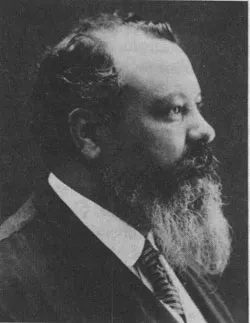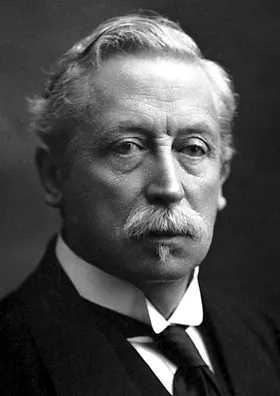
Christiaan Eijkman
Human Design Chart
Biography
Eijkman won the 1929 Nobel Prize in Physiology or Medicine together with Sir Frederick Hopkins for the discovery of thiamine deficiency as the cause of beriberi. His brilliant assistant, the later professor in Animal Physiology and Rector Magnificus of the University of Wageningen Gerrit Grijns (b. 28 May 1865, Leerdam - 11 November 1944, Utrecht) who also contributed to this insight, was passed.
He was the seventh of the ten children of Christiaan Eijkman (b. 25 Nov 1822, Utrecht- 1 Dec 1893, Wageningen), the headmaster of a boarding school and Johanna Alida Pool (13 Dec 1814, Nijmegen - 14 Dec 1898, Amsterdam) who married 13 April 1949. Two children died early, but the others eight became adults. His brother Johann Frederik Eijkman (1851) became a famous chemist.
In 1875 Eijkman studied medicine at the Military Medical School of the University of Amsterdam to become a medical officer for the Netherlands Indies Army. From 1879 to 1881 he assisted the physiologist T. Place. On 13 July 1883 he dissertated cum laude on the thesis ”Over de polarisatie van zenuwen” (On Polarization of the Nerves) in Amsterdam.
On 30-8-1883 he married Aaltje Wigêri van Edema (b. 19 Nov 1859, Wolvega - 8 Jan 1886, Nijehaske). That year they went to Java, later West-Sumatra where he served as a medical officer. After he he contracted malaria he went back to the Netherlands on sick-leave. In 1885 he specialised in bacteriology under Joseph Forster in Amsterdam and Robert Koch in Berlin. In 1886 his wife Aaltje died at age 27.
The same year he went back to the Dutch Indies to study the polyneuropathy disease beriberi. The commission for the investigation of beriberi under the head of Pekelharing and Winkler was established by the Dutch government to combat the disease that took epidemic forms in the eighties of the 19th century.
Christiaan Eijkman — Manifestor with Profile 6/2
Manifestor 6/2 — Design at a Glance
Christiaan Eijkman revealed himself as a pioneer and visionary whose design was geared towards guiding the world into a new future. Similar to an emperor in ancient Rome, he possessed the grand vision of an empire but did not wage the necessary wars himself; instead, he sent others to conquer foreign lands for him. This role as a leader brought with it a specific pain point: He was often misunderstood and polarized his surroundings. Because his thinking frequently extended beyond that of others, some people were inspired by his great dreams and followed him, while others rejected or even hated him because of these visions. To find the right followers, it was crucial for Christiaan Eijkman to inform others about his plans in a timely and precise manner. This strategy of informing formed the core of his design. When he adhered to this principle, he was rewarded with an inner sense of peace. If, however, he lived against his design, he felt instead a persistent, deep-seated anger within him. His path was thus marked by the necessity of clearly communicating his intentions to minimize resistance and gain support, which endowed him with the necessary energy for his pioneering role.
Emotional Authority
Christiaan Eijkman displayed an inner decision-making structure characterized by emotional wave movements. His design carried Emotional Authority, meaning that his defined Emotional Center was the sole source of his internal guidance – regardless of whether other centers in his chart were also defined. This priority rule is a central mechanism: The emotional truth always took precedence over other impulses or logical considerations.
His perception of the world was always colored by his current mood. In one moment, he could be enthusiastic about something, and in the next, see the same situation negatively. These fluctuations were merely snapshots and not necessarily the deeper truth. Quick decisions based on transient emotions often proved disadvantageous as they relied on incomplete information.
Instead, his design required patience and time. By letting decisions sleep and reviewing them multiple times, intense feelings subsided. Only when emotional distance was gained did clarity emerge. This process of 'pondering' and repeated review served to separate fleeting mood from enduring inner truth. For long-term life decisions, this calming process was essential for finding calmness and a grounded direction rather than succumbing to the short-lived waves of emotion.
The 6/2 Profile — Role Model / Hermit
Christiaan Eijkman revealed himself in his youth as someone who learned through trial and error. The Profile 6/2 acted like a 3-line before the thirtieth year: He experimented with various roles and withdrew after setbacks to gather experience. This phase served the practical acquisition of knowledge through direct engagement with the environment.
After about three decades, his approach fundamentally changed. The 6-line became active, leading him into inner distance. Christiaan Eijkman metaphorically retreated to reflect on earlier experiments from a great distance. This period served for healing and deep self-knowledge. From this isolation, he developed wisdom that he later passed on to others.
His design also emphasized the ability to distribute power justly – delegation rather than traditional leadership. At the same time, his survival as an individual was marked by the necessity of self-defense. Where he was individually present, he tolerated no interference. This protected his identity from external influence, especially when new truths emerged. The combination of delegating leadership and defending individuality shaped his path: He learned to transfer authority without dissolving himself and consistently defended the boundaries of his own understanding against foreign influences.
Single Definition — Defined & Open Centers
Christiaan Eijkman was revealed through a design that combined mental clarity with emotional depth. His defined Ajna Center gave him a consistent, trustworthy way of conceptual thinking; he wasn't easily swayed by external opinions and could independently create concepts. This mental stability flowed into his defined Throat Center, which served as a focal point for communication. He reliably expressed what his mind conceptualized, giving his statements a clear structure.
Alongside intellectual precision, his defined G Center shaped his identity and direction. He had a firm sense of self and knew where he belonged without relying on others. His defined Heart Center supported this by providing available willpower; he could keep promises and control resources, which helped him complete projects and claim recognition for his work.
At the same time, Christiaan Eijkman was influenced by the dynamics of his open centers. His open Solar Plexus meant that he lacked emotional authority; he was susceptible to picking up and amplifying the mood of the environment rather than generating it himself. It was important for him not to immediately follow impulses but to let patience prevail until emotional clarity set in – often only after a night's sleep.
His open Head Center made him receptive to mental pressure and inspiration from the environment. He tended to interpret questions from others as his own urgency or get entangled in doubts that weren't his own. The challenge was not to accept this external mental noise as truth but to let it go.
Similarly, his open Sacral Center lacked persistent generative energy; he was prone to overexerting himself with borrowed energy from others and experiencing exhaustion because he didn't have an internal source for sustained vitality. His open Root Center also absorbed stress from the environment; he could suffer under adrenalized frenzy that wasn't his own but came from outside. The wisdom of his design lay in recognizing these external influences without mistaking them as his own necessities.
Channels for leadership, community, insight and change.
Christiaan Eijkman appeared as someone who created logical structures while simultaneously seeking new experiences. His design combined rational leadership with a deep emotional curiosity about the unknown.
This was evident through Channel 7-31 in his personality, giving him the ability to understand collective patterns and lead logically by gaining trust and guiding others. This energy shaped how he took responsibility not through coercion but through recognized competence. Parallel to this, Channel 35-36 in his Juxta-personality drove him actively to seek new experiences to gain emotional depth and wisdom, often by facing crises or changes to break out of stagnation.
In his design, Channel 23-43 was also at work. Here he received spontaneous insights in the Ajna Center that he then articulated clearly and efficiently through the Throat Center. His goal was to convey innovative perspectives so they were accepted and transformed collective thinking. He learned to wait for his timing so his unique ideas would be understood. Additionally, Channel 37-40 in his personality stabilized his social bonds; he sought his place within the whole and created stable group structures through fair agreements and mutual support.
Individual Gates rounded out this picture: Gate 13 enhanced his awareness of continuity and collective memory, while Gate 46 underscored his full commitment to the process here and now. Gate 20 helped him act authentically, and Gates like 51, 16, 8, and 62 added aspects of willpower, experimental joy, contribution, and logical precision. Together these energies formed a person who combined rational order with emotional experience to advance both individually and collectively.
Collective Circuitry — Circuit Signature
Christiaan Eijkman's design inclined towards structured communication tinged with emotion. As someone with a simple definition, all his active circuits created an interconnected energetic flow between Ajna, Throat, Identity, Solar Plexus, and Heart Centers. This created an integrated experience of thinking, feeling, and acting.
The Knowledge Circuit connected his Ajna to the Throat Center through Channel 23-43 (Structuring). This connection supported the ability to express inner concepts clearly and orderly. Parallel to this, the Understanding Circuit worked through Alpha Animal Channel 7-31, connecting the Throat with Identity Centers. Here it was about sharing logical insights free from emotional influence, providing a rational basis for his expression.
In contrast, the Meaning-Finding Circuit brought in the emotional wave of the Solar Plexus Center into communication via Channel 35-36 (Transience). This added a cyclical, felt depth to the rational expression based on past experiences. Finally, the Ego Circuit connected the Heart with the Solar Plexus Center through Community Channel 40-37. This channel promoted a balanced relationship of giving and taking as well as mutual support within a group. Since all centers lay in one defined group, these four aspects – structured thinking, rational analysis, emotional reflection, and cooperative resource building – did not operate separately but as a single coherent life energy on Christiaan Eijkman.
Left Angle Cross of Masks 2
Christiaan Eijkman carried the design of the left Mask Cross. This configuration shaped a fundamental stance characterized by a deep connection to life and a strong drive to share knowledge with others. In Human Design, this cross represents an energetic alignment aimed at gathering life experiences and sharing them in the form of teaching or inspiration with others. It is often associated with a certain sense of destiny, focusing on the sharing of wisdom gained through personal experience. Christiaan Eijkman thus demonstrated someone whose energy was directed not only towards learning for himself but also towards disseminating these insights into the world. The mechanics of this cross emphasize the importance of communication and exchange as central life tasks. It is less about merely accumulating information than it is about bringing that information to life and making it accessible to others. This orientation promoted an attitude of openness and giving, characteristic of individuals with this specific energetic pattern.
Saturn Return · Uranus Opposition · Chiron Return · 2nd Saturn Return — Life Cycles
Christiaan Eijkman was marked by a profound loss during the first Saturn Return phase of his life. In 1886, at age 28, his wife Aaltje passed away. This period signified the transition from youth to full responsibility; his design indicated that here were forming the foundations for future structures, often through painful confrontation with definitive limits.
Later, at age 40, a new dynamic took hold: The Uranus Opposition signaled a necessary break with established patterns in favor of individual expression. In 1898, Eijkman was appointed Professor of Hygiene, Medical Policy and Forensic Medicine at Utrecht University. This appointment was not merely a career advancement but the concrete realization of an inner necessity to break away from previous roles and take up an independent, innovative position. The design described this step as finding one's own space where specific insights could work outside conventional paths. Both events illustrated the path from losing old bonds towards establishing self-determined authority in public life.
Manifestor · Emotional Authority — Synthesis
Christiaan Eijkman lived a life path marked by profound inner wisdom that unfolded over time. The profile of role model and natural talent points to a development where early experimental phases (6/2 Line) were followed by an intense period of reflection, culminating in wise guidance. This ability for self-observation and detachment was strengthened by the defined Mental Center, which allowed him a constant understanding of concepts – an inner compass for exploring new ideas. The Manifestor type underscored his natural inclination to act as a pioneer and initiate changes, always driven by a vision beyond the immediate visible (Channel 31/7).
A central tension in his design lay between emotional authority and the need for logical guidance. The emotional wave required time for decision-making and experiencing various emotional levels, while the channel of the Alpha Animal (31/7) pointed towards clear, future-oriented direction. This dynamic likely led to an internal struggle between intuitively grasping truths and the need to frame these in logical structures and communicate them outward – a dance between melancholy and pulsating creativity.
4 Defined Channels
Incarnation Cross - Left Angle Cross of Masks 2
Solar Return
The Solar Return shows the moment when the sun returns to its exact birth position - your personal solar year.
Life Cycles
Discover the life cycles with a detailed triple view (birth chart, cycle chart, composite).
Human Design Profile
- Type
- Manifestor
- Strategy
- To inform others before acting
- Authority
- Emotional Authority
- Profile
- 6/2 - Role Model / Hermit
- Definition
- Single Definition
- Incarnation Cross
- Left Angle Cross of Masks 2
- Date of Birth
- 11.08.1858 02:30
- Place of Birth
- Nijkerk, Netherlands
Frequently Asked Questions
What was Christiaan Eijkman's Human Design type?
Which Profile did Christiaan Eijkman have?
What Authority did Christiaan Eijkman have?
What incarnation cross was Christiaan Eijkman assigned?
When was Christiaan Eijkman born?
Discover your own Human Design
Are you also a Manifestor? Find out in a personal reading how to use your initiation power peacefully and dissolve resistance.
More Personalities
Back to overviewChristian-Jaque
Kesha

Lucebert
Masaccio
Nadar
Papus