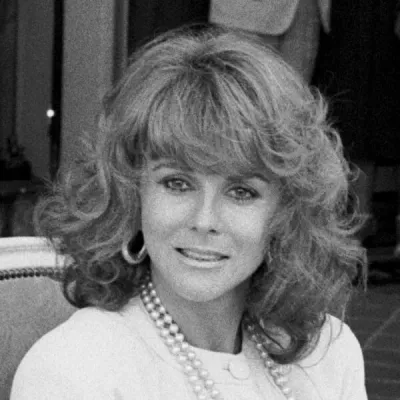
Christopher Lambert
Human Design Chart
Biography
He carries duel citizenship with U.S. and France. His first marriage and divorce was to actress Diane Lane, with one daughter from that marriage. On 6 February 1999 he married 17-year-younger Yaimyse Haft.
Christopher Lambert — Generator with Profile 6/2
Generator 6/2 — Design at a Glance
Christopher Lambert revealed himself as someone who does not unleash his power through self-willed pushing forward but rather by precisely responding to external stimuli. His Generator design points to an enormous reservoir of sacral energy – comparable to a hardworking horse that only runs effectively when properly guided. The central mechanics lie in the strategy of reacting: instead of taking initiative and waiting for impulses from outside until his inner signal sends out a clear 'yes'.
This approach is crucial for his energy balance. If he performs tasks that he actually has no desire to do, or if external constraints prevent him from pursuing his heart's project despite an internal urge, there is a risk of rapid energy loss leading to exhaustion. Conversely, living in harmony with these impulsive responses leads to deep and lasting satisfaction.
The danger of frustration lies where he tries to fight against this nature and initiate things instead of responding to them. His strength unfolds not through constant action for the sake of action but through patience, waiting for the right moment when his sacral center responds. Only then does full endurance set free without overloading himself or working against his inner compass. This dynamic fundamentally shapes his ability to act: success arises where reacting to impulses takes precedence over self-willed action.
Emotional Authority
Christopher Lambert's design laid a tendency towards emotional depth and wave-like mood swings. His inner authority was carried by the defined Solar Plexus Center, meaning that he did not make decisions based on head or first impulse but through a process of emotional maturation.
Emotional authority is subject to constant ups and downs; the world appears colored by the current mood. What is seen as exciting in one moment can be negative in the next. This initial impression is only a snapshot, not yet the deep truth. Quick, spontaneous decisions from such an emotional wave often proved problematic.
The mechanics required patience and multiple reconsiderations of important questions. The more time Christopher Lambert took, the clearer his inner signal became. Intense feelings faded with distance, calmness set in, and comprehensive clarity emerged. This process was essential for long-term realignments that could sustainably shape his life course. Only by waiting for the emotional low point could he recognize his true direction free from distortion by transient moods.
The 6/2 Profile — Role Model / Hermit
Christopher Lambert's design laid a tendency towards a two-phase development: initially an experimental field full of trial and error, later the role of a wise mentor. Before Saturn's return, that is in the first three decades of life, his 6/2 line acted like a 3-line. This created space for intense personal experiences where mistakes were seen as necessary teachers and withdrawal after failures was the driving principle.
Around thirty years, the sixth line fully activated. The design now described a desire to withdraw with distance – metaphorically into a cave on a mountain – to reflect upon past experiments. This phase served healing and deep self-knowledge. The mechanics of Gate 17 (Line 6) represent completed succession and leadership, similar to the Bodhisattva principle: wisdom is not imposed but made available when others seek it.
Simultaneously, Line 2 in Gate 38 formed a stance of discreet self-defense. It showed resistance without breaking established norms and relied on intuitive insight rather than offensive struggle. When Christopher Lambert emerged from his reflective phase, he could impart this introspective ability to others. His presence then acted as a role model offering orientation through lived experience and quiet strength, without disturbing collective processes with mutative changes.
Triple Split Definition — Defined & Open Centers
Christopher Lambert's Human Design profile indicated a tendency towards constant, independent thinking. His defined Ajna Center generated persistent mental processes; he was hard to influence and used his intellect as an external authority to structure concepts. This mental clarity flowed directly into his communication: The also defined Throat Center allowed him to express thoughts reliably. His voice served as a transmitter for these mental contents, enabling him to communicate with ease and honesty without the message getting lost in half-sleep.
Parallel to this, Christopher Lambert had an immense vital energy source through his defined Sacral Center. This energy was only available when reacting correctly to initiatives from others; it was not a tool for arbitrary planning but a motor for satisfaction in action. His identity and direction were set by the defined G Center: He possessed a firm sense of his mission and could guide others into their own paths without having to take over theirs.
Despite this inner stability, he was exposed to specific vulnerabilities. His open Head Center made him susceptible to mental pressure from others; he tended to engage with questions that were not his and sought inspiration to resolve confusion. Additionally, lacking a constant source of willpower in the sense of ego competition through his open Heart Center, he was conditioned to want to prove his worth or make promises he could not keep energetically – a classic non-self pattern pushing him to assert himself against others rather than trusting his inner authority.
Channels for clarity, intimacy, meaning and determination.
Christopher Lambert's Human Design profile indicated a tendency towards intense physical connection paired with the ability to translate complex ideas into efficient structures. The Channel of Union 59-6 rooted his energy in sacral sexuality and emotional wave, imprinting intimacy as the core of his relationships. This configuration required patience: Only through waiting for emotional clarity could deep connections arise without intensity being misunderstood.
Simultaneously, the Channel of Structuring 43-23 revealed a mind seeking new paths. Here spontaneous insight combined with assimilative expression. Christopher Lambert had to learn to communicate his innovative thinking clearly so that it was accepted and recognized as an efficient path by others. Without proper timing he risked rejection; in the flow of his design, however, he could mutate perspectives.
His life purpose emerged from the Channel of Life Struggle 38-28. This channel drove him to fight for individual integrity and find meaning in resistance. It was not about blind struggle but discerning through Gate of the Player (28) which conflict it was worth leading. This stubborn will towards individuation created internal tension that could only be discharged through physical movement or sports.
The Channel of Discovery 29-46 completed this picture: He responded positively to new experiences and got lost in them to later gain insights. Through Gate of Saying Yes (29) he began processes which were then directed into a clear direction by Gate of Determination (46). Success here did not come through control but through persistent perseverance until the final revelation.
Additionally, Gates like 17 (logical teaching), 39 (provocation as analysis) and 22 (social mutation) contributed to his way of teaching and positioning himself in the collective. Gate 50 provided protection through values and traditions while Gate 14 enabled skilled handling of power. This mix of combative individuality, structuring mind and exploratory drive formed a person who learned through experience then acted with clarity.
Individual Circuitry — Circuit Signature
Christopher Lambert's Human Design profile indicated a tendency towards separate, parallel functioning energetic fields. As a Triple Defined he had three independent energy centers that did not merge into one another. This created inner complexity: different parts of his personality operated independently without forming a single continuous flow.
The Knowledge Circuit marked him through two separate segments. On the one hand it connected Ajna and Throat Center (Channel 43-23), fostering the ability to structure thoughts in clear speech. On the other hand, Spleen and Root Center worked together (Channel 28-38), describing an instinctive life struggle and striving for efficiency. These energies were isolated from each other: intellect and instinct did not communicate directly.
In the Purpose Circuit he connected Identity and Sacral Center (Channel 46-29). This generated a cyclical search for meaning, with emotional waves from the past rhythmically driving his own life force. It was about sharing felt insights with the collective.
The Archer Circuit connected Sacral and Solar Plexus Center (Channel 59-6). Here primordial energies of coupling, protection and care were at work. This connection drove him to maintain relationships and preserve his genetics as well as environment through emotional bonding and instinctive concern. Together these three independent blocks formed a mosaic of intellectual structuring, emotional purpose finding and instinctive protective drive that never worked as one whole but rather as separate forces alongside each other.
Left Angle Cross of Upheaval 1
Christopher Lambert's Human Design profile suggests a tendency towards profound and often unexpected transformation processes. His chart includes the left cross of revolution, a configuration that does not promise static stability but requires constant new beginnings and radical shifts in perspective. This structure signifies more than just 'change'; it denotes a specific rhythm: old patterns are frequently broken off abruptly to make way for entirely new paths before they have even become established.
For Christopher Lambert, this manifested as a life dynamic where continuity is less defined by consistent structures but rather through the capacity for transformation. The left cross of revolution demands that he not fear the moment of rupture but accept it as a necessary step into a new phase. It involves letting go of identities or roles that have fulfilled their purpose, even if this comes with uncertainty.
This mechanism shapes an attitude of flexibility: instead of clinging to a fixed goal, Christopher Lambert remains open to the unexpected. The 'revolution' is not a flaw in the system but its core function. It enables him to break out of dead ends and steer into completely new directions without needing a prior plan. The energy of this cross supports trust in the process itself – that every apparent setback or sudden turn ultimately serves the greater flow of personal development. Christopher Lambert navigated not through linear planning, but through intuitive adaptation to constantly changing circumstances.
Saturn Return · Uranus Opposition · Chiron Return · 2nd Saturn Return — Life Cycles
Christopher Lambert's Human Design profile indicates a tendency towards inner clarity condensing into external recognition. He emerged as someone who did not just fill his role but transformed it into a platform for deeper validation. This is evident in the first Saturn return cycle, where years of groundwork often crystallizes into a sustainable outcome. In 1985, at age 28, he received the César Award for Best Actor for his film Subway. For his design, this was no coincidence but a typical moment of condensation: The Saturn return marks the phase when an individual learns to take responsibility for their position and underpin it with concrete achievements. The award served as a mirror reflecting his inner structure outwardly visible. Rather than just acting, his work was validated and stabilized by this success. This aligns with the mechanics of the Saturn return, which is not merely about age but brings potential into sustainable form through maturation. Christopher Lambert used this period to solidify his artistic identity, described in his design as an integration of aspiration and reality. The success thus expressed an inner order now also externally acknowledged.
Generator · Emotional Authority — Synthesis
A central red thread in this design is the deep connection between creative energy and emotional maturity. Sacral energy (Generator type) is fueled by the pairing channel 59/6, indicating a potent life force that unfolds in relationships and creative expression. This energy requires emotional authority to gain clarity – a process of waiting and maturing further reinforced by the defined Ajna center (constant thinking). The line 6 in his profile points towards an evolution from early experiments to profound wisdom shared later; a cycle of experience, reflection, and ultimately influence.
The central paradox lies in the tension between the impulsive drive for creative expression (sacral center, channel 59/6) and the necessity of emotional clarity (emotional authority). The energy is present, yearning to be expressed but must filter through the emotional wave. This creates a field of tension between the desire for immediate realization and the inner wisdom to let decisions mature – a dynamic seen in cycles culminating in recognition (Saturn return), when creative work bore fruit.
4 Defined Channels
Incarnation Cross - Left Angle Cross of Upheaval 1
Solar Return
The Solar Return shows the moment when the sun returns to its exact birth position - your personal solar year.
Life Cycles
Discover the life cycles with a detailed triple view (birth chart, cycle chart, composite).
Human Design Profile
- Type
- Generator
- Strategy
- To respond - wait for something to respond to
- Authority
- Emotional Authority
- Profile
- 6/2 - Role Model / Hermit
- Definition
- Triple Split
- Incarnation Cross
- Left Angle Cross of Upheaval 1
- Date of Birth
- 29.03.1957 11:43
- Place of Birth
- Manhasset, NY, United States
Frequently Asked Questions
What is Christopher Lambert's Human Design type?
What Profile does Christopher Lambert have?
What authority does Christopher Lambert possess?
Which incarnation cross is assigned to Christopher Lambert?
When was Christopher Lambert born?
Discover your own Human Design
Are you also a Generator? Find out in a personal reading how to use your sacral energy correctly and discover deep satisfaction.
More Personalities
Back to overviewSissy Spacek
Aaliyah

Alexia

Anémone
Angèle

Ann-Margret