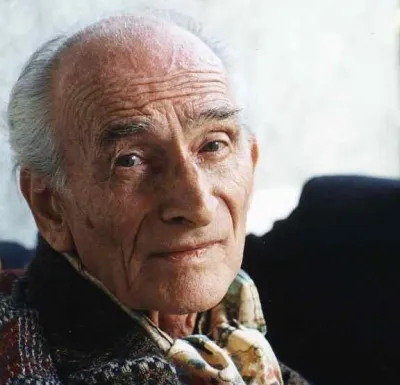
Claude Allègre
Human Design Chart
Biography
Allegre earning a Ph.D. in physics in 1962. He was an assistant lecturer in physics at the University of Paris from 1962 to 1968 before accepting a position as assistant physicist with the Paris Institut de Physique du Globe. He has been the director of the geochemistry and cosmochemistry program at CNRS (French National Scientific Research Center) since 1967. Allegre joined the faculty at the University of Paris VII in 1970, a position he retained. In 1971, he was appointed as director of the Department of Earth Sciences, a position he held until 1976. He was then named the director of the Paris Institut de Physique du Globe from 1976 to 1986. In 1993, he was named as a member of the Institut Universitaire de France (Denis Diderot University).
After establishing an outstanding career in the Earth sciences, Claude Allegre became one of the few scientists to participate successfully in governmental policy. Claude Allegre is the architect of the subdiscipline of isotope geodynamics. This area involves the study of the coupled evolution of the mantle and continental crust of Earth through a multi-isotopic tracer approach. He geochemically modelled the early solar system, the early evolution of planets and the formation of meteorites. This cosmochemical research is the reason that Allegre was chosen by NASA to participate in the Apollo lunar program. In that role, he was among the first scientists to determine the age of the Moon.
Claude Allegre is probably best known by the public for his extensive governmental work. He was the minister for National Education, Research and Technology for France, where he created quite a controversy by attempting to overhaul the public educational system.
Allegre received numerous honours and awards. He was a member of the U.S.
What does Manifesting Generator 1/3 mean for Claude Allègre?
Manifesting Generator 1/3 — Design at a Glance
Claude Allégres Human Design featured a constant, sacral energy source combined with the ability to skip steps and achieve results quickly. As an Manifestor Generator, he possessed the endurance of a Generator through his defined Sacral Center while also having the dynamic power of a Manifestor. This hybrid nature allowed him to bring things into his life without needing to go through the usual linear process.
However, this speed carried specific risks: Often, he would skip important intermediate steps, leading to later returns and filling in gaps. Such interruptions of fluid movement could cause frustration as they went against his natural pace. Additionally, his design tended to react simultaneously to numerous impulses and start multiple projects at once. Without clear orientation, his energy spread too thin, quickly turning creativity into exhaustion.
Success and satisfaction came only through a conscious reaction to external impulses rather than self-initiated action. He had to regularly check if his Sacral Center still validated the current path. When this validation occurred, he entered a playful creative mode. In this state, multitasking was no obstacle but a source of deep satisfaction. The challenge always lay in using his inner authority as a compass to constructively and sustainably apply his immense speed rather than getting lost in overlooked details or dispersed energies.
Emotional Authority
Claude Allégres Human Design showed a tendency towards temporal distance in decision-making. He was someone who preferred clear decisions after the subsiding of emotional waves over spontaneous reactions. His inner authority carried the defined Emotional Center, meaning he was under constant influence from an emotional wave that colored his perception through current moods. In one moment, he could be enthusiastic about something, and in the next, negatively evaluate it. However, his immediate feeling was only a snapshot, not necessarily his truth. Quick decisions based on this first coloring could therefore have negative consequences.
The mechanics of his emotional authority required patience. The more time he took, the deeper he could see. This entailed multiple 'sleeping over' of a decision. He should hesitate and ask himself questions. Over time, intense feelings subsided, an emotional distance set in, and clarity and calm returned. This process was particularly relevant for long-term, life-defining decisions. Through waiting, he arrived at his true inner truth beyond the first impression.
The 1/3 Profile — Investigator / Martyr
Claude Allégres Human Design showed a tendency to acquire knowledge not just theoretically but through direct practical application and testing boundaries. As someone with Profile 1/3, the Researcher and Experimenter, his life was an ongoing process of learning phases and trial-and-error situations. The Line 1 of his profile drove him to seek complete control and deep understanding before acting. This stood in tension with Line 3, which functioned through direct testing and learning from mistakes. Often, this led Claude Allégre to hesitate because he felt he didn't know enough to act safely. Yet, his mechanics required precisely this step into practice. His judgment was considered trustworthy when it was both theoretically grounded and practically tested. The energy of Line 1 sought guidance and self-determination, while Line 3 emphasized the process of trial and error. Alliances or cooperations often served temporarily to maintain vitality in conflict situations. Claude Allégre lived this dynamic: He gathered insights through personal experience and rigorously tested them before accepting them as valid.
Split Definition — Defined & Open Centers
Claude Allègres Human-Design profile was characterized by an immense internal energy capacity that stood in a tension field with situational dependency. With defined Head and Ajna centers, he suffered from constant mental pressure to ask questions and form concepts – a continuous inspiration that often led to concern without direct means of implementation. His defined Throat center allowed him to express his thoughts as well as the willpower from the Heart Center and vital endurance from the Sacral Center reliably. The Solar Plexus and Spleen centers were also defined, bringing emotional depth and intuitive body intelligence.
This high internal activity contrasted with his open centers: G Center and Root Center. Without a fixed identity or direction, he tended to feel lost in inappropriate environments or seek external validation of his person. His open Root Center made him vulnerable to absorbing external stress, which could lead to feelings of being overwhelmed if he did not learn to recognize this pressure as non-own. The mechanics required strict adherence to the strategy of responding rather than initiating to avoid squandering sacral energy through mental overload or impulsive action. His inner authority lay in emotional clarity: He had to learn to wait for the waves of his Solar Plexus before acting. Only then could he utilize his enormous capacity for thinking and will-setting without falling into frustration or burnout due to absorbed stress. The challenge was to accept mental pressure without acting it out, and to wait for the correct environment to find identity and direction.
Channels for will, thinking, curiosity, feeling, care and abstraction.
Claude Allègres profile established a fundamental tension between the desire for control and dependence on emotional mood. His personality, marked by the Channel of the Line of Money 21-45, aimed at material sovereignty and hierarchy. The Gate of the Hunter (21) demanded to profit personally and take responsibility, while the Gate of the Gatherer (45) focused on authority and resources. This pressing will for enforcement stood in conflict with the profile Channel of Openness 22-12. Here, the emotional wave from the Solar Plexus Center determined when social interaction took place; only in the right mood could Claude Allègre unfold his warmth and communicative power. Coercion led to harshness, whereas patience resulted in a deep, transformative effect on others.
This dynamic was complemented by intellectual channels. The Channel of Curiosity 11-56 connected the Gate of Ideas with the Gate of Inspiration, enabling Claude Allègre to transform abstract concepts into captivating stories that taught or entertained others. Parallel to this, the Channel of Awareness 61-24 translated sudden insights (Satori) from the Head Center into rational answers in the Ajna Center. This combination allowed him to turn inspiration into understandable knowledge without feeling the need to control everything. The challenge was to integrate the aggressive control claim of his personality with the passive, rhythmic nature of his design to avoid appearing isolated and instead make his authority effective through authentic, mood-driven communication.
Tribal Circuitry — Circuit Signature
Claude Allègres profile presented a divided structure: two energetically isolated clusters. The first connected Head, Ajna, Throat Center, Solar Plexus, and Heart; the second Sacral Center and Spleen. There was no direct connection between these groups, leading to a separation of intellectual/emotional processing from instinctual life force.
In the first cluster, the Knowledge and Meaning-Finding Circuits were active. The Knowledge Circuit connected his Head with Ajna as well as Throat Center with Solar Plexus. This promoted the expression of unique identity through innovative flashes (Channel 24-61) and emotional waves contributing to transformation. Parallel to this, the Meaning-Finding Circuit linked Head, Ajna, and Throat Center. Here, reflecting on past experiences was central to finding their meaning and sharing insights with the collective (Channels 64-47, 11-56). Both circuits were closely tied to will.
The second cluster consisted of Sacral Center and Spleen, connected by the Archer Circuit. This channel (27-50) focused on conservation, care, and protection of family and genetic heritage. This instinctive level operated independently from the processes of thinking and feeling in the first cluster. Additionally, the Ego Circuit, which linked Throat Center with Heart (Channel 21-45), supported the accumulation of material resources and cooperation within the tribe but required pauses for regeneration as there was no direct connection to the Sacral Center. Claude Allègres energy thus flowed along two separate paths: on one hand, intensive cognitive and emotional work with will-setting; on the other hand, a distinct, instinctive basis of survival protection.
Right Angle Cross of Tension 1
Claude Allégres Human-Design profile featured the structure of the right tension cross, a configuration that established inner tension as a central structural element and driving force. This mechanism did not describe a temporary emotional state but rather a fundamental architectural principle of his character: Tension was not to be understood as an interference but as a necessary motor for action capability and development.
In this design, the tension functioned as an organizing moment that focused energy and provided direction. It served to overcome inertia and set processes in motion. For Claude Allégre, this meant that his inner dynamics were based on this sustained tension, which helped him deal with the demands of his existence and master them. The tension created the necessary friction to translate impulses into concrete steps.
Without this structure prescribed by the cross, energy might have remained more diffuse or lost effectiveness. Instead, the tension acted as a framework that shaped his actions and reactions. It was the backdrop against which his experiences unfolded and gave him a certain intensity and endurance in dealing with challenges. This configuration thus profoundly influenced how he channeled and utilized forces in his life.
Manifesting Generator · Emotional Authority — Synthesis
Claude Allégre lived a life marked by profound inner dynamics: the interplay of creative energy and the need for clarity. As an expressing generator, he had the ability to quickly initiate things, yet his emotional center challenged him not to follow impulses immediately but to wait and examine them deeply. This combination of speed and inner wave created a natural inclination towards experimentation and exploration – a spirit of inquiry reinforced by Profile 1/3 – coupled with the desire for thorough review and validation. The Awareness Channel (64/24) points to a mind constantly seeking new insights, while the connection between Head Center and Ajna Center characterizes an unceasing inspiration and drive towards analysis.
A central tension field in his design lay in the interplay between the need for autonomous action and the necessity of emotional maturity. The defined Heart Center indicated a strong will, whereas the open Throat Center made him receptive to external influences. This tension manifested itself in a search for control and validation but also in the ability to adapt to new situations and learn from experiences. Channel 21/45 further emphasized the need to manage material resources and take responsibility for the tribe, which clashed with his desire for independence.
6 Defined Channels
Incarnation Cross - Right Angle Cross of Tension 1
Solar Return
The Solar Return shows the moment when the sun returns to its exact birth position - your personal solar year.
Life Cycles
Discover the life cycles with a detailed triple view (birth chart, cycle chart, composite).
Human Design Profile
- Strategy
- To respond - wait for something to respond to
- Authority
- Emotional Authority
- Profile
- 1/3 - Investigator / Martyr
- Definition
- Split Definition
- Incarnation Cross
- Right Angle Cross of Tension 1
- Date of Birth
- 31.03.1937 10:00
- Place of Birth
- Paris, France
Frequently Asked Questions
What is Claude Allégre's Human Design type?
What Profile did Claude Allégre have in Human Design?
What Authority guided Claude Allégre?
What incarnation cross did Claude Allégre have?
When was Claude Allégre born?
Discover your own Human Design
Are you also a Manifesting Generator? Find out in a personal reading how to unfold your multi-talents and direct your energy wisely.
More Personalities
Back to overviewAldair

Alizée

Angeli

Arletty

Artus

Balthus