
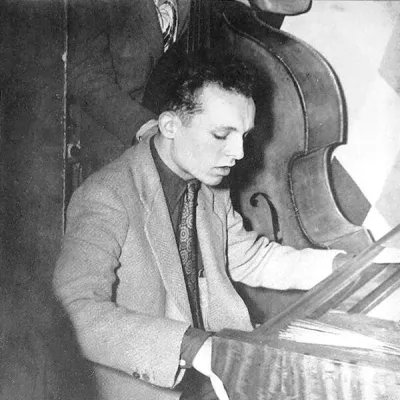
Claude Bolling
Human Design Chart
Biography
The Human Design of Claude Bolling: Manifestor 6/2
Manifestor 6/2 — Design at a Glance
Claude Bolling lived as a pioneer and visionary whose nature it was to lead the world in new directions. His design matched the metaphor of an emperor: He had great perspective but did not fight the necessary battles himself. Instead, he delegated tasks to others to achieve his goals. This style of leadership inevitably led to misunderstandings and polarization. Since his thinking often surpassed that of those around him, he was loved and followed by some while being rejected or even hated by others.
To master this dynamic, informing became crucial. Through timely and precise communication about his intentions, Claude Bolling could find the right followers who would follow him. If he lived true to this strategy, his design rewarded him with a deep sense of inner peace. However, if he deviated from it and acted out of alignment with his nature, persistent, deep anger arose within him. This emotional pendulum between the rewarding peace of strategic action and the tormenting anger of deviation significantly shaped his experiential world.
Emotional Authority
Claude Bolling lived with an emotional authority, meaning that his defined Emotional Center carried his inner guidance. This configuration was subject to a constant wave of emotions: The world appeared colored by the current mood. What seemed inspiring in one moment could appear negative in the next. His immediate feeling was only a snapshot and not necessarily his deeper truth.
Quick, spontaneous decisions based on this emotional excitement were risky for his design and could have negative consequences. The mechanism of his authority required patience. Claude Bolling had to take time to let decisions mature. The principle of 'sleeping on it' was central: By taking a step back and asking himself several times, the intense feelings gradually subsided.
This process of emotional detachment protected him from impulsive misjudgments. Over time, he gained distance from the initial excitement, leading to clarity and calmness. Only then had he gone through the decision-making process and could recognize his true direction. This approach was particularly important for long-term decisions that could have a significant impact on his life course. Through waiting, his design filtered out the transient mood from the lasting insight.
The 6/2 Profile — Role Model / Hermit
Claude Bolling's design featured a clear shift in two phases of life. In his youth, before turning thirty, he primarily acted as an experimenter. The driving force here was the sixth line, which initially behaved like a third line: characterized by trial and error. He sought experience competition and had to overcome shocks through willpower to master challenges alone. Often, this might have seemed impressive, yet his design warned of the 'paper tiger' – the risk that true depth remained hidden.
After turning thirty, this dynamic fundamentally changed. The actual sixth line became active and demanded separation. Claude Bolling metaphorically retreated into his 'cave on the mountain'. This withdrawal was not for isolation but for intense reflection and healing. He looked back at his earlier experiments with distance to gain deep self-knowledge. In this phase, initial uncertainty transformed into authentic wisdom.
The second line of his profile supported this process through natural brilliance and inspiration. Although there were limits to knowledge he had to accept, he became a source for others. When the time was ripe, he emerged from his retreat – no longer as a searching youth but as a wise role model. People came to him to partake in introspective wisdom and be inspired by his ability for deeper understanding. His path led from chaotic learning through experience to the calm authority of reflection.
Split Definition — Defined & Open Centers
Claude Bolling's design established a tendency towards constant mental pressure and emotional depth, coupled with situational identity. His defined Head and Ajna centers generated a persistent internal drive to question and form concepts; this mental process was his constant companion. The connection to the defined Throat enabled him to express these thoughts reliably, while the open G Center meant he did not have an inner direction but had to be initiated by the environment. He tended to ask who he really was or what role he should play rather than carrying a stable identity from within.
His emotional authority in the Solar Plexus center required patience; truth revealed itself to him only at the end of the emotional wave, not impulsively in the present moment. This contrasted with his immediate intuition in the defined Spleen Center, which provided spontaneous judgments about health and values. The defined Root Center ensured a firm handling of stress and life impulse, while the open Heart and Sacral Centers made him vulnerable to external conditioning. He lacked consistent willpower in the Heart Center and tended to make promises to prove his worth, often ending in frustration. Similarly, he lacked constant vital energy in the Sacral; he absorbed others' life force and amplified it but risked exhaustion as he did not generate it himself. This configuration marked him as someone who radiated mental clarity and emotional depth yet relied on external initiations for direction and energy.
Channels for emotional depth, logical clarity and meaningful struggle.
Claude Bolling's design established a tendency towards individual affirmation through competition or shock. Gate 51 (Willpower) formed the dominant drive: a strong will that asserted itself without social bonds, relying on adaptability in sudden events. This urge for individual recognition was in tension with his emotional authority. Impulsive action led to friction; only filtering through the Solar Plexus enabled effective action.
Two channels served as tools to channel this will. The Openness Channel 22-12 connected the emotional center with the throat. It allowed him to express passion and melancholy through speech, but only at the right timing of his mood. Gate 12 (Caution) regulated the openness of Gate 22 by limiting interactions to those offering the greatest transformative potential. The quality of his articulation affected others emotionally, provided he acted not out of compulsion but from inner resonance.
Simultaneously, Acceptance Channel 17-62 ensured logical structure. It connected Ajna Center (opinions) with Throat Center (details). This channel organized information mentally and translated visual patterns into language. Claude Bolling could thus communicate complex connections in detail and constantly refine his mental system. The challenge lay in aligning the ego's competitive drive with the capricious nature of these channels. Inner conflict arose when will demanded immediate results, while the mechanics required emotional resonance or logical acceptance from the listener. His design called for patience: waiting for the right emotional moment and clear, detailed formulation before expressing his will.
Individual Circuitry — Circuit Signature
Claude Bolling's design established a tendency towards pulsating, acoustic creativity expressed through emotional waves. His Knowledge Circuit connected Head and Ajna centers with inspiring flashes of insight (Channels 24-61) as well as Throat and Solar Plexus centers for emotionally colored expression (Channel 38-28). Parallel to this, an isolated energy in Spleen and Root Centers (Channel 22-12) emphasized the life struggle. These segments were not directly connected but existed as parallel forces.
Simultaneously, Claude Bolling was marked by focused, visual logic through his Understanding Circuit. Here Channel 62-17 connected Ajna with Throat Center, enabling rational insights free from conditioning – an 'emotionless ratio' since Solar Plexus Center was not involved here.
The Shared Definition split his energy into two groups: Head, Ajna, Throat and Solar Plexus formed a cohesive field of creative intuition and emotional communication. In contrast, Spleen and Root stood as separate units for instinct and endurance. Claude Bolling lived this synthesis of pulsating creativity and structured logic, with the separated groups setting different emphases in his identity formation without forming an uninterrupted energy flow between them.
Left Angle Cross of the Clarion 1
Claude Bolling's design carried the architecture of the left cross of Fanfare 1. This configuration established a foundational stance characterized by a deep connection to collective consciousness and an urge towards inspiration. It was not about individual isolation but rather a role as a resonant body for larger cultural currents.
The mechanics of this specific cross work like an architectural pattern that places the individual in service to the community. The energy of this configuration promoted the ability to shape inner visions or artistic impulses so they could touch and elevate others. It created a bridge between personal expression and a more universal, almost mythic understanding of beauty and harmony.
For Claude Bolling, this meant that his work often sprang not from pure egoism but rather from a kind of musical or spiritual obligation. Fanfare 1 symbolizes the call that goes out into the world – a signal that demands attention while also offering comfort. This structure shaped his lifestyle through a constant exchange between the inner and outer worlds. He functioned as a channel through which abstract emotions were translated into tangible forms without losing his own identity. Instead, this connection to the whole expanded his self-understanding.
Saturn Return · Uranus Opposition · Chiron Return · 2nd Saturn Return — Life Cycles
Claude Bolling's design showed a tendency towards cyclical structuring that was evident in clear turning points of his creative work. These patterns were marked by the return of specific planetary archetypes: Saturn for professional consolidation and Chiron for the unfolding of personal purpose.
The first Saturn return occurred at age 26, a time when years of groundwork often condensed into a solid result. Claude Bolling recorded with Lionel Hampton again in 1956. This was no coincidence but rather aligned with the mechanics of this cycle: creating stability and recognition during the career phase. The structure he had built proved robust enough to enable recurring high-level collaborations.
Later came the Chiron return at age 51. In Human Design mechanics, this is not a healing process in psychological terms but an unfolding cycle where one's incarnation cross blossoms and meaning becomes tangible – provided the person lives according to their strategy. Claude Bolling experienced this bloom in 1981: his “Concert for Guitar classical and Jazz-Piano” was released on LP. This work represented the maturation of his artistic expression. The mechanics show here how inner clarity after years of development manifests outwardly. Both events underscore that Claude Bolling's life was marked by these planetary cycles: first structuring through Saturn, then meaning-giving unfolding through Chiron.
Manifestor · Emotional Authority — Synthesis
Claude Bolling was a pioneer whose life was characterized by a constant interplay between inner inspiration and the drive for external manifestation. His design as an Initiator with emotional authority pointed to visionary power that could only fully unfold once his own emotional clarity had developed. This combination of initiating force and reflective decision-making formed the red thread of his character – a person who both charted new paths and carefully weighed when the right time was for their implementation. The connection between Head Center and Ajna Center intensified this inner drive towards inspiration, while the defined Throat Center gave him the opportunity to authentically express these visions once they were emotionally ripe.
A central paradox in Claude Bolling's design lay in the tension between his individual creativity and the need for recognition. The open Heart Center indicated a vulnerability to external evaluations, while the defined Root Center created a strong inner foundation. He was therefore both eager to forge his own paths and break free from conventions as well as concerned about earning respect through his work and leaving a lasting impression. This interplay of self-actualization and desire for affirmation shaped his life path and created a unique dynamic in his creative output.
4 Defined Channels
Incarnation Cross - Left Angle Cross of the Clarion 1
Solar Return
The Solar Return shows the moment when the sun returns to its exact birth position - your personal solar year.
Life Cycles
Discover the life cycles with a detailed triple view (birth chart, cycle chart, composite).
Human Design Profile
- Type
- Manifestor
- Strategy
- To inform others before acting
- Authority
- Emotional Authority
- Profile
- 6/2 - Role Model / Hermit
- Definition
- Split Definition
- Incarnation Cross
- Left Angle Cross of the Clarion 1
- Date of Birth
- 10.04.1930 18:00
- Place of Birth
- Cannes, France
Frequently Asked Questions
What was Claude Bolling's Human Design type?
What profile did Claude Bolling have in Human Design?
Which authority guided Claude Bolling?
What incarnation cross did Claude Bolling have?
When was Claude Bolling born?
Discover your own Human Design
Are you also a Manifestor? Find out in a personal reading how to use your initiation power peacefully and dissolve resistance.
More Personalities
Back to overviewAaliyah

Alexia

Alizée

Angèle

Anne-Marie

Arcángel
