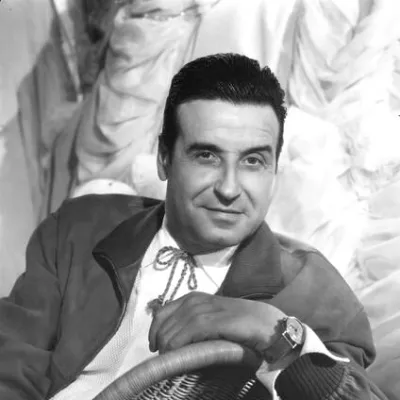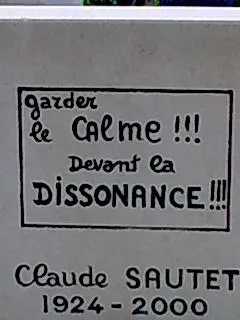
Claude Sautet
Human Design Chart
Biography
Claude Sautet — Projector with Profile 5/1
Projector 5/1 — Design at a Glance
Claude Sautet's design tended towards precise diagnosis: He immediately saw where systems were failing. As a projector, his aura acted like a focused beam of light that revealed weaknesses in the environment around him. However, this ability came with a risk. When he addressed these flaws directly, others often perceived it as unpleasant or even confrontational – similar to shining a bright flashlight into someone's face.
The mechanics of his design called for elegance rather than confrontation. Instead of openly criticizing problems, it was more effective for him to set an example himself through harmony. By giving off his own radiant example, he attracted others; they came to him on their own and sought his advice. His strategy involved waiting for a sincere invitation. Only through this appreciative inclusion could he exercise his leadership role without resistance.
Since his sacral center was undefined, Claude Sautet did not have a constant energy source. He worked in phases of high intensity followed by necessary rest periods to regenerate. Ignoring this rhythm risked exhaustion. However, living according to this principle rewarded him with success. If he missed his strategy and sought recognition instead of invitation, it led sooner or later to his non-self theme: bitterness. His path was therefore to patiently wait for the right inclusion so that his light could effectively shine.
Emotional Authority
Claude Sautet's design tended towards emotional depth and wave-like decision-making. His inner authority was Emotional Authority carried by the defined Emotional Center. In Human Design mechanics, if this center is activated, it always takes the lead in decisions regardless of all other defined centers in the chart. This configuration shaped a lifestyle where feelings showed up as constant ups and downs. The perception of the world was always colored by the current mood; something could appear inspiring at one moment but negative the next.
This mechanism did not mean that every spontaneous reaction reflected his truth. Rather, it was a snapshot, an initial impression that had yet to mature. Quick decisions made purely on impulse therefore carried the risk of proving detrimental. The strategy of his design lay in patience: He needed time for a decision to ripen. Often this required allowing himself to be properly enticed and asking questions multiple times. By sleeping on things, intense feelings gradually subsided. Only with emotional distance did clarity and calmness set in. This process was especially important for long-term course corrections that significantly influenced his life path. Through waiting, he gained access to a deeper, more comprehensive understanding that lay beyond the transient mood swings.
The 5/1 Profile — Heretic / Investigator
Claude Sautet's design tended towards deep research which he could use to provide concrete solutions for others. As a 5/1 profile – The Hero and Researcher – his nature was shown through the desire not only to accumulate knowledge but also to make it practically accessible. Line 1 in the profile anchored him in detailed exploration of patterns; here, continuity and development of new forms were about avoiding frustration. This inner work formed the basis for his outer impact: Line 5 gave him a magnetic presence so that other people instinctively sought his insights to solve their own problems.
This dynamic also brought specific challenges with it. Without clear boundaries, there was a risk of exhaustion as demand for his expertise could disturb his internal balance. His mental attitude was closely tied to timing; practical solutions were only effective at certain moments. Furthermore, his design showed sensitivity towards emotional openness which made him vulnerable to influence, especially when he found himself in positions regarded as powerful socially. The balance between private research (Line 1) and public problem-solving (Line 5) was thus central: Only by learning to say 'No' occasionally could he optimally use his gifts without sacrificing himself. This shaped his path as someone who transformed knowledge into tangible answers, always mindful of his own capacities and the need for clear structures.
Triple Split Definition — Defined & Open Centers
Claude Sautet's design was characterized by immense mental and emotional density. His defined Head and Ajna centers created a constant internal pressure to question and form concepts; he lived in a permanent state of thinking, driven to understand connections even when answers were not yet available. This mental energy flowed directly into his defined Throat center, giving him a reliable voice to clearly express his thoughts and theories.
At the same time, he had a strong emotional system: His defined Solar Plexus center served as his inner authority. He was designed to make decisions not in impulsive moments but to wait for an emotional wave until clarity emerged. His feelings were not a disturbance but essential intelligence that needed time to unfold and distinguish truth from fleeting mood.
This complex internal play of thinking, feeling, and speaking contrasted with his open Sacral center. Here he lacked the constant motor for generative work energy. Instead, he was prone to absorb and amplify the vital energy of his environment. Without this driving force, he tended to become overburdened by external expectations or the pace of others, leading to exhaustion if he did not respect that his energy was available in spurts and needed breaks. His strength lay not in unrelenting production but in connecting mental inspiration and emotional depth with a clear voice while learning not to misinterpret foreign energy around him as his own responsibility.
Channels for logic, reflection, intuition, community and emotion.
Claude Sautet's design inclined towards analytical skepticism, paired with the need for deep reflection. The Logic Channel 63-4 connected Head and Ajna centers: Gate 63 (Doubt) filtered patterns on constancy while Gate 4 (Formulate) sought answers. This created a mind that demanded evidence and rejected unfounded belief; logic had to function practically to be accepted. Parallel to this, the Lost Son Channel 13-33 between G and Throat centers operated. Here, Gate 13 (Listener) gathered experiences and secrets while Gate 33 (Withdrawal) withdrew to transform these into deeper truths. Sautet showed himself as someone who needed patience before sharing insights – a process of maturation through reminiscence.
His creative potential was shaped by the Wavelength Channel 48-16 connecting Spleen and Throat centers. Gate 48 (Depth) sought intuitive information that Gate 16 (Skillfulness) translated into masterful precision through repeated experimentation over time. This required long-term engagement to explore talent. Emotional dynamics were brought in by the Feelings Release Channel 39-55 between Root and Solar Plexus centers: Gate 39 (Provocation) triggered moods that Gate 55 (Mind) processed in waves of joy to melancholy. Authenticity was crucial here to channel this mutative force.
Social bonds were regulated by the Community Channel 37-40 between Solar Plexus and Heart centers. Gate 37 (Friendship) sought recognition as a whole while Gate 40 (Solitude) ensured fair agreements. This fostered cooperative structures based on mutual respect rather than hierarchy. Additional facets provided prioritized gates: Gate 59 pursued a genetic strategy of pairing independent of personal feelings. Gate 9 enabled precise work and perfection through repetition in the Sacral center. In the personality domain, Gate 21 controlled material resources under conditions of respect while Gate 26 introduced innovations into conservative structures. Gate 28 demanded decisions here-and-now through risk assessment, and Gate 7 projected future leadership patterns. Gate 11 used visual memories for situational awareness, and Gate 50 preserved traditional values as a protective reflex.
Collective Circuitry — Circuit Signature
Claude Sautet's design presented itself as Triple Definition: three independent, parallel existing energetic blocks. The first stream connected Head and Ajna centers (Understanding Circuit). This allowed focused, logical thinking separate from emotions with the aim of structuring rational insights. A second, isolated block included Identity, Throat, and Spleen centers. Here energies of understanding (Channel 16-48) and meaning-making (Channel 33-13) flowed, creating a connection between strategic communication and intuitive value decision-making, linked with the reflection process of past experiences in the Identity center. The third stream connected Heart, Solar Plexus, and Root centers. Through the Community Channel (37-40), this created a rhythm of giving and taking, steered by emotional waves from the Solar Plexus and endurance of the Root. This fostered cooperative resource-building within a tribe but required pauses for regeneration. The Knowledge Circuit contributed only the 55-39 channel (Feelings Release) connecting Solar Plexus and Root – this was already integrated in the third stream. None of these three groups stood in direct exchange; they acted as separate, parallel energy fields without shared flow.
Left Angle Cross of Spirit 1
Claude Sautet's Design carried the imprint of the left cross of Spirit 1. This configuration established a fundamental stance characterized by inner stability and a deep connection to spiritual or metaphysical dimensions. In Human-Design, this cross describes a specific energetic structure that focuses on the interior – not as an escape from the world, but as a source for authentic action.
The mechanics of this pattern promoted a posture of patience and trust in a larger plan. It was less about external acting or forcing outcomes, and more about living in harmony with inner values. This energy supported a form of leadership that did not rely on loudness or dominance, but rather on quiet presence and integrity.
For Claude Sautet, this meant his essence was aligned to embody truth on a personal, often silent level. The challenge lay in carrying this inner clarity outward without being swayed by external expectations. The left cross of Spirit 1 helped maintain an internal compass even in uncertainty or darkness. It was an energy of transformation through surrender to what is felt as sacred or true – independent of societal consensus. This structure shaped a way of life based on authenticity and deep resonance, rather than superficial adaptation.
Saturn Return · Uranus Opposition · Chiron Return · 2nd Saturn Return — Life Cycles
Claude Sautet's Human Design profile indicated a tendency towards structural anchoring that crystallized into clear milestones. In 1955, at the age of 31, he directed his first feature film "Die tolle Residenz." This coincided with his first Saturn Return, a cycle often marking years of groundwork leading to solid results and establishing initial professional identity.
Ten years later, in 1965 at the age of 41, Sautet showcased his directorial talent with the adventure film "Schieß, solange du kannst." This period marked the Uranus Opposition, a phase of expansion and breaking away from the past, where new creative potentials often emerge explosively and shatter previous boundaries.
The peak of this development occurred in 1970 when Sautet, at the age of 46, found his theme and style with "Die Dinge des Lebens." This coincided with his Chiron Return, a fulfillment cycle of blooming. During this time, one's personal cross of incarnation unfolds increasingly; if lived according to their strategy, meaning and purpose become experiential. For Sautet, this did not mean healing old wounds but rather the concrete realization of his deepest purpose in artistic creation.
Projector · Emotional Authority — Synthesis
Claude Sautet was a Projector whose life seemed marked by a profound need to recognize patterns and make them accessible to others (defined Head Center and Ajna Center, Logic Channel). This manifested in an ongoing search for understanding and the drive to formulate questions until a consistent picture emerged. His ability to grasp the potential and weaknesses of others, coupled with a heroic impulse (5/1 Profile), points towards a natural role as advisor and problem solver – someone who could bring "light into darkness" for others. Repeated successes in his creative work (events documented at Saturn Return and Chiron Return) reinforce this thread of a deep knowledge base he used to address complex issues.
At the same time, Claude Sautet lived in a tension field between the need to share his knowledge and emotional waves (Emotional Authority). While logic and pattern recognition were pronounced, decisions required time to find an emotional resonance. This paradox may have led to internal pressure, constant wrestling with doubts, and the necessity of filtering inspiration through emotional clarity. The Knowledge Circuit amplified this dynamic by linking the expression of individuality with a need for emotional depth.
5 Defined Channels
Incarnation Cross - Left Angle Cross of Spirit 1
Solar Return
The Solar Return shows the moment when the sun returns to its exact birth position - your personal solar year.
Life Cycles
Discover the life cycles with a detailed triple view (birth chart, cycle chart, composite).
Human Design Profile
- Type
- Projector
- Strategy
- Wait for the respectful invitation
- Authority
- Emotional Authority
- Profile
- 5/1 - Heretic / Investigator
- Definition
- Triple Split
- Incarnation Cross
- Left Angle Cross of Spirit 1
- Date of Birth
- 23.02.1924 19:00
- Place of Birth
- Montrouge, France
Frequently Asked Questions
What is Claude Sautet's Human Design type?
What profile did Claude Sautet have in Human Design?
What authority guided Claude Sautet in Human Design?
What incarnation cross was assigned to Claude Sautet?
When was Claude Sautet born?
Discover your own Human Design
Are you also a Projector? Find out in a personal reading how to unfold your leadership qualities and recognize the right invitations.
More Personalities
Back to overviewSissy Spacek

Alain-Fournier

Anémone

Ann-Margret

Bourvil
Christian-Jaque