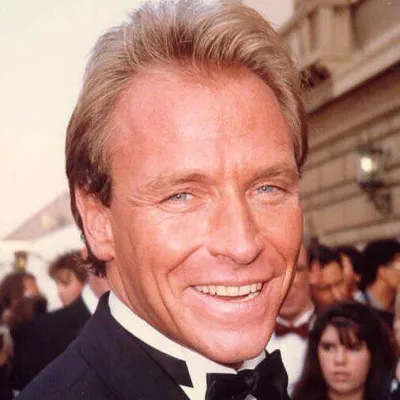
Corbin Bernsen
Human Design Chart
Biography
The son and first child of a producer and an actress, he did his first commercial at seven months; his brother and sister also acted. He had a film cameo at 19. Discovering that he loved to be in front of the camera, he switched to UCLA's theater department. After earning a master's degree in play writing in 1980, he worked as a model and carpenter. During the 1984-85 season he played a policeman on "Ryan's Hope."
Bernsen had a five-year relationship with actress Heather Thomas, whom he met in 1977 when both were attending UCLA. He also had a five-year relationship with actress Brenda Cooper, during which they were married from 1983-1987. On 19 November 1988 he married his house-mate, actress Amanda Pays, whom he had met in late 1987. They had a son, Oliver, born in 1989 and twin sons born on 19 March 1992. A fourth son, Finley, made an appearance 9 June 1998.
His films include "Disorganized Crime, "Bert Rigby," "You're a Fool, " and "Major League." In 1999 he began a steady gig on the TV series "Jag."
Corbin Bernsen as a Generator 4/6 in Human Design
Generator 4/6 — Design at a Glance
Corbin Bernsen had a design that presented him as an energetic workhorse with high endurance potential. As a Generator, he possessed an abundance of sacral energy, which endowed him with extreme strength and resilience – provided this power was used for tasks that received his inner consent. His chart pointed to two central risks: The wastage of energy through activities without genuine enthusiasm led to burnout, while suppressing the urge to work on heart projects despite external resistance was also harmful.
The mechanics of his design dictated that this energy primarily became available when he responded to impulses rather than initiating himself. Therefore, the motto was clear: Do not force it but wait and react. His most successful strategy involved receiving signals from life and acting upon them as soon as his sacral center gave a clear “yes”. If Corbin Bernsen lived in harmony with this reaction to inner impulses, his design rewarded him with a deep sense of satisfaction and fulfillment. Should he instead constantly initiate out of the head or ignore his sacral response, he would sooner or later encounter persistent frustration and a noticeable lack of energy. His stability thus depended directly on his ability to respond from the gut rather than fighting against the current of his own nature.
Sacral Authority
Corbin Bernsen displayed a decision-making stance that did not begin in the mind but was deeply rooted in the body. His inner authority lay in the defined sacral center, the only instance that mattered for him as a Generator. This meant he was not guided by cognitive analysis or long-term planning but reacted to external stimuli with an immediate physical resonance. This reaction often manifested as characteristic grunts, deep “hmms”, or a palpable surge of power in the abdominal area – signals clearly indicating whether something sparked his energy or not.
Since his emotional center was open, this sacral authority could operate unhindered and became the central decision-making source. Once his sacral motor responded to a stimulus, he felt vital and alive. A state of inexhaustible energy emerged that enabled him to perform tasks with great enthusiasm and without compulsive purposefulness. He was born to immerse himself fully in his activities and experience deep satisfaction. This mechanism greatly simplified his process: Instead of searching for the “right” thing abstractly, he simply followed the physical confirmation of the moment. Thus, the strategy of responding not only led to correct decisions but created a foundation for authentic action joy and effortless living.
The 4/6 Profile — Opportunist / Role Model
Corbin Bernsen's design set a tendency towards intensively spending early years in exchange with others before an inner conflict developed between the desire for belonging and the urge to distance oneself. As a Profile 4/6, he enjoyed experimenting extensively during his youth, particularly in relationships and friendships. Line 4 marked this phase through a need for community affiliation and network-building.
With the activation of Line 6, typically around age 30, a contradiction emerged: The inner conflict between heart (Line 4) and head (Line 6). While the big heart sought connection, Line 6 withdrew contemplatively to ponder the meaning of life. This tug-of-war between emotional belonging needs and intellectual distance could be confusing due to both poles being strongly pronounced.
In later life stages, he was expected to take on the role of a wise role model through cooperation with other people rather than isolation. His Line 4 ensured necessary caution: The heart opened selectively to avoid injuries from false individuals. Line 6 in Gate 35 consciously sought correction and authenticity, often evoking resistance but essential for achieving the experience goal. Thus, early experimental freedom transformed into tested wisdom based on genuine experience.
Triple Split Definition — Defined & Open Centers
Corbin Bernsen was characterized by a constant, mechanical presence: His defined Head and Ajna centers created a persistent mental pressure to ask questions and form concepts. This energy source was not ready for direct implementation but served to inspire others to think. Simultaneously, his defined G Center gave him a reliable sense of self-identity and clarity about his own direction, while the Sacral Center as an engine provided daily availability of vitality that relied on reaction rather than initiation. His defined Spleen Center ensured a spontaneous survival instinct in the present moment, supported by the physical stress pressure of the defined Root Center, which propelled him forward.
In contrast, Throat, Heart and Solar Plexus were open. The open Throat Center meant that communication was situational; he tended to feel pressured to force attention through speaking rather than waiting for natural invitations. His open Heart Center left him vulnerable to wanting to prove his worth through willpower or promises – a trap ending in frustration as this energy was not consistent. Additionally, his open Solar Plexus absorbed environmental emotions like a barometer. He tended to interpret foreign moods as his own and avoid confrontation out of fear of rejection rather than recognizing that he could remain emotionally cool alone. This openness protected him from identifying with non-self emotions or competitive urges but required the discipline not to misinterpret these impulses as his own truth.
Channels for determination, logic, rhythm and life struggle.
Corbin Bernsen showed a basic attitude swinging between the strict filter of reason and deep biological impulses. His design suggested that he did not blindly accept patterns, but only recognized them as true when they practically worked. This skepticism came from the Logic Channel 63-4 connecting Head Center with Ajna Center. Here doubt (Gate 63) works together with formulation (Gate 4) to exclude unfounded belief; a response was valid for him only if it could be verified through consistent experience. This served the collective as a tool for prediction and pattern recognition.
In contrast, his timing was not mentally planned but steered by the Rhythm Channel 5-15 connecting Sacral Center with G Center. Through fixed habits (Gate 5) and love of extremes (Gate 15), he created a magnetic, impersonal connection to the flow of life. His timing was based on sacral reactions rather than cognitive calculation, which allowed him natural, effortless progress as long as he followed this rhythm.
Additionally, he was driven by the Life Struggle Channel 38-28 connecting Root Center with Spleen Center. Here it was about fighting for individual integrity (Gate 38) and intuitive recognition of what is worth fighting for (Gate 28). This adrenalized energy served to find meaning in life and resist external forces that could distract him from his true nature. The tension between logical scrutiny, rhythmic flow, and combative engagement with significance shaped his inner dynamics.
Collective Circuitry — Circuit Signature
Corbin Bernsen was marked by three separate, parallel operating energetic streams. One stream connected Spleen and Root Centers via the Life Struggle Channel (28-38). This gave him a pulsating, acoustic creativity aimed at going new ways and initiating change through unique expression – a core aspect of the Knowledge Circuit.
A second independent stream consisted of two parts: Head and Ajna Centers (Logic Channel 63-4) as well as Identity and Sacral Centers (Rhythm Channel 15-5). Here focused, future-oriented logic worked on sharing rational insights. This combination of individual creativity and structured reason served to bring transformations into the world by connecting innovative flashes with strategic focus.
The third stream also connected Identity and Sacral Centers, this time via the Discovery Channel (46-29) of the Meaning Circuit. This aspect turned towards the past: emotions and experiences were cyclically reflected to understand their deeper meaning and share these insights with the collective.
As Corbin Bernsen is a Triple Definition, these three systems – creative transformation, rational future shaping, and emotional past reflection – did not exist as a continuous flow but as independent forces working side by side. This required a balance between impulsive innovation, logical structuring, and emotional depth without these areas automatically blending into one another.
Right Angle Cross of Consciousness 3
Corbin Bernsen's design established a tendency towards a clear and structural alignment of his perception. His inner programming was set to not receive information as chaotic masses but to organize it into a logical framework that stabilized his identity. This architecture functioned as a filter: It determined which impulses consciousness would allow through and how decisions were made – always in service of a coherent self-definition.
This mechanism is based on what is known as the "Right Cross of Consciousness 3". This is not a random constellation but rather the fundamental infrastructure of his mental processes. This cross forms the framework upon which his sense of self rests. It defines the way he constructed his reality: through a conscious, often analytical distancing from pure impulse in favor of an ordered perspective.
Without specific content filled by individual Gates or Channels in this section, the statement remains general but precise: Corbin Bernsen had a system that helped him to create clarity. His decisions did not arise out of caprice but from the necessity to maintain his inner structure. This shaped him as someone who actively aligned his identity within the context of his consciousness, always with the goal of presenting a consistent stance outwardly. The mechanism thus served as a compass for his orientation in complex situations.
Saturn Return · Uranus Opposition · Chiron Return · 2nd Saturn Return — Life Cycles
Corbin Bernsen revealed himself during this phase of life as someone who anchored his inner authority through concrete practical application and teaching. The Chiron Return marks a fulfillment cycle of blooming in which one's incarnation cross unfolds and meaning becomes tangible – provided the person has followed their strategy. It is a turning point from seeking to anchoring.
This process manifested for Corbin Bernsen in 2005, at age 51, when he made his directorial debut with "Carpool Guy." This career event served as concrete evidence of the mechanics: The theoretical or inner maturation translated into visible, existential practice. Instead of continuing to search externally, he found through this new role a sense of anchoring. The cycle did not promote healing in the sense of wounds but rather the realization of life's purpose through active design. Directing became the medium for bringing previously gathered insights and his inner authority into effect in the world. It was not merely a change of job but the crystallization of a long-term developmental line that now reached its full viability.
Generator · Sacral Authority — Synthesis
Corbin Bernsen seems to be guided by a deep inner rhythm that manifests through the connection of vital energy and clear self-identity. The ability to react to external impulses from life (rather than initiating them) while maintaining a firm foundation in his G Center suggests a lifestyle that is both dynamic and grounded. This rhythm is reinforced by a logical mind that recognizes patterns and draws conclusions – an ongoing filtering process to find constancy in a changing world. The combination of sacral energy, defined authority, and the Networker Profile points to a person who thrives best through interaction with others while preserving their own inner truth.
A central tension lies in balancing the need for connection (Line 4 in the Profile) with the desire for independent thought and reflection (Line 6). This dynamic is further intensified by the open Throat Center and Heart Center, implying an ongoing confrontation with external influences and one's own authenticity. While the defined Root Center provides energy to take on challenges, the openness in these centers requires a conscious decision about which energies to accept and which to reject – an ongoing process of self-discovery and boundary-setting.
4 Defined Channels
Incarnation Cross - Right Angle Cross of Consciousness 3
Solar Return
The Solar Return shows the moment when the sun returns to its exact birth position - your personal solar year.
Life Cycles
Discover the life cycles with a detailed triple view (birth chart, cycle chart, composite).
Human Design Profile
- Type
- Generator
- Strategy
- To respond - wait for something to respond to
- Authority
- Sacral Authority
- Profile
- 4/6 - Opportunist / Role Model
- Definition
- Triple Split
- Incarnation Cross
- Right Angle Cross of Consciousness 3
- Date of Birth
- 07.09.1954 20:40
- Place of Birth
- North Hollywood, CA, United States
Frequently Asked Questions
What is Corbin Bernsen's Human Design type?
What Profile does Corbin Bernsen have in Human Design?
What authority does Corbin Bernsen possess?
What incarnation cross is assigned to Corbin Bernsen?
When was Corbin Bernsen born?
Discover your own Human Design
Are you also a Generator? Find out in a personal reading how to use your sacral energy correctly and discover deep satisfaction.
More Personalities
Back to overviewAaliyah

Alexia

Angèle

Anne-Marie

Arcángel

Arno