
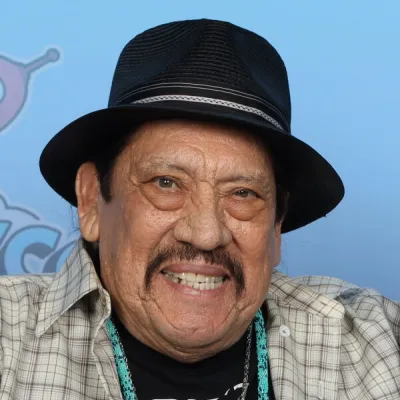
Danny Trejo
Human Design Chart
Biography
A native of Los Angeles, Trejo's film career began in 1985, when he landed a role in Runaway Train (1985). The first film in which he was given a credited role was as Art Sanella in Death Wish 4: The Crackdown (1987). He went on to star in a multitude of other films, many of which were small parts as inmates, gangsters, or other criminals, appearing in Desperado, Heat (both 1995), From Dusk till Dawn (1996), Con Air (1997), The Replacement Killers (1998), Reindeer Games (2000), and Once Upon a Time in Mexico (2003), among others.
From 2001 to 2003, Trejo appeared in the Robert Rodriguez-directed Spy Kids franchise as Isador "Machete" Cortez. Subsequently, in 2010, Trejo reprised his role as Machete in the spin-off exploitation action film Machete as the protagonist. With the success of Machete (2010), Trejo once again reprised his role in a direct sequel, Machete Kills (2013).
Danny Trejo as a Manifesting Generator 2/4 in Human Design
Manifesting Generator 2/4 — Design at a Glance
Danny Trejos Design shows a tendency towards hybrid energy: he had the constant power of a Generator, but also the ability to skip steps and quickly draw results into his life. This configuration as a Manifesting Generator means that he should react to inner impulses to avoid frustration, but unlike pure Generators, he had the speed to push projects forward in parallel. The challenge was not to move too fast or overlook important steps, which could otherwise lead to setbacks and dissatisfaction. Instead, his potential was evident when he used his creative power in a 'play mode'. By constantly checking whether his sacral center still felt the current path as satisfying, he could handle multiple tasks simultaneously without falling into frustration. This structure allowed him to draw deep satisfaction from his work as long as he sought variety and did not try to work everything linearly and individually. His energy worked best when he reacted rather than initiated, using the speed to stay in the flow.
Emotional Authority
Danny Trejos Design shows a tendency towards emotional wave motion, which significantly shaped his perception and decision-making. As a person with defined Emotional Authority, he was subject to a permanent up and down of feelings, coloring the world through the lens of the current mood. What appeared inspiring in one moment could seem negative in the next. However, this intensity was only a snapshot, not a final judgment. Quick, spontaneous decisions from this emotional heat carried the risk of negative repercussions, as the first impression did not yet reflect the deeper truth. The mechanics of his inner authority required patience. Only by sleeping on decisions and waiting for the intense feelings to subside did he gain the necessary emotional distance. Only then did clarity and calm set in, a state indicating that he had gone through the inner process. This approach was particularly crucial for long-term life decisions, as it steered the influence on his life path sustainably. The defined Solar Plexus Center carried this authority and had precedence over other defined centers, meaning that no rational or intuitive instance could replace emotional maturity. Danny Trejo thus emerged as someone who found fundamental clarity through time and distance from his emotional world.
The 2/4 Profile — Hermit / Opportunist
Danny Trejos Design is characterized by the Profile 2/4, known as 'Natural Talent/Networker'. This pattern creates a constant tension between the deep need for withdrawal and the longing for community. Danny Trejo thus showed himself in a cycle: First, he withdrew into his 'cave' to find peace and clarity. In this phase of solitude, marked by Line 2, he reflected on his experiences and used his natural talent to develop as a role model. Line 2 calls for selflessness and a contribution to the collective, often unusual. Once this inner work was completed, the need of Line 4 came into play. Then he actively sought contact with his favorite people. This line, also called 'Burnout', is driving and seeks influence in the network. For Danny Trejo, it was crucial to clearly communicate these transitions: 'Now I want to be alone' versus 'Now I want company'. Only so could he avoid the intense emotional energy of Line 4 leading to a breakdown. Instead, he used time with others to think analytically and collect new impulses, which he then processed again in the following calm phase. This interplay between isolation and connection allowed him to develop brilliant ideas based on the synthesis of inner reflection and external networking.
Split Definition — Defined & Open Centers
Danny Trejo's Human Design reveals a tendency towards persistent, physically grounded expression strength. His defined Throat Center, connected to the Sacral Center, created a direct channel for vital energy in action and speech. This did not mean impulsive talking, but rather the ability to communicate and act from a deep, generative source once the correct response was identified.
This stability was reinforced by his defined G Center, which gave him a firm, reliable self-identity and a clear sense of direction. He had the ability to comfort others or present new perspectives through this inner security, without being dependent on their expectations. His emotional depth came from the defined Solar Plexus Center, which functioned as an inner authority. Here lay the necessity to wait for the emotional wave to clear before making important decisions. This patience prevented impulsive reactions and allowed him to fully utilize the depth of his feelings without being overwhelmed by them.
Additionally, his defined Root Center provided a constant, adrenalized pressure that propelled him forward in the material world and helped him overcome existential challenges.
In contrast, his open Head Center revealed a vulnerability to mental pressure and confusion when seeking answers that did not come from his inner authority. He tended to get entangled in questions that belonged to others rather than trusting his own clarity. His open Ajna Center meant that his conceptual thinking was flexible but did not serve as a source for ultimate truth; he could adopt ideas without holding them as personal dogmas.
The open Heart Center showed a tendency to want to prove himself through promises to demonstrate value, often leading to frustration due to the lack of persistent energy. Finally, his open Spleen Center was vulnerable to fears about health and survival, which could lead him to cling to things that were not good for him to gain a false sense of security.
Channels for powerful leadership, determination and emotional clarity.
Danny Trejo's Human Design reveals a tendency towards innovative, mutative energy that channels through a clear direction and collective influence. The Beat Channel 14-2 connects the Sacral with the G Center. Gate 14 focuses on material resources to drive mutation, while Gate 2 acts as a higher knowledge guide for movement through space and time. This configuration endowed him with the ability to take new, unusual directions and encourage others through his healthy aura, without actively chasing his destiny.
Parallel to this, a structure of logical leadership was evident. The Alpha Channel 7-31 connects the G Center with the Throat Center. Here, Gate 7 provides the logical role for society, while Gate 31 acts as a collective leader. This means that his leadership qualities were based on tested patterns and he only became effective when invited by the majority to raise his voice. It was not about absolute authority, but about influence from a position that gained the trust of the community.
Furthermore, the Discovery Channel 29-46 shaped his approach. Through Gate 29, which says yes, and Gate 46, the self-determined resolve, he was encouraged to let go of expectations and fully immerse himself in experiences. Only through this persistence and trust in being in the right place at the right time could profound insights be revealed.
The Recognition Channel 30-41 propelled him through root pressure and emotional waves. Gate 41 generated restlessness and a desire for new scenarios, while Gate 30 heated these impulses through emotional intensity. This created a strong desire to deeply feel life and leap from inexperience into experience, with patience needed to gain clarity.
Individual Gates like Gate 8 (Contribution), Gate 56 (Storytelling), and Gate 60 (Acceptance of Limitations) underscored his role as a creative role model, working through vivid representation and the transformation of pressure into creativity. Gate 37 (Friendship) and Gate 27 (Care) completed the picture of a person who nurtured organic community structures and radiated altruistic warmth.
Collective Circuitry — Circuit Signature
Danny Trejo's Human Design reveals a tendency towards rhythmic endurance and strategic clarity. In the Knowledge Circuit, he connected Identity and Sacral Centers through the Beat Channel. This created a pulsing, acoustic energy that strengthened his unique individuality through persistent, personal pathways.
Parallel to this, the Understanding Circuit was at work. Here, he connected Throat and Identity Centers via the Alpha Channel. This configuration promoted the sharing of logical, rational insights, free from conditioning, with a focus on future-oriented structure and improvement.
In the Meaning Circuit, there existed two separate segments. The first reconnected Identity and Sacral Centers, this time through the Discovery and Recognition Channels. This served the emotional reflection of past experiences to grasp their meaning. The second segment connected Solar Plexus and Root Centers. It generated a cyclical, wave-like emotional energy, but did not flow directly with the other centers, instead acting as an independent force of emotional processing.
Overall, Danny Trejo was someone who defined his identity through rhythmic endurance as well as strategic communication, while emotional cycles ran parallel but separate from these rational and identity-forming flows.
Right Angle Cross of Contagion 2
Danny Trejo's Human Design shows a tendency towards a deep, almost fateful connection with collective suffering. This configuration, known as the right cross of infection two, does not describe a physical illness but a soul resonance. It manifests as an inner burden that arises when one not only observes but also feels the suffering of others as one's own. Danny Trejo did not act as a detached observer but as someone who directly absorbed the weight of human existence.
This mechanism means that the boundary between one's own pain and that of the community is often permeable. It is an energy that tends to settle in the darkest corners of human experience to understand them. Instead of shielding himself from the harshness of the world, Danny Trejo attracted this intensity. It shaped his way of seeing the world: not as a place of easy joy, but as a space where one suffers together under the weight of existence. This attitude allowed him to show authenticity that stems from direct contact with pain. He carried this burden not as a weakness, but as proof of his belonging to all who suffer similarly. The energy of this cross demands a kind of empathy that does not remain superficial but penetrates to the core of human vulnerability. Danny Trejo's design reflects this deep, painful solidarity.
Saturn Return · Uranus Opposition · Chiron Return · 2nd Saturn Return — Life Cycles
Danny Trejo's Human Design shows a tendency towards late but structurally stable turning points. His first Saturn Return around 1971 marked the beginning of his film career. This cycle condenses years of groundwork into a solid foundation that supports long-term stances.
The Uranus Opposition in 1985, when he got a role in 'Without a Trace', demonstrated the disruptive power of this aspect. It breaks old patterns and forces new, often unexpected paths. Instead of linear planning, here the principle of sudden breakthroughs dissolves established structures.
At 51, his Chiron Return in 1995, when he starred in 'Heat', marked a fulfillment cycle. This is not a healing phase but a bloom: the incarnation cross unfolds increasingly, making sense and purpose tangible. It is the moment when the life task shows its full effect.
The second Saturn Return in 2001, with appearances in 'Spy Kids', confirmed this development. It stabilizes the insights gained previously and integrates them into personal identity. Danny Trejo's chart thus shows a path marked by structural anchoring, disruptive realignment, and ultimately the full unfolding of inner purpose.
Manifesting Generator · Emotional Authority — Synthesis
A central red thread runs through the design: the dynamic connection between initiation and reaction. As a Manifesting Generator (MG), this person has the ability to quickly initiate and transform things (Sacral Center, Beat Channel), yet the design emphasizes the necessity of waiting for the inner impulse and not forcing the process. This tension is reinforced by the emotional center, which requires maturing decision-making, and the profile as a natural talent/networker, which oscillates between solitude and community. A pattern emerges where energy and direction are present but their full unfolding depends on inner clarity and the right timing.
The central paradox lies in the simultaneous presence of quick, initiating energy and deep emotional processing. The ability to act swiftly (MG Hybrid) contrasts with emotional authority that demands patience and reflection on decisions. The Knowing Circuit intensifies this inner conflict by emphasizing both the power of innovation and the necessity of emotional authenticity. This dynamic creates a tension field between the desire for rapid progress and the deep understanding that true transformation requires time and emotional maturity.
4 Defined Channels
Incarnation Cross - Right Angle Cross of Contagion 2
Solar Return
The Solar Return shows the moment when the sun returns to its exact birth position - your personal solar year.
Life Cycles
Discover the life cycles with a detailed triple view (birth chart, cycle chart, composite).
Human Design Profile
- Strategy
- To respond - wait for something to respond to
- Authority
- Emotional Authority
- Profile
- 2/4 - Hermit / Opportunist
- Definition
- Split Definition
- Incarnation Cross
- Right Angle Cross of Contagion 2
- Date of Birth
- 16.05.1944 05:18
- Place of Birth
- Maywood, California, United States
Frequently Asked Questions
What is Danny Trejo's Human Design type?
What Profile does Danny Trejo have in Human Design?
What authority does Danny Trejo have?
Which incarnation cross is Danny Trejo associated with?
When was Danny Trejo born?
Discover your own Human Design
Are you also a Manifesting Generator? Find out in a personal reading how to unfold your multi-talents and direct your energy wisely.
More Personalities
Back to overviewSissy Spacek

Aldair

Alizée

Anémone

Angeli

Ann-Margret
