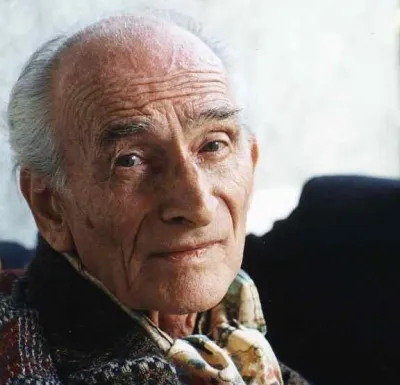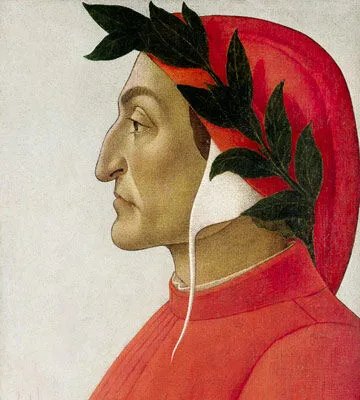
Dante Alighieri
Human Design Chart
Biography
At a time when Latin was still the dominant language for scholarly and literary writing—and when many Italian poets drew inspiration from French or Provençal traditions—Dante broke with both by writing in the vernacular, specifically his native Tuscan dialect. His De vulgari eloquentia (On Eloquence in the Vernacular) was one of the first scholarly defenses of the vernacular. His use of the Florentine dialect for works such as The New Life (1295) and Divine Comedy helped establish the modern-day standardized Italian language. His work set a precedent that important Italian writers such as Petrarch and Boccaccio would later follow.
Dante was instrumental in establishing the literature of Italy, and is considered to be among the country's national poets and the Western world's greatest literary icons. His depictions of Hell, Purgatory, and Heaven provided inspiration for the larger body of Western art and literature.
Dante Alighieri as a Manifesting Generator 5/1 in Human Design
Manifesting Generator 5/1 — Design at a Glance
Dante Alighieri's design inclines towards lightning-fast result orientation, coupled with the necessity to wait for internal impulses. As an Manifesting Generator, he combined the constant energy of a Generator with the direct action of a Manifestor. This configuration allowed him to skip steps and quickly pull things into his life. Yet this speed carried risks: Often, he acted too quickly, neglecting important intermediate steps and had to catch up later, which caused frustration – his specific Non-Self theme. Additionally, he tended to pursue multiple projects simultaneously, driven by various impulses. If his inner authority was not "on board" in these situations, the joy of creation quickly turned into dissatisfaction. His path to deep satisfaction lay in reacting to life rather than initiating it. He regularly checked whether his Sacral Center responded with a clear "yes". Only then did his true power ignite. In this state, he fell into a playful mode that sought variety and experienced parallel work not as an interruption but as a source of energy. Thus, he could draw deep satisfaction from his creations by maintaining the balance between his natural speed and the necessary inner consent.
Sacral Authority
Dante Alighieri's decision-making did not rely on cognitive analysis but rather on an immediate physical reaction. His design as a Generator determined his inner authority through the defined Sacral Center. This sacral authority manifested in the form of a "gut feeling" – audible as grunts, hums, or mhm sounds – which only arose in response to external stimuli. Dante Alighieri learned to heed this internal impulse to unlock vitality and inexhaustible energy. When his sacral motor engaged, he acted with great enthusiasm and immersed himself fully in his activities, free from purposefulness. This mechanism simplified his process: strategy and authority merged into one. A prerequisite was an open Emotional Center that prevented quick emotional judgments and ensured the clarity of the sacral response. Through this immersion in events, Dante Alighieri found his satisfaction. The energy did not arise from will but as a resonant response to the world around him. His life was marked by the ability to experience joy through active engagement with stimuli and to act with vibrant power, guided solely by the signal of his body.
The 5/1 Profile — Heretic / Investigator
Dante Alighieri's design created a specific tension: the altruistic impulse to solve crises against the necessity of private knowledge accumulation. As a 5/1 profile, known as the "Hero/Researcher," he was marked by Gate 35, which promotes selflessness and sharing experiences in critical moments. This configuration gave him almost magnetic appeal; others instinctively sought solutions for their problems from him.
At the same time, the Researcher's Line 1 required deep, private self-awareness and attention (Gate 22). Gate 22 stands for courteous attention and the ability to transmit mutations into society, often without direct reward. The challenge lay in balancing these two forces. Without clear boundaries, exhaustion threatened from the unceasing demand of others, similar to an expert who is drained after hours of consultation.
The mechanics of his design required learning to say "No." Only by doing so could Dante Alighieri maintain the balance between sharing his insights for others (Line 5) and the necessary peace for his own research and processing (Line 1). This boundary setting was essential to optimally utilize his gifts without depleting himself through excessive experience-sharing. His path involved connecting deep inner work with external aid provision, by learning when to withdraw and when to share.
Split Definition — Defined & Open Centers
Dante Alighieri's design indicated a tendency towards constant internal pressure that did not serve as an impetus for action. As a Generator, he had a defined Sacral Center providing vital energy for reactive tasks, along with a defined Root Center delivering the necessary stress for movement. This mechanical foundation contrasted with his mental field: The definition between Head and Ajna Centers generated a constant stream of questions, inspiration, and conceptual thinking. However, since these centers were not coupled to motors, there was no energy to directly translate thoughts into actions; forcing solutions instead led to frustration. His strategy involved waiting for external stimuli so that the Sacral Center could respond with a clear yes or no answer. Only then did energy become available for endurance, which through his defined Throat Center became effective as communication or action.
Simultaneously, his vulnerability was revealed in the undefined centers. The open G Center meant he lacked a fixed identity and blended with his environment, needing others to initiate him to find direction; feeling unsure about his place when the environment wasn't right. His open Heart Center made him susceptible to pressure to prove his worth through willpower, often ending in promises he could not keep. Additionally, his open Solar Plexus absorbed foreign emotions, leading him to interpret emotional waves of others as his own instability. His open Spleen Center carried a deep survival fear that made him impulsive or cling to unhealthy situations due to the riskiness of spontaneous decisions. Dante Alighieri thus appeared as someone with mental clarity but dependent on external validation to correctly apply his energy and avoid emotional and identity confusion.
Channels for powerful action, change and clear insight.
Dante Alighieri lived in a constant tension between individual evolution and collective rhythm. His design indicated an unpredictable pulse that required patience. The Channel of Mutation 60-3 connected the Root Center with the Sacral Center, bringing evolutionary change through Gate 60 (Limitation) and Gate 3 (Order). This energy was melancholic and pulsing; it demanded acceptance of limitation to move beyond the confusion of a new beginning. Dante had to learn not to resist this mechanical moodiness but rather patiently wait for the right moment from his Sacral Center to react.
This inner dynamics contrasted with his personality. The Channel of Charisma 34-20 connected the Sacral Center (Gate 34) with the Throat Center (Gate 20), promoting a powerful, immediate manifestation that had to be guided by sacral reaction to avoid chaos. Simultaneously, the Channel of Awareness 61-24 shaped his thinking pattern, connecting Head and Ajna Centers (Gates 61 and 24). This allowed not logical planning but spontaneous insights or 'Satori'. Knowledge came to Dante not through analysis but as a sudden experience when the mind was still.
Additionally, Gates like Gate 35 (Change Through Interaction), Gate 5 (Basic Rhythm) and Gate 22 (Social Mutation) were at play. These configurations emphasized the need to stay in his own rhythm and respond to external stimuli rather than control them. Dante's path involved accepting the melancholy of pauses and surrendering to the happy coincidence of his inner truth, instead of fighting against the natural flow of change.
Individual Circuitry — Circuit Signature
Dante Alighieri's design indicated a tendency towards a unique identity marked by mutation. This was not a static formation but a constant deviation from the known, driven by creative flashes of insight. His Human Design included the Knowledge Circuit with Awareness and Mutation Channels connecting Head and Ajna Centers to form one part – the source of innovative ideas. A second, energetically separate part connected Sacral and Root Centers through Mutation, providing pulsing transformative energy. Both groups existed parallel to each other; they did not directly flow into one another but worked as separate forces.
Supporting this structure was the Integration Circuit. Here, the Channel of Charisma linked Throat with Sacral Center, enabling power from life's reactions (Gate 34) and intuitive knowledge to be translated into presence. Dante Alighieri used this flow to express inner impulses acoustically in the present moment. His chart's split definition meant these energetic islands – mind, survival, and expression – were defined but not continuously connected with each other. He moved between these separate fields: mental innovation on one side and physical, impulsive implementation on the other. His design challenged him to integrate these disparate energies by making his mutated identity effective through the right moment of expression without bridging gaps where no direct connection existed.
Left Angle Cross of Separation 1
Dante Alighieri's Human Design shows a tendency towards clear differentiation to find an authentic identity. He appeared as someone who had to break free from collective expectations or false roles in order to recognize his own path. This configuration corresponds to the left separation cross 1, which focuses on penetrating into one's true nature through distinction. The challenge was to separate from everything that did not belong to his essential character, even if this meant conflicts or loneliness. His strength came from his ability to set clear boundaries and only accept what truly fit him. This mechanism describes a life task: breaking free from external determination in favor of an independent, unadulterated existence. Dante Alighieri lived this dynamic by not letting himself be swept up into general currents but consistently sorting out what endangered his inner integrity. The separation was not an act of rejection itself, but a prerequisite for the authenticity of his being. Through constant differentiation and demarcation, he created space for an identity based on inner truth rather than adaptation.
Saturn Return · Uranus Opposition · Chiron Return — Life Cycles
Dante Alighieri's creative phases followed a clear cyclical structure. His design suggested that his intellectual and creative development condensed at regular intervals. This was first evident in 1292 when he turned 27 with the creation of the 'Vita nova'. This first Saturn return marked the transition from a learning phase to established achievement, where years of groundwork matured into a solid work.
Ten years later, in 1304 at age 39, the Uranus opposition occurred. This cycle often demands breaking free from old structures in favor of new perspectives. Dante Alighieri used this energy for 'De vulgari eloquentia', a work that questioned linguistic conventions and took new paths. The mechanical tension of this cycle pushed him towards innovation.
The peak of this development was the Chiron return in 1315 when he turned 50 years old. This fulfillment cycle brings one's life purpose into focus if one follows their strategy. For Dante Alighieri, it did not manifest as inner healing but rather a consistent stance: on October 15, 1315, he rejected an offer from his home city and renewed his condemnation. This decision affirmed his internal compass to the outside world. The cycle underscored that his path lay not in returning to old order but in fidelity to his own design, even if this meant external isolation. Thus, cycles structured not only his works but also his moral positions.
Manifesting Generator · Sacral Authority — Synthesis
Dante Alighieri was a Manifesting Generator whose life was marked by a deep inner dynamic: the constant reaction to life (sacral center) and the urge to manifest this energy in creative expression (defined throat). This shift between receiving and giving, waiting and acting, formed the red thread of his work. The connection between Head Center and Ajna Center intensified this process, creating a persistent mental pressure that spurred him towards new insights and forms of expression – an inspiration he then carried into the world through his sacral energy. His ability to react to impulses and quickly implement them (Channel 34-20) was complemented by a need for deep satisfaction from his work, which constantly forced him to reprioritize and focus on what truly mattered.
A central paradox in Dante's design lay in the tension between his ability for quick manifestation and an open G Center. On one hand, the connection between sacral center and throat enabled rapid implementation of ideas; on the other hand, he lacked a firm inner identity, making him vulnerable to external influences. This openness led him to redefine himself repeatedly, seek new paths, and shape his direction from context – a constant flow between internal drive and external adaptation that shaped his work and life journey.
3 Defined Channels
Incarnation Cross - Left Angle Cross of Separation 1
Solar Return
The Solar Return shows the moment when the sun returns to its exact birth position - your personal solar year.
Life Cycles
Discover the life cycles with a detailed triple view (birth chart, cycle chart, composite).
Human Design Profile
- Strategy
- To respond - wait for something to respond to
- Authority
- Sacral Authority
- Profile
- 5/1 - Heretic / Investigator
- Definition
- Split Definition
- Incarnation Cross
- Left Angle Cross of Separation 1
- Date of Birth
- 06.06.1265 04:33
- Place of Birth
- Florence, Italy
Frequently Asked Questions
What was Dante Alighieri's Human Design type?
Which Profile did Dante Alighieri have?
What was Dante Alighieri's Authority?
What incarnation cross did Dante Alighieri have?
When was Dante Alighieri born?
Discover your own Human Design
Are you also a Manifesting Generator? Find out in a personal reading how to unfold your multi-talents and direct your energy wisely.
More Personalities
Back to overviewAldair

Alizée

Angeli

Arletty

Artus

Balthus