
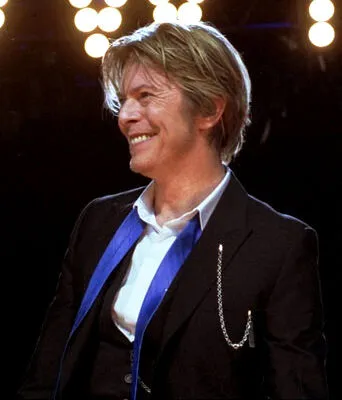
David Bowie
Human Design Chart
Biography
Bowie studied art, music and design before embarking on a music career in 1962. He released a string of unsuccessful singles with local bands and a self-titled solo album (1967) before achieving his first top-five entry on the UK singles chart with "Space Oddity" (1969). After a period of experimentation, he re-emerged in 1972 during the glam rock era with the alter ego Ziggy Stardust. The single "Starman" and its album The Rise and Fall of Ziggy Stardust and the Spiders from Mars (1972) won him widespread popularity. In 1975, Bowie's style shifted towards a sound he characterised as "plastic soul", initially alienating many of his UK fans but garnering his first major US crossover success with the number-one single "Fame" and the album Young Americans (1975). In 1976, Bowie starred in the cult film The Man Who Fell to Earth and released Station to Station. In 1977, he again changed direction with the electronic-inflected album Low, the first of three collaborations with Brian Eno that came to be known as the Berlin Trilogy.
What does Manifesting Generator 3/5 mean for David Bowie?
Manifesting Generator 3/5 — Design at a Glance
David Bowie's design featured a hybrid nature that combined the speed of a Manifestor with the energy of a Generator. He was someone who could skip steps and quickly bring things to life, but he had to react to impulses rather than initiate them. This configuration described a Manifesting Generator: a hybrid of both types. With his defined sacral center, he possessed constant energy, which required him not to push himself forward but to respond to life's impulses.
At the same time, his structure allowed him to skip steps and advance projects rapidly when acting. However, this carried risks: Often, he was too quick and skipped important stages, necessitating a return and catch-up – a source of frustration as it touched on his non-self theme. Additionally, he tended to pursue multiple things simultaneously, driven by different impulses. Without inner consent, this creative drive could quickly turn into dissatisfaction.
The solution lay in the 'Play Mode'. Only when the sacral center clearly signaled 'Yes! I love that!' after testing and internal authority agreed did his speed become beneficial. Regularly checking projects for sustained resonance was crucial. With correct application, he drew deep satisfaction from his work. Variety and fun were then not distractions but essential drivers of his creative power; adhering to linear processes would have stifled rather than fostered his energy.
Sacral Authority
David Bowie followed a clear inner logic: His decisions did not arise through intellectual planning or initiating actions but through direct reactions to external stimuli. As a Generator, his strategy was the response, not the first step. This attitude greatly simplified his decision-making process as his internal authority and life strategy were identical.
His true compass lay in his defined sacral center. Here, truth manifested as physical signals – often deep grunts, hums, or loud 'Mhm's'. These sounds marked moments of resonance. Once this inner motor engaged, a sudden surge of vitality and enthusiasm followed. Bowie then acted with inexhaustible energy and great joy, completely free from compulsion or purposefulness. He immersed himself in his activities because they made him alive.
Supporting this sacral intuition was his activated spleen center. This connection allowed for lightning-fast, instinctive reactions. He had immediate access to his physical well-being and could reliably guide himself from this deep perception. If something felt right, he immediately sensed it in his gut; if not, the energy remained absent. This system protected him from exhaustion and ensured that he only did what gave him strength. His life energy was not a rational asset but a physical feedback system to which he trusted.
The 3/5 Profile — Martyr / Heretic
David Bowie's design marked him as a heroic adventurer and charming storyteller. His Profile 3/5 established a fundamental stance: He believed nothing given, but tested everything himself through experiments and failures. This line of the Adventurer forced him to practically acquire knowledge before it became valuable.
This self-learned experience later served him in his role as a Hero (Line 5), solving others' problems. The combination of private experimentation and public problem-solving generated a strong attraction on his environment, which wanted to learn from his insights. This role flattered his ego but also made him vulnerable to public failure when trying new things.
The dynamics between necessary private experimenting and public presentation as a rescuer defined his life task. His intuition developed particularly during crisis times, creating individual mutations to protect the collective against new threats. This increased survivability and established generalizable new forms. His ambition was strengthened through secret interactions while he persistently believed in official channels even when obstacles arose. Thus, he transformed personal failures into collective benefit.
Single Definition — Defined & Open Centers
David Bowie's design established a strong internal structure in thinking, expression, and energy while he absorbed identity, willpower, and emotions from the environment. His defined Ajna Center generated constant mental conceptualization; his mind served as an authority for others and conditioned the mental field around him. This flowed into his defined Throat Center, which enabled reliable communication and manifestation – he spoke out what his mind conceptualized.
His defined Sacral Center provided constant vital energy. As a Generator, he reacted rather than initiated; his strategy was to wait for life and then respond with full force. This was supported by his defined Spleen Center, which offered spontaneous intuition in the present moment and allowed existential judgments. Additionally, his defined Root Center created set stress pressure for forward movement, driving him materially forward.
In contrast, his Head Center was open. It lacked a constant mental focus; he tended to wonder if he had to find inspiring answers and absorbed mental pressure waves from the environment. His open G Center meant no fixed identity or direction. He mirrored the people around him and sought the right place where he could flourish rather than forcing his own rigid personality.
His Heart Center was also open. It lacked a constant willpower; in non-self, he tended to give promises to prove his worth and then failed to keep them, which could lead into a spiral of self-disapproval. Finally, his Solar Plexus Center was open. He absorbed and amplified foreign emotions rather than having an emotional climate of his own. This made him vulnerable to feeling emotionally unstable because he personalized the moods of others instead of recognizing them as external information.
Channels for intuition, logic, insight and individual power.
David Bowie demonstrated through energy that intuitive depth transformed into communicated talent. His design suggested that he was not just gifted but created his abilities through persistent experimentation and perfectionism. This aligned with Channel Wave Length 48-16: Gate Depth (48) sought vital life information, while Gate Dexterity (16) tested new possibilities. Through this connection emerged a process where technical mastery became expertise through repetition – often described as 'one percent inspiration and ninety-nine percent perspiration'. Bowie strongly identified with his passions, allowing him to express his unique wavelength.
This perfectionism was supported by the Channel of Judgment 58-18. Here, Gate Vitality (58) drove an insatiable urge for 'better and more', while Gate Correction (18) checked what did not work. This combination helped him question patterns and find solutions applicable to the collective. He sought not just errors but used this critique to refine his art.
Additional energies were at play: Gate 9 promoted detail work and focus without logical distraction, while Gate 5 set the fundamental rhythm of his creation. Gate 14 helped him handle power and resources with grace. Overall, his design shaped a path where inner intuition was brought into form through external discipline and recognition that touched others. He needed this validation to continue his process and further develop his gifts.
Collective Circuitry — Circuit Signature
David Bowie's design set a tendency towards pulsating, acoustic emanation that transported his unmistakable individuality through emotional waves. This energy revolved around walking the unique path and transforming new knowledge. The Knowledge Circuit connected his Ajna with Throat Center (Channel 43-23), meaning structuring in expression: thoughts were translated into clear, formed expressions.
Parallel to this, two separate segments of the Understanding Circuit worked. The connection between Throat-, Spleen-, and Root Centers (Channels 16-48, 18-58) allowed sharing logical insights as well as judgmental reactions in stressful situations. This happened free from emotional coloring, purely rational and focused on the future.
A third aspect came from the Integration Circuit: The connection between Sacral and Spleen Centers (Channel 34-57) ensured that power was gained through reacting to life and guided by intuitive knowledge in the present moment. This strengthened his survival through highest individuality.
As a Simple Defined, David Bowie energetically closed; all his defined centers – Throat, Spleen, Root, Sacral, and Ajna – formed one continuous group. There were no internal conflicts between separate energy blocks. His mechanics showed as a coherent flow from inspiration over rational structuring to emotionally filled, structured expression in the world.
Right Angle Cross of Penetration 4
David Bowie's Human Design profile laid a profound motivation to penetrate through resistance and boundaries in order to find the true essence or truth. It was not about superficiality but rather about breaking through illusions and structures. This attitude stemmed from the energy of the right side of Crossing 4, which served as a constant background identity permeating his entire design. Unlike open centers that react situationally, this configuration acted as a firmly anchored identity foundation. The focus was on how he defined his existence by actively overcoming barriers. The right side of Crossing 4 described an impulse not to remain at the surface but to uncover the underlying reality. This energy demanded a form of being where obstacles were seen not as stop signs but as necessary layers that had to be penetrated to reach the core. David Bowie lived this identity by continuously engaging with what was hidden or blocked. The mechanics of this cross shaped his way of encountering the world: not through adaptation, but by breaking through facades. It was a driving force that led him to look behind the scenes of perception and question structures deemed fixed. His identity thus formed itself in the process of penetration, where each barrier overcome confirmed his inner truth.
Saturn Return · Uranus Opposition · Chiron Return · 2nd Saturn Return — Life Cycles
David Bowie's Human Design profile indicated a tendency towards deep structural phases marked by three Saturn Return cycles and one Chiron Return cycle. These cycles shaped his life path as times of consolidation and confrontation with his own mortality.
The first Saturn Return established public recognition and commercial breakthrough. In 1975, at the age of 28, he released the album Young Americans, which brought him his first number-one hit in the USA. For his design, this was a typical moment: years of groundwork condensed into a viable result that solidified his position.
The Chiron Return, occurring between ages 49 and 51, is a fulfillment cycle. Here, one's incarnation cross increasingly unfolds in life if lived according to strategy and authority. Meaning and purpose become experiential. In 1996, at the age of 49, David Bowie was inducted into the Rock and Roll Hall of Fame. This was not an act of healing old wounds but a confirmation of his life's mission and a peak of personal bloom.
The second Saturn Return brought existential crisis and confrontation with mortality. In 2004, at age 57, he suffered a heart attack during a concert at the Hurricane Festival. This event underscored the harsh reality of the cycle: the structure of earlier years was challenged and redefined by a direct encounter with the end.
Manifesting Generator · Sacral Authority — Synthesis
David Bowie was a Manifestor Generator whose life was marked by constant sacral energy (sacral authority). He responded to impulses and quickly pulled in possibilities, yet occasionally overlooked important steps – a dynamic that showed repeatedly as a need for correction and refinement (Channel 48-16). His profile as an experimenter/hero and rescuer underscored this tendency: he tried many things himself, gathered life experiences, and shared his knowledge willingly. This combination of sacral drive and the urge to self-experience formed a red thread through his creative development.
A central paradox in his design lay in the interplay between the Knowledge Circuit and the ability to form concepts (defined Ajna Center). He was driven to generate and express new knowledge, yet the depth of his understanding sprang from inner intelligence that was not always rationally graspable. This led to a tension between the need for innovation and the search for authentic expression – a dynamic that played out at turning points in his career (noted events 1975, 1996, 2004).
4 Defined Channels
Incarnation Cross - Right Angle Cross of Penetration 4
Solar Return
The Solar Return shows the moment when the sun returns to its exact birth position - your personal solar year.
Life Cycles
Discover the life cycles with a detailed triple view (birth chart, cycle chart, composite).
Human Design Profile
- Strategy
- To respond - wait for something to respond to
- Authority
- Sacral Authority
- Profile
- 3/5 - Martyr / Heretic
- Definition
- Single Definition
- Incarnation Cross
- Right Angle Cross of Penetration 4
- Date of Birth
- 08.01.1947 09:00
- Place of Birth
- London, England, United Kingdom
Frequently Asked Questions
What was David Bowie's Human Design type?
What Profile did David Bowie have in Human Design?
What authority did David Bowie have?
What incarnation cross did David Bowie have?
When was David Bowie born?
Discover your own Human Design
Are you also a Manifesting Generator? Find out in a personal reading how to unfold your multi-talents and direct your energy wisely.
More Personalities
Back to overviewAaliyah

Aldair
Alexia

Alizée

Angèle

Angeli
