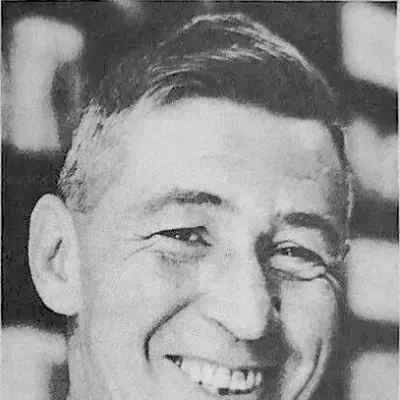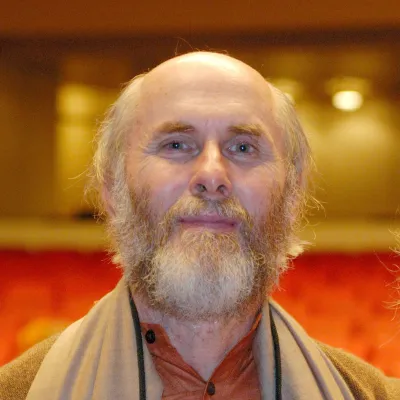
David Frawley
Human Design Chart
Biography
He is married to Yogini Shambhavi Chopra.
The Human Design of David Frawley: Projector 6/2
Projector 6/2 — Design at a Glance
David Frawley's design points towards a tendency for precise, focused perception. As a projector, his aura acted like a bright flashlight, directing itself towards weaknesses in the environment or in systems. He had the ability to immediately recognize where processes were not running optimally or where there was 'blind spots'. However, this direct confrontation with flaws could be perceived as unpleasant if it occurred too early or uninvited.
The mechanics of his design show that projectors do not draw a constant, intrinsic energy source from the sacral center. Instead, they go through phases of high activity followed by necessary rest phases for regeneration. A constant, uninterrupted work rhythm therefore led to exhaustion in him. The optimal strategy was to wait for an honest, appreciative invitation before offering his advice or energy. Through this patience and waiting for the right invitation, his leadership impact was accepted and appreciated. If a projector lives according to this pattern, he is rewarded with success. If he ignores this dynamic and acts uninvited or overextends himself through constant work, the non-self theme of bitterness arises. His design therefore required a selective, invitation-based interaction to effectively and sustainably bring his clear perspective without provoking resistance or exhausting himself.
Emotional Authority
David Frawley's design points towards an emotional wave movement that significantly shaped his perception and decision-making. His inner authority carried the defined solar plexus center, meaning that this emotional leadership always took precedence over all other defined centers, regardless of further configurations in his chart. He was subject to permanent emotional fluctuations, coloring the world through the lens of his current mood. What appeared inspiring in one moment could be perceived negatively in the next. His immediate feeling was only a snapshot, not yet the final truth. Quick, spontaneous decisions made in this emotional heat therefore carried a high risk of negative consequences.
The mechanics of his emotional authority required patience and time to gain clarity. By letting decisions sleep and asking himself multiple times, the intense emotions subsided. Only with this emotional distance did calmness set in and the process was completed. This approach was particularly essential for long-term, life-defining decisions, as it allowed him to gain deeper and more comprehensive insights rather than being led by fleeting moods.
The 6/2 Profile — Role Model / Hermit
David Frawley's design points towards a two-phase life path: first intense experimentation, later detached wisdom. In his younger years, before the age of 30, the 6/2 configuration acted as 3/2. This meant a phase of trial and error. Here it was about collecting many personal life experiences and returning after setbacks to try something new. This early period was characterized by the necessity to learn through personal practice.
Around the age of 30, this dynamic fundamentally changed. The sixth line became active. David Frawley then showed a need for distance and withdrawal to look back on the earlier experiments. This phase of intense reflection served for healing and deep self-knowledge. The mechanics describe this as retreating into a 'cave' to judge with clarity.
The sixth line stands for highest reason and the pursuit of peace and justice. It looks beyond the momentary and ensures that connections and actions create sustainable, positive conditions for the future. Emotions are controlled here to make rational decisions.
The second line brings extremes and peculiarities into the rhythm. From the outside, these can appear bizarre, but they create a valuable range. In old age, David Frawley emerged as a wise person. Others sought him out to partake in his life wisdom and learn the ability for deep introspection. His role was to be an example for proper conduct through this distance and reason.
Triple Split Definition — Defined & Open Centers
David Frawley's design indicated a tendency towards constant mental pressure to question and form concepts. This inspiration came from his defined Head and Ajna Centers, which generated a perpetual thought process without having the energy to directly implement it. His defined Throat Center allowed him to articulate these thoughts clearly, while his defined G Center provided a firm identity and direction.
At the same time, his design showed a vulnerability to external expectations. His open Heart Center tended to want to prove itself, which could lead to a cycle of promises and disappointments, as he lacked the consistent willpower to fulfill them. Additionally, his open Sacral Center was receptive to the energy of others, which could lead him to overwork or take on the fatigue of others instead of trusting his own fluctuating energy flow.
The challenge was to accept the mental pressure without turning it into hasty actions and to use his own authority to free himself from the need to prove his worth through performance.
Channels for intuitive clarity, creative form and abstract depth.
David Frawley's design indicated a tendency towards intuitive self-determination and technical perfection. He was someone who perfected his essence through spontaneous, self-referential actions without seeking external recognition. This attitude was shaped by the Channel of Perfect Form 57-10, which connects the Spleen Center with the G Center. Through the Gate of Intuitive Insight (57) and the Gate of Self Behavior (10), he developed the ability to move through the world existentially and unburdened. This behavior, guided by deep intuition rather than thoughts or emotions, ensured his individual survival and radiated a quality that invited others to live their lives as themselves.
Parallel to this, his design connected intuitive depth with the drive to master skills. The Channel of Wavelength 48-16 linked the Spleen Center with the Throat Center. Here, the Gate of Depth (48) sought life-critical information, while the Gate of Dexterity (16) experimented with new possibilities. This created an inner need to transform dexterity into talent through repeated experimentation and practice. For David Frawley, this meant that talent was understood as a combination of inspiration and hard work, with recognition and resources needed to continue this refinement process.
His inner drive was further determined by the Channel of Recognition 30-41, which connected the Root Center with the Solar Plexus. The pressure from the Root (Gate 41) generated restlessness and a desire for new experiences, intensified by the emotional wave of the Solar Plexus (Gate 30). This led to an intense need to seek out new situations, with patience and waiting for emotional clarity being crucial to avoid blindly jumping into desires.
Mentally, his mind was active through the Channel of Abstraction 64-47, which connected the Head Center with the Ajna Center. The Gate of Confusion (64) and the Gate of Understanding (47) ensured that he filtered every experience through a kaleidoscope of mental images. This experience-based mind sought out stories and perspectives to share with others, with clarity often only emerging after a period of patient waiting. Additional nuances were provided by gates such as Gate 6 (Friction/Development), Gate 36 (Crisis as Movement), and Gate 15 (Collective Rhythm), which shaped his development through friction and adaptation to natural cycles.
Collective Circuitry — Circuit Signature
David Frawley's design indicated a tendency towards separate, parallel functioning energy blocks, characteristic of his Triple Definition. This structure did not create a continuous connection between all defined areas but isolated specific functional approaches from each other.
The Understanding Circuit connected his Throat Center with the Spleen through the wavelength. This promoted an emotionless ratio, focusing on logical and strategic insights for improving the future and sharing them, free from conditioned emotions.
At the same time, the Meaning Circuit worked in two unconnected segments. One connected Head and Ajna Centers (Abstraction), the other Solar Plexus and Root Centers (Recognition). Here, it was about cyclical emotional waves from the past, reflected and shared with the collective to learn from them – yet without a direct energetic bridge to cognitive abstraction or rational future perspective.
The third segment, Integration, connected the Identity Center with the Spleen through the Perfect Form. This channel served to secure individual survival by channeling strength from the reaction to life through proper behavior and intuitive knowledge into the present.
These three groups – rational future shaping, emotional past resolution, and individual self-empowerment – existed as separate energy fields. They worked alongside each other without forming a common flow, creating a complex but clearly defined inner dynamics.
Left Angle Cross of the Plane 2
David Frawley demonstrated a fundamental disposition rooted in inner stability and the ability to penetrate complex situations through calm observation. His design inclined him to influence not through external action but by creating a clear, supportive framework. This configuration describes a life task of uncovering hidden connections and passing them on to others by serving as a reliable anchor himself. The energy of this design is geared towards forming order out of chaos without losing one's own center. It's about being present without dominating and conveying knowledge in a way that others can actually absorb and integrate. David Frawley utilized this inner structure to create a profound, calming effect in his interactions, enabling others to focus on what is essential. His presence was less about loud assertiveness and more about a quiet, but persistent force that created space for clarity. This reflects the mechanics of how the integration of knowledge and experience in the background manifests as wisdom and support externally.
Saturn Return · Uranus Opposition · Chiron Return · 2nd Saturn Return — Life Cycles
David Frawley's design is characterized by a clear structuring of knowledge and identity that reached its full potential during specific life phases. This was evident in 1980, at the age of 30, when he founded the Vedic Research Center in Santa Fe, New Mexico. This step marked his first Saturn Return, a cycle in which years of internal preparation and learning processes often consolidate into a stable external structure. For his design, this was the moment when theoretical knowledge was translated into institutional reality.
Later, in 1991 at the age of 41, he underwent a profound inner transformation through his conversion to Hinduism. This fell into the phase of the Uranus Opposition, a period often understood in Human Design as a break with old patterns and a search for a more authentic, personal truth. While the Saturn Return laid the groundwork, the Uranus Opposition enabled the release from previous conditions in favor of a new, deep spiritual orientation. Both events illustrate how cosmic cycles in his life did not remain abstract concepts but became concrete steps of self-definition and knowledge dissemination. His path was marked by the ability to translate inner insights into external actions, whether through founding institutions or personal transformation.
Projector · Emotional Authority — Synthesis
A central red thread in this design is the ability to recognize patterns and shape them into a form that is understandable and useful to others (Channel 57-10). This quality, fueled by the defined Head Center with its constant pressure for inspiration and the emotional center, which requires time for insights to mature, shapes a profound wisdom. The Line 6 in the Profile indicates an intensive process of experimentation and reflection that ultimately culminates in a form of lived knowledge that attracts others. The projection of this energy, combined with the ability to recognize errors in the system, points to a natural role as a guide and teacher.
A central paradox lies in the tension between the need for deep emotional validation and the ability to generate detached, logical insights (Understanding Circuit vs. Emotional Center). The design points to a person capable of grasping and communicating complex connections, but who also experiences an inner wave of emotions that prevents a quick, impulsive expression of these insights. The Saturn Return at the age of 30, connected with the founding of an institution, and the Uranus Opposition, marking a profound personal transformation, underscore this shift between testing and solidifying one's wisdom.
4 Defined Channels
Incarnation Cross - Left Angle Cross of the Plane 2
Solar Return
The Solar Return shows the moment when the sun returns to its exact birth position - your personal solar year.
Life Cycles
Discover the life cycles with a detailed triple view (birth chart, cycle chart, composite).
Human Design Profile
- Type
- Projector
- Strategy
- Wait for the respectful invitation
- Authority
- Emotional Authority
- Profile
- 6/2 - Role Model / Hermit
- Definition
- Triple Split
- Incarnation Cross
- Left Angle Cross of the Plane 2
- Date of Birth
- 21.09.1950 10:18
- Place of Birth
- La Crosse, WI, United States
Frequently Asked Questions
What is David Frawley's Human Design type?
What is David Frawley's Human Design Profile?
What authority does David Frawley have?
What incarnation cross is active for David Frawley?
When was David Frawley born?
Discover your own Human Design
Are you also a Projector? Find out in a personal reading how to unfold your leadership qualities and recognize the right invitations.
More Personalities
Back to overviewSissy Spacek

Alain-Fournier

Anémone

Ann-Margret

Bourvil

Hergé