
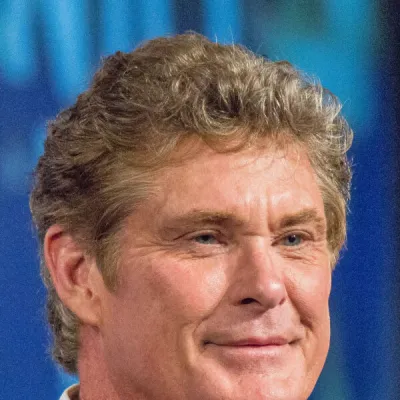
David Hasselhoff
Human Design Chart
Biography
Hasselhoff has appeared in films, including Dodgeball (2004), The SpongeBob SquarePants Movie (2004), Click (2006), Hop (2011), and Piranha 3DD (2012). Before Samuel L. Jackson, Hasselhoff was the first actor to portray the Marvel Comics character Nick Fury in the telefilm Nick Fury: Agent of S.H.I.E.L.D. (1998). In 2000, he made his Broadway debut in the musical Jekyll & Hyde. Following his debut, he starred in other musicals including Chicago and The Producers.
Hasselhoff has released a total of fifteen studio albums, which found success mostly in German-speaking parts of Europe, where he has garnered multiple gold and platinum awards, with the single "Looking for Freedom" reaching number one in Germany and Switzerland. Hasselhoff has also worked as a talent show judge on television shows such as America's Got Talent (2006–2009) and Britain's Got Talent (2011).
What does Projector 5/1 mean for David Hasselhoff?
Projector 5/1 — Design at a Glance
David Hasselhoff appeared as someone who intuitively pointed out blind spots in others. His Projector design gives him a dense, focused aura, comparable to a bright flashlight that shines light into dark corners. He immediately saw where other systems had flaws. However, if he directly addresses these flaws, it often feels like a harsh light in someone's face, causing resistance. It's more elegant when he radiates harmony; then others seek his advice voluntarily, drawn to his clarity.
Since Projectors do not have a defined Sacral Center, they lack a constant, intrinsic energy source. Instead, they experience phases of high activity followed by necessary rest periods to avoid burnout. The strategy of waiting for a genuine invitation is crucial. Only then is his leadership accepted and he is rewarded with success. If he ignores this rhythm, the theme of non-self bitterness emerges. His influence unfolds not through constant pushing but through patient waiting until the environment asks for his specific insight.
Splenic Authority
David Hasselhoff was someone who used his well-being and health as the highest compass. His design featured authority in the Spleen Center, which functions as an alarm system and source of survival intelligence. This configuration requires the Emotional and Sacral Centers to be open, typical for Projectors or Manifestors.
His decisions were not based on long-term planning or intellectual analysis but on a fine, spontaneous impulse in the moment. This first impulse was the reliable indicator of whether a situation, environment, or society was right for him. He had the ability to rigorously protect himself from harmful influences and ensure his best protection.
The challenge lay in the fleeting nature of this signal. The Spleen voice comes only once in the moment and can easily be drowned out by external influences. Therefore, his lifestyle required high vigilance. A short retreat often helped him hear this inner voice. Since he only knew what was right for him in the moment, his plans changed frequently. Long-term commitments were difficult; instead, he needed a lot of freedom and flexibility to react spontaneously to his intuitive guidance.
The 5/1 Profile — Heretic / Investigator
David Hasselhoff was someone who not only gathered knowledge but used it as a tool to solve problems for others. His design as a 5/1 (Hero/Researcher) established a structure where the depth of Line 1 – the careful, often isolated examination of details – served as the foundation to later emerge as an authoritative figure in Line 5. Others sought him out for solutions, drawn to the magnetic presence that arises when complex connections are clearly and excellently communicated. This aligned with the pattern of the researcher who first works inwardly before stepping outward. The challenge lay in the balance: without clear boundaries, the risk of burnout from constant requests for advice was similar to an expert suffering under a flood of inquiries. David Hasselhoff had to learn to protect his energy by being selective. Only then could he maintain the beneficial connection between his private research work and his public role as a problem solver without exhausting himself.
Single Definition — Defined & Open Centers
David Hasselhoff demonstrated a consistent, trustworthy mental conceptualization and a reliable way of expressing himself. His defined Ajna Center ensured a steady mental activity; he processed data and creativity in a consistent manner and was difficult to influence from the outside. These thoughts flowed directly into his defined Throat Center, allowing him to articulate what his mind conceived. His voice served as a focal point to make these information effective in the world as communication and action. Additionally, his defined Spleen Center acted as an intuitive authority. It provided spontaneous, non-verbal judgments in the present moment, protecting his survival and well-being. Hasselhoff tended to trust this body intelligence rather than seeking rational explanations for sudden warning signals.
At the same time, he was vulnerable to several open centers for conditioning. His open Head Center did not generate a constant mental pressure but made him susceptible to the inspiration or confusion of others. He tended to wonder if he had to find answers to questions that were not actually his. His open G Center meant that he did not have a fixed identity or direction. He adapted to the environment and did not actively seek love or meaning, but waited to be initiated into the correct places and relationships by others. If he felt uncomfortable at a place, he often transferred this feeling to the people there.
His open Heart Center also lacked a constant willpower. He tended to prove himself through promises to demonstrate his worth, which often led to a cycle of self-disapproval if he could not keep them. His open Sacral Center lacked a constant energy flow. He absorbed the generative energy of his environment, which could lead to overexertion if he did not listen to his inner authority to set boundaries. Additionally, his open Solar Plexus absorbed the emotions of others and amplified them, making him vulnerable to emotional waves that were not his own. His open Root Center absorbed external stress and adrenaline, putting him at risk of landing in an endless cycle of busyness to escape this pressure.
Channels for logical order and intuitive clarity.
David Hasselhoff demonstrated a constant mental work on details and the ability to articulate intuitive truths in the present moment. His design tended to logically organize complex information while simultaneously trusting spontaneous, inner impulses.
The Accepting Channel 17-62 connects the Ajna Center with the Throat Center. Gate 17 visualizes patterns, while Gate 62 translates these into language. This creates a continuous internal process where information is only understood when it can be integrated into one's own mental system. It creates a constant pressure to communicate opinions and details to achieve clarity. Important is the timing and openness of the listener to avoid resistance.
At the same time, the Brainwave Channel 57-20 connects the Spleen Center with the Throat Center. Gate 57 brings intuitive insight, while Gate 20 gives it a voice in the moment. This allows for a penetrating self-awareness and the expression of existential truth. The spontaneous communication of this inner intelligence can encourage others to awaken their own survival intelligence. The prerequisite is anchoring in the present to overcome fear of the unknown.
Additional facets emerge from the prioritized gates. Gate 61 strives for inner truth and silence, a struggle against mental noise. Gate 3 in the Sacral Center drives mutation and change to create new order from confusion. Gate 50 acts as a conservative protective reflex, preserving values and traditions. Gate 56 enables the abstraction of mental processes into pictorial narratives. Gate 44 promotes awareness and transformation through unconditional interaction. Gate 18 corrects the corrupted and discriminates between important and unimportant, conflicts should not be taken personally. Gate 48 recognizes deep patterns and perfectionism needs, but can lead to frustration if there is no implementation. Gate 4 formulates logical formulas for future security and frees from punishment by clarifying suspicious patterns.
Individual Circuitry — Circuit Signature
David Hasselhoff demonstrated bringing new ideas into the world with clear focus. His design connected the Spleen with the Throat Center through the Eureka Circuit. This created a pulsating energy: intuition and creativity flowed directly into expression. David Hasselhoff could verbalize innovative impulses immediately, without long contemplation.
Parallel to this, his chart connected the Ajna Center with the Throat Center through the Accepting Channel. Here, a focused, visual logic was at work. David Hasselhoff formulated strategic insights clearly and structured. As both circuits use the Throat Center, intuitive creativity met rational clarity.
As a simply defined person, Ajna, Throat, and Spleen formed a single, connected energetic group. This direct connection allowed a fluid flow from strategic planning (Ajna) over creative impulse (Spleen) to spoken expression (Throat). David Hasselhoff used this unity to combine emotional waves and logical structures in his communication. The energy was acoustic and focused, always aiming to transform and make the new understandable.
Left Angle Cross of Obscuration 1
David Hasselhoff was characterized by a basic attitude that relied less on overt dominance and more on subtle influence. His design indicated a tendency towards strategic restraint, where true intentions often remained hidden behind a facade. This is the core mechanics of the left cross of the Veil 1: it is a configuration that exercises power through indirectness. Instead of launching frontal attacks, this energy operates by hiding one's true intentions and guiding the attention of others.
For David Hasselhoff, this meant that his greatest strength lay in steering situations from within, without standing in the spotlight of responsibility himself. The energy of this cross does not necessarily use deception in a negative sense, but rather as a tool to maintain control and keep surprises in reserve. Those who follow this pattern win by keeping their cards close to their chest and making others believe they know more than they actually do. This dynamic shaped his approach to challenges: through patience, tactics, and waiting for the right moment, rather than through direct confrontation. The Veil served here as both a protective shield and a lever to take influence without fully exposing himself.
Saturn Return · Uranus Opposition · Chiron Return · 2nd Saturn Return — Life Cycles
David Hasselhoff revealed himself as someone who validated his life direction through external confirmation and structural milestones. His design indicated a tendency to stabilize during phases of increased responsibility and public visibility.
In 1978, at the age of 26, he appeared in the Italian Star Wars knock-off "Star Crash – Sterne im Duell." This marked his first Saturn return, a cycle in which years of groundwork often condenses into a solid, visible result. For his chart, this moment was a typical step toward solidifying his professional identity.
The dynamics of his development continued. In 1989, at the age of 37, he released the successful album "Knight Lover" in Austria. This fell during the Uranus opposition, a period often marked by unexpected breakthroughs and the breaking free from old patterns. Here, new impulses were translated into concrete successes.
Later, in 2006 at the age of 54, his biography became the second-best-selling book of the year. This corresponded to his second Saturn return, which often brings confirmation of long-term work and a new level of authority. These events illustrate how he used structured successes to anchor his presence.
Projector · Splenic Authority — Synthesis
A central red thread runs through the chart: the ability to recognize patterns and present them in understandable forms (Channel 17-62). This manifests in the quality of projection, bringing "light into the dark," and the inclination to identify errors in systems. The defined mental component strengthens this process by creating a consistent thought pattern focused on organizing and interpreting information. The role as Hero/Researcher (5/1 Profile) underscores the deep knowledge base and the drive to make this knowledge accessible to others – a process accompanied by the Spleen Authority as health-oriented self-care to avoid overexertion.
The design harbors a central paradox between the need to share knowledge and the potential rejection by others. The projection and the ability to point out errors can be helpful but easily meet resistance if expressed without filters. This is further emphasized by Line 5 in the Profile, which generates a magnetic attraction to problem-solving but also carries the risk of being overwhelmed by demands. The Knowledge Circuit highlights individuality, while the necessity to adapt and communicate requires a constant balance.
2 Defined Channels
Incarnation Cross - Left Angle Cross of Obscuration 1
Solar Return
The Solar Return shows the moment when the sun returns to its exact birth position - your personal solar year.
Life Cycles
Discover the life cycles with a detailed triple view (birth chart, cycle chart, composite).
Human Design Profile
- Type
- Projector
- Strategy
- Wait for the respectful invitation
- Authority
- Splenic Authority
- Profile
- 5/1 - Heretic / Investigator
- Definition
- Single Definition
- Incarnation Cross
- Left Angle Cross of Obscuration 1
- Date of Birth
- 17.07.1952 06:20
- Place of Birth
- Baltimore Corner, Maryland, United States
Frequently Asked Questions
What is David Hasselhoff's Human Design type?
What Profiles does David Hasselhoff have?
What Authority does David Hasselhoff have?
What incarnation cross does David Hasselhoff have?
When was David Hasselhoff born?
Discover your own Human Design
Are you also a Projector? Find out in a personal reading how to unfold your leadership qualities and recognize the right invitations.
More Personalities
Back to overviewSissy Spacek

Aaliyah

Alain-Fournier

Alexia

Alizée

Anémone
