
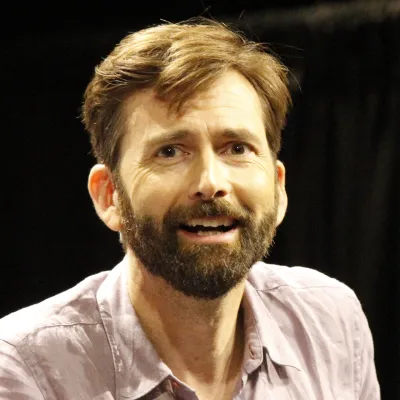
David Tennant
Human Design Chart
Biography
Tennant has also worked extensively as a voice actor and in theatre, including a portrayal of the title character in a 2008 production of Hamlet and the voice of Scrooge McDuck in DuckTales (2017–present). In 2015, he received the National Television Award for Special Recognition.
On 30 December 2011 Tennant married actress Georgia Moffett, daughter of Peter Davison, who played the Fifth Doctor. They have five children, including her child from a previous relationship whom Tennant adopted. Their son Ty has acted in the film Tolkien and the 2019 television adaptation of War of the Worlds. The family lives in Chiswick, West London.
What does Generator 2/4 mean for David Tennant?
Generator 2/4 — Design at a Glance
David Tennant's design establishes a foundational structure of extreme endurance and enormous energy potential, which, however, requires specific conditions for its effectiveness. As a Generator, he possessed a great deal of sacral energy, which made him strong and resilient like a workhorse as long as he had energy for his tasks. This configuration also created two clear pitfalls: first, the risk of burnout if he continuously did things he had no interest in, thereby wasting his strength. Second, the frustration of being prevented from working on his heart project, even though he wanted to continue working with full power.
His energy was primarily released when he responded to impulses rather than initiating things himself. The motto was "react, don't initiate." His most successful strategy was to wait for a signal from life and then, when his sacral center gave a clear "yes," to respond with action. Living in harmony with this design by reacting from the gut earned him deep satisfaction and a sense of fulfillment. If, however, he tried to go against this mechanism, for example, by constantly taking the initiative, he would eventually encounter persistent frustration and a lack of energy. His success therefore directly depended on whether he sought and followed this inner confirmation.
Sacral Authority
David Tennant's Human Design suggests a tendency towards intuitive, physical reactions to external stimuli. As a Generator, he possessed sacral authority, which also served as his strategy. This configuration greatly simplified the decision-making process, as inner guidance and the path of action were identical. A prerequisite for this was an open emotional center, ensuring that decisions were not made in emotional waves.
His sacral authority manifested as a direct physical response: a surge of energy, an inner voice, or sounds like an affirming "Mhm." When his sacral motor engaged with a topic, he felt vital and energized. This allowed him to immerse himself enthusiastically and without obsessive purpose in activities. He was born to move through life and become absorbed in his tasks, driven by the joy of the activity itself.
Additionally, an activated spleen center acted as a supportive authority. This gave him the ability to react particularly quickly and spontaneously. Through direct access to his instinctive perception and physical well-being, he could reliably guide himself with these inner signals. The combination of sacral energy and spleen-based intuition created a robust foundation for spontaneous, life-affirming decisions, always based on immediate physical resonance.
The 2/4 Profile — Hermit / Opportunist
David Tennant's design points to a tendency towards a dynamic balance between withdrawal and connection. He is someone who combines the need for intense community with the urge for isolated reflection. This tension is characteristic of Profile 2/4, known as "Natural Talent / Networker." Here, energy constantly fluctuates between Line 2, which demands solitude and inner processing, and Line 4, which seeks exchange in a familiar circle.
For David Tennant, it was crucial to create a safe environment where he could clearly communicate when he sought company and when he needed to be undisturbed. During his "Me-Time," he immersed himself in internal processes to gain clarity. Once this need was satisfied, he returned from his "cave" to spend time with his favorite people.
This cycle allowed him to reflect on the knowledge from his network during his alone time and develop brilliant ideas from it. Line 2 brings an unbridled energy that can grow and mutate, while Line 4 helps to use boundaries to enhance potential. Without this structure, there was a risk of sinking into confusion or depression. However, by enduring the inner instability and waiting for the right call from outside, he could cut through confusion and continuously develop further.
Single Definition — Defined & Open Centers
David Tennant's Human Design shows a tendency towards a fixed, reliable self-identity. With a defined G Center, he had a deep sense of his own direction and the ability to show others new paths without being dependent on their approval. This inner security was supported by a defined Sacral Center, which gave him a tremendous source of vital energy. His motor generated daily power that he could use to find satisfaction and master tasks with persistence by reacting to invitations. A defined Root Center also provided the necessary pressure to move forward in the world and master existential challenges.
At the same time, David Tennant was vulnerable to conditioning through several open centers. An open Head Center could lead him into mental confusion or the attempt to not answer his own questions. An open Ajna Center made him susceptible to foreign concepts that he could interpret as his own truth. An open Throat Center led him to seek attention or try to gain control through spontaneous speaking rather than waiting for the right invitation. An open Heart Center drove him to prove his worth through promises or competition, which often ended in frustration. Additionally, his open Solar Plexus absorbed the emotions of the environment, which could lead to emotional instability if he did not recognize them as foreign. Finally, his open Spleen Center could lead him to impulsive decisions or amplify fears that were not his own. His challenge was to not personalize these open fields but to trust in his defined energy and direction.
Channels for resources, change and evolutionary impulse.
David Tennant's energy carried innovation and change not as a planned strategy but as a pulsing, often melancholic impulse. This basic attitude resulted from the interplay of two powerful channels. The Channel of Mutation 60-3 connected the Root with the Sacral Center. It brought an unpredictable rhythm of chaos and order, with Gate 60 demanding the acceptance of limitation and Gate 3 driving the urge to realize new possibilities despite confusion. This created internal tension in pauses, felt as melancholy, until the next mutative pulse began.
Parallelly, the Channel of the Beat 14-2 connected the Sacral with the G Center. Here, Gate 14, the competence in handling material resources for mutation, merged with Gate 2, the higher knowledge that directs movement through space and time. This combination provided him with the keys to open innovative directions by simply trusting the answers from his Sacral Center. He acted as a keyholder, helping others find their own direction through his presence without actively leading them.
Additionally, prioritized gates shaped this dynamic. Gate 50 brought a conservative protective reflex and awareness of values and traditions. Gate 56 allowed the abstraction of mental processes into pictorial narratives. Gate 58 in the Root Center drove experiments and the refinement of patterns, while Gate 5 emphasized the fundamental rhythm of life processes and the necessity of habits for energy building. Gate 46 demanded full commitment and physical presence in the here and now. Finally, Gate 34 as a powerful Sacral Gate carried a great energy that needed guidance to serve the common good rather than being used indiscriminately. This configuration created a person who brought change through authentic reaction and rhythmic presence into the world.
Individual Circuitry — Circuit Signature
David Tennant's design points towards a pulsing, acoustic mode of expression characterized by mutations and his own rhythm. His simple definition connects the Identity, Sacral, and Root Centers directly. This created a continuous energetic flow from inner identity through life force to immediate reaction. The Knowledge Circuit shaped how this energy was carried. The active connection of identity and Sacral Center through the channel 'The Beat' promoted a unique pulse and rhythm. Simultaneously, the channel 'Mutation' between Sacral and Root Center encouraged deviations from the known and transformative impulses. This configuration supported the expression of an individual identity through new insights and creative impulses. The energy flowed from identity through the sacral power to the root, enabling a direct, often impulsive implementation of ideas into the world. It was about gaining new knowledge and transforming it, driven by an inner beat and the readiness to break from tradition.
Right Angle Cross of Laws 1
David Tennant's Human Design reveals a tendency towards a profound, almost fateful connection with his essence. He is portrayed as someone who not only seeks his inner truth but integrates it as an unchangeable law in his life. This attitude was shaped by the right cross of Laws 1, a configuration that describes a strong orientation towards one's own inner principles and the integrity of the self.
In Human Design, this cross marks a phase where the search for identity and meaning is central. It's not about external recognition but about clarity regarding who one truly is and what values one holds unconditionally. David Tennant was called upon by this mechanism to live his own truth without compromise, which would harm his innermost self. This created an inner stability that also required a certain distance from conventional expectations.
The energy of this cross supports a clear, direct way of drawing boundaries and focusing on what is authentic. For David Tennant, this meant that his path was often determined by the necessity to remain true to himself, even if it made the journey more difficult. It was a deep, personal discipline aimed at shaping life in harmony with his highest convictions. This orientation gave him a certain gravitas and seriousness, fueled by his inner conviction.
Saturn Return · Uranus Opposition · Chiron Return — Life Cycles
David Tennant's Human Design shows a tendency to find visible confirmation in phases of intense inner restructuring. This dynamic became tangible in 2011, at the age of 40, when he won the BBC Audio Drama Award for Best Actor for his portrayal of Franz Kafka. This success fell during his Uranus opposition, a phase in which one's self-image is often radically questioned and redefined. The award marked not only a professional peak but also confirmed the new identity that emerged from this profound inner work.
Later, in 2020 at the age of 49, his Chiron Return occurred. This cycle represents the flowering and unfolding of one's life purpose, provided one has followed their strategy up to this point. However, in this year, most cultural events and projects were postponed or canceled due to the pandemic. This external crisis formed a stark contrast to the inner expectation of the fulfillment cycle. Instead of a public celebration of his path, David Tennant faced the challenge of repositioning his sense and expression forms in a time of standstill, without the external confirmation structures he had previously relied on.
Generator · Sacral Authority — Synthesis
A central red thread runs through the design: the dynamic interaction between inner energy and the need for expression. The strong sacral energy (Generator type, Sacral Authority, Channel of Beats) generates natural strength and endurance, which, however, is bound to an authentic reaction to external stimuli. This energy seeks activities that truly 'attract' and allows deep immersion in work, provided it is not blocked by external expectations or internal doubts. The profile as a natural talent and networker emphasizes this aspect by highlighting the pendulum swing between withdrawing into one's own world (Line 2) and the desire for connection and exchange (Line 4).
At the same time, a central paradox is revealed: the tension between the pursuit of individuality and the deep connection with others. The Knowledge Switch, characterized by creativity and mutation, drives the desire to go new ways and generate unique knowledge. This is, however, countered by the defined G Center, which implies a strong sense of direction and the ability for loving leadership of others. Successes (2011) and crises (2020) seem to both be based on this tension field – the recognition of individual achievement and the challenge of providing orientation amidst upheavals.
2 Defined Channels
Incarnation Cross - Right Angle Cross of Laws 1
Solar Return
The Solar Return shows the moment when the sun returns to its exact birth position - your personal solar year.
Life Cycles
Discover the life cycles with a detailed triple view (birth chart, cycle chart, composite).
Human Design Profile
- Type
- Generator
- Strategy
- To respond - wait for something to respond to
- Authority
- Sacral Authority
- Profile
- 2/4 - Hermit / Opportunist
- Definition
- Single Definition
- Incarnation Cross
- Right Angle Cross of Laws 1
- Date of Birth
- 18.04.1971 14:00
- Place of Birth
- Broxburn, UK
Frequently Asked Questions
What is David Tennant's Human Design type?
What Profile does David Tennant have in Human Design?
Which Authority guides David Tennant's decisions?
Which incarnation cross is active for David Tennant?
When was David Tennant born?
Discover your own Human Design
Are you also a Generator? Find out in a personal reading how to use your sacral energy correctly and discover deep satisfaction.
More Personalities
Back to overviewSissy Spacek

Aaliyah

Alexia

Anémone

Angèle

Ann-Margret
