
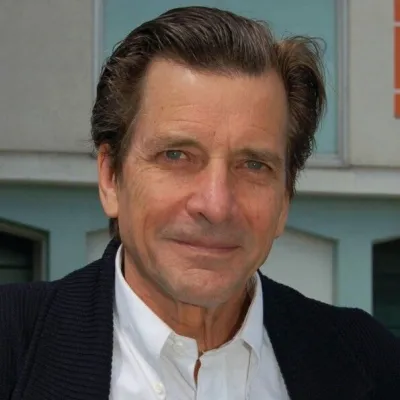
Dirk Benedict
Human Design Chart
Biography
In his own words, "The manuscript was promptly rejected by 20 major publishing houses, not only for the "dangerous" opinions espoused by it's author, but also because, according to the 'experts', it needed to be rewritten by a "professional." I was, after all, only an actor. Four years of rejection finally resulted in it's publication by a small house in California. A year later, that publisher was so intimidated by pressure from 'special interest' groups, he took it off the market and burned all his remainders. Several years passed until Avery called and asked if they might bring it out. I dug it out of my trunk, dusted it off and that is the edition that is now in print. After this ten-year journey from my typewriter to the readers hands, it is with immense joy that I read the comments of those who have read the book, and know that it was all worth the effort and perseverance."
Benedict is the son of a country lawyer who died when Dirk was 18. Raised in the country, he had no early contact with anything connected with show business. He started acting on a dare while in college. While he was in Sweden in 1972, working on "Georgia, Georgia," he discovered the macrobiotic diet and changed his eating habits drastically. A few years later, when doctors diagnosed cancer of the prostate, he refused to accept the usual treatment and moved away to a secluded cottage where he managed his own cure, through diet.
He married actress Toni Hudson in 1986; two sons, George and Roland; divorced in 1995.
In 1994, Benedict directed his first short "Christina's Dream." He has also written a screenplay.
In 2007, he was a contestant on the U.K.
What does Generator 6/2 mean for Dirk Benedict?
Generator 6/2 — Design at a Glance
Dirk Benedict is characterized by tremendous endurance, which is not driven by constant self-initiative but rather by responding to external impulses. His Generator design has a lot of sacral energy, comparable to a workhorse that remains strong and resilient as long as it has the power for its task. This energy was primarily available to him when he responded to signals from his environment instead of initiating on his own.
The central mechanics of his design lie in reacting: Successful action arose from his sacral center giving a clear "yes" and Dirk Benedict following up with action accordingly. Living in harmony with this strategy of responding led to deep feelings of fulfillment and satisfaction. Conversely, frustration and energy loss threatened when he acted against this principle – either by taking initiative without an internal signal or by suppressing his urge to work on his heart project.
Two main pitfalls shaped his dynamics: On one hand, the risk of investing energy in things where intrinsic joy was lacking, which tended towards burnout over time. On the other hand, frustration when prevented from working on his passions even though he still had plenty of power left. Dirk Benedict's potential unfolded fully only when he used this sacral power to respond to life, not to anticipate it.
Emotional Authority
Dirk Benedicts Design indicates a tendency to never make decisions based on the current emotion; emotional waves required time for clarification here. This structure results from his emotional authority being anchored in the defined Solar Plexus Center. In Human-Design mechanics: Whenever the Emotional Center is activated, it functions as an inner authority – regardless of which other Centers are also defined. This mechanism has absolute priority over all further definitions in the chart.
Dirk Benedict was subject to an emotional wave that manifested in a constant up and down of his feelings. The world appeared colored by his current mood: In one moment totally excited about something, in the next evaluating the same thing negatively. His feeling in the moment, however, was only a snapshot, a first impression that did not necessarily represent his truth yet. Quick, spontaneous decisions based on emotion could therefore have very negative consequences.
It was necessary to "sleep on" decisions to move from this colored snapshot to clear truth. The more time he took, the deeper and more comprehensive his understanding became. This required patience and repeatedly questioning a decision. Over time, intense feelings subsided, he gained emotional distance, and clarity as well as calmness set in. Only then had he gone through the process – a mechanism that is especially important for long-term decisions that can significantly influence his life course.
The 6/2 Profile — Role Model / Hermit
Dirk Benedict is marked by a design that foresees a clear two-phase development. In the first decades of his life, the influence of Line 2 dominated: he experimented, learned from mistakes, and searched for his individual rhythm. This phase was characterized by trial and error, during which he developed calmness and self-control to keep up with his own pace.
Around age thirty, the mechanics of Line 6 kicked in. Dirk Benedict now withdrew more to look back on his earlier experiences from a distance. This withdrawal served not for isolation but for deeper reflection and healing. He sought meaning in life beyond material goals and reflected on the transition from individual experience to collective wisdom.
Gate 37 on Line 6 emphasized his purposefulness in spiritual or meaningful questions. He learned to value family values and support projects that help others recognize their own purpose. From this phase of inner clarity, Dirk Benedict became a figure who shared wisdom from a distance. Others sought his advice to learn from his ability for deep introspection. His path led from individual experimenting through reflective withdrawal to the role of an exemplar making sense and purpose visible for others.
Split Definition — Defined & Open Centers
Dirk Benedict revealed himself as a person with a massive, constant energy base. His design indicated a tendency towards firm identity and strong will. The defined G Center gave him a reliable self-image and a clear sense of direction in life. He intuitively knew where he belonged and could show others this orientation without having to control their paths.
This inner stability was reinforced by the defined Heart Center, which provided access to consistent willpower. Dirk Benedict was able to keep his promises and use his resources autonomously. He enjoyed being successful and proving his worth, while it was important for him not to overwhelm others with his competitiveness.
The engine of this system was the defined Sacral Center. It generated enormous vitality daily, manifesting as restlessness or a pressing desire for active expression. For Dirk Benedict, it was crucial to respond to questions rather than initiate them himself. Only through an affirmative sacral response did he have access to the energy needed to master tasks with endurance and satisfaction.
At the same time, his experience was shaped by the defined Solar Plexus and Root Centers. The Solar Plexus as emotional authority required patience: Dirk Benedict had to wait out the waves of his feelings to gain clarity rather than react impulsively to highs or lows. The defined Root Center provided constant pressure and stress to move forward in the world, keeping him grounded as long as he followed this energy.
In contrast stood his open centers: Head, Ajna, Throat, and Spleen were undefined. This meant that mental clarity, spontaneous communication, and intuitive health signals were not consistently present within him. Dirk Benedict tended to question whether he had the right answers or was drawing attention when reacting conditionally. Instead, he benefited from situational uptake of these areas from his environment and patiently waiting for invitations to communicate or external mental inspirations rather than mentally anticipating them.
Channels for community, rhythm, focus and maturation.
Dirk Benedict exhibited a basic attitude aimed at belonging and confirmation in communities. This social dynamic is driven by Gate 37 in his personality, seeking recognition and finding a place within the whole. This drive contrasts with the stable internal structure of his design.
The Rhythm Channel 5-15 connects fixed habits (Gate 5) with a love for extremes (Gate 15), dictating a natural, magnetic flow through life. Dirk Benedict is propelled by this biological pulse; his timing is internally set and draws others into his energy flow when he remains authentic.
Simultaneously, the Concentration Channel 52-9 acts as formative energy. Through Gate 52 (Non-action) and Gate 9 (Focus), a calm pressure to hold still and precisely assess details arises. This energy requires deep alignment with one thing to perfect patterns and can be restless if no worthy focus is found.
The Maturity Channel 42-53 emphasizes the necessity of fully experiencing cycles. Gate 53 initiates new cycles, while Gate 42 reflects growth. Dirk Benedict must carry these processes through to completion to gain wisdom; premature ending leads to cycle repetition.
The challenge lies in integrating these forces: The emotional wave movement from Gate 37 and the Community Channel 37-40 – which relies on mutual dependence and 'good deals' – must harmonize with the cyclical, focused energy of his design. While his personality seeks 'Who asks me?', his design through rhythm, concentration, and maturity demands a disciplined, experience-based way of life.
Collective Circuitry — Circuit Signature
Dirk Benedict's design inclined towards cooperative resource creation within his tribal group, driven by the Ego Circuit. Here, Channel 37-40 (Community) connected the Heart Center with the Solar Plexus Center. This connection established a dynamic balance of give and take – 'Today I give to you, tomorrow you give to me' – setting mutual support as the core mechanism. Since this circuit does not connect to the Sacral Center, Dirk lacked constant life force for continuous production. Instead, he relied on cyclical rest periods to regenerate energy for collective cooperation. This shapes a conservative, traditional mode of security through mutual dependence, distinct from individual achievement.
Parallel to this, two additional energetically separate circuits were at work. The Understanding Circuit connected Dirk's Identity, Sacral, and Root Centers in a group. It focused on cool, future-oriented logic and strategy free from emotional conditioning to improve structures. Separately, the Meaning-Finding Circuit also touched the Sacral and Root Centers but operated as an independent stream. This circuit turned towards the past, using wave-like emotions for reflection of past events and seeking meaning therein to learn collectively.
Through shared definition, these systems coexisted: The Ego Circuit provided tactile security in the here-and-now through reciprocity, while the other two streams covered either rational future planning or emotional past resolution. Dirk did not act alone but coordinated resources within the collective, with pauses essential to maintain this interpersonal balance.
Left Angle Cross of Migration 1
Dirk Benedict's Human Design shows a tendency towards continuous progress. He was someone driven by an inner dynamism that did not allow him to remain in static states but always sought new horizons and development opportunities. This fundamental attitude stemmed from the 'Left Moving Cross', an archetypal configuration symbolizing the deep desire for constant further development. For Dirk Benedict, this evolutionary journey was not an optional extra but the central motor of his personality. The design described an energy that propelled him to transcend boundaries and understand progress as a natural state. Rather than being content with what is given, his inner compass always sought paths of growth. This structure shaped his way through life: as a process of continuous movement where the goal was not arrival at a fixed point but the motion itself and the expansion of one's own possibilities.
Saturn Return · Uranus Opposition · Chiron Return · 2nd Saturn Return — Life Cycles
Dirk Benedict experienced existential turning points that manifested as concrete life stations. In 1974, at age 29, he was diagnosed with prostate cancer. This first Saturn Return often marks a phase of confrontation with limits and structure; here it appeared in the form of a severe crisis requiring fundamental reassessment.
Ten years later, in 1986 at age 41, he married Toni Hudson. This fell on his Uranus Opposition, a cycle that triggers deep changes and the need for freedom or new structures in relationships. The marriage is seen here as a conscious realignment within this dynamic field.
In 1994, at age 49, he directed his first short film 'Christina's Dream'. This corresponded to his Chiron Return, a fulfillment cycle of blooming. During this phase, one's incarnation cross unfolds increasingly; those who have followed their strategy and authority experience meaning and purpose. The artistic realization of the film appeared as an expression of this inner maturity and self-realization. These three events illustrate how astrological cycles did not remain abstract for Dirk Benedict but became concrete turning points in health, partnership, and career path.
Generator · Emotional Authority — Synthesis
Dirk Benedict's Human Design reveals a central thread of cyclical maturation and collective contribution. The defined sacral energy coupled with the Root Center provides him a constant source of strength that is, however, channeled through the emotional center – a process requiring time and reflection. This combination manifests in an ability to collect experiences, process them, and pass on wisdom, particularly within the context of community and relationships (Channel 37-40). The format energies of the mental circuitry (Channels 52-9 and 42-53) reinforce this cycle by focusing on detail accuracy and pattern perfection.
A central paradox lies in the tension between the need for inner clarity and an open throat as well as an undefined spleen center. While the emotional center seeks a deep, time-bound truth, he is simultaneously vulnerable to external influences and conditioning. This openness can lead to uncertainty but is balanced by his ability to adapt and learn from experiences. The constant struggle with fear (undefined spleen center) drives him to seek authentic connections and share his wisdom with others – a process that is both challenging and fulfilling.
4 Defined Channels
Incarnation Cross - Left Angle Cross of Migration 1
Solar Return
The Solar Return shows the moment when the sun returns to its exact birth position - your personal solar year.
Life Cycles
Discover the life cycles with a detailed triple view (birth chart, cycle chart, composite).
Human Design Profile
- Type
- Generator
- Strategy
- To respond - wait for something to respond to
- Authority
- Emotional Authority
- Profile
- 6/2 - Role Model / Hermit
- Definition
- Split Definition
- Incarnation Cross
- Left Angle Cross of Migration 1
- Date of Birth
- 01.03.1945 08:47
- Place of Birth
- Helena, MT, United States
Frequently Asked Questions
What is Dirk Benedict's Human Design type?
Which Profile does Dirk Benedict have?
What authority does Dirk Benedict have?
What is Dirk Benedict's incarnation cross?
When was Dirk Benedict born?
Discover your own Human Design
Are you also a Generator? Find out in a personal reading how to use your sacral energy correctly and discover deep satisfaction.
More Personalities
Back to overviewSissy Spacek

Aaliyah

Alexia

Anémone

Angèle

Ann-Margret
