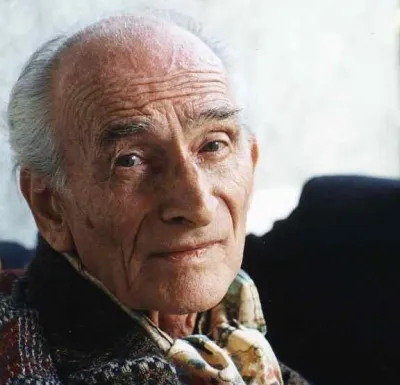
Edoardo Agnelli
Human Design Chart
Biography
Edoardo Agnelli as a Manifesting Generator 3/5 in Human Design
Manifesting Generator 3/5 — Design at a Glance
Edoardo Agnelli revealed himself as a hybrid being who combined constant inner strength with the ability to achieve results swiftly. His design blended the enduring energy of a Generator with the leapfrogging dynamism of a Manifestor. This configuration set a tendency towards parallelism: He reacted to numerous impulses and often started several projects simultaneously.
The challenge lay in this speed. Often, he skipped important intermediate steps, which led him back later to close gaps – a process that could cause frustration if not accepted. His success depended strictly on not initiating himself but reacting to life. Only the response of his sacral center – a clear “Yes” – legitimized his actions.
When this strategy was followed, his work style transformed into a playful mode. Instead of proceeding linearly, he enjoyed variation and the possibility of handling various tasks in parallel. This structure allowed him deep satisfaction in creation, provided that he maintained contact with his inner validation and let himself be guided by joy in the process rather than fighting against his natural rhythm.
Sacral Authority
Edoardo Agnelli lived as a Generator whose decision-making was marked by sacral authority. This internal instance functioned as the primary compass needle, independent of head-driven purpose or external expectations. His design allowed for a direct reaction to life impulses: Instead of planning, he waited for the stimulus and checked physical resonance.
The sacral authority manifested in him as a physical signal – an inner grumble, a surge of energy, or a spontaneous “Mhm”. This gut feeling determined whether something consumed energy or bestowed joy. If the impulse was positive, it followed with inexhaustible vitality and enthusiasm; he engaged in activities that fulfilled him without needing an external goal. This mechanism simplified his process significantly as strategy (reacting) and authority (feeling) are identical in the Generator type.
Edoardo Agnelli trusted this spontaneous physical resonance as a measure for action joy. He did not let himself be guided by intellectual considerations but by immediate feedback from his system. This configuration described a lifestyle that relied on inner authenticity and energetic alignment. By listening to his body, he reliably discovered where his true strength lay and how he could walk through life with satisfaction.
The 3/5 Profile — Martyr / Heretic
Edoardo Agnelli revealed himself as someone who gained knowledge not from books but through direct, often risky experimentation. His design set a tendency towards initial skepticism and self-testing – the Line 3 of the Explorer. Only after these personal experiences, including resulting mistakes, did he step into the role of Helper (Line 5) to offer solutions for others. This combination created natural attractiveness: Others were drawn to him because they wanted to partake in his practical treasure.
The Sun in Gate 38 emphasized this process strongly. It promoted learning through trial and error as well as preserving one’s own vitality. However, this configuration also carried vulnerability within it: The fear of public failure was real, as experiments often took place in the view of others. If he failed, it did not happen privately but as part of his public presence. This created a tension between the need for confirmation as a competent hero and the risk of image damage through failures. His authority rested on showing what works – or does not work – and passing these insights along. The uncertainty about one’s own depth could hinder action, yet the energy to implement collective solutions remained a driving factor.
Single Definition — Defined & Open Centers
Edoardo Agnelli had a reliable inner structure. His defined G Center gave him a firm identity and clear direction, while the Sacral Center provided vital energy – but only in response to external impulses, not through initiation. The connection to the Throat enabled authentic expression from this inner truth. Additionally, the defined Spleen and Root Centers ensured spontaneous intuition in the moment as well as constant pressure for material existence and survival.
In contrast, Head, Ajna, Heart, and Solar Plexus acted as open centers. Without their own constant energy, they served as antennae: open to inspiration and ideas (Head/Ajna), but without mental authority; sensitive to the emotional climate of the environment (Solar Plexus) and receptive to others' will pressure (Heart). The challenge lay in not overstimulating his defined inner structure through these environmentally dependent fields. Edoardo Agnelli tended to be distracted by mental doubts or emotional waves from the environment rather than trusting his sacral response and intuitive spleen perception. His open Heart Center required discipline: no promises, as the energy for fulfillment was not consistently present. Making decisions in emotional valleys or forcing mental answers led to frustration. His strength showed when he waited until life asked him a question and then answered from his defined power – clearly communicating and intuitively acting without identifying with foreign emotions or expectations.
Channels for meaningful struggle, authentic expression and intuitive survival.
Edoardo Agnelli exhibited a personality marked by bold individual expression and stubborn resistance against conformity. His design laid an energy that was designed to serve as an example by living his uniqueness. The Channel of Inspiration 1-8 connected his G Center with the Throat Center through the Gate of Self-expression (1) and the Gate of Contribution (8). This allowed him to express a transformative perspective creatively and attract attention simply through his presence. He inspired others not primarily through words, but by demonstrating the art of individual living and thereby promoting new directions in his environment.
Simultaneously, the Channel of Life Struggle 38-28 shaped his actions. This channel connected the Root Center with the Spleen Center via the Gate of the Fighter (38) and the Gate of the Player (28). It endowed him with the determination to maintain his individual integrity and fight against external forces that might divert him from his truth. While Gate 38 exerted pressure for self-assertion, Gate 28 helped him recognize which struggles were worth it and which resistance was worthwhile. This combination created a driving force to find meaning in life and defend it through stubbornness and adrenalized energy.
Additional channels supported this dynamic. The Channel of Exploration 34-10 connected the Sacral with G Center (Gates 34 and 10) and promoted self-love as well as holding onto inner convictions through sacral reaction. The Channel of Perfect Form 57-10 (Spleen to G, Gates 57 and 10) guided his behavior through intuitive insight and secured his survival in the present moment. The Channel of Wavelength 48-16 (Spleen to Throat, Gates 48 and 16) connected intuitive depth with the skill to perfect abilities through repetition. Finally, the Channel of Power 34-57 (Sacral to Spleen, Gates 34 and 57) strengthened his intuitive capacity for survival through sacral reaction to danger.
Prioritized gates like Gate 39 (Mutation, Provocation), Gate 21 (Control of material things), Gate 13 (Collective Memory), Gate 19 (Resources, Spirituality), Gate 50 (Protective Reflex, Traditions), Gate 14 (Power, Direction Finding) and Gate 46 (Devotion, Body Love) rounded out his profile. They underscored the need for analysis, respect in community, reflection on time, secure territories, conservative values, skillful power handling, and full participation in the process. Edoardo Agnelli's design was thus oriented towards an individual, combative, and inspiring way of life.
Individual Circuitry — Circuit Signature
Edoardo Agnelli revealed a design that combined inner strength with a drive for personal transformation. His simple definition created a cohesive energetic flow between identity, throat center, spleen, and root, characterized by pulsing, acoustic energies.
The Knowledge Circuit connected his Throat and Identity Centers as well as the Spleen to the Root Center. Through the Channel of Inspiration (Gates 1-8), he received intuitive impulses, while the Life Struggle Channel (Gates 28-38) provided resilience. This promoted the expression of a unique identity through emotional waves and creative mutations.
Parallel to this, the Centering Circuit linked his Identity with the Sacral Center. The Channel of Exploration (Gates 10-34) strengthened his self-worth and inner convictions. However, since this circuit did not connect to the Throat Center, these firm beliefs often remained unspoken or difficult to articulate directly.
The Understanding Circuit connected the Throat with the Spleen Center via the Channel of Wavelength (Gates 16-48). This allowed him to communicate intuitive perceptions logically and focused, free from emotional coloring.
Finally, the Integration Circuit integrated his Identity, Spleen, and Sacral Centers. The Channels Perfect Form (10-57) and Power (34-57) channeled power from life through proper behavior and intuitive knowledge into the present moment. This configuration reinforced Edoardo Agnelli in his highest individuality by combining inner strength with the ability to intuitively walk new paths and selectively express them.
Right Angle Cross of Tension 4
Edoardo Agnelli was marked by the right cross of tension 4, a configuration that established tension as a central driving force and structural element of his design. This mechanism did not describe a temporary emotional state but rather a fundamental architectural principle: The ability to not only endure pressure but actively transform it into form and function. For Edoardo Agnelli, this meant that stability was often achieved through the conscious integration of friction points, rather than avoiding them. His design suggested that his actions and decisions were determined by an internal rhythm of tension absorption and resolution. This affected all areas of life as the right cross of tension 4 represented a specific kind of energy channeling where conflicts or challenges served as necessary building blocks for one's own structure. It was a system that created order out of dissonance, translating tensions not into dissolution but into sustainable patterns. Edoardo Agnelli thus lived in a dynamic where the pressure itself became the source of his capacity to act, significantly shaping who he was and how he operated.
Saturn Return · Uranus Opposition — Life Cycles
Edoardo Agnellis life followed a clear architectural structure determined by two decisive planetary turning points. The first Saturn return cycle marked the transition to mature identity consolidation and the establishment of long-term responsibility areas. In 1923, at age 31, Agnelli became patron and later president of the football club Juventus Turin. This event embodied the typical effect of this cycle: Consolidation of a position that was not only personally significant but also brought structural stability to his environment. It was a phase of anchoring in which he shaped his role sustainably.
The second notable event coincided with the Uranus opposition, a cycle often signaling abrupt changes or the sudden end of life phases. In 1935, at age 43, Agnelli died in a landing accident involving a Savoia-Marchetti SM.80. This tragic incident illustrated the disruptive power of this planetary configuration, which often unexpectedly and quickly ends established structures. While the Saturn return solidified his leadership role, the Uranus opposition abruptly interrupted his life path. Both cycles thus framed his short but impactful public career: first consolidation through structural assumption of responsibility, then sudden end by an unforeseeable event.
Manifesting Generator · Sacral Authority — Synthesis
Edoardo Agnelli lived a life marked by the dynamic interaction between inner drive and the need for authentic expression. His design as a Manifesting Generator with defined Sacral authority points to a person who constantly provides energy but optimally utilizes it only when responding to external impulses – a pattern evident in his readiness to take initiatives once his gut feeling signaled approval. Anchoring in the G Center and connection through the Channel of Inspiration (1/8) further reinforced this individualistic trait, fostering natural radiance and a drive for self-actualization. The recurring focus on ‘responding’ rather than ‘initiating’, coupled with the need for authentic expression, formed the red thread of his actions.
At the core of this design is a paradox between the ability to act swiftly and the need for inner confirmation. As a Manifesting Generator, he possessed the energy to tackle things quickly, yet the defined Sacral center demanded that he only act after sacral ‘yes’. This tension field between impulsive action and the necessity of internal alignment shaped his decisions and potentially led to phases of accelerated activity followed by a return to a state of inner orientation. The combination of defined Root and open Head Center points to a person who had a strong will but was also open to new perspectives and information.
6 Defined Channels
Incarnation Cross - Right Angle Cross of Tension 4
Solar Return
The Solar Return shows the moment when the sun returns to its exact birth position - your personal solar year.
Life Cycles
Discover the life cycles with a detailed triple view (birth chart, cycle chart, composite).
Human Design Profile
- Strategy
- To respond - wait for something to respond to
- Authority
- Sacral Authority
- Profile
- 3/5 - Martyr / Heretic
- Definition
- Single Definition
- Incarnation Cross
- Right Angle Cross of Tension 4
- Date of Birth
- 02.01.1892 22:00
- Place of Birth
- Verona, Italy
Frequently Asked Questions
What was Edoardo Agnelli's Human Design type?
What Profile did Edoardo Agnelli have in Human Design?
What authority did Edoardo Agnelli have?
What was Edoardo Agnellis incarnation cross?
When was Edoardo Agnelli born?
Discover your own Human Design
Are you also a Manifesting Generator? Find out in a personal reading how to unfold your multi-talents and direct your energy wisely.
More Personalities
Back to overviewAldair

Alizée

Angeli

Arletty

Artus

Balthus