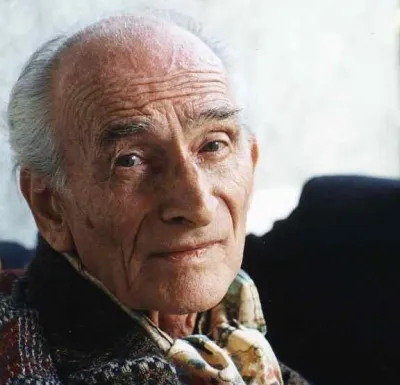
Eduard Spranger
Human Design Chart
Biography
He served as professor of philosophy in Leipzig (1911–20), Berlin (1920–45), and Tübingen (from 1946), and in 1937–38 he lectured in Japan. He was briefly imprisoned in Berlin late in World War II (1944) but was released at the request of the Japanese ambassador.
Spranger was a student of Wilhelm Dilthey and continued his teacher’s research in the Geisteswissenschaften (human sciences), emphasizing in his most important works, "Die Lebensformen" (1914; Types of Men) and "Psychologie des Jugendalters" (1924; “The Psychology of Youth”), the effects of culture and history on human ethics and actions.
He died on 17 September 1963, aged 81, in Tübingen, West Germany.
Eduard Spranger — Manifesting Generator with Profile 2/4
Manifesting Generator 2/4 — Design at a Glance
Eduard Spranger's Human Design profile suggests a tendency towards hybrid work methods: He has the constant energy source of a Generator but also possesses the speed of a Manifestor through additional connections. This configuration allowed him to skip steps and quickly incorporate new developments into his life. However, this acceleration carried risks. If Eduard Spranger moved too fast, he sometimes skipped necessary intermediate steps, leading him to have to backtrack later to fill in gaps – a process that could cause frustration for him. Additionally, his system tended to react simultaneously to numerous impulses and handle multiple projects at once. Without clear inner consent, this variety of tasks threatened to quickly turn into overload. Eduard Spranger's strategy involved not initiating himself but waiting for life to give a clear impulse. Only when his Sacral Center responded with a definite "yes" and his inner authority agreed would he invest his energy. Regular reviews helped him ensure that the chosen paths continued to resonate. Under these conditions, Eduard Spranger could draw deep satisfaction from his work. For him, variety was not an obstacle but essential; he needed the "play mode" to sustain his creative power. The advice to focus on only one thing at a time contradicted his nature. Instead, he thrived in simultaneously working on different areas as long as each individual activity was carried by genuine inner enthusiasm.
Sacral Authority
Eduard Spranger's decision-making followed a clear inner logic: He did not react through careful planning but rather based on immediate physical resonance. As a Generator, his strategy was also his inner authority – the sacral authority. This fundamentally simplified his process because he did not need external advisors or lengthy analyses to find the right path.
His orientation happened through an "inner voice." In response to external stimuli, his body would react with a surge of energy or characteristic sounds like grunting or humming. These signals were not arbitrary but indicated where his actual energy lay. When this sacral answer came, he felt vital and alive; the available energy was seemingly inexhaustible. He accomplished his tasks with great enthusiasm and immersed himself in them – without any external sense of purpose being necessary. Joy and satisfaction arose naturally alongside his work, not as a goal.
Additionally, his activated Spleen Center supported him. It gave him quick, instinctive access to his physical well-being. This connection allowed Eduard Spranger to react particularly spontaneously and quickly to situations. He could reliably guide himself from this immediate perception, which further accelerated and sharpened his decision-making ability.
The 2/4 Profile — Hermit / Opportunist
Eduard Sprangers Design created a tendency towards dynamic tension between the need for withdrawal and the desire for community. As a person with Profile 2/4, he constantly oscillated between two poles: Line 2, which demanded solitude and concentrated inner work, and Line 4, which sought exchange with familiar people. This configuration marked him as someone who needed a safe environment to communicate clearly when he wanted company and when he needed to be left alone.
During his solitary times, he immersed himself in internal processes, created clarity, and reflected the knowledge of his network. Once this need for peace was satisfied, he emerged again to connect with his favorite people. Line 2 promoted consideration and the ability to concentrate, while in extreme cases it could also allow selfish pauses that might endanger others. At the same time, through Line 4, he possessed the talent to recognize deeper motivations of others and to integrate people into a meaningful order – a gift that could be misunderstood as manipulative. Eduard Spranger used this structure to develop brilliant ideas in silence and then pass them on within the protected framework of his network.
Split Definition — Defined & Open Centers
Eduard Spranger's Human Design profile showed a tendency towards consequent, conceptual clarity. His defined Ajna Center ensured consistent mental preferences; he processed data and creativity in a trustworthy manner and was hard to distract from external influences. This internal structure led to his defined Throat Center: He spoke what his mind conceptualized. His voice served as a focal point to transmute messages into the world - clear, honest, and direct from the mental source.
This intellectual firmness rested on a deep inner alignment. His defined G Center gave him a reliable self-identity and a sense of correct direction. He knew where he belonged without having to direct others. Parallel to this, he had immense vital energy through his defined Sacral Center. As a Generator, he responded to life; his energy was only available when he consented. Initiating from the mind led him to resistance and frustration. His defined Spleen Center complemented this with spontaneous intuition in the present moment, while his defined Root Center provided the necessary pressure to exist materially and nourish existential awareness.
In contrast to this stable core structure, his vulnerability showed in the open centers. His open Head Center had no consistent way of processing inspiration; he tended to engage with others' questions or get lost in mental monologues when not trusting his authority. The open Heart Center lacked a consistent willpower; he was vulnerable to the pressure of proving his worth through promises and performance, often ending in cycles of self-doubt. Additionally, his open Solar Plexus absorbed the emotions of the environment. He amplified others' moods and feelings, making him vulnerable when identifying these as his own or avoiding confrontation out of fear of rejection.
Channels for inspiration, rhythm, logic, judgment and charisma.
Eduard Spranger's Human Design profile showed a tendency towards exemplary leadership. He was someone who influenced others through the nature of his existence rather than explicit instructions. This effect came from Channel of Inspiration 1-8, connecting the G Center with the Throat Center. Through Gate 1 (Self-expression) and Gate 8 (Contributing), he was inclined to live out his individual identity creatively and thereby generate attention. His presence served as a valve for creative potential; by simply being who he was, he inspired others to express their unique qualities.
Parallel to this, Eduard Spranger possessed the energy of Channel of Beats 14-2. This channel connected the Sacral Center with the G Center and gave him the ability to initiate new directions. Gate 14 (Power Competence) provided access to resources while Gate 2 (Higher Knowledge) directed movement through space and time. This allowed him to materialize mutative impulses into physical reality often through spontaneous reactions to life without prior planning.
His mental structure was shaped by Channel of Acceptance 17-62. This channel connected the Ajna Center with the Throat Center, allowing him to translate visual patterns (Gate 17) into detailed language (Gate 62). Eduard Spranger logically organized information to make it understandable; he sought the inner order of concepts before communicating them.
Additionally, Channel of Judgment 58-18 between Root and Spleen Centers influenced his design. Gate 58 (Vitality) drove the urge for improvement while Gate 18 (Correcting) checked what was healthy or wrong. This created an insatiable desire to perfect patterns that only became effective when invited.
Channel of Charisma 34-20 connected Sacral and Throat Centers. Gate 34 (Power) provided the generative energy for immediate action in the present moment (Gate 20). Eduard Spranger had the strength to be active and experience self-affirmation through doing, so long as he responded to inner signals rather than external expectations.
Individual gates like Gate 52 promoted silent concentration for pattern correction while Gate 31 in the Personality Field supported the transmission of leadership power.
Individual Circuitry — Circuit Signature
Eduard Spranger's Human Design profile showed a tendency towards a divided, non-continuous energetic structure. His energy sources consisted of two parallel, unconnected systems: a complex network of identity, mind, and expression ability as well as a separate area for intuitive survival instincts. This division meant he often experienced things as adjacent streams not always integrated.
The Knowledge Circuit connected his Throat, Identity, and Sacral Centers directly. This created a pulsating flow that translated creative mental sparks (Channel 20-57) and inspiring impulses (Channel 1-8) into concrete expression. It was about expressing unique individuality through emotional waves and acoustic presence.
Parallel to this, the Understanding Circuit worked as two separate units: Ajna with Throat Center on one side, Spleen with Root Center on the other. Here logical judgment (Channel 18-58) and acceptance of structures (Channel 17-62) were in focus, free from emotional coloring. This served strategic improvement of society through rational insights.
The Integration Circuit additionally connected Throat and Sacral Centers via Channel 20-34. This flow provided charisma and the ability to channel power from reacting to life in the present moment. Together these separate systems formed a profile that swung between creative transformation, rational strategy, and intuitive survival without fusing these areas into one continuous line.
Right Angle Cross of Service 2
Eduard Sprangers Human-Design profile indicated a specific orientation characterized by the so-called right Service Cross. This configuration did not signal general everyday helpfulness but rather a deeper, structural task: the ability to stabilize complex or difficult situations and help others find their own strength. It was a pattern aimed at bringing order out of chaos and providing support where it was most urgently needed without losing one's self.
The mechanics of this cross emphasized the importance of service as a path to personal validation. Eduard Spranger, through this structure, defined his identity not by dominance or egocentric striving but by meaningful use of his energy for the benefit of others. This did not mean subordination but an active role as support and promoter. The challenge was to perform this service authentically without falling into a victim mentality. His design challenged him to use his gifts to build bridges and enable others to realize their full potential. This path of service was no coincidence, but a central component of his energetic signature that significantly influenced his actions and interactions with the world.
Saturn Return · Uranus Opposition · Chiron Return · 2nd Saturn Return — Life Cycles
Eduard Sprangers Human-Design profile combined a deep inner structure with the necessity to carry it outward. His first Saturn Return in 1909 at age 27 marked a turning point: Habilitation at the University of Berlin and inaugural lecture condensed years of groundwork into a solid academic foundation. This cycle confirmed his role as someone who systematically organizes and strengthens knowledge.
The Uranus Opposition in 1922, when he was forty, brought a sudden break: The death of his father from stomach cancer severed old ties and demanded a reassessment of his own position in life. Such phases often dissolve rigid structures to create new space.
His Chiron Return in 1933 at age 51 marked the fulfillment cycle where his life purpose became clearer. His resignation on April 25 was not defeat but a conscious release from structures no longer aligned with his inner truth. This allowed him to shape his path more independently.
The second Saturn Return in 1937 at age 55 crowned this development: Lectures in Japan showed how his mature wisdom now had international impact. Here the full maturity of his design came into play – not as mere accumulation of knowledge but as a living transmission of a formed perspective to a new generation and culture.
Manifesting Generator · Sacral Authority — Synthesis
Eduard Spranger lived a life path marked by an inner dynamic between creative inspiration and the need for withdrawal. His profile as a Manifesting Generator with sacral authority points to someone who could quickly follow impulses (through the connection of Sacral Center to Throat Center), but whose decisions always arose from an internal, physical reaction. The profile as a natural talent and networker reinforced this tendency: Phases of intense self-reflection alternated with the desire to express ideas and share them with others (Channel 1-8). His defined mental center allowed him to consistently develop and implement concepts.
Sprangers design contained a central paradox: the tension between the ability to quickly initiate things and the simultaneous need for withdrawal and inner clarification (Line 2 of the profile). The recurring cycles – career events coupled with phases of self-discovery – showed a pattern of active engagement followed by necessary distance. This points to someone who, while possessing strong creative energy (Knowledge Circuit), could only fully unleash it when he maintained balance between the external world and his inner landscape.
5 Defined Channels
Incarnation Cross - Right Angle Cross of Service 2
Solar Return
The Solar Return shows the moment when the sun returns to its exact birth position - your personal solar year.
Life Cycles
Discover the life cycles with a detailed triple view (birth chart, cycle chart, composite).
Human Design Profile
- Strategy
- To respond - wait for something to respond to
- Authority
- Sacral Authority
- Profile
- 2/4 - Hermit / Opportunist
- Definition
- Split Definition
- Incarnation Cross
- Right Angle Cross of Service 2
- Date of Birth
- 27.06.1882 05:00
- Place of Birth
- Berlin, GER
Frequently Asked Questions
What is Eduard Spranger's Human Design type?
Which Profile did Eduard Spranger have?
What Authority guided Eduard Spranger's decisions?
What incarnation cross did Eduard Spranger have?
When was Eduard Spranger born?
Discover your own Human Design
Are you also a Manifesting Generator? Find out in a personal reading how to unfold your multi-talents and direct your energy wisely.
More Personalities
Back to overviewAldair

Alizée

Angeli

Arletty

Artus

Balthus