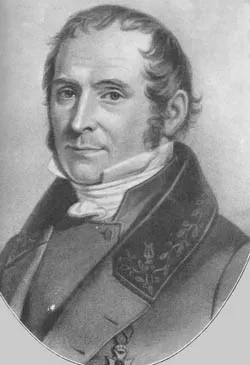
Elias Magnus Fries
Human Design Chart
Biography
Elias Magnus Fries — Generator with Profile 5/1
Generator 5/1 — Design at a Glance
Elias Magnus Fries revealed himself as someone with an enormous and enduring reserve of strength. His design showed a high sacral energy that made him seem like a strong workhorse – provided he had the energy for his specific tasks. This immense endurance was not, however, a free pass for constant initiative. On the contrary: His effectiveness depended crucially on waiting for impulses from his environment before taking action. The central strategy involved receiving a signal and then responding to it from the gut. When his inner center answered with a clear "yes", he could achieve tremendous results through consistent action.
This mechanism created two clearly distinguishable states in his life. If he responded correctly to these internal signals, he experienced deep satisfaction and a sense of fulfillment. His materialization power was then unhindered. However, if the urge for false initiative arose or he suppressed his energy by doing things that did not resonate internally, frustration resulted. This path often led to a noticeable loss of energy and in extreme cases to burnout, as he worked against his natural flow of energy. Equally frustrating was when external circumstances prevented him from continuing work on projects for which he still had full power. His design therefore required a precise alignment between inner impulse and outer reaction to use his great strength meaningfully.
Sacral Authority
Elias Magnus Fries demonstrated a decision-making process based on inner resonance. His design designated him as a Generator with Sacral Authority, a configuration where strategy and inner guidance are identical. This simplified his process: He did not react through deliberate thought but rather through physical responses to external stimuli.
His authority was anchored in the defined Sacral Center. It manifested as a gut feeling or surge of energy – a grunt, hum, or nodding "Mhm" when agreeing, and a negative sound when disagreeing. Elias Magnus Fries had to learn to hear these signals to distinguish true resonance from false drive. When his sacral motor kicked in, he felt vital and alive. He was endowed with seemingly inexhaustible energy that filled his work with great enthusiasm.
This design marked him as someone born to walk through life with joy and contentment. He immersed himself fully in his activities without the need for external purpose. The joy of the activity itself was sufficient. If the Spleen Center was activated or directly connected to the Sacral Center, it served as a supportive authority. This enabled particularly quick and spontaneous reactions, along with reliable access to instinctive perception and physical well-being, which guided him. His energy was not a means to an end but rather an expression of his natural state when responding correctly to life.
The 5/1 Profile — Heretic / Investigator
Elias Magnus Fries revealed himself as someone who combined a deep, individual research drive with a magnetic attraction that drew others to problem-solving. His design created a tension between private insight and public benefit. Line 1 drove him towards learning new projects and challenges, while Line 5 endowed him with the quality that made other people want to know what knowledge he had to offer. Others often sought solutions for their problems from Elias Magnus Fries, which could lead to exhaustion if no clear boundaries were set. The fifth line tempted others to give energy to push forward the mental logical process. Without external support, he did not reach a solution and proof. Unearned reward and recognition was given when the answer was expressed in the Throat Center. Line 1 had the ability to work together for group goals. Honesty was crucial for genuine contribution within the context of group goals. Elias Magnus Fries learned to say No to maintain the balance between research for himself and problem-solving for others. This allowed him to optimally use his gifts and protect against excessive demand for solutions from others.
Split Definition — Defined & Open Centers
Elias Magnus Fries revealed himself through a stable identity and constant mental processing that led to reliable communication. His defined G Center provided him with a firm self-image and clear sense of direction, while the defined Ajna Center enabled consistent conceptual thinking. This internal structure flowed into his defined Throat Center, allowing him to express thoughts clearly and reliably. The driving force came from his defined Sacral Center; his vital energy was only activated through reaction, giving him sustained endurance for appropriate inquiries.
At the same time, Elias Magnus Fries was situatively receptive to external influences through several open centers. His open Head Center made him susceptible to mental pressure and the search for inspiration from outside rather than relying on inner clarity. His open Heart Center tended to feel the need to prove himself through willpower or promises despite not having a constant energy source. The open Solar Plexus Center absorbed emotional currents of the environment, making him vulnerable to others' moods and fear of confrontation. Additionally, his open Spleen Center picked up signals of well-being or lack thereof from the surroundings, which could lead to unhealthy dependencies for feeling secure. Finally, his open Root Center amplified external stress, putting him under adrenalized pressure that did not originate from himself. These opennesses required conscious distance from conditioning environments to maintain his own strategy of waiting and reacting.
Channels for determination, endurance and structured insight.
Elias Magnus Fries was someone who pursued situational insights with persistence and innovation. His design indicated a tendency not to possess mutative thinking as a constant trait but rather to activate it through external circumstances. This occurred via the Channel of Structuring 43-23, connecting the Ajna Center with the Throat Center. Through Gate 43, he received spontaneous breakthroughs and rational insights that he assimilated and expressed via Gate 23. This connection allowed for efficiency-enhancing communication that changed perspectives but only became effective when the timing was right and he did not try to plan ahead. His challenge lay in letting go of control and trusting his unique perspectives until they were accepted by the environment.
Parallel to this, his personality featured the Channel of Discovery 29-46, linking the Sacral Center with the G Center. This signaled an inner motivation to lose oneself completely in experiences to find new paths through persistence. Gate 29 provided access to the endurance of the Sacral through positive affirmation, while Gate 46 established a connection to Higher Self and the right life direction. Elias Magnus Fries had to let go of expectations and commit unwaveringly to processes that could take years. Only at the end of this experience did the significance of his discoveries reveal itself.
Additional Gates like 14 (Power and Direction), 4 (Logical Formulas) and 49 (Emotional Principles) complemented this picture with aspects of skillful handling of influence, seeking clarifying patterns for the future as well as sensitive responding to tribal upheavals. Gates like 8 (Contribution), 7 (Leadership) and 13 (Collective Memory) in his personality pointed towards a need to express identity through leadership and reflect experiences within the context of time. The combination of situatively activated structural clarity and deeply rooted, experience-based discovery process characterized how he processed and shared knowledge.
Collective Circuitry — Circuit Signature
Elias Magnus Fries was someone where two separate energetic systems worked parallel. The Knowledge Circuit connected his Ajna with his Throat Center. This created a pulsating, acoustic creativity aimed at expressing new identities through structuring. It was about the unique path and transforming knowledge into the world.
Simultaneously existed the Meaning-Finding Circuit connecting his Identity with his Sacral Center. This connection was cyclical and past-oriented. Here emotions were processed in waves to find meaning behind past events. The goal was to share these felt insights with the collective.
As Elias Magnus Fries had a split definition, these two circuits were not directly connected. They formed separate streams: one focused on the current creative expression of new structures, the other on reflective processing of past experiences for collective insight. The tension between this now-oriented creativity and wave-like emotional reflection shaped his inner experience as two coexisting, non-fusing forces.
Left Angle Cross of Revolution 2
Elias Magnus Fries was marked by a deeply rooted, transformative orientation. His design carried the energetic signature of the left cross of Revolution. This configuration established a structural background that pointed towards fundamental change and revolutionary impulses. It was not about superficial adjustments but rather a principled dynamic aimed at breaking or reshaping existing orders.
The energy of this cross acted as a driving force behind his personality, creating an inner pressure toward transformation. Since no specific Gates or Channels are mentioned in the raw content, this revolutionary orientation remains abstract. It did not manifest in concrete isolated actions but rather as an all-pervasive background process. Elias Magnus Fries lived with this potential power of upheaval within him. It was a principled readiness for revolution that defined his energetic structure. This dynamic formed the foundation of his inner stance, shaping him as someone whose essence was oriented towards change regardless of external circumstances. The general dynamics of transformation and revolution thus stood at the center of his design.
Saturn Return · Uranus Opposition · Chiron Return · 2nd Saturn Return — Life Cycles
Elias Magnus Fries showed himself to be someone whose life structure was defined by clear professional milestones. These anchoring points marked not only outer success but also inner consolidation of his role. In 1820, at the age of 26, he was elected a member of the Leopoldina. This fell into the period of his first Saturn Return. Often in this cycle, years of groundwork condense into a solid result; the election confirmed his professional position and created a stable basis for the following years.
Ten years later, in 1834 at the age of 40, he followed with the move to Uppsala University. This step corresponded to the Uranus Opposition, a phase where unexpected changes or new horizons often open up. The location and task change was not just a relocation but a structural realignment that elevated his work to a higher level and offered him more space for independent research.
The third decisive point came in 1851 when he, at the age of 57, after Wahlberg's death, received the professorship in botany. This marked his second Saturn Return. Here, the culmination of a long development was evident: earlier recognition and mid-term change now culminated in an ultimate authoritative position. These three events formed the framework of his work by linking his growing responsibility with corresponding cyclical phases of his inner maturation.
Generator · Sacral Authority — Synthesis
Elias Magnus Fries primarily lived from his sacral energy (Generator Type), where the process of learning and knowledge acquisition held a central place. The profile as Hero/Researcher (5/1) indicates that he sought profound knowledge to provide solutions for others – a tendency reinforced by the defined Mental Center (Ajna) and the Channel of Structuring (61/24). This channel allowed him to develop innovative perspectives and express them precisely, which in turn brought reinforcement and change. The repeated professional changes and membership in scientific societies (events documented during Saturn Return and Uranus Opposition) underscore this drive towards knowledge dissemination and application.
A central paradox lay in the connection between his enduring sacral energy and the need for continuous problem-solving for others. While he could benefit from working on heart projects himself (sacral authority), there was simultaneously the danger of being drained by others' demands – a typical pitfall of the 5/1 profile. This tension between personal drive and external expectations shaped his work and likely required constant balancing between self-initiative and providing his knowledge for others.
2 Defined Channels
Incarnation Cross - Left Angle Cross of Revolution 2
Solar Return
The Solar Return shows the moment when the sun returns to its exact birth position - your personal solar year.
Life Cycles
Discover the life cycles with a detailed triple view (birth chart, cycle chart, composite).
Human Design Profile
- Type
- Generator
- Strategy
- To respond - wait for something to respond to
- Authority
- Sacral Authority
- Profile
- 5/1 - Heretic / Investigator
- Definition
- Split Definition
- Incarnation Cross
- Left Angle Cross of Revolution 2
- Date of Birth
- 15.08.1794 11:00
- Place of Birth
- Hyltebruk, Sweden
Frequently Asked Questions
What was the Human Design type of Elias Magnus Fries?
Which Profile did Elias Magnus Fries have?
What Authority guided Elias Magnus Fries?
What incarnation cross did Elias Magnus Fries have?
When was Elias Magnus Fries born?
Discover your own Human Design
Are you also a Generator? Find out in a personal reading how to use your sacral energy correctly and discover deep satisfaction.
More Personalities
Back to overviewAaliyah

Alexia

Angèle

Anne-Marie

Arcángel

Arno